Kyoto Main Character Energy - Fushimi Inari and Kiyomizu-dera
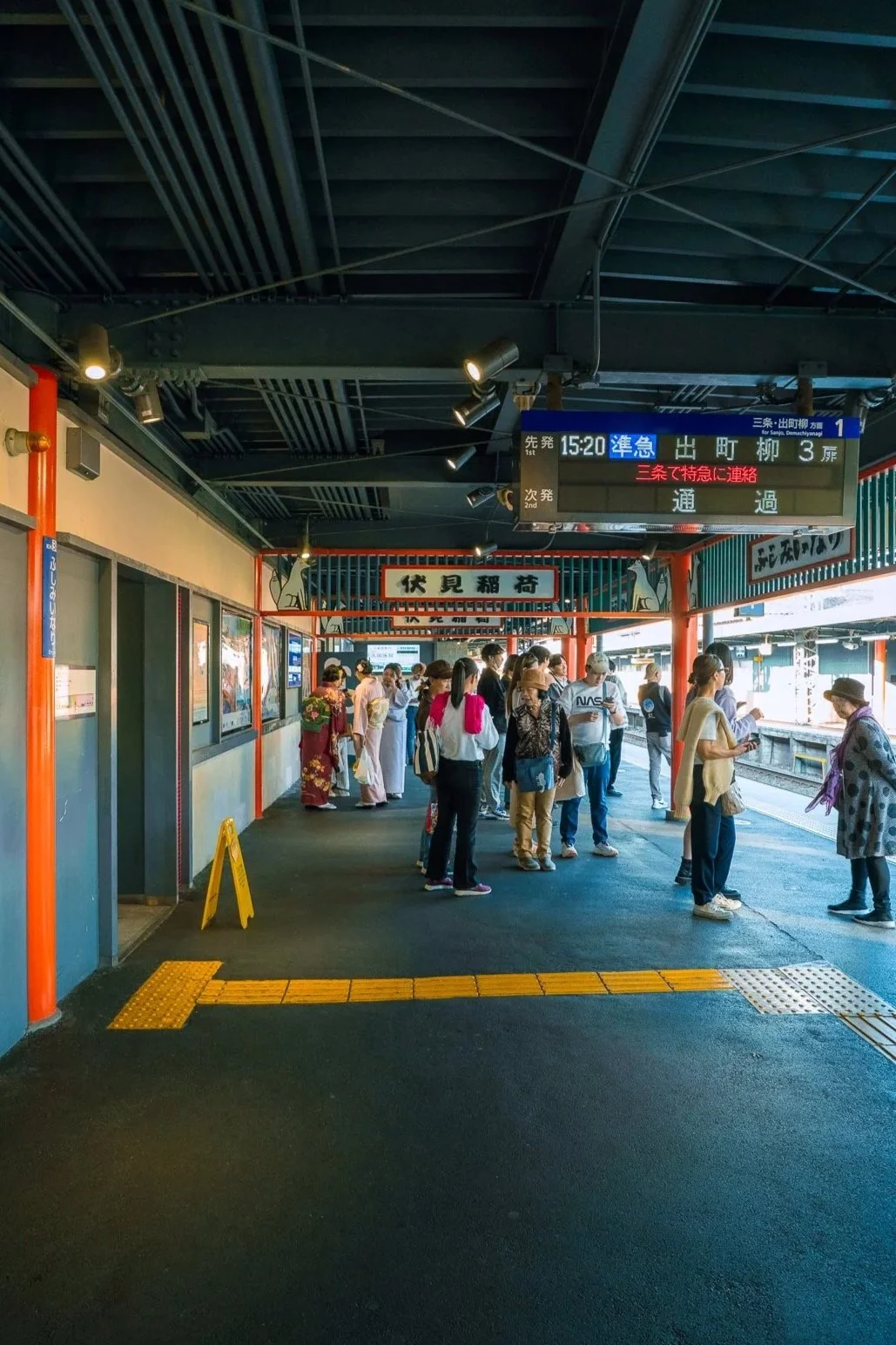
If there is one thing we never accounted for with the Fushimi Inari Taisha is the walking that it would entail. Despite all the reels and the travelogues that told us about “crowds thinning as you go up”, we didn’t quite account for just how much “up” there would be. If I had known better, I doubt I would have agreed to walking all the way to Kyoto’s most famous visual motif.
But who can resist a nice brisk walk on a Kyoto early November morning. Perfect sunlight, perfect temperature, perfect number of humans on the road. Magical. And then I realise that I’ve fallen for this trick before. Walking is among the top five things I love about Japan. Possibly one of the reasons why most of the population is impossibly thin. “There’s thin and then there is Tokyo thin.” - one of the many observations I made during my trip. Most of the other observations were food-based, just so you know.
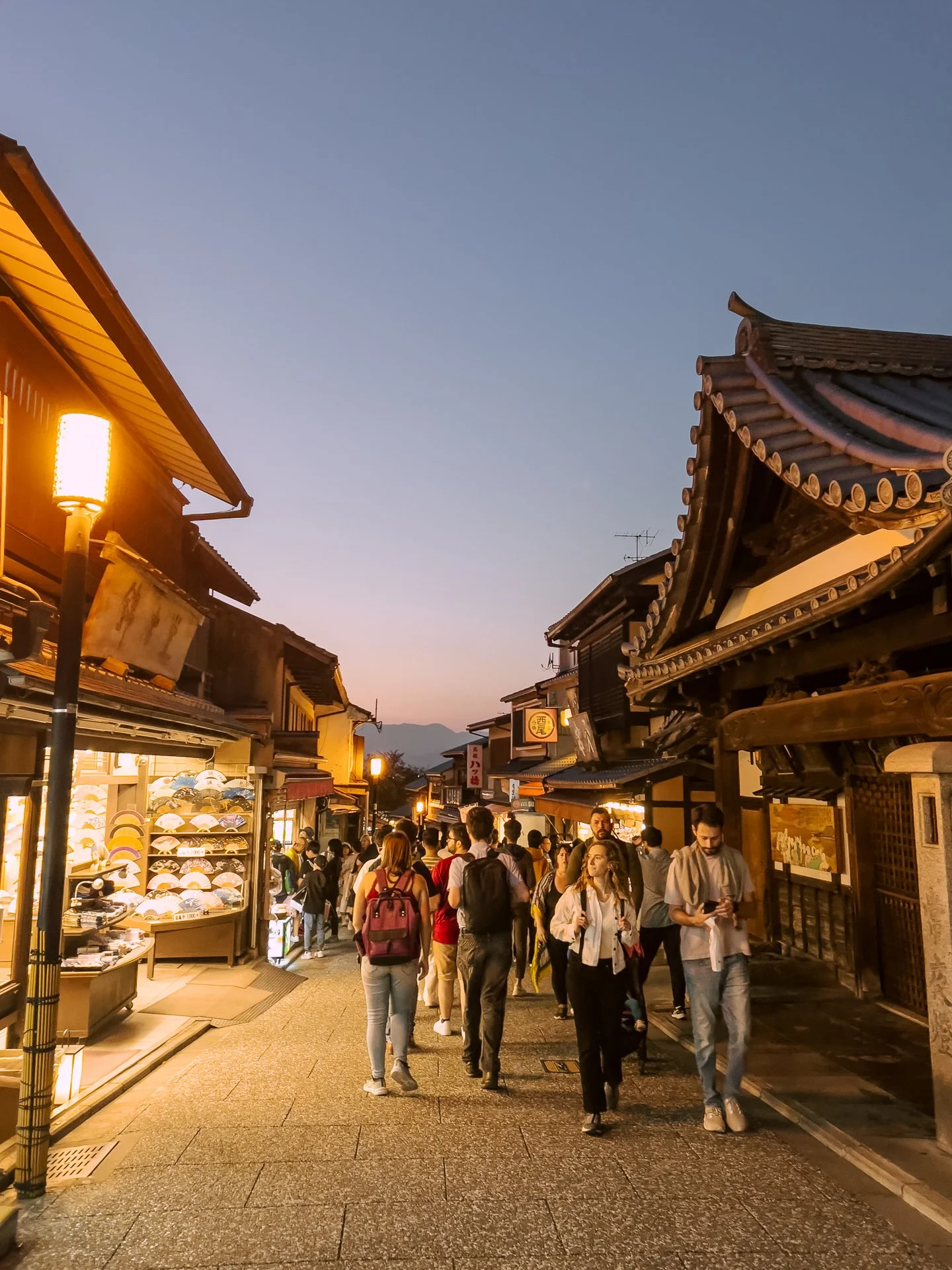
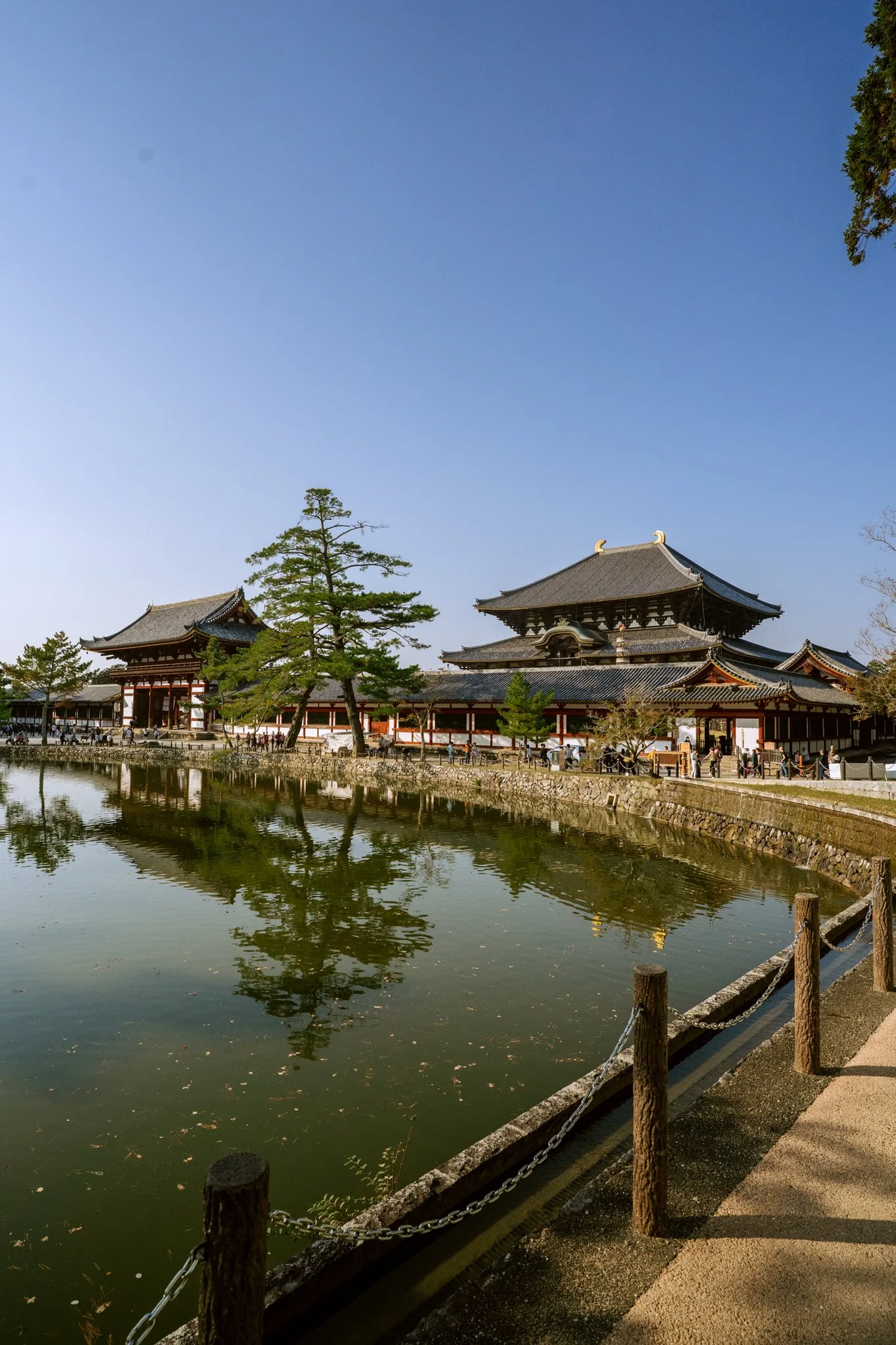
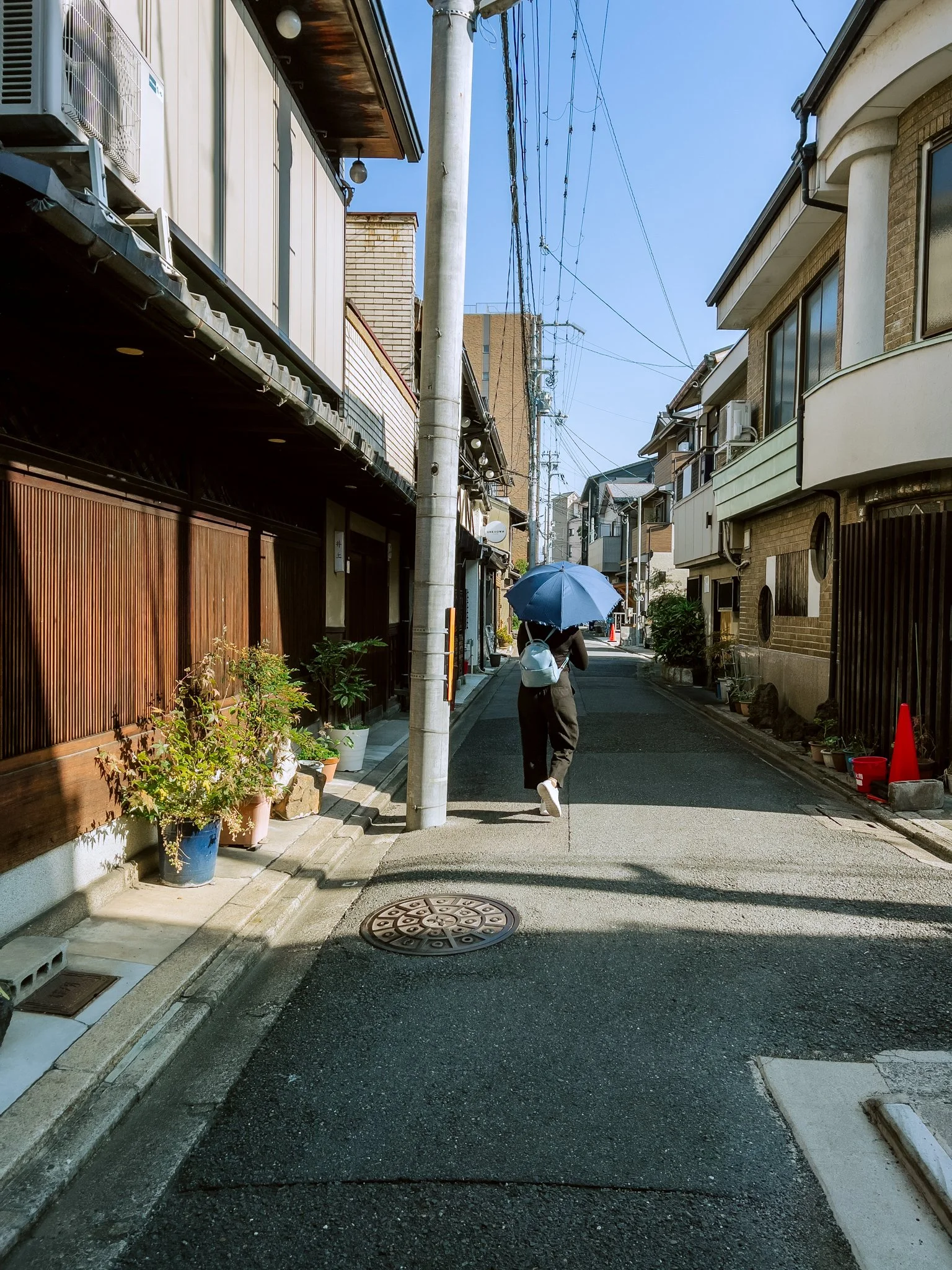
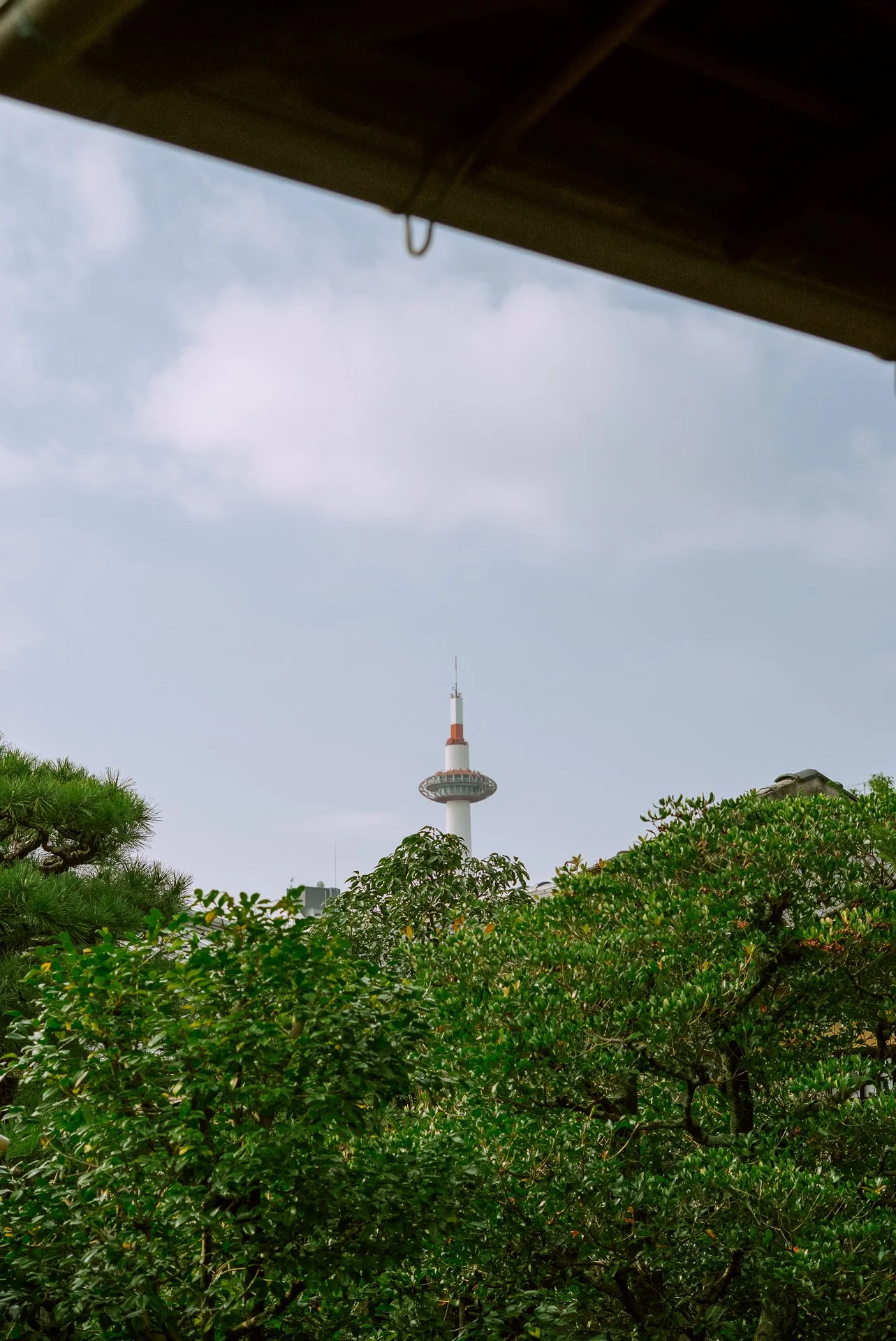
Walking in Kyoto is wild. The Kyoto Tower plays peek a boo from behind buildings - a friend in the skyline. Modern silhouettes sit amicably with grand, solemn curlicued black *hon-gawara* roofs, making you think of venerable monks sitting stoic among regular folk. The walks are punctuated with quick snack or dessert stops. Pauses to gawk at ancient architecture, to bow in front of cute little temples, stopping to check out the sweetest, most memorable stores.
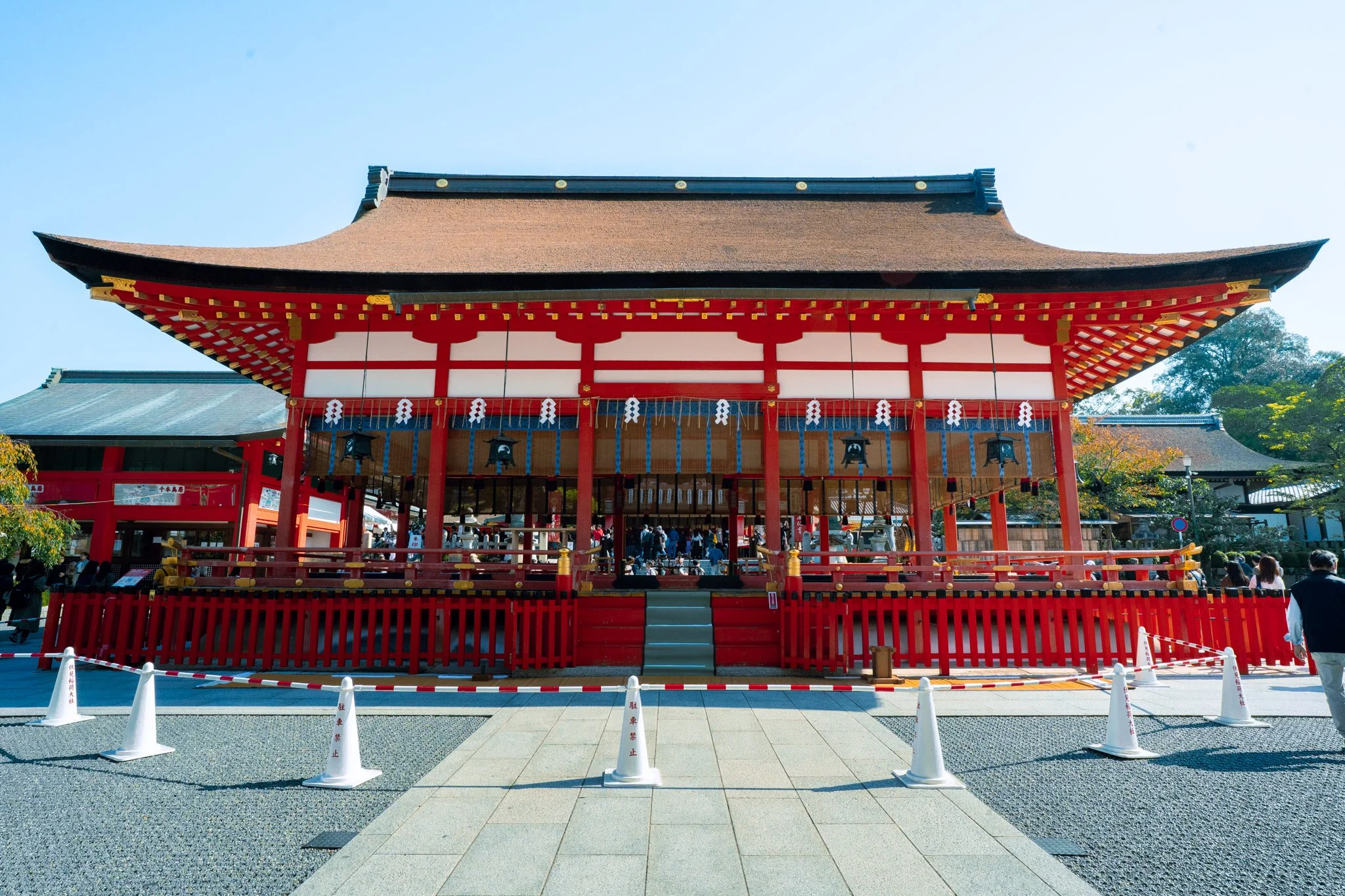
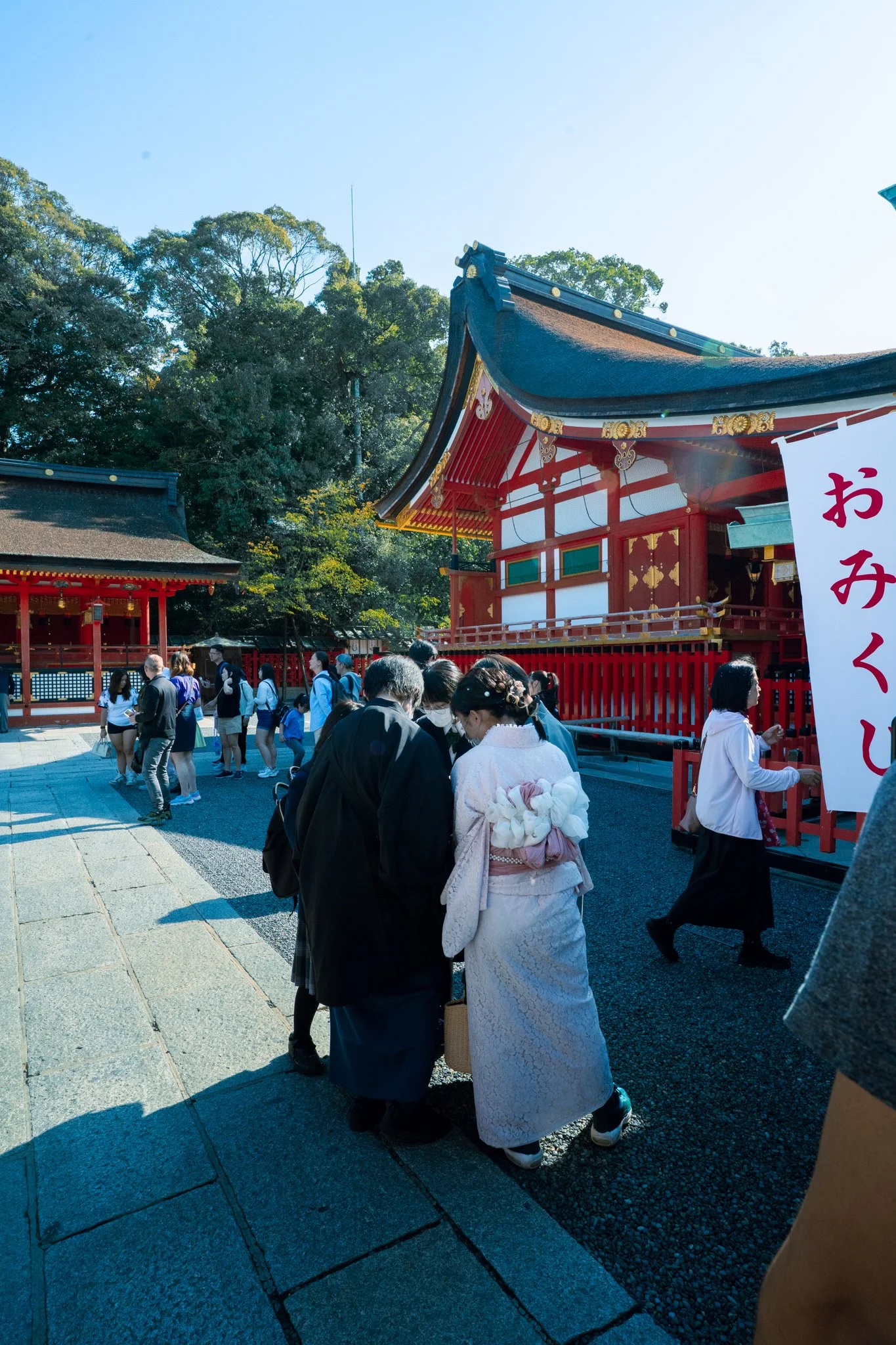
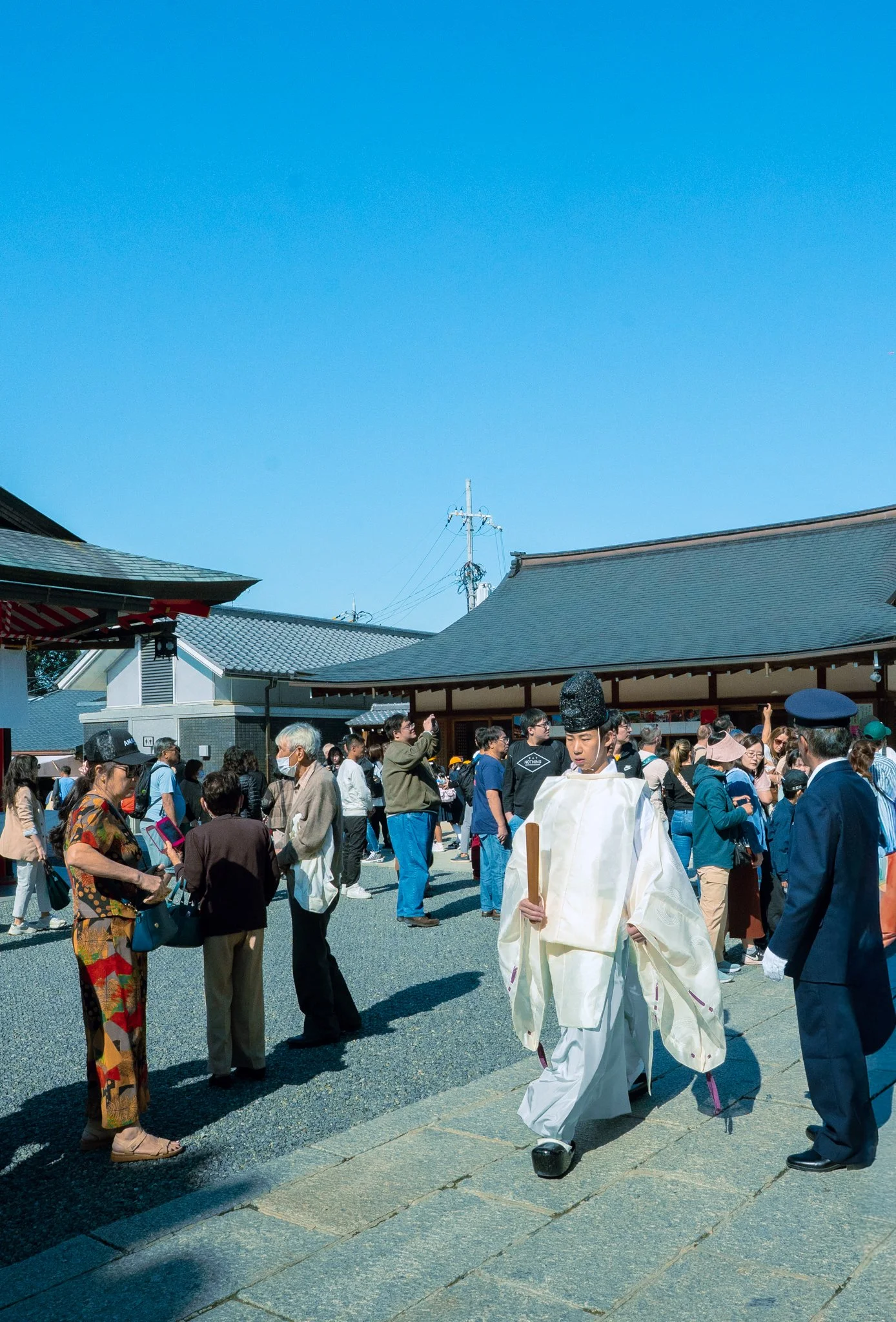
My inner traveller voice warned me that there would be crowds to reckon with. But not even my easily pessimistic inner traveller voice could have prepared me for the number of people at the Shrine. To call it a crush was a vivacious understatement. The temple grounds are especially crowded - all the tour bus crowds, the semi serious travellers, the serious travellers and the worshippers make for an intense situation. I had to really admire the priests and the worshippers who went about their solemn business of prayer in this veritable circus. Tourists quiet crowds do not make. The priests with their white robes and zen faces, created a small island of serenity amongst all the mayhem.
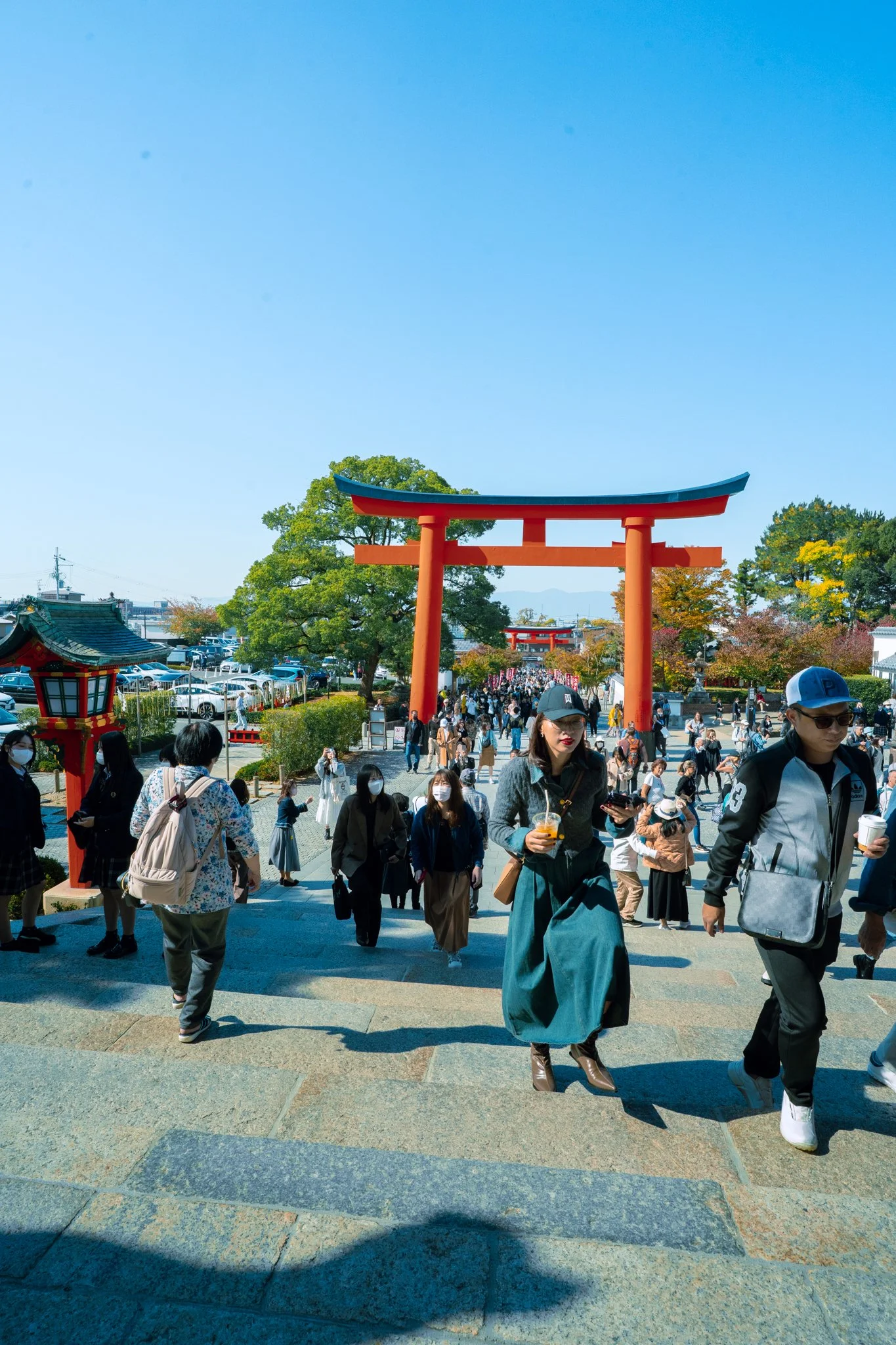
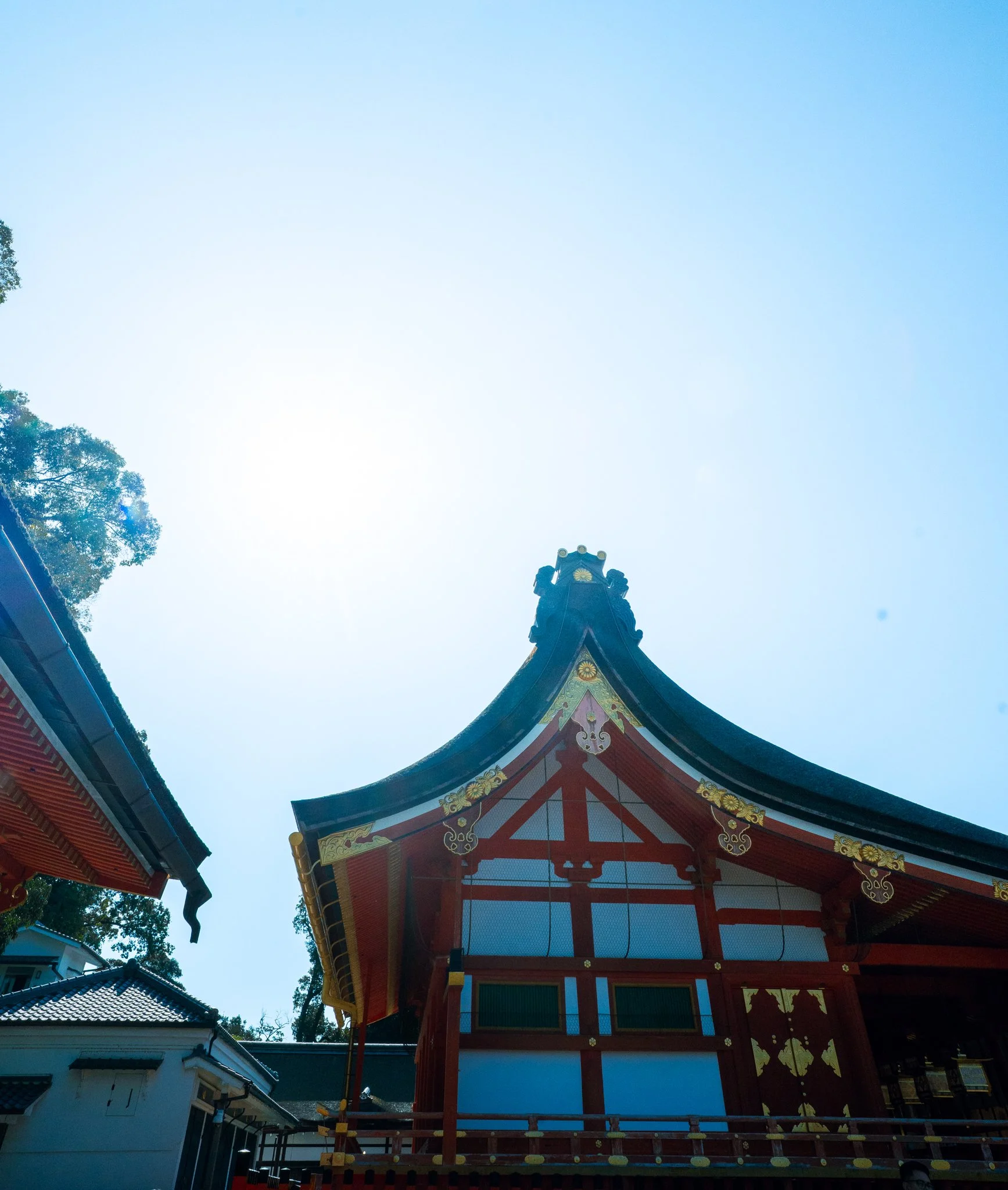
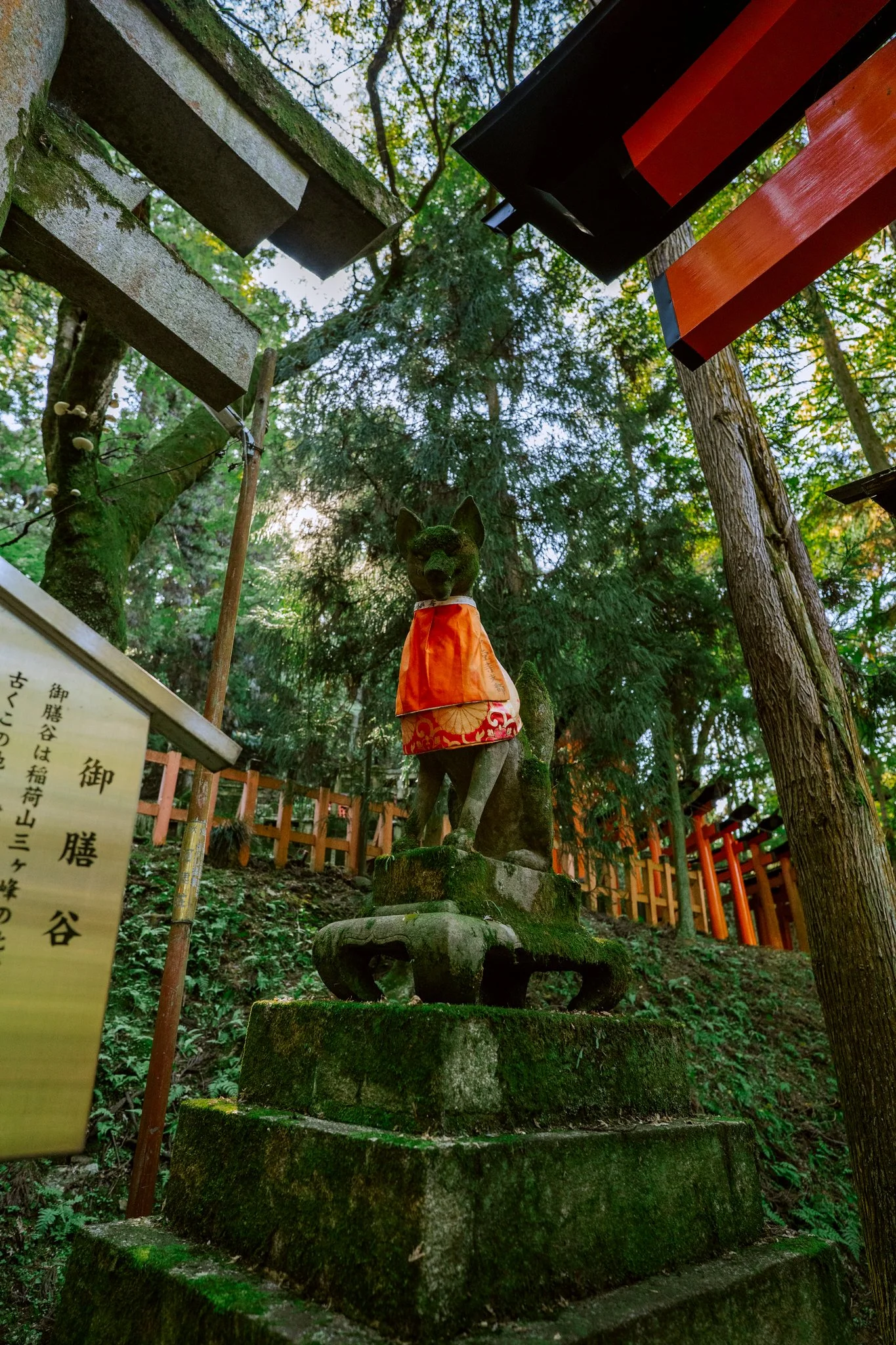
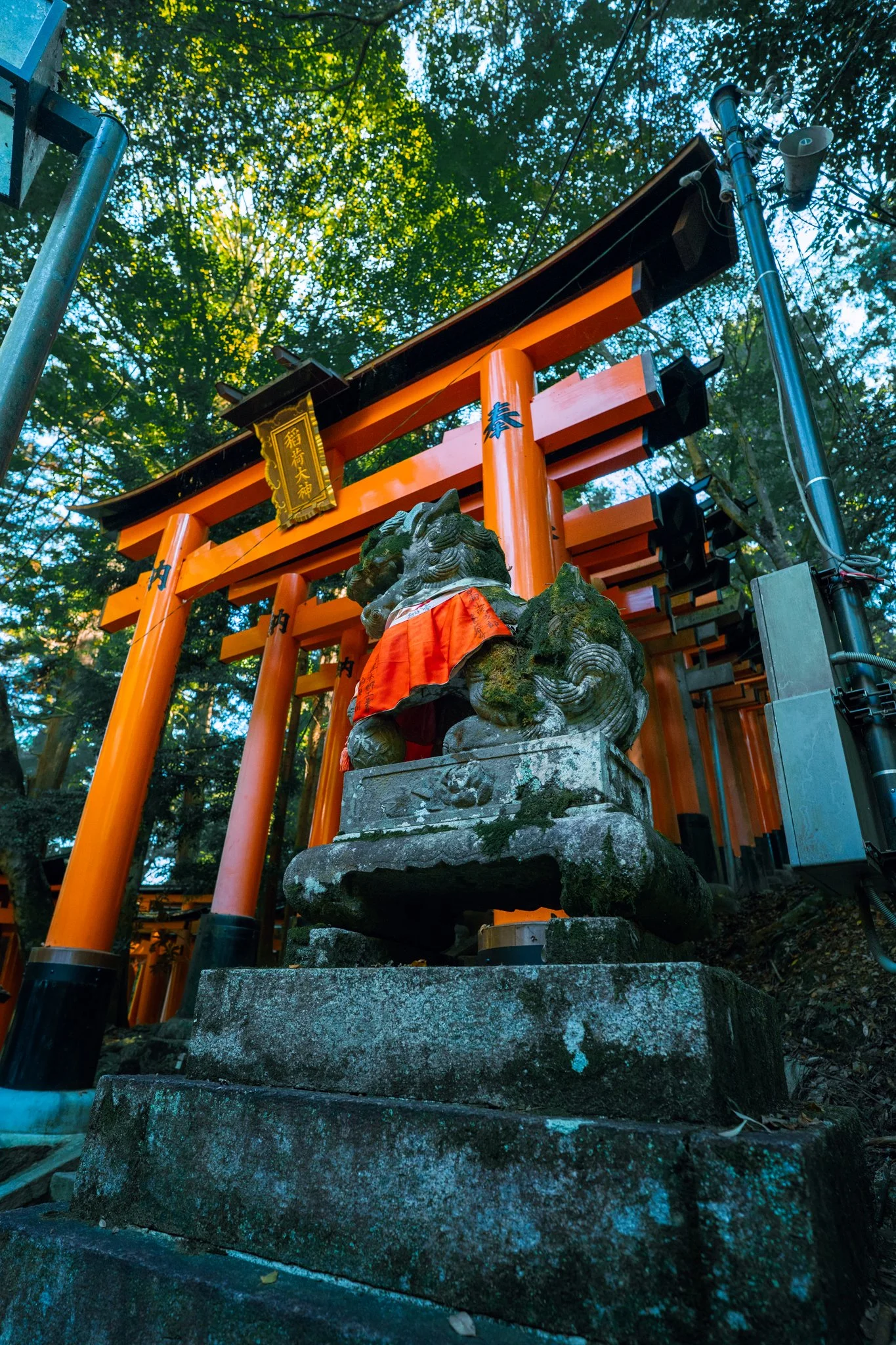
The temple gates are flanked by two kitsunes or magical foxes. They are believed to be messengers of the deity Inari. The statues sport a little red bib, making them instantly endearing. The origins of the shrine date back to the year 711 and the sheer awesomeness of the torii gates, all 10,000 (approximately) of them, vouch for an antiquity, a quasi-permanence. It speaks of an oldness that endures; a faith that can’t be shaken by the forces of time or flippant tourists.
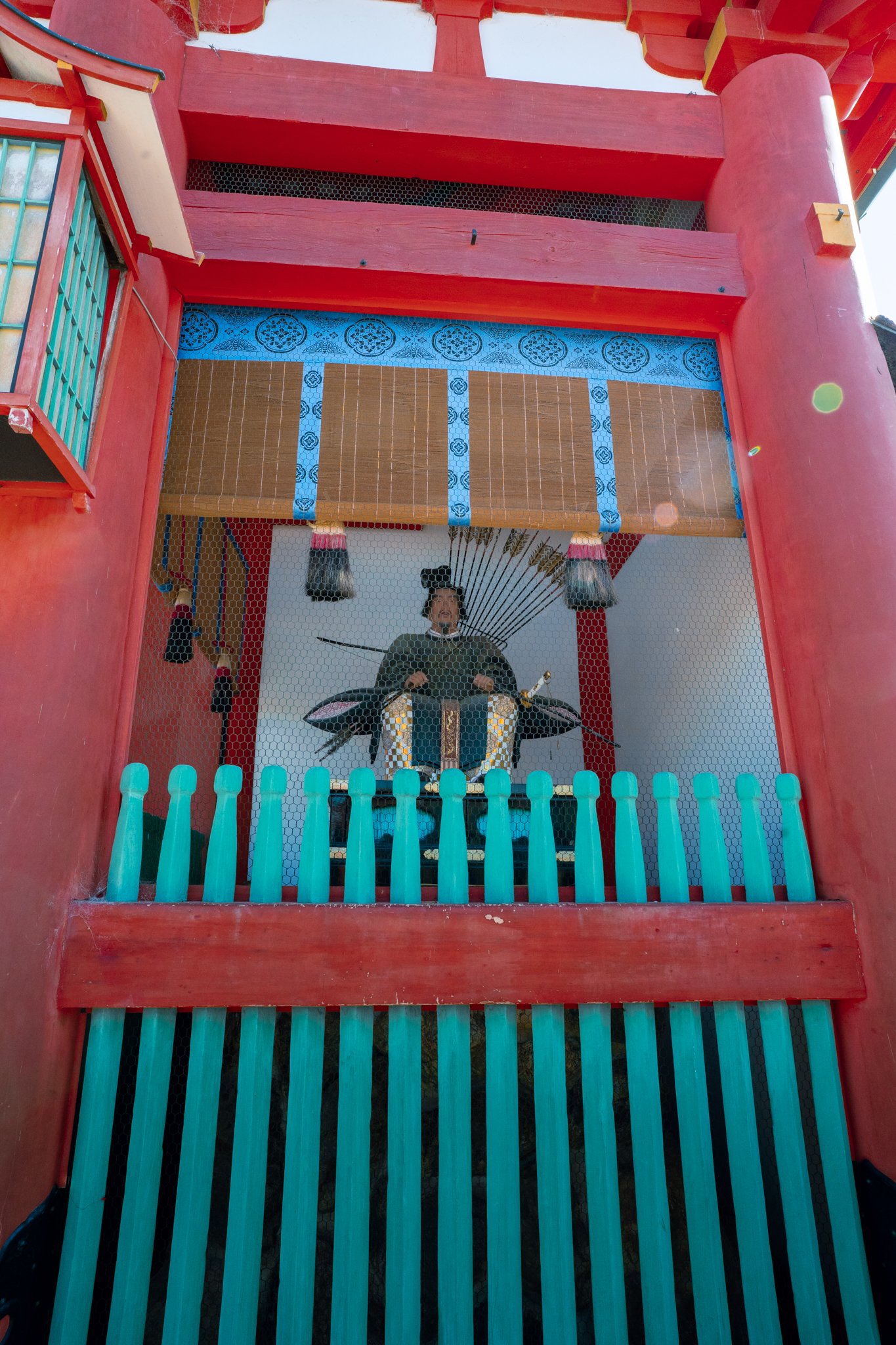
The story goes that an ancestor of the Hata clan was in the habit of practising his marksmanship skills with mochis., those soft round delectable rice cake, Why he would choose to use these delicious little things for anything but popping into his mouth, is beyond simple humans like me. But then again, I’m no archer. One of the arrows that pierced a mochi, turned into a swan and flew to the top of the mountain and lo, behold a magical and bountiful crop of rice began to grow. Now, in retrospect, the zushin or the protective spirits at the gates being archers instead of the usual muscley almost-god-mostly-demon beings I had gotten accustomed to seeing in other temple gates began to make sense. They looked a little too human in comparison to be god’s bouncers - but now with the transmogrifying arrows and all - the archer guardians made perfect sense. Inari Okami, the Shinto god of rice, prosperity and fertility claimed the mount Inari as their own. Inari shape shifts in depiction - sometimes an old man, sometimes a maiden and sometimes a white fox. Everyone’s confused about the binary-noxnbinary-identifies as whatever movement when the gods have been doing it since the beginning of time. Eyeroll.
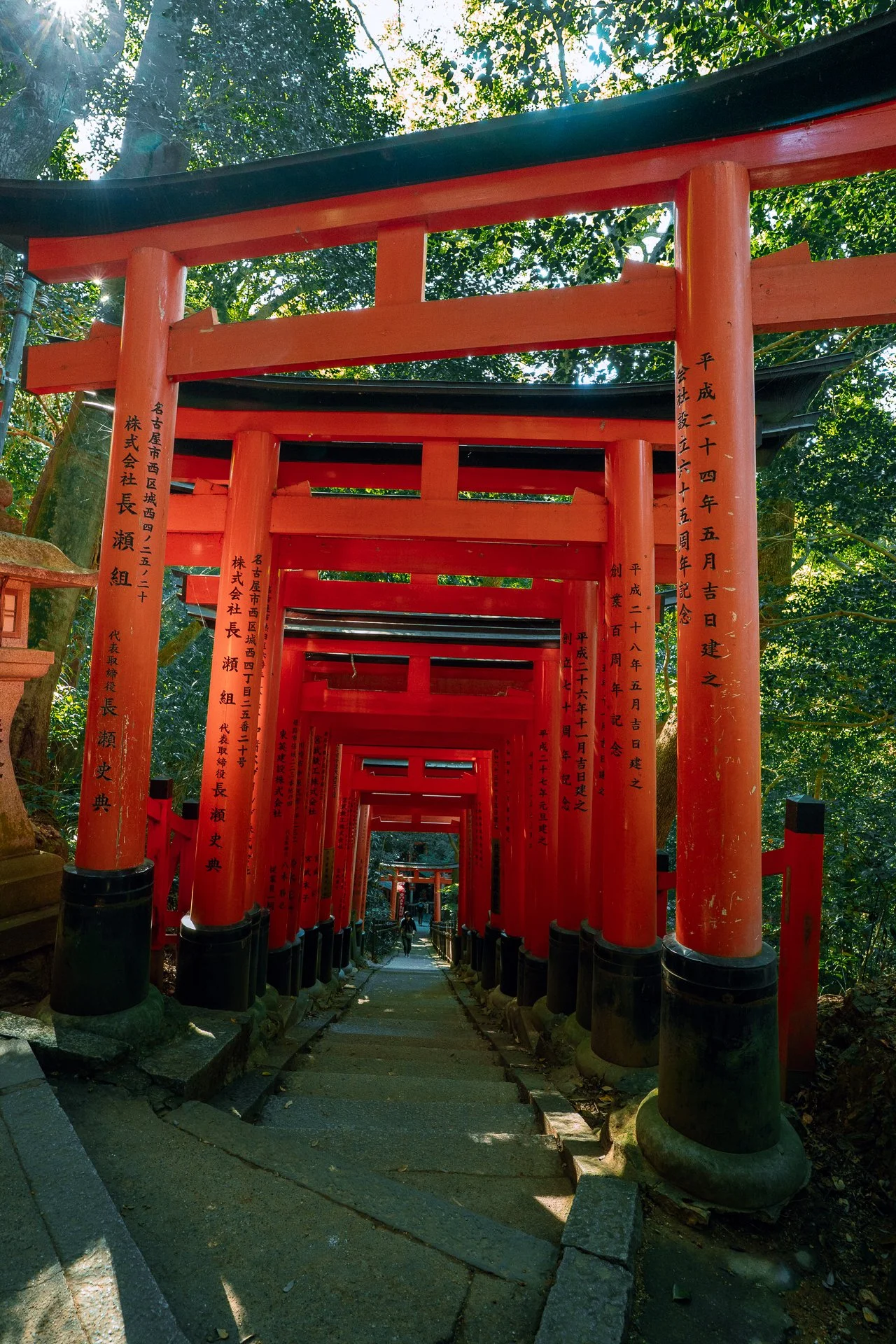
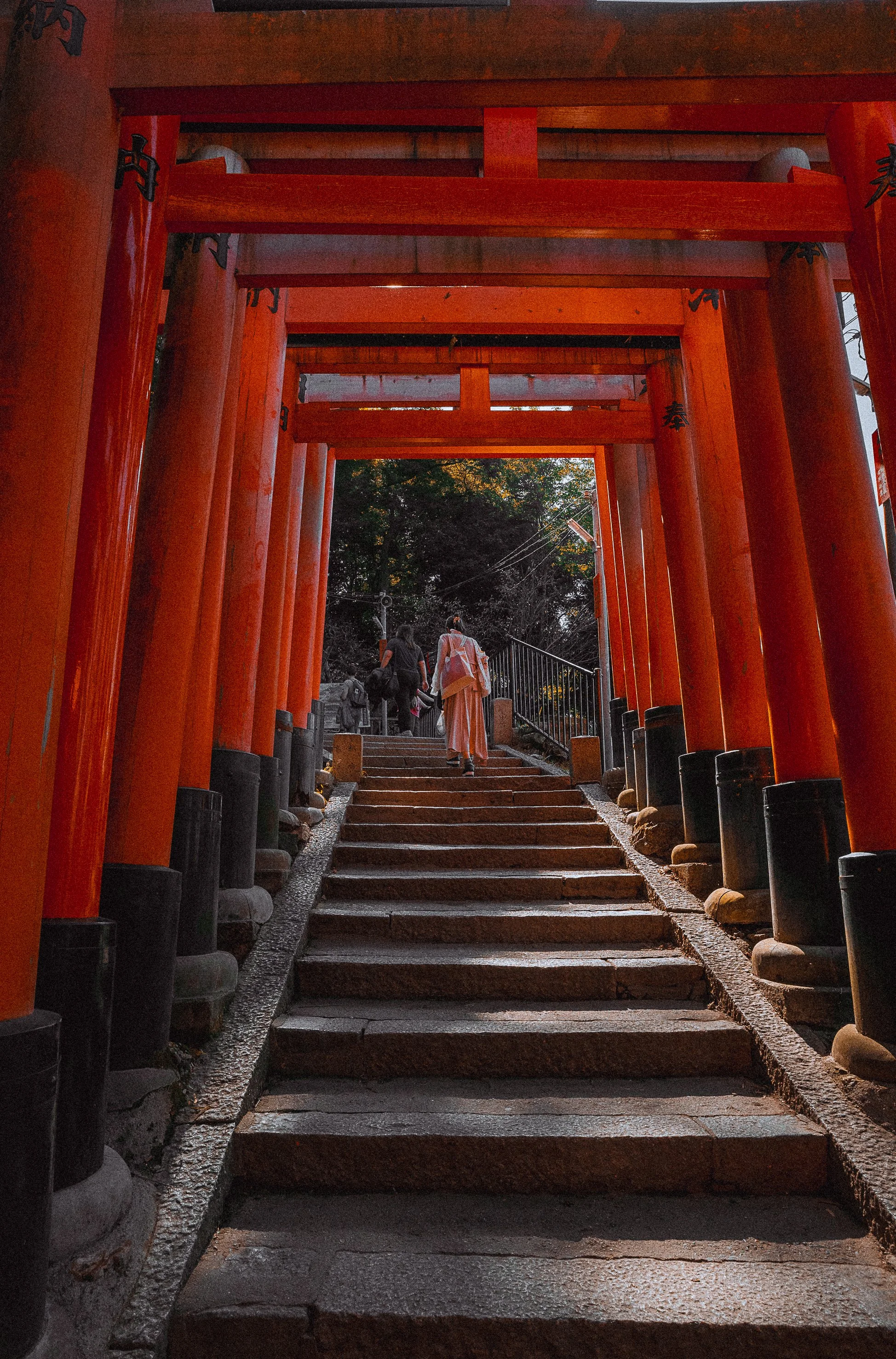
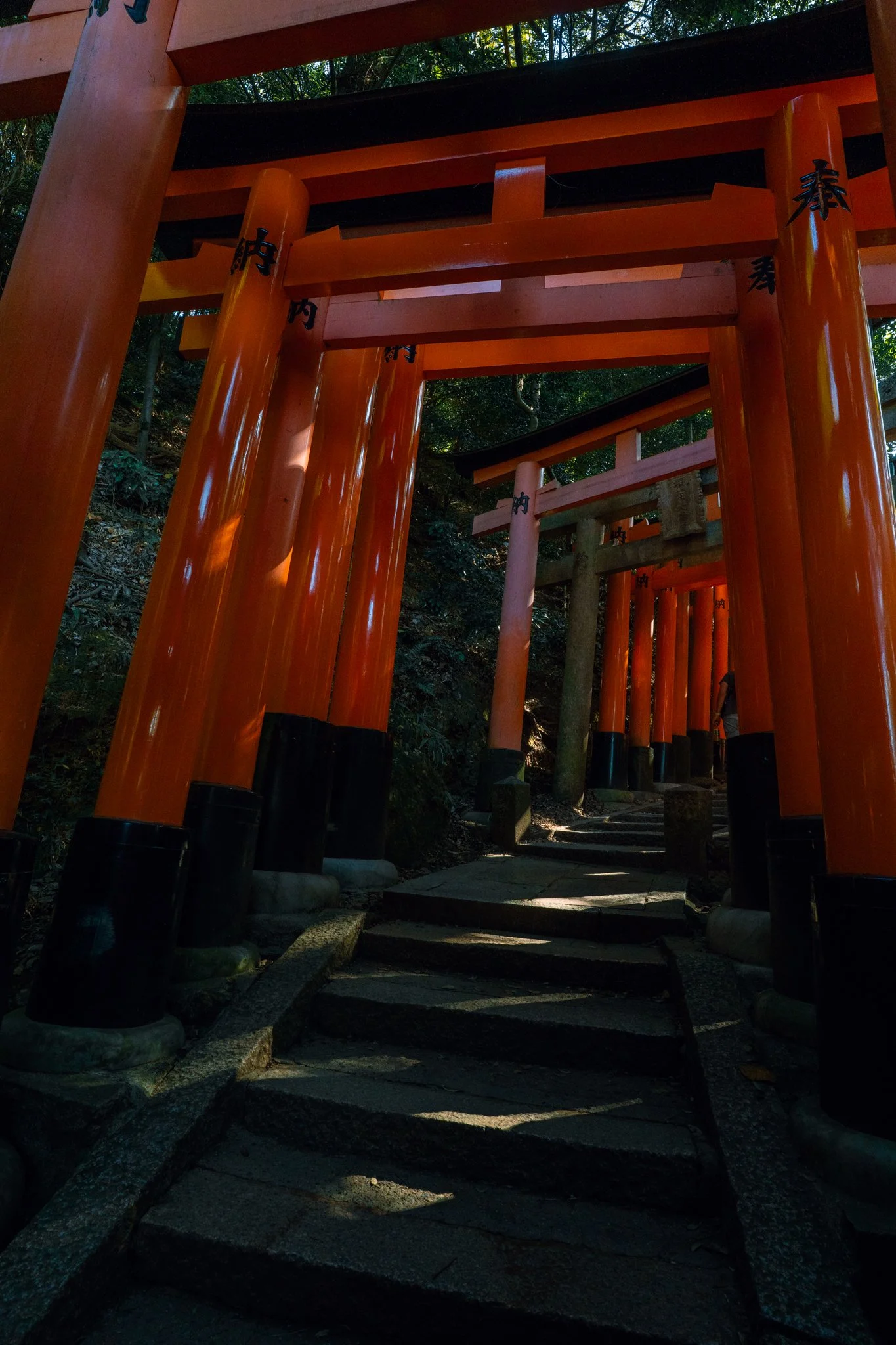
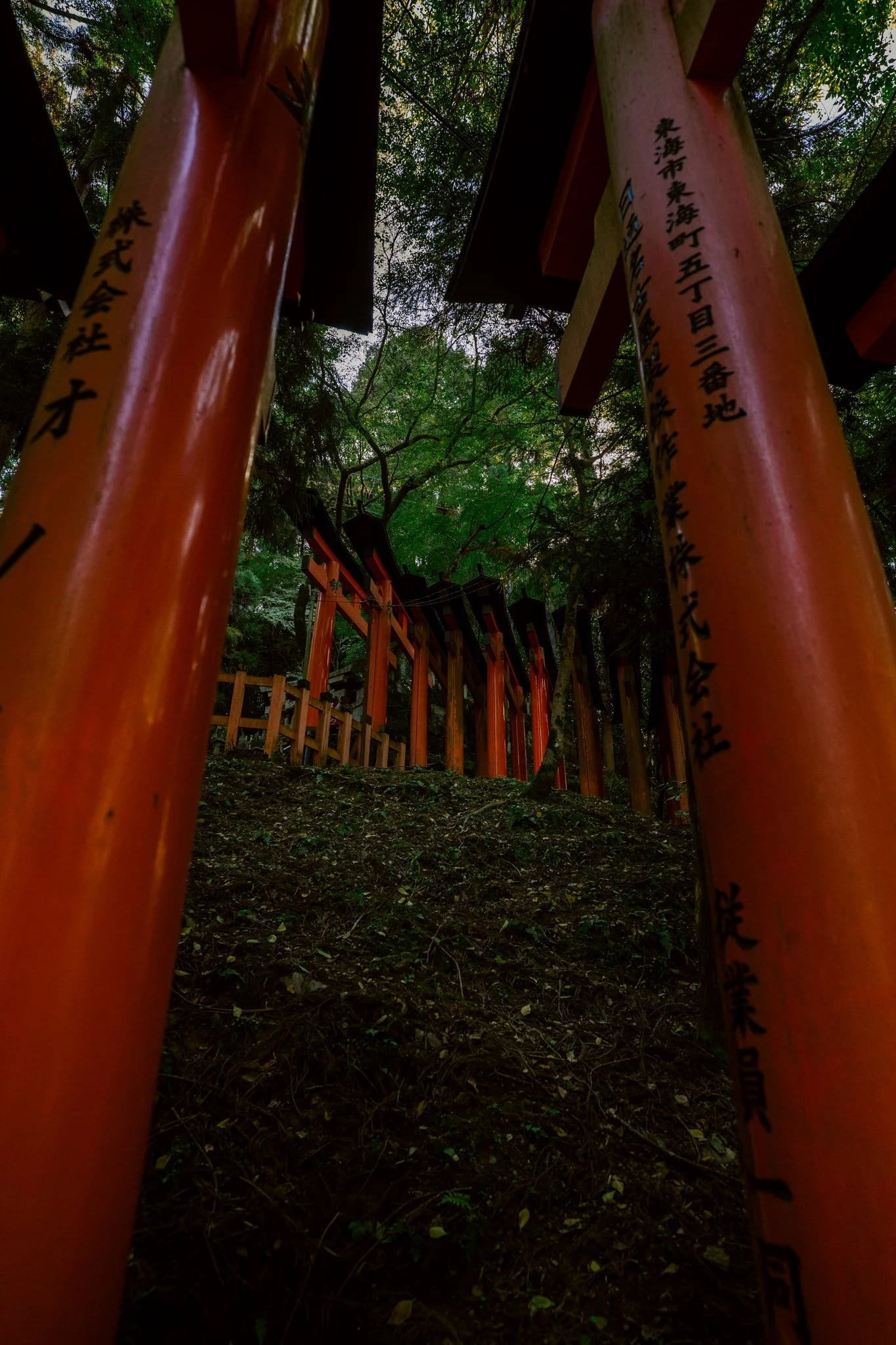
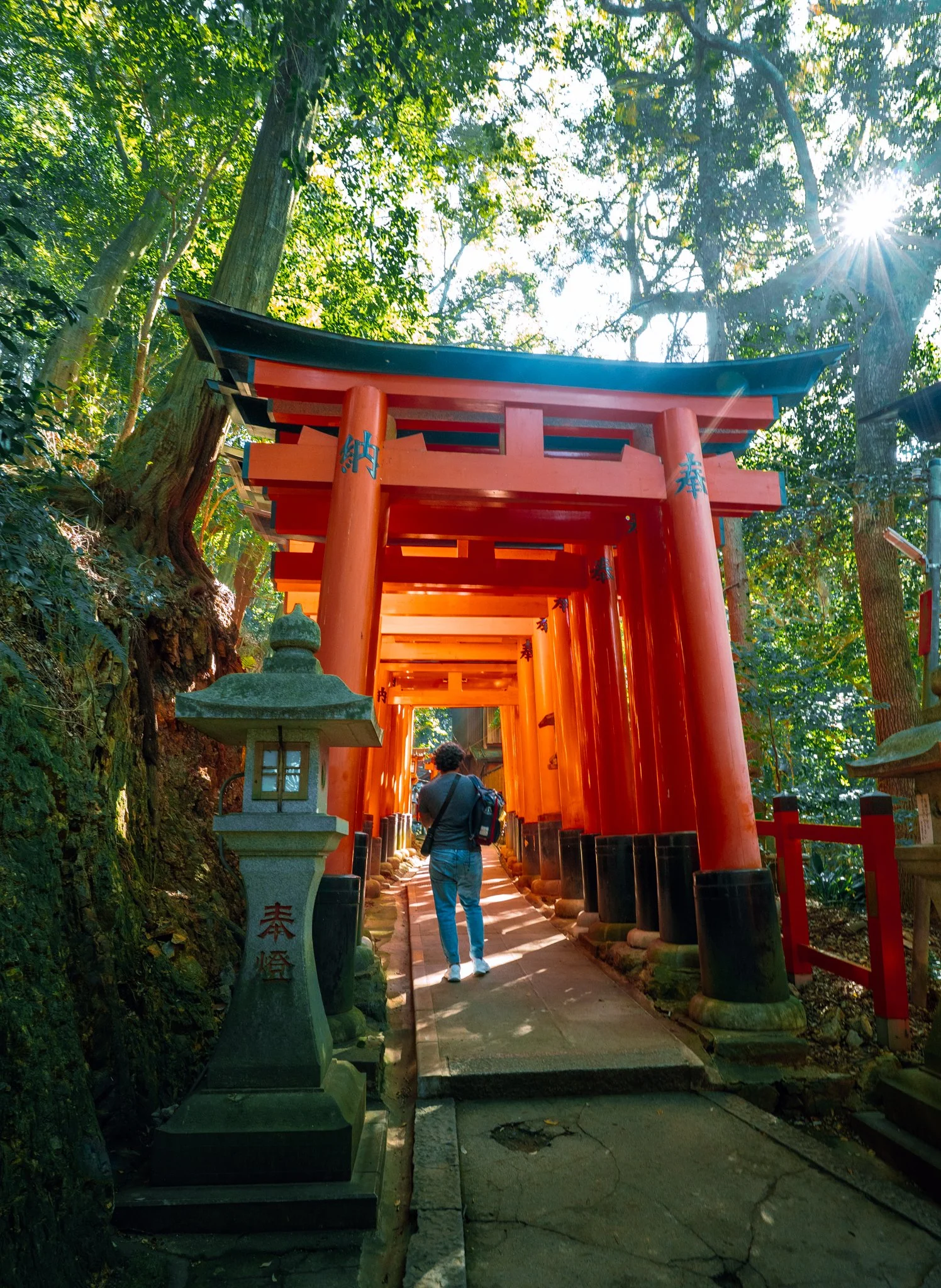
The first twenty minutes of walking through the torii gate passage is jostling around with tourists, all intent of getting that perfect photograph on their phones. At 5 ft 2 inches, it felt like I was in a dense forest of humans and raised mobile phones. Some minutes of ambling later, there is a distinct thinning. The forest is not quite dense. And before you know it, it’s a garden at best. Not everyone is okay with dedicating half a day to one spot on the Kyoto bucket list. The climb takes 2 to 3 hours, and then there is the climb down. Once the petering out happens, the experience takes over. One that tests your knees a little and your commitment a lot. But it’s so worth it. The massive torii gates become real, you marvel that someone, many someones, put them there. You commune with the love, devotion and the enormous effort that it took to make this edifice of worship. The cracks in the vermillion make them real - it’s easy to get lost in the abstract of it all, the holy kami-ness of it all, the impassive beyondness of it all. Less mystic and more visceral.
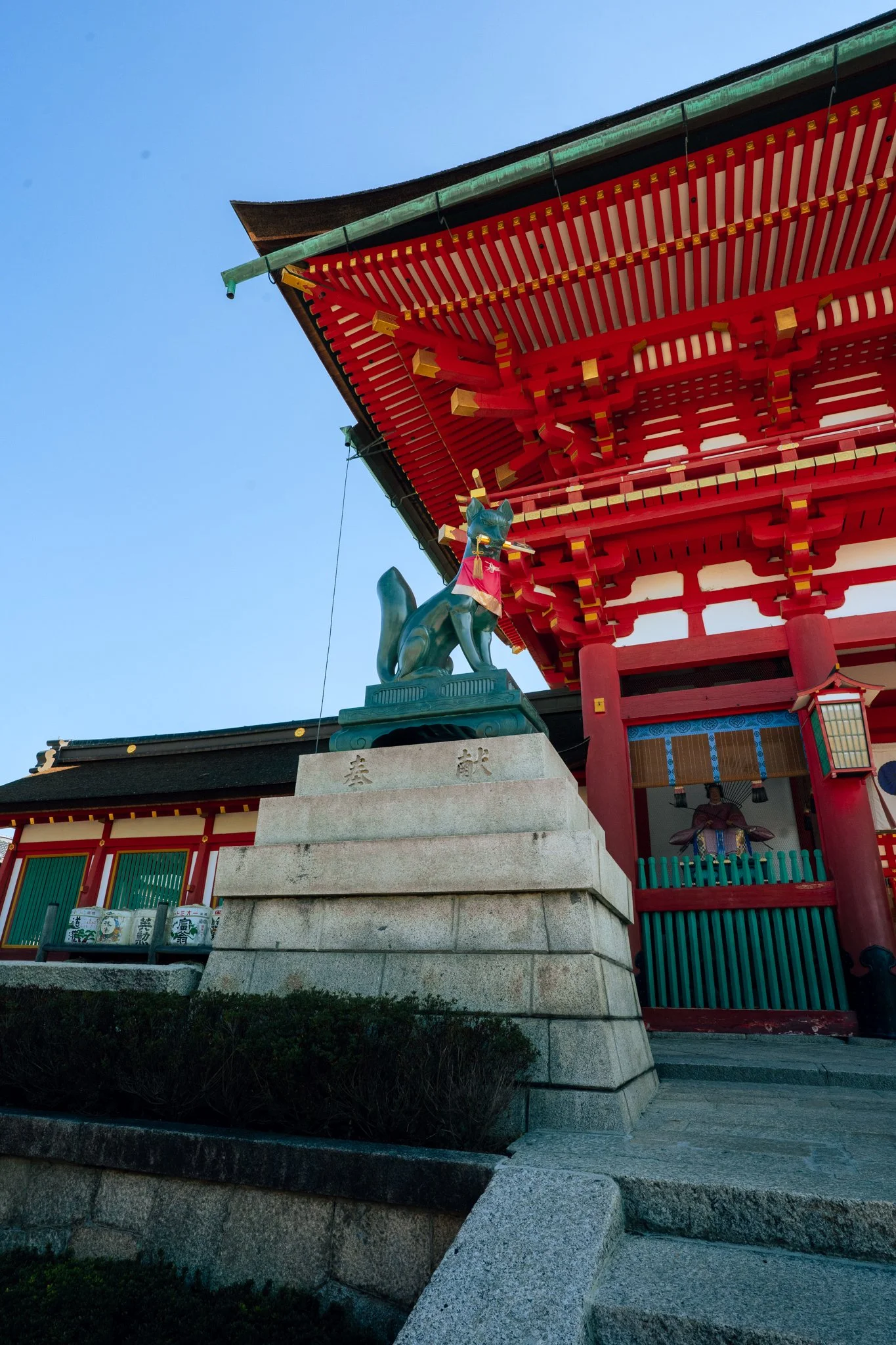
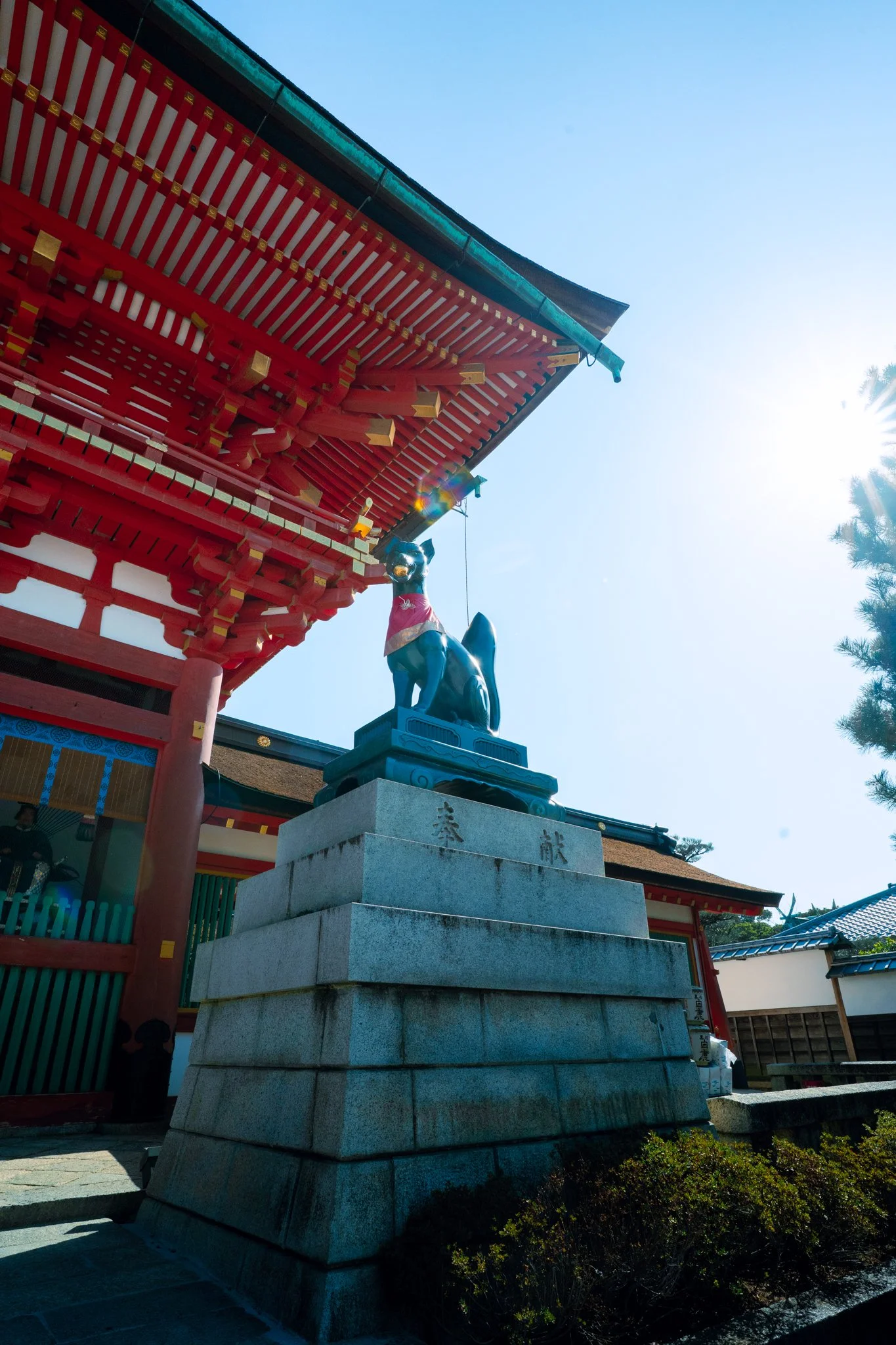
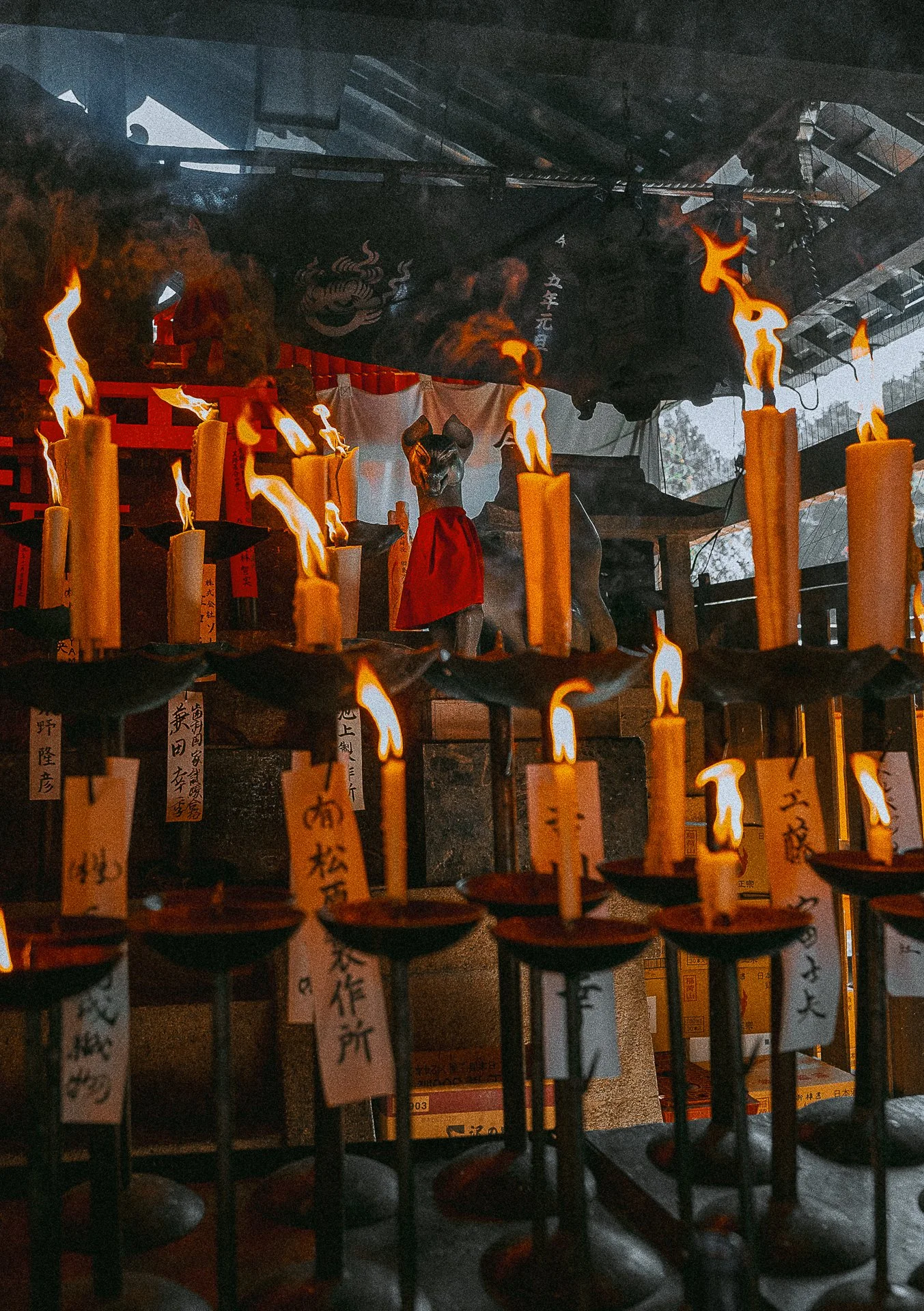
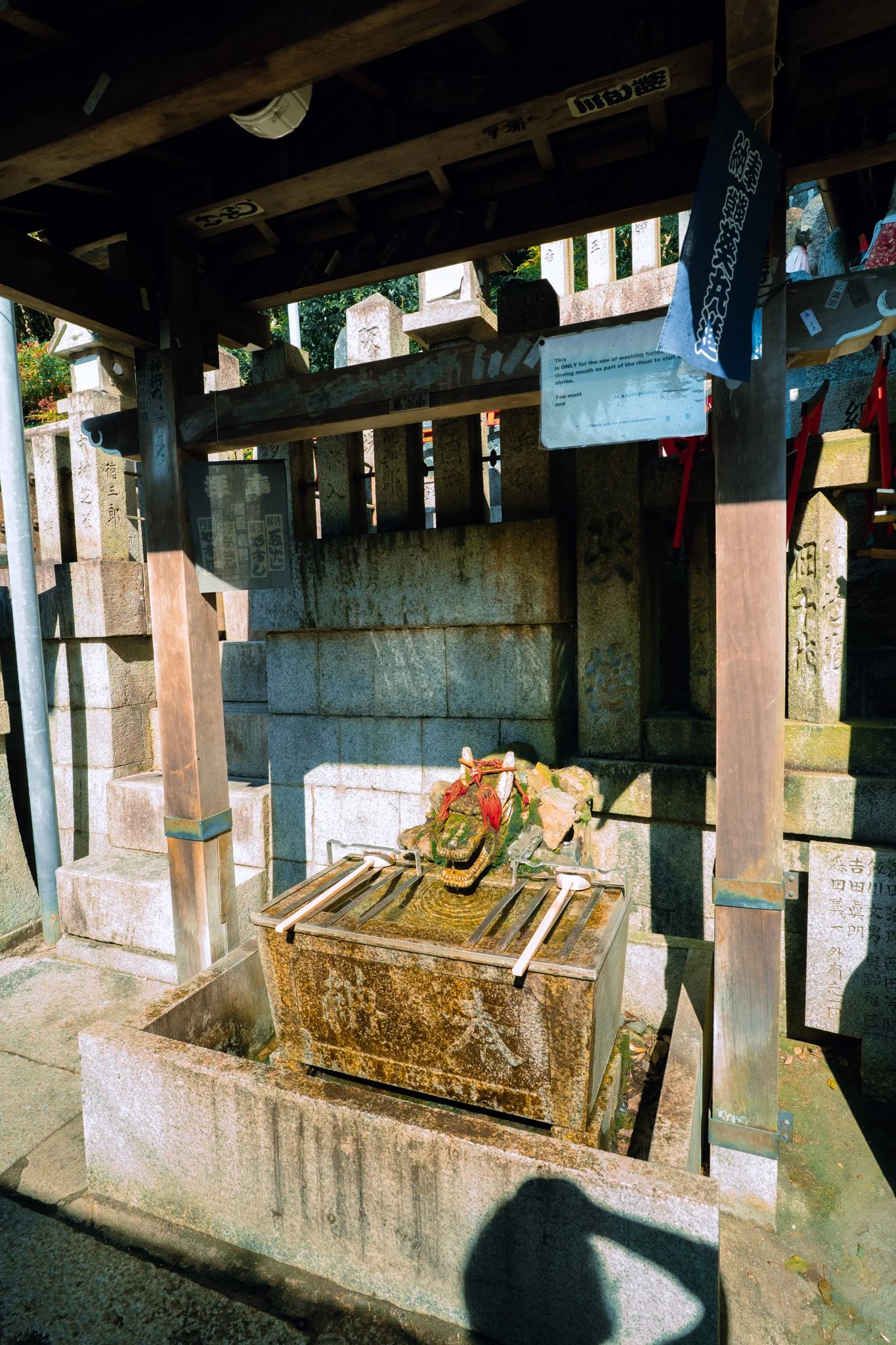
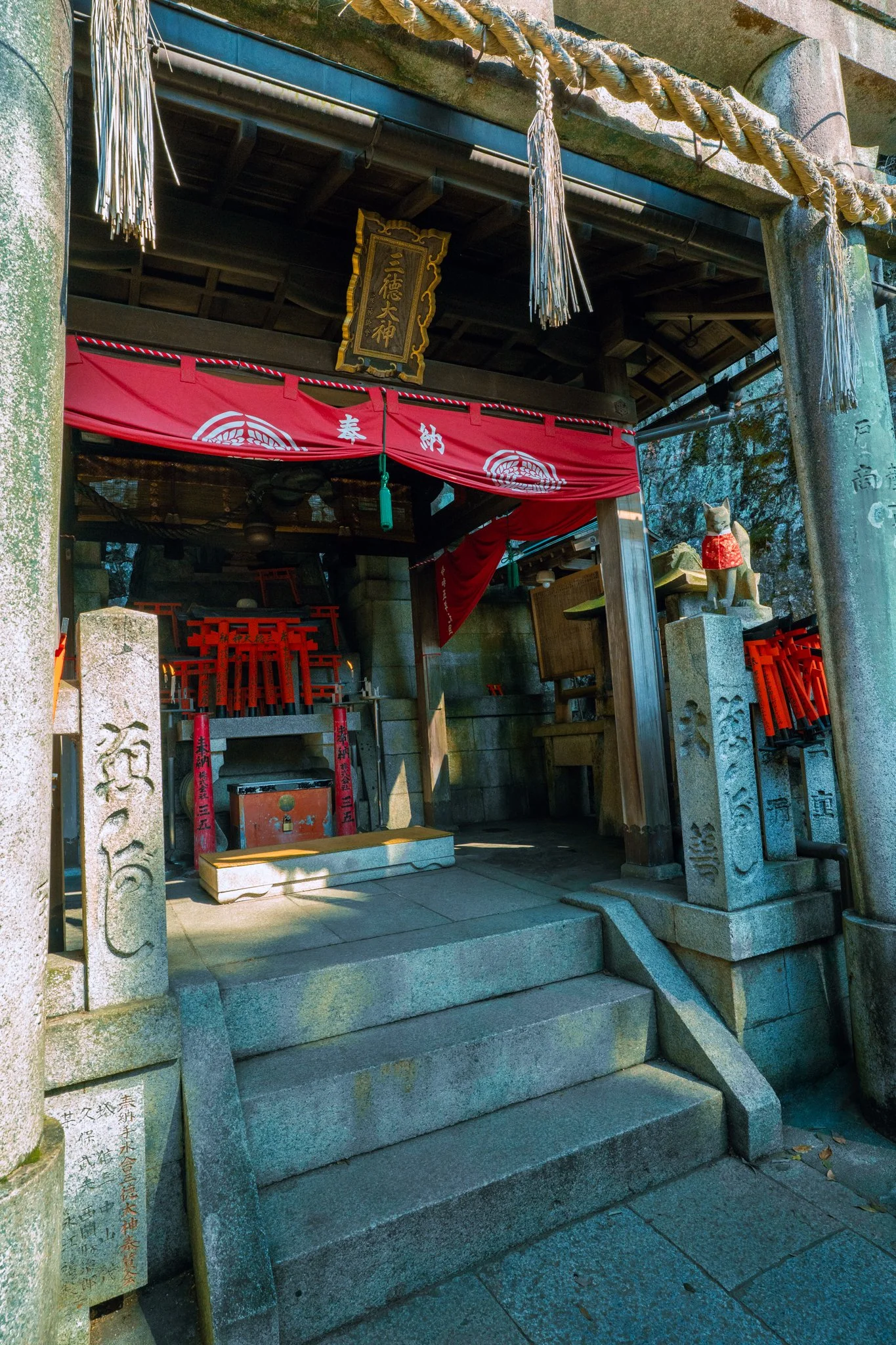
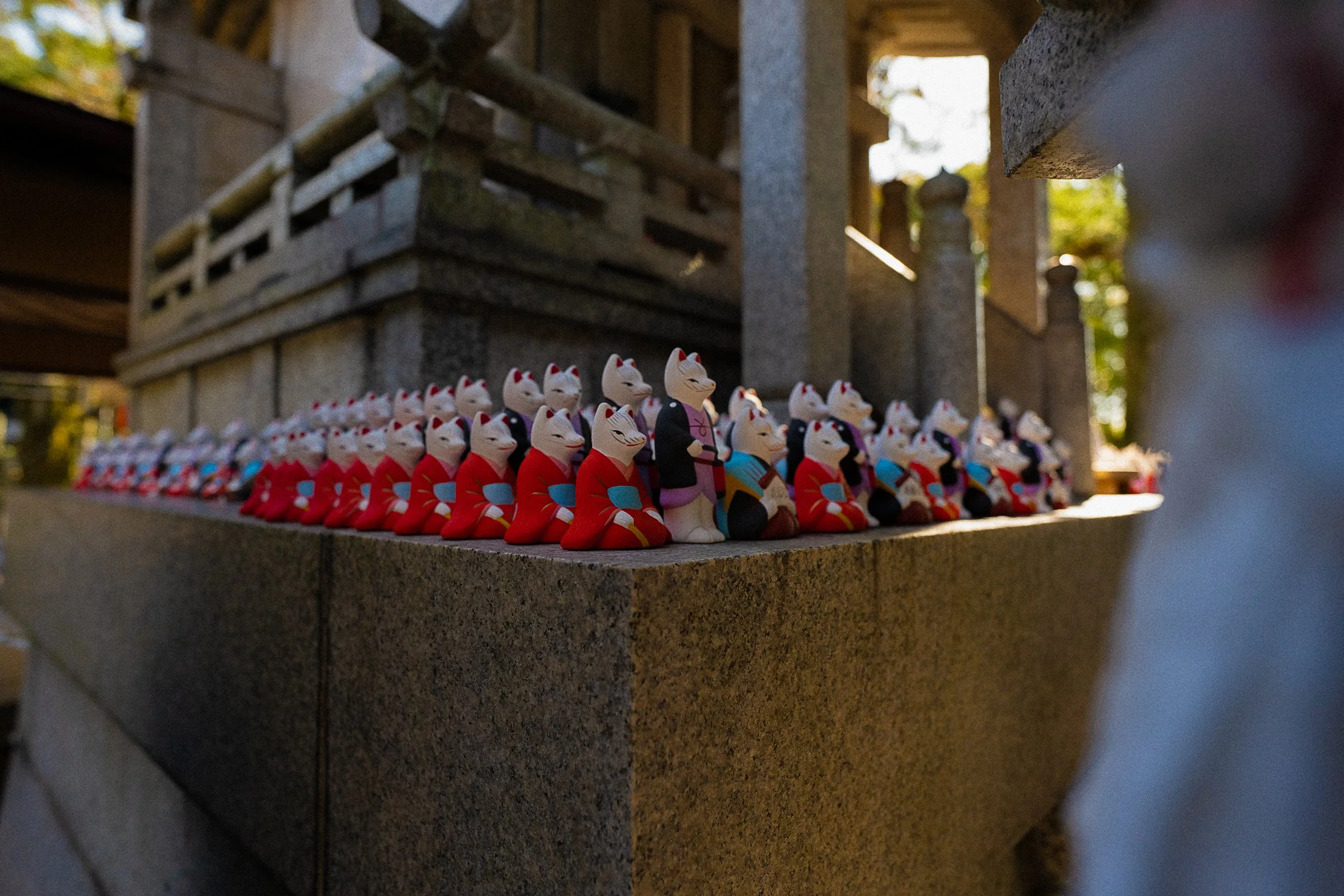
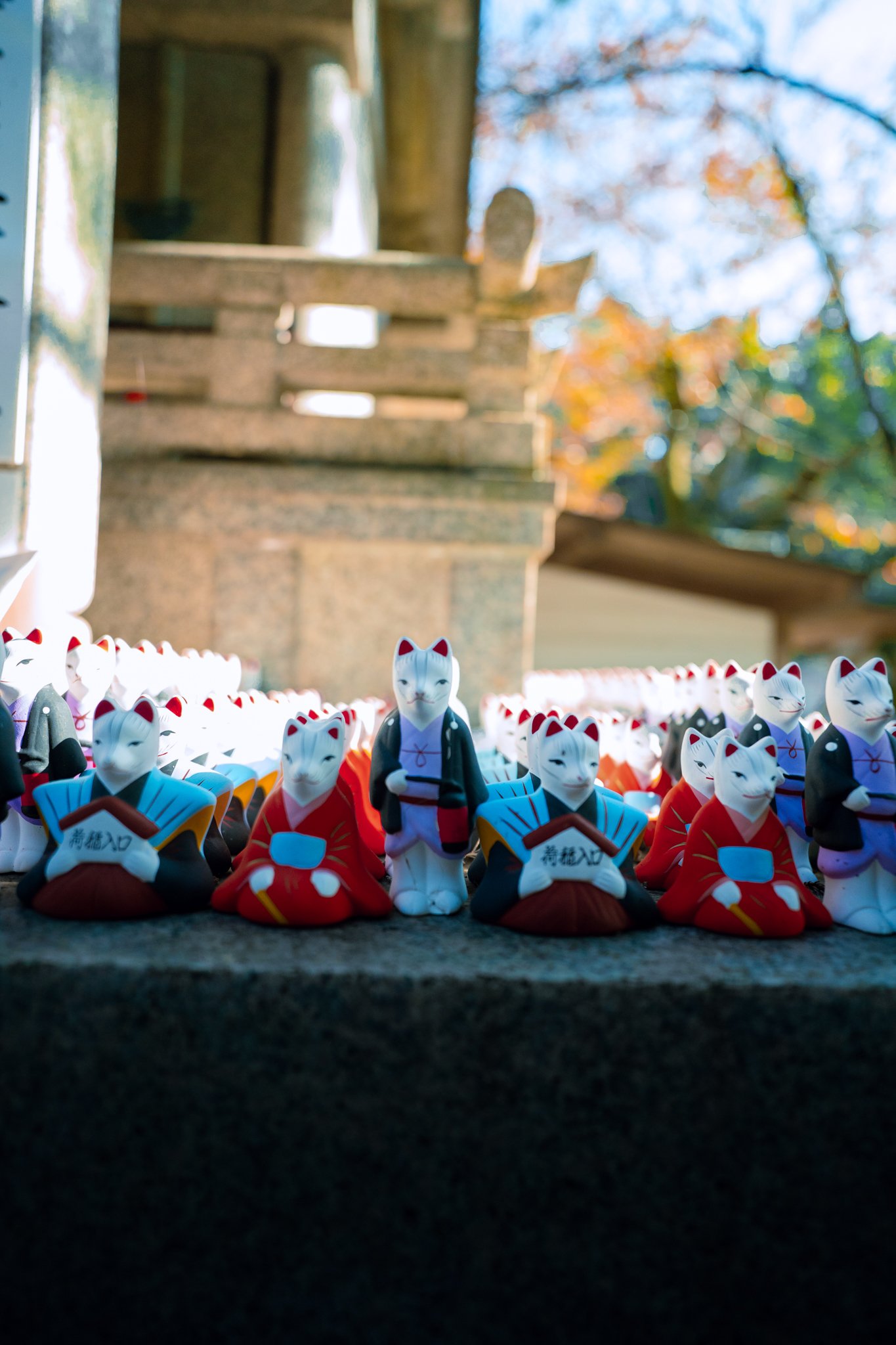
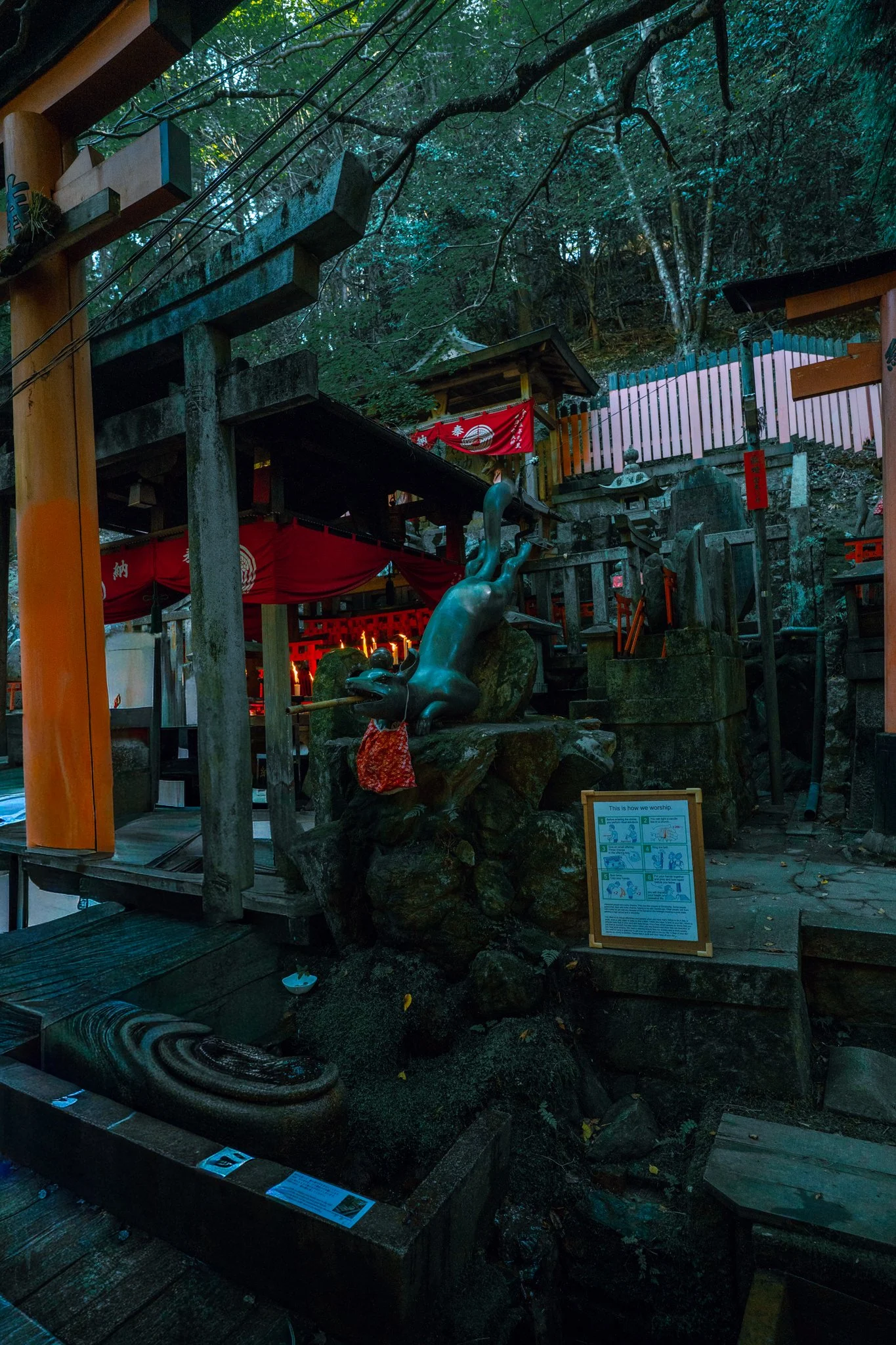
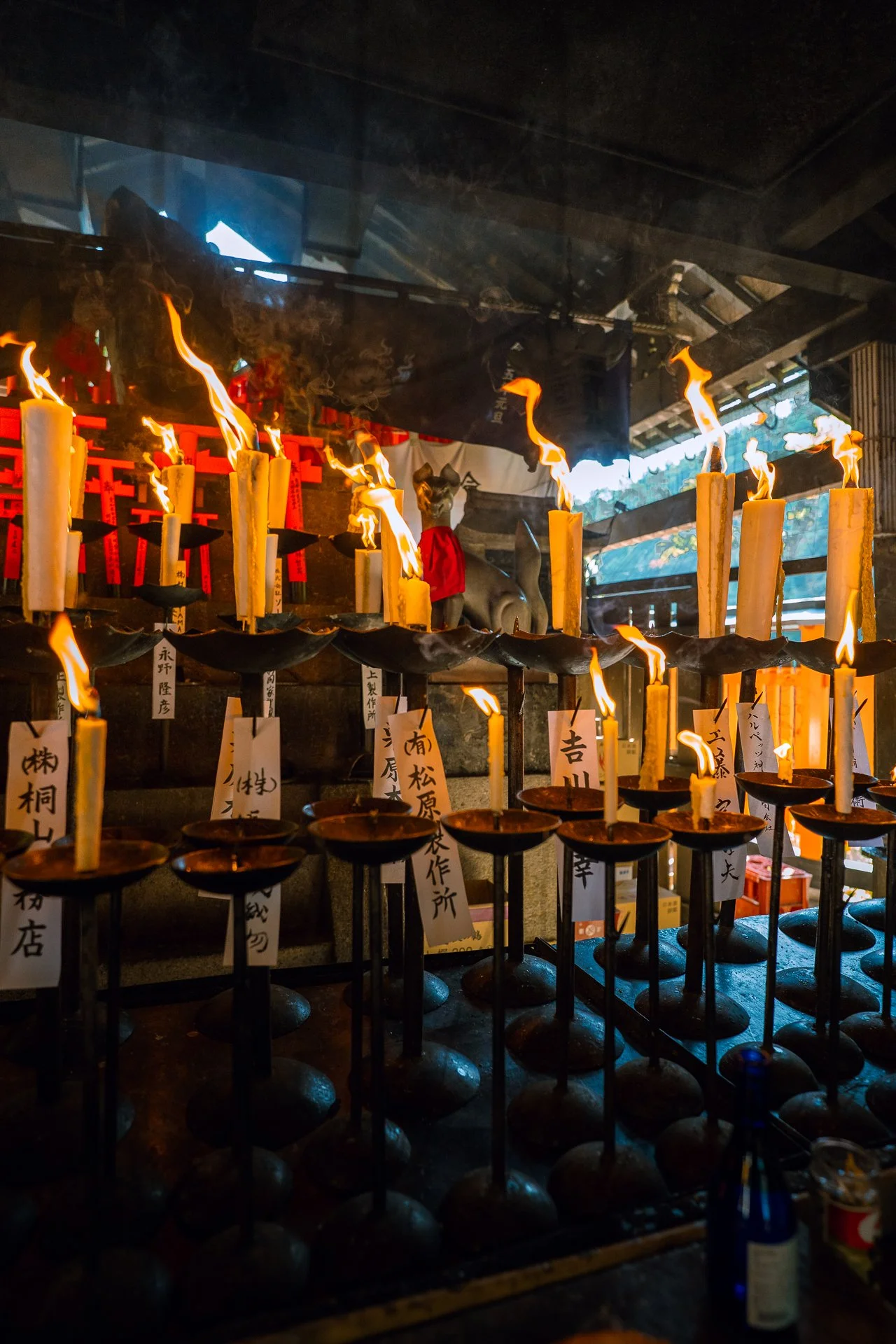
Just above where the crowd reduces to a smattering, as if by design, is a kitsune shrine. The candles are otherworldly fox-tails of flame, an aura of mystery and formidability wraps the space - as if testing one’s worthiness. The kitsune on the altar is almost snarling - but in fact it is holding what looks like a gem. These messengers carry different things in their mouth that represent various blessings. A sheaf of rice (bountiful harvest), a scroll (wisdom and learning), a key (prosperity, wealth and fortune), or a gem (integrity as the messenger of god). And of course, this particular one with the gem in its mouth is ‘means business’ kitsune, Fun fact, fried tofu is called Kitsune because it’s believed that they love fried tofu. We began to wonder what was up with these kitsunes being little fashion plates with their dressy red cravats. All of them sported one. Red in Japanese cultures stands for protection, well-being and good fortune, And these bibs are talismans against evil and disease. Some of these bibs are offerings made for safe pregnancies, for prayers answered and such. In other temples, there are more human-like figures wearing these red bibs. This practice has a darker and sadder story. The Jizo statue represents a protective deity that ensure safe passage to travellers and children. Parents who lost children tied bibs they had sown or made by hand, or maybe even belonged to the child, in the hope that the Jizo would find the child in limbo and ensure its safe passage into the afterlife. Though the kitsune is a shinto deity and Jizo is a Buddhist deity, the red bib is just the beginning of many overlapping practices.
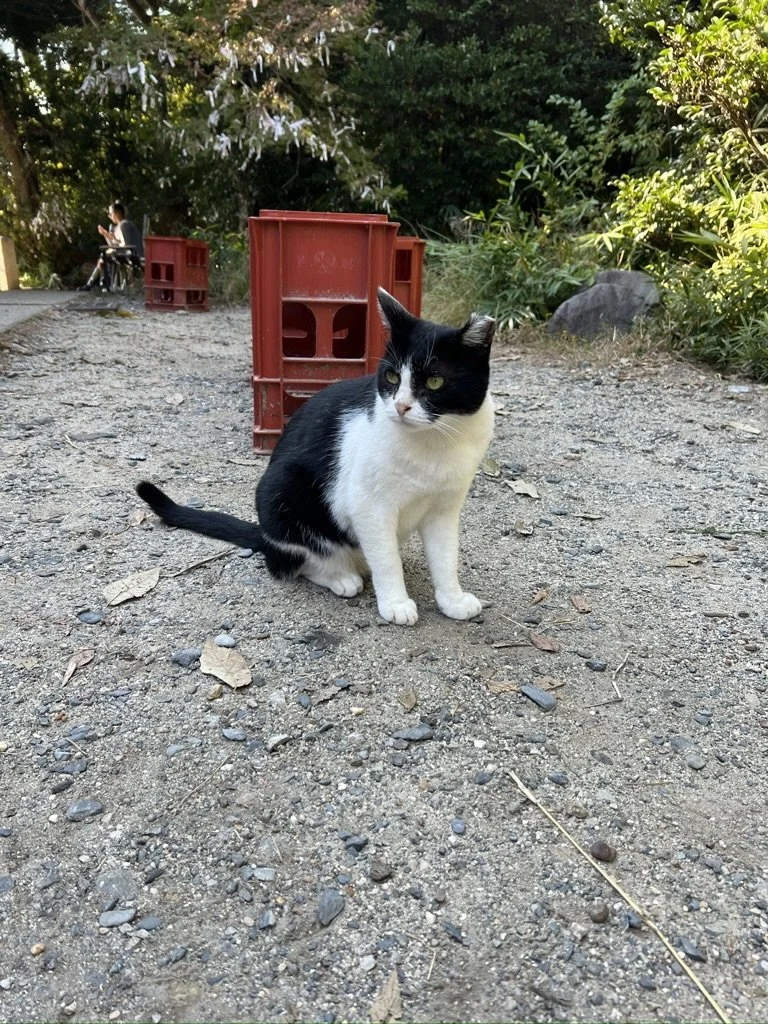
As the people reduce, the trees around the torii-gate path increase. As you make your way up the mountain, you go deeper into the forest. The shrine is open 24 hours of the day, and I can’t imagine how eerie it might be at night. This place is buzzing with the electricity of centuries worth of prayers and its fair share of dark desires. Vows of revenge, pledges of fealty, marriages, unrequited love, bloodthirsty promises, lustful oaths and everyday, garden variety human angst. Quite enough to bring out the uncanny in a place. Warnings of imminent boar population and what to do in case of an encounter are everywhere. Once you read these notices, you can’t shake the feeling of being watched, though you’re far from alone. Ghouls may or may nor be real but wild boars and bears certainly are. There are warning signs to not engage with monkeys as well, but we didn’t spot any. There are, however, no warning signs about engaging with the cute cats that are in abundance on the hills, so interact away by all means. Though I have to warn you, you’ll have some fierce competition around.
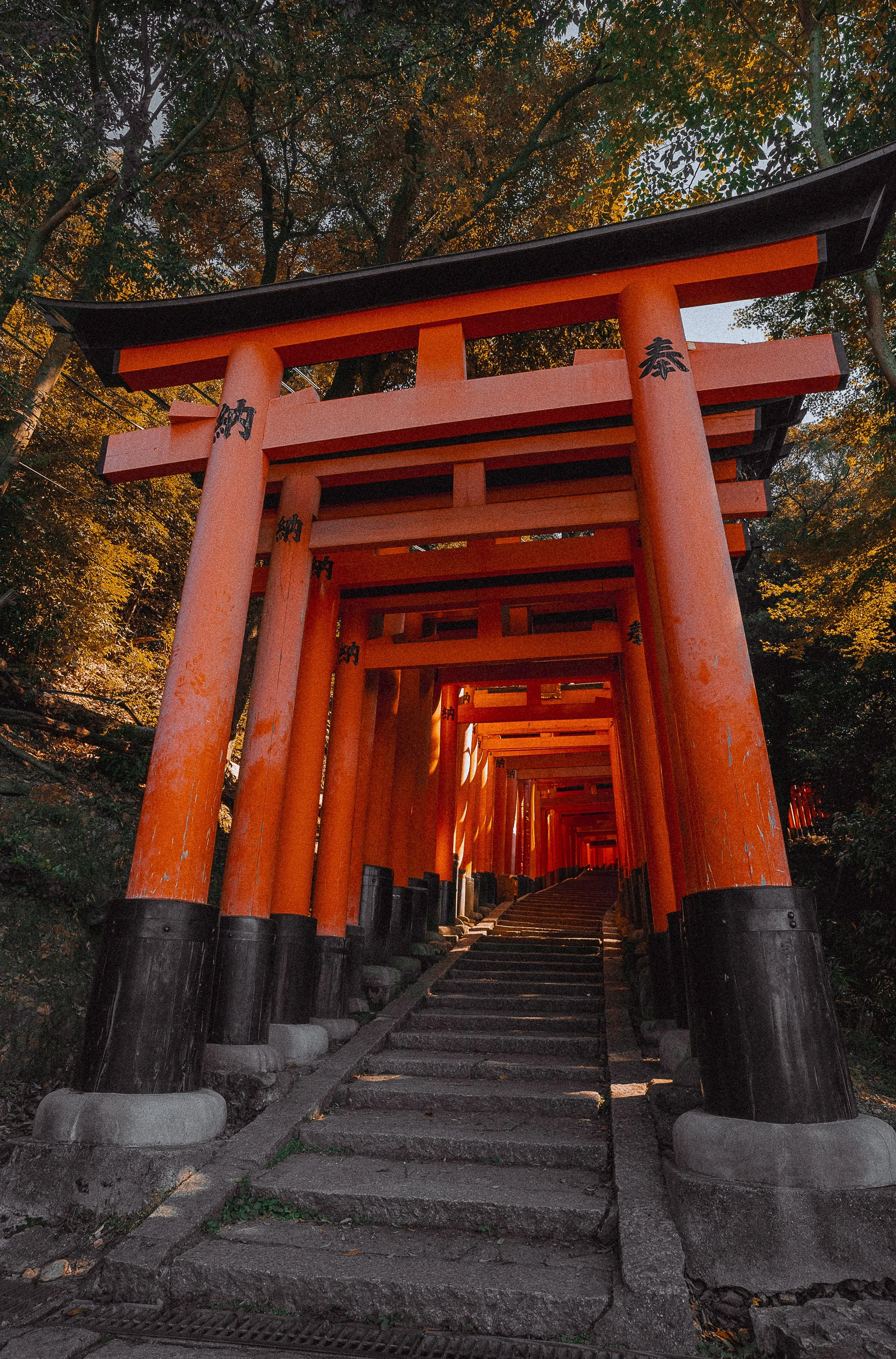
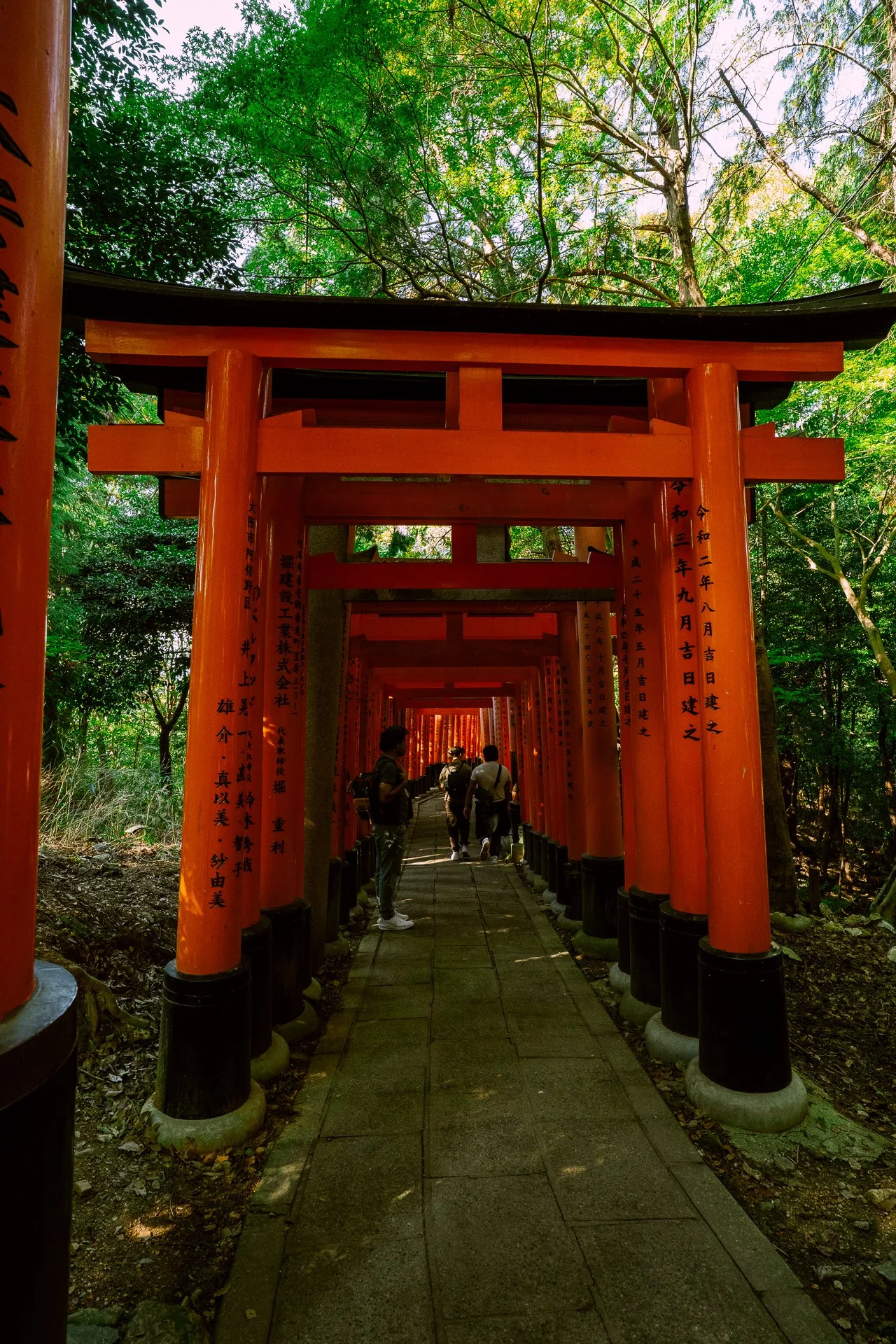
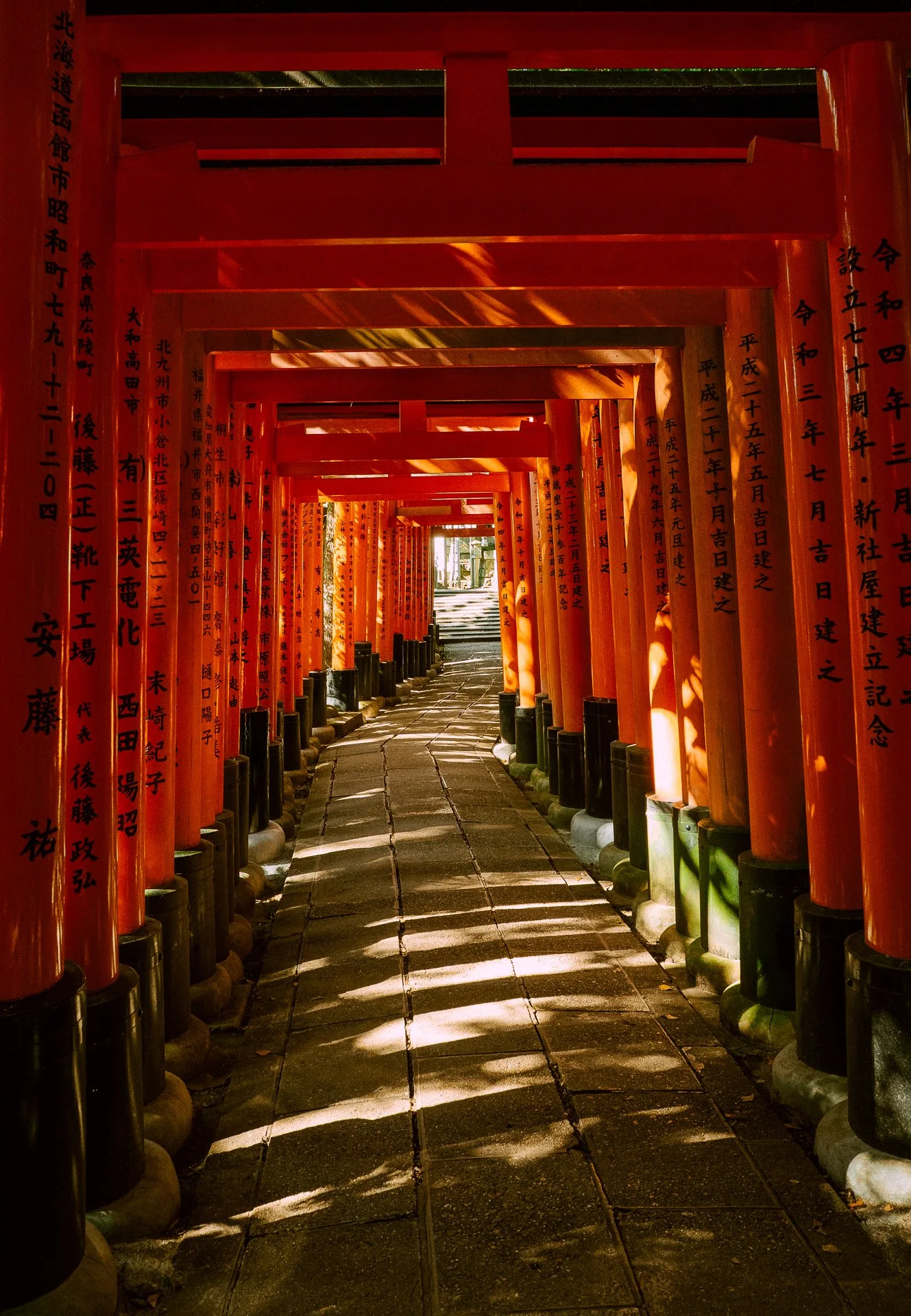
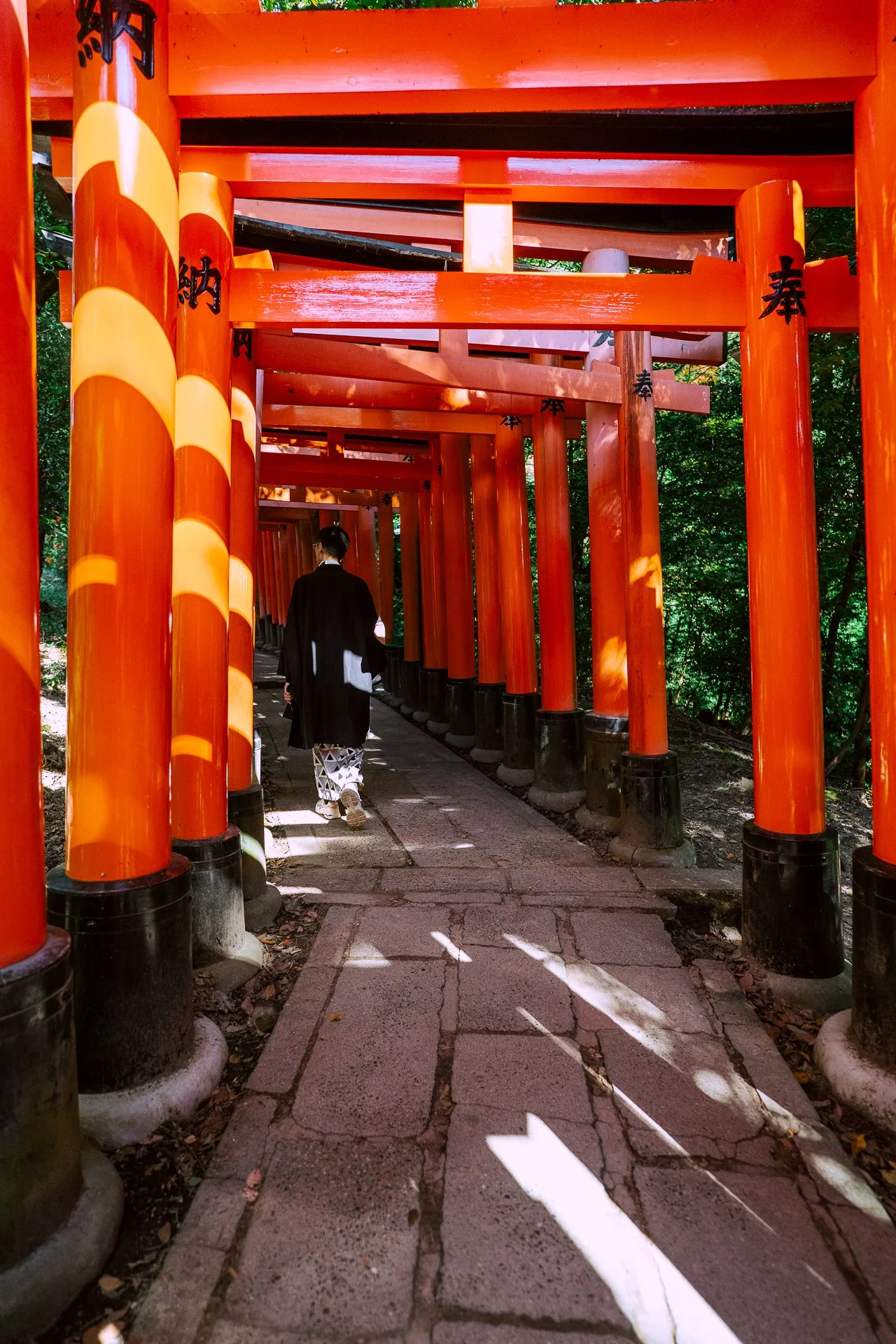
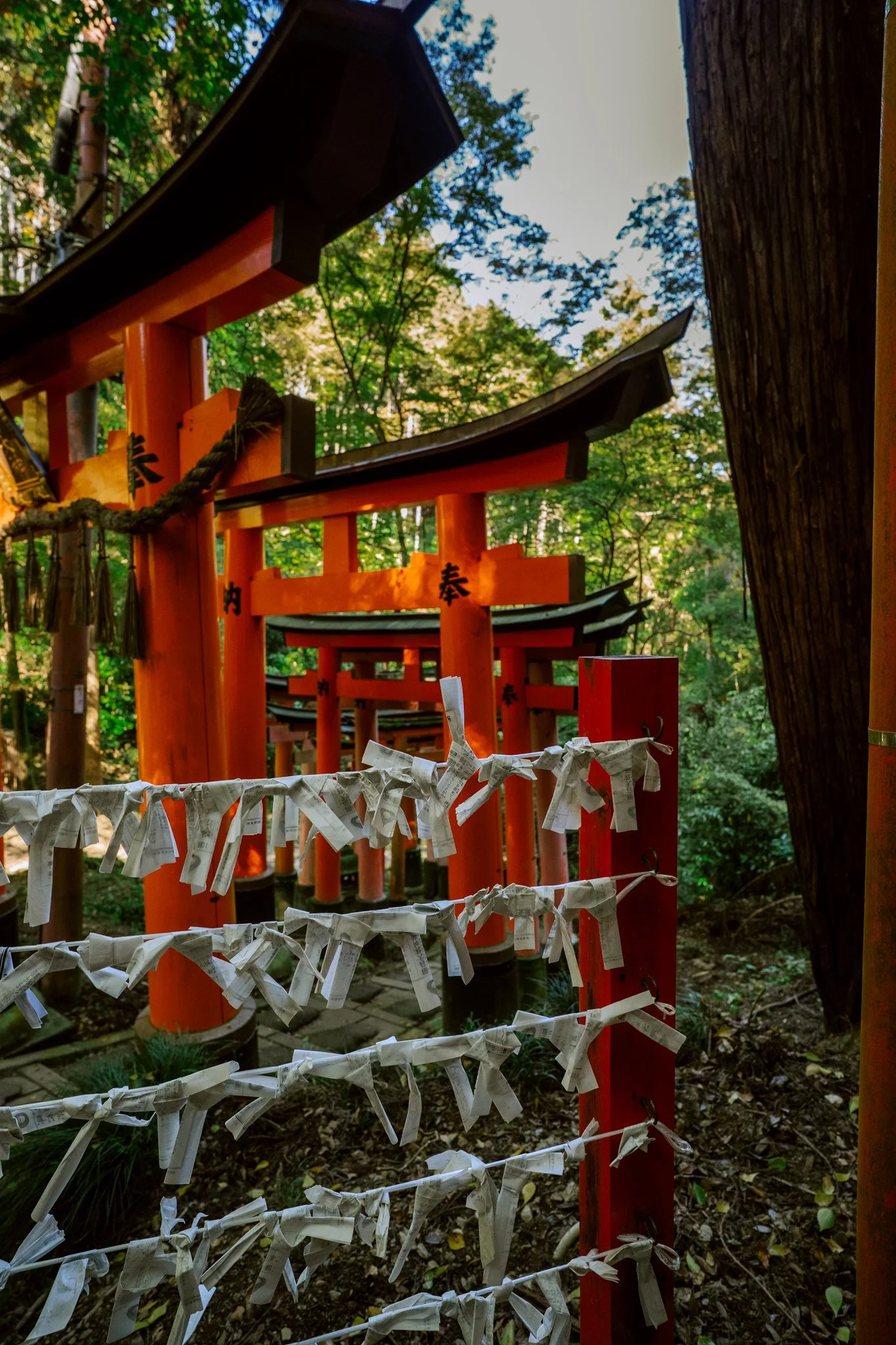
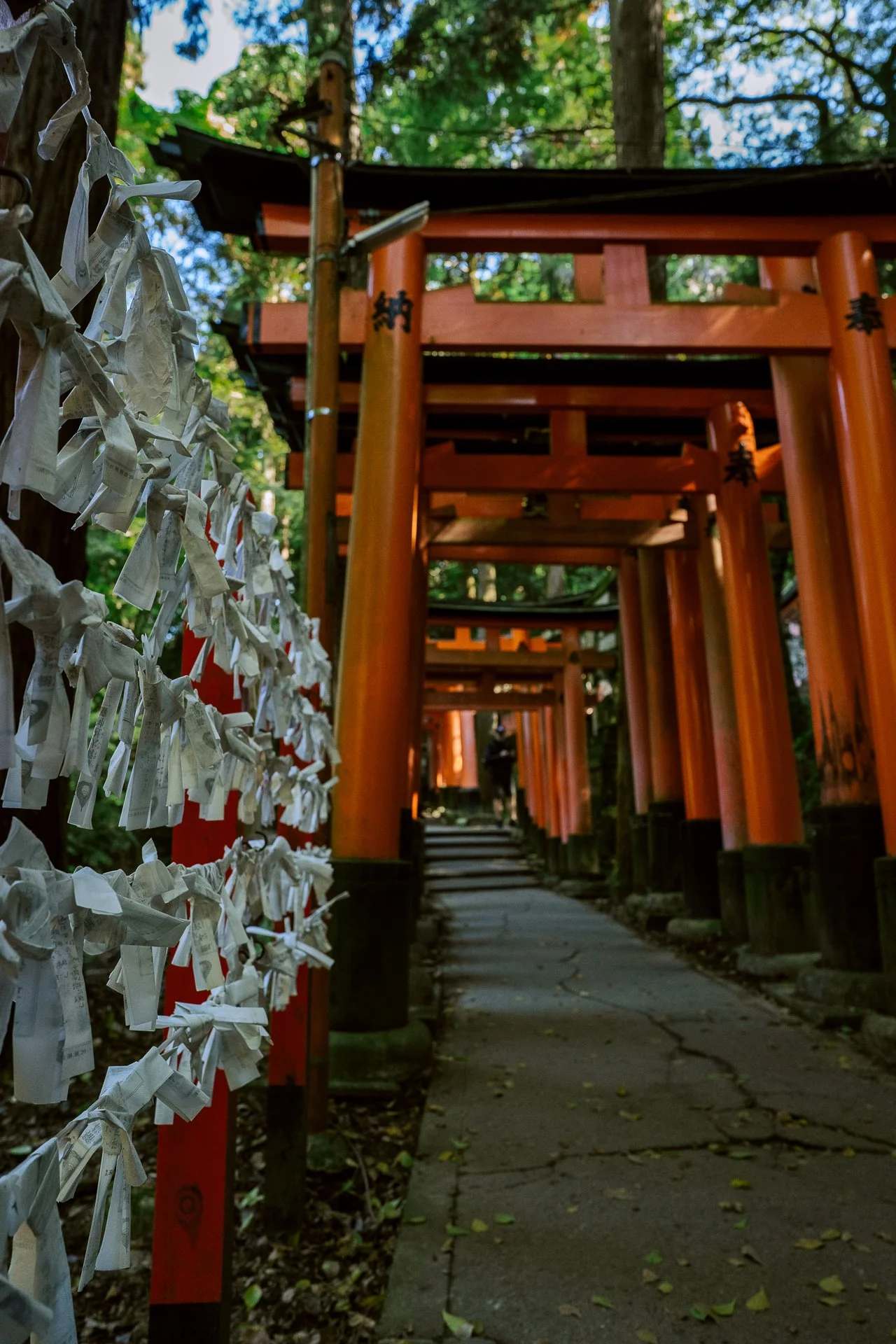
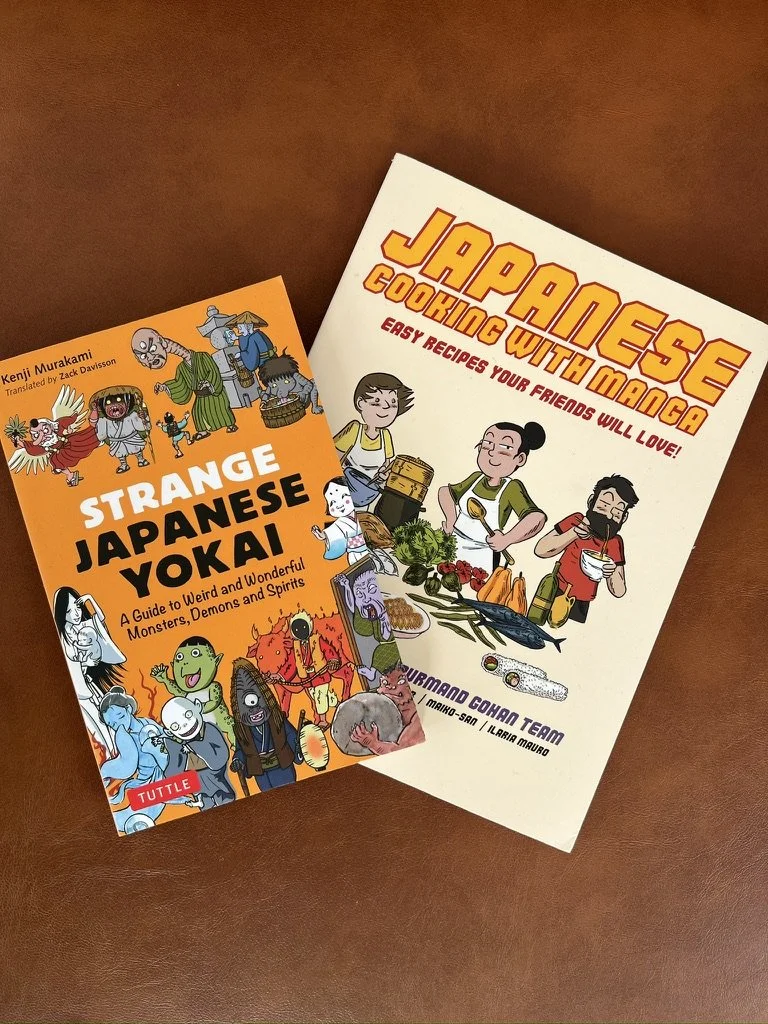
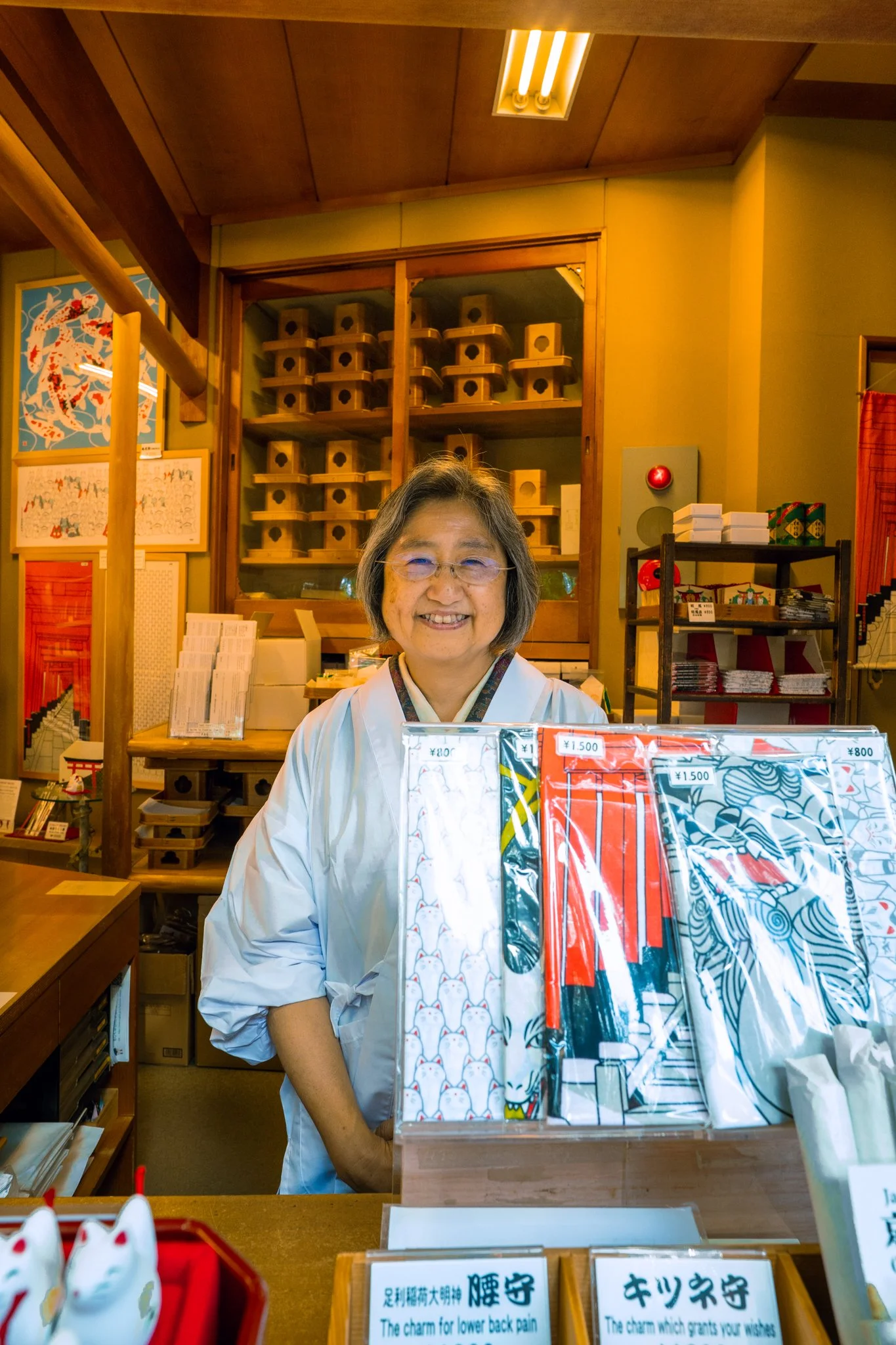
The climb is peppered with little food stalls and souvenir stores. Very useful as the walk makes one very thirsty, quite hungry and oftentimes hot and tired. We wondered if the shopkeepers made the hike up and down everyday. And what if you forgot something!!? Yikes! We found a cute gift shop with some lovely unique souvenirs. One of our favourite Japan souvenirs are the printed towels with serious art on them. We found some great Inari art and to our delight met the designer who ran the store as well. As you can see, she was happy to comply when I asked her if I could take a picture. She’s as cute as her work. There’s also a bookstore where I picked up a few cute books including an illustrated guide to yokai or demons.
Even in mid-November, we found the walk quite warm and was even parched. I can’t imagine how it would be in the warmer months. Luckily there quite a few quick snacks and drink stops. But don’t expect a meal during the trek. Fushimi Inariyama has a very strict trash policy and the visitors are expected to take the trash with them. Some stores accept the trash from the products you bought from them. I wouldn’t call the pilgrimage hard, but I was challenged. To put it lightly. But Mister I Did My Zone 2 Workouts was light-footed and breezed through the trek. So, don’t ignore your Zone 2 workouts, kids.
By the time we climbed down the hill we were starving. The snacks hadn’t quite cut it. So we grabbed more snacks from the stalls just outside the temple. Roasted dango, yakisoba noodles, fried pork, strawberry mochi, orange juice, soft serve are some of the food options that are immediately available.Sahit wanted to check out the snack scene a little further, so he wandered around with his Zone 2 legs. I wobbled around, all parched and knackered and aching feet - and you’ll never guess what. I stumbled right into a place that offered a foot spa with a nice cold matcha latte and a cookie. Genius. Just the perfect way to end a challenging few hours that deeply humbled feet and lungs. Nothing like a massage and a cold matcha latte to restore lost dignity.
As much as one would like to dismiss Kyoto as “typical”, there is just so much magic in this place. And even though you have to practically elbow your way through some experiences - not really, this is still Japan and we mind our manners here - there’s always some major payoff at the end. I can’t imagine just skimming the surface of an experience like the Fushimi Inariyama and reducing it to a tick on a Kyoto Bucketlist.
Although I was convinced we were done for the day, turns out that we were ready for one more so-called Kyoto cliche. We had read that popular places were less crowded in the evening and our naive brains were like “Let’s go check out the Kiyomizu Dera now, it might not be as crowded.” I laugh when I think back on that naivety.
We got off at the Kiyomizu-Gokjo station and expected a short walk. It wasn’t a short walk and it was along some very dusty highways. And then abruptly we were on a stone bridge that apparently lead to the past.
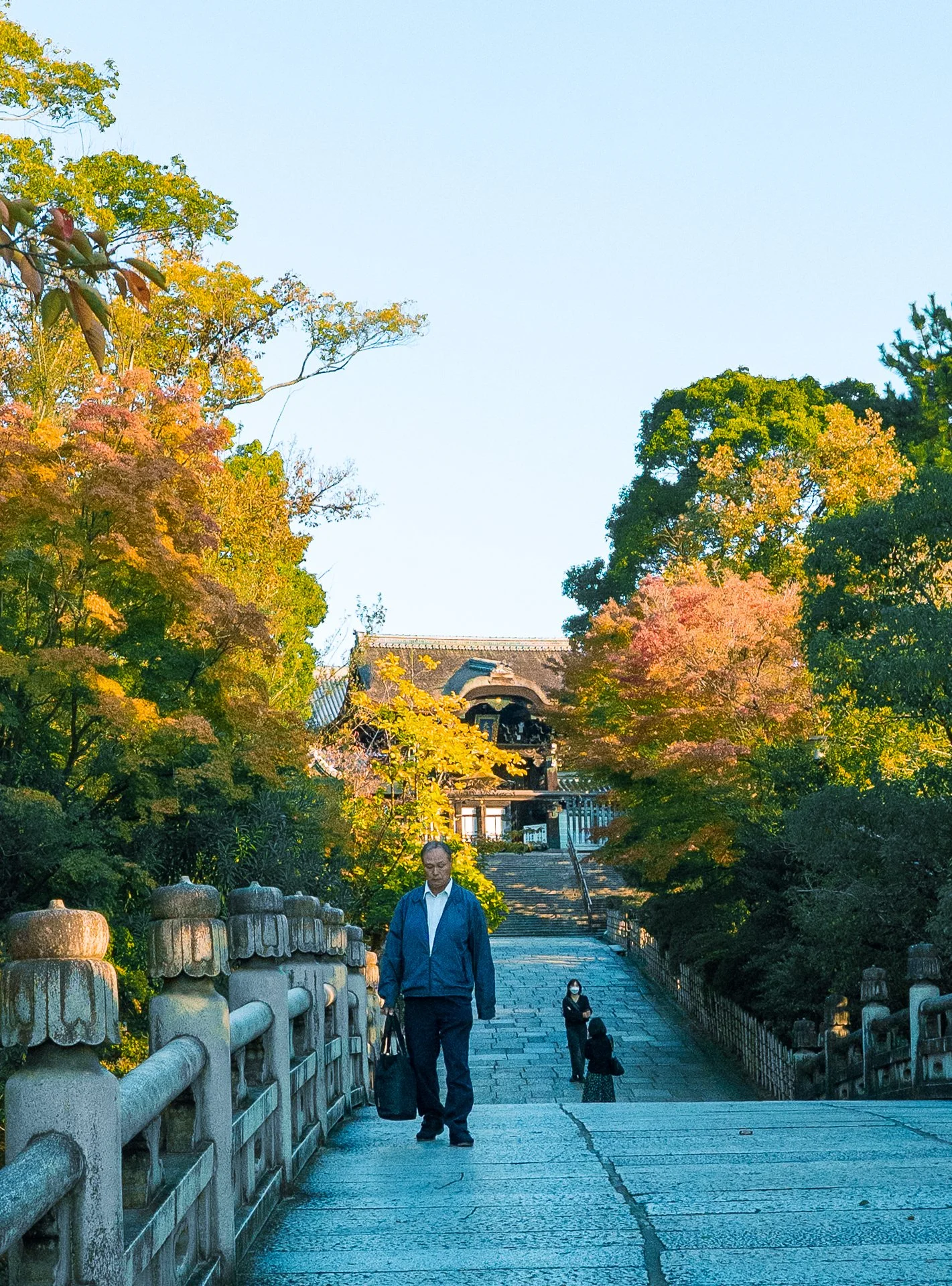
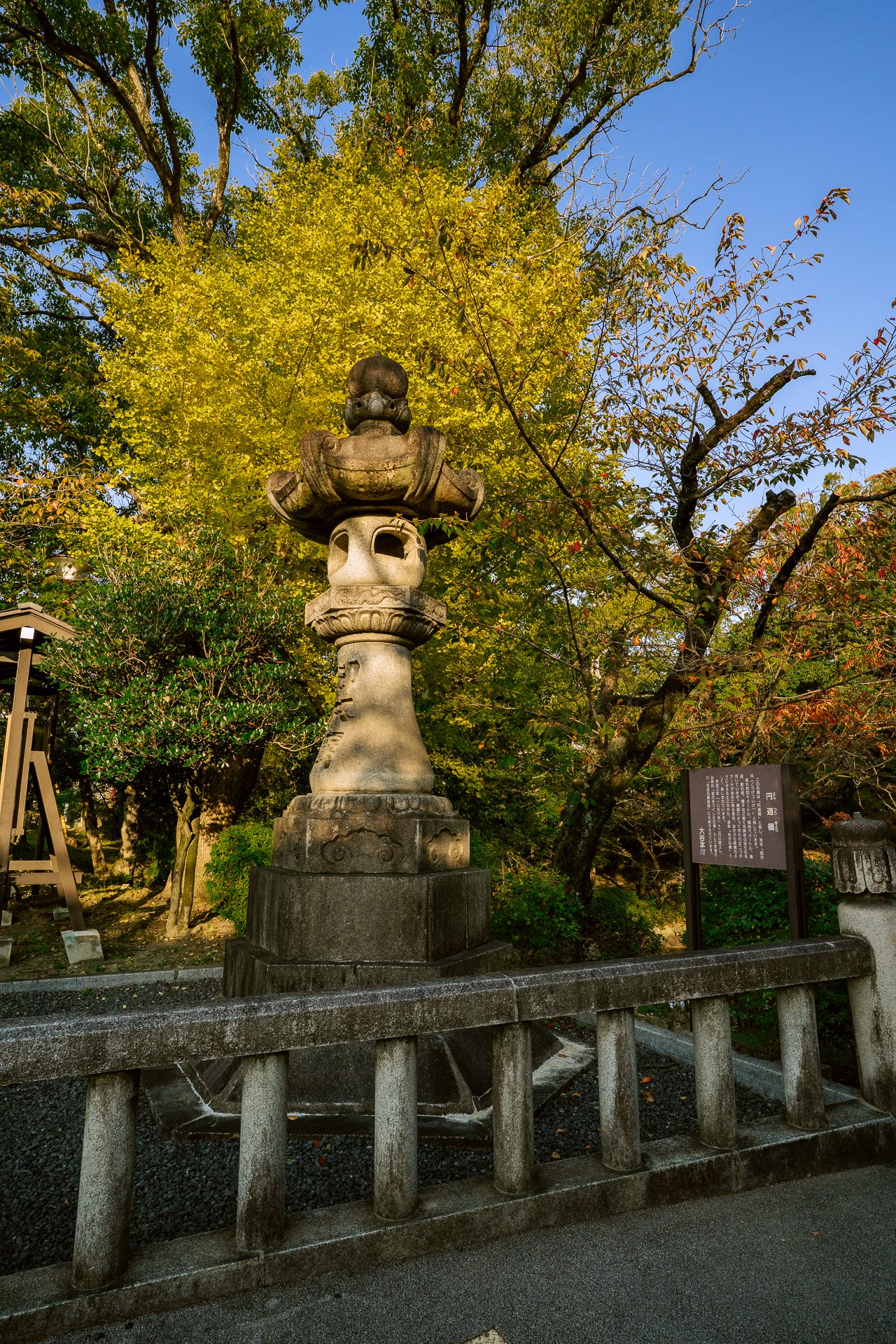
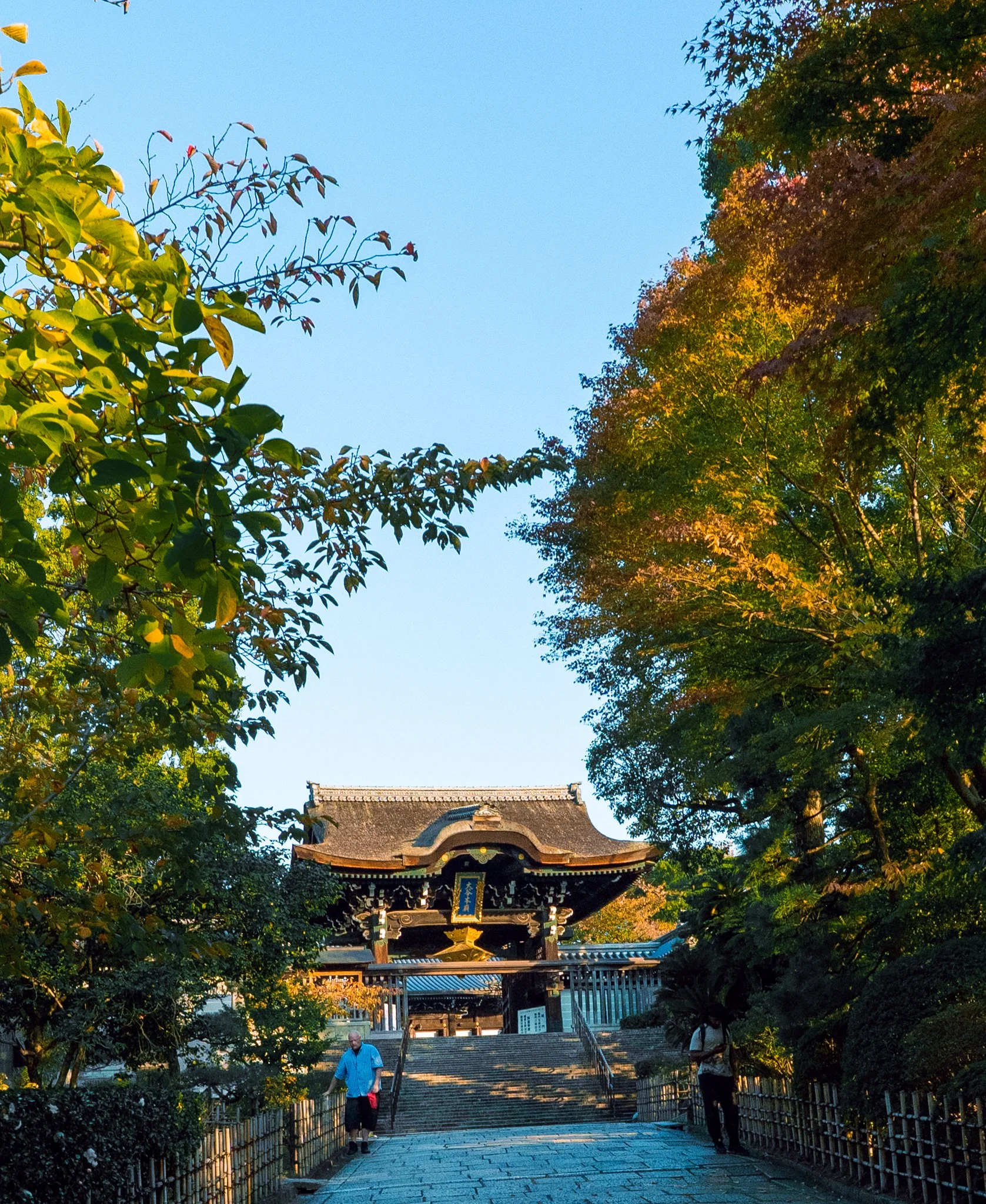
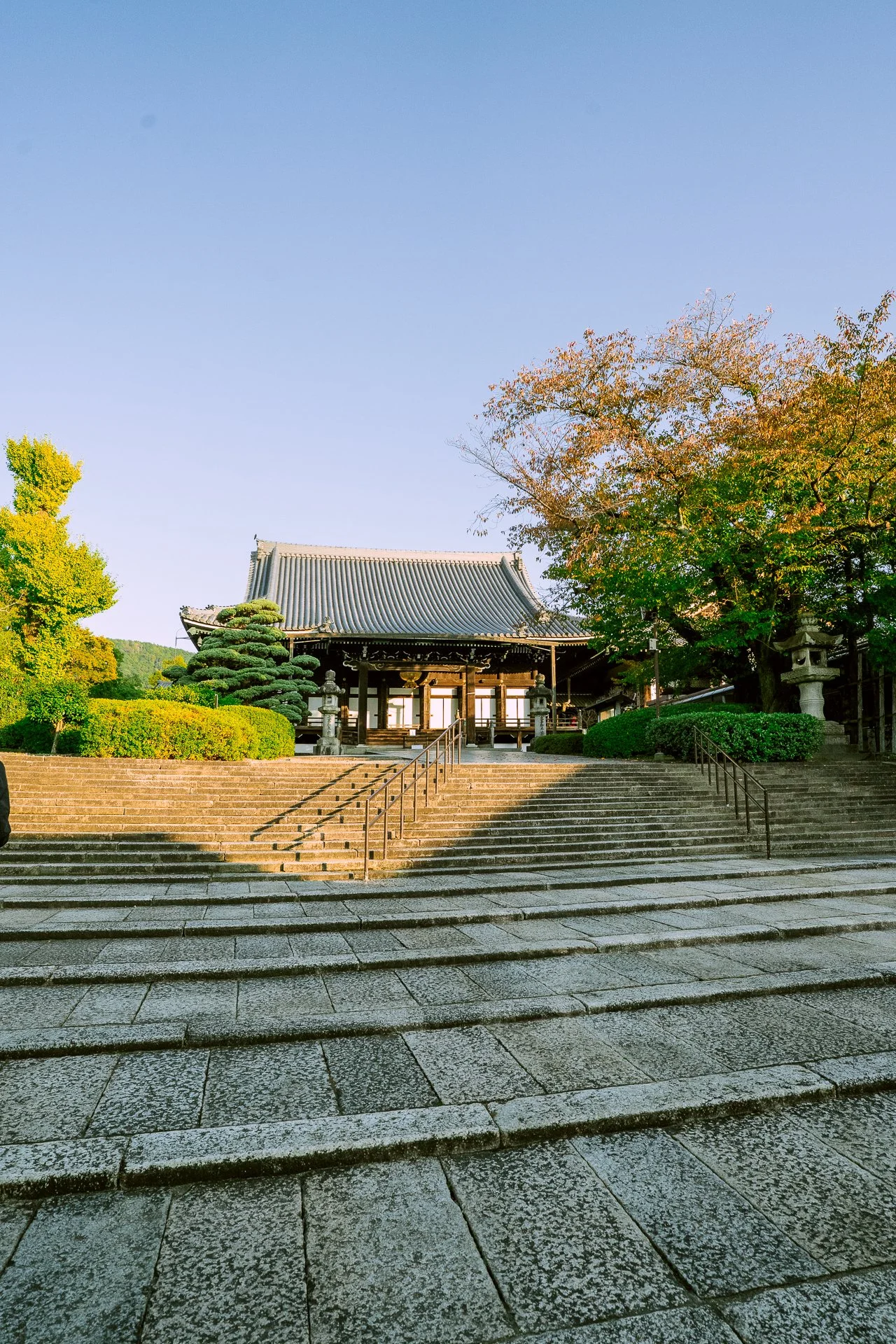
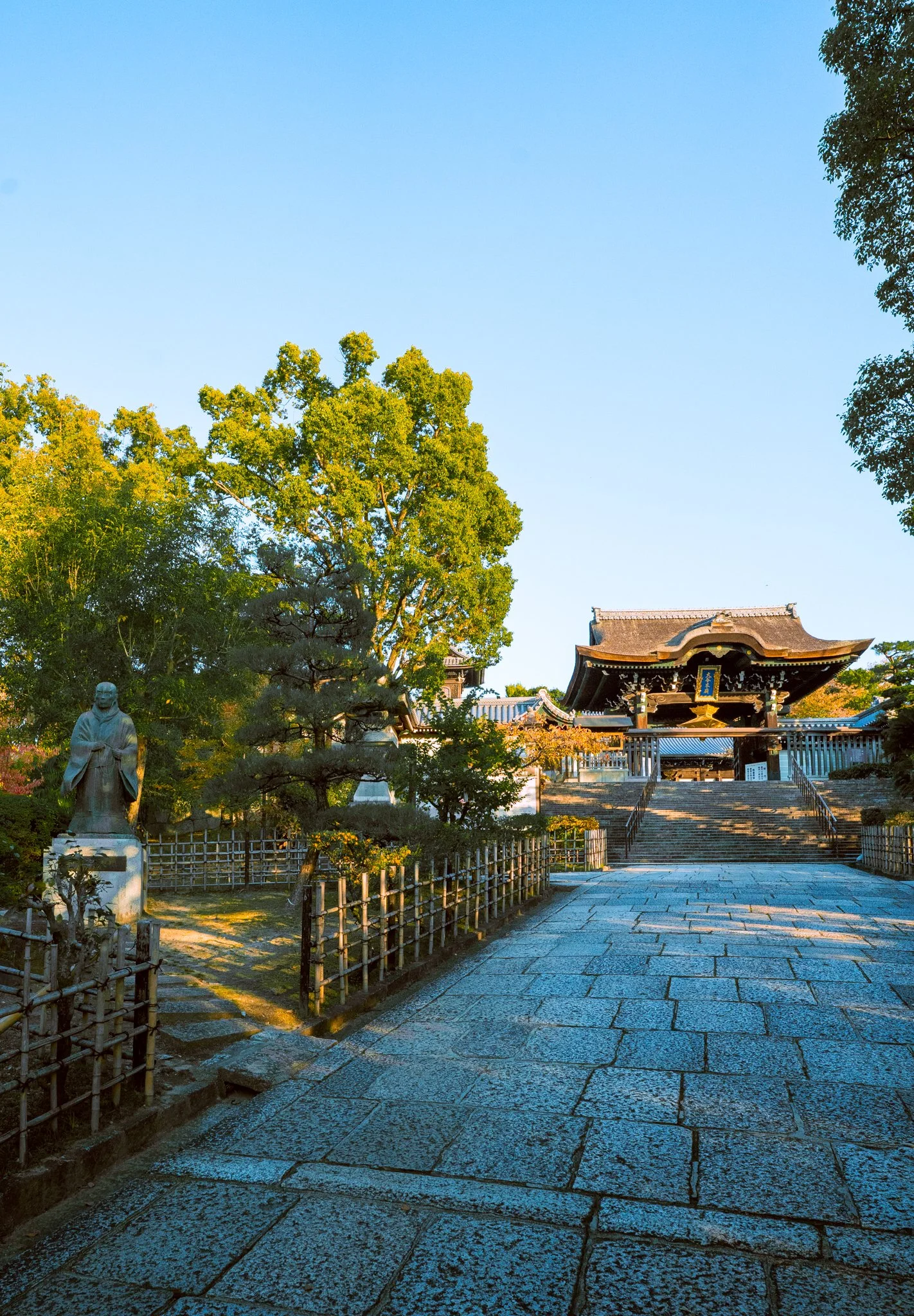
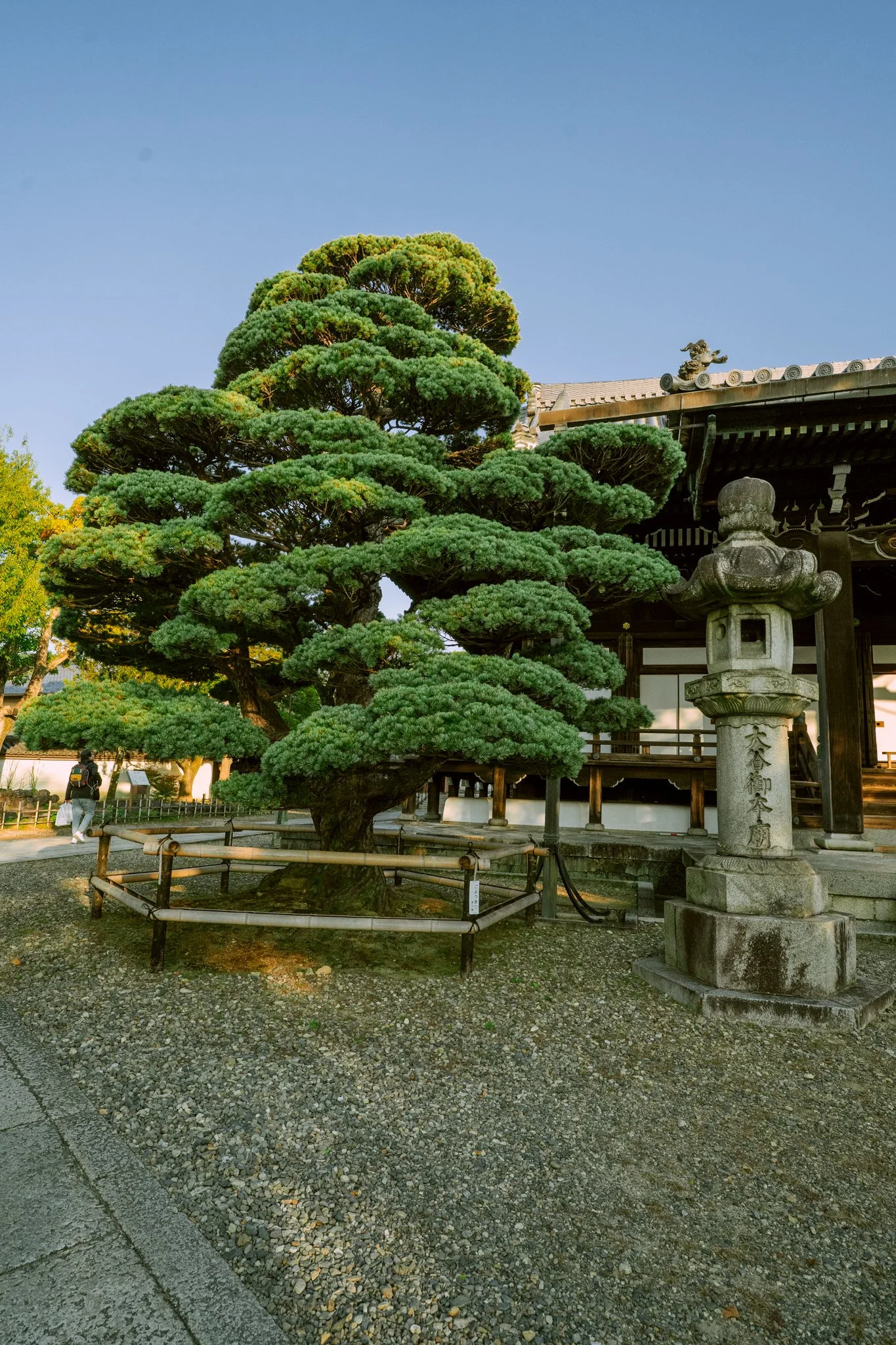
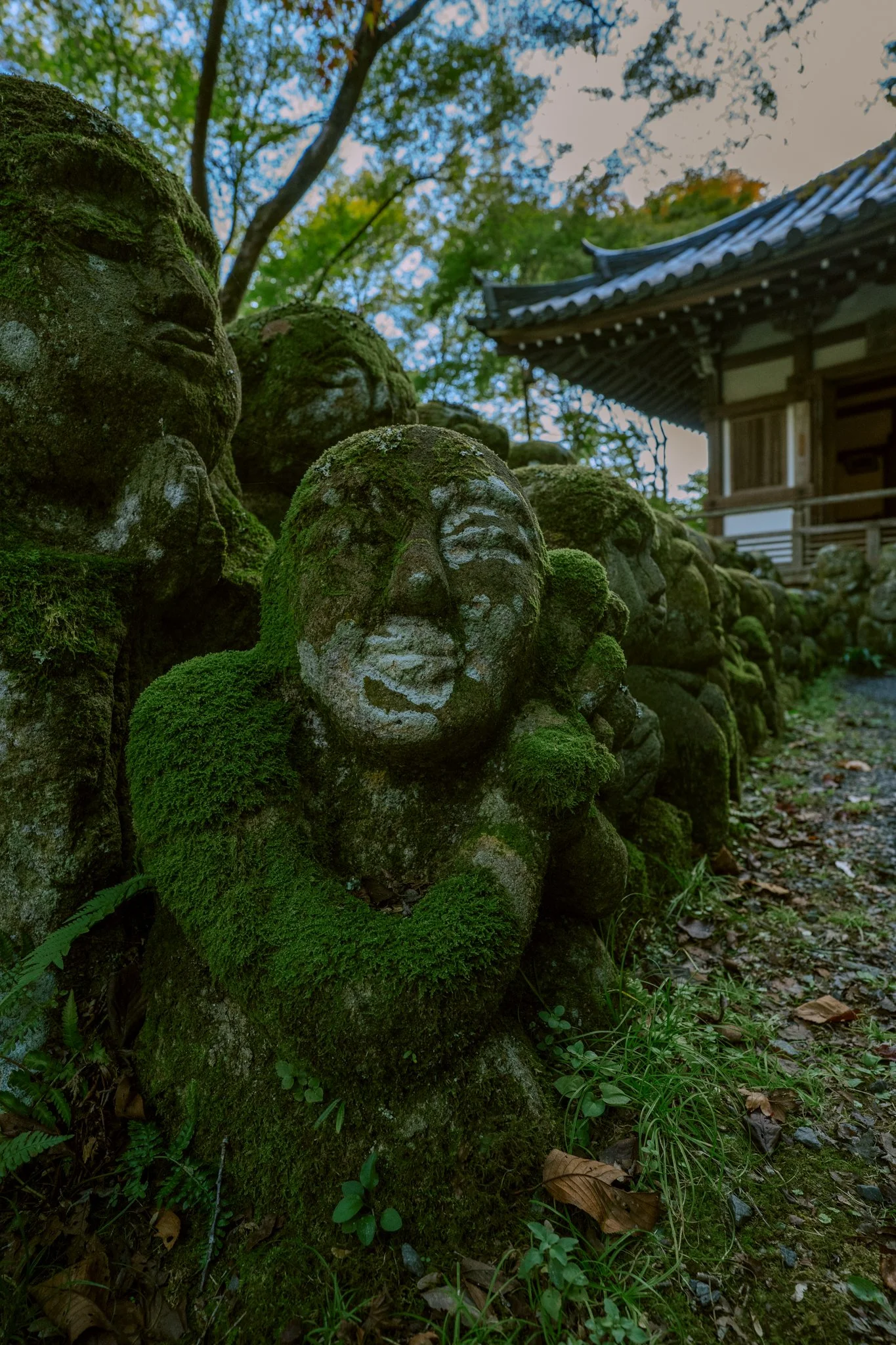
We seemed to have taken a longer, scenic route that took us through some very serene and magical Kyotoscapes. The extreme concrete and dusty highway scenes clashed head on with the really picturesque and antique-looking Otani Hombyoentsu Bridge. No warning whatsoever. And then on, it was a stroll into the past. We were trying to reach the Kiyomizu Temple by dusk so we couldn’t explore like we wanted to. But even a hurried stroll could not take away the beauty and serenity AND ISOLATION of this temple ground. These gardens dedicated to the Otani Homboyo Temple, the mausoleum of Shinran Shonin is where Kyoto remembers that it is a meditative being.
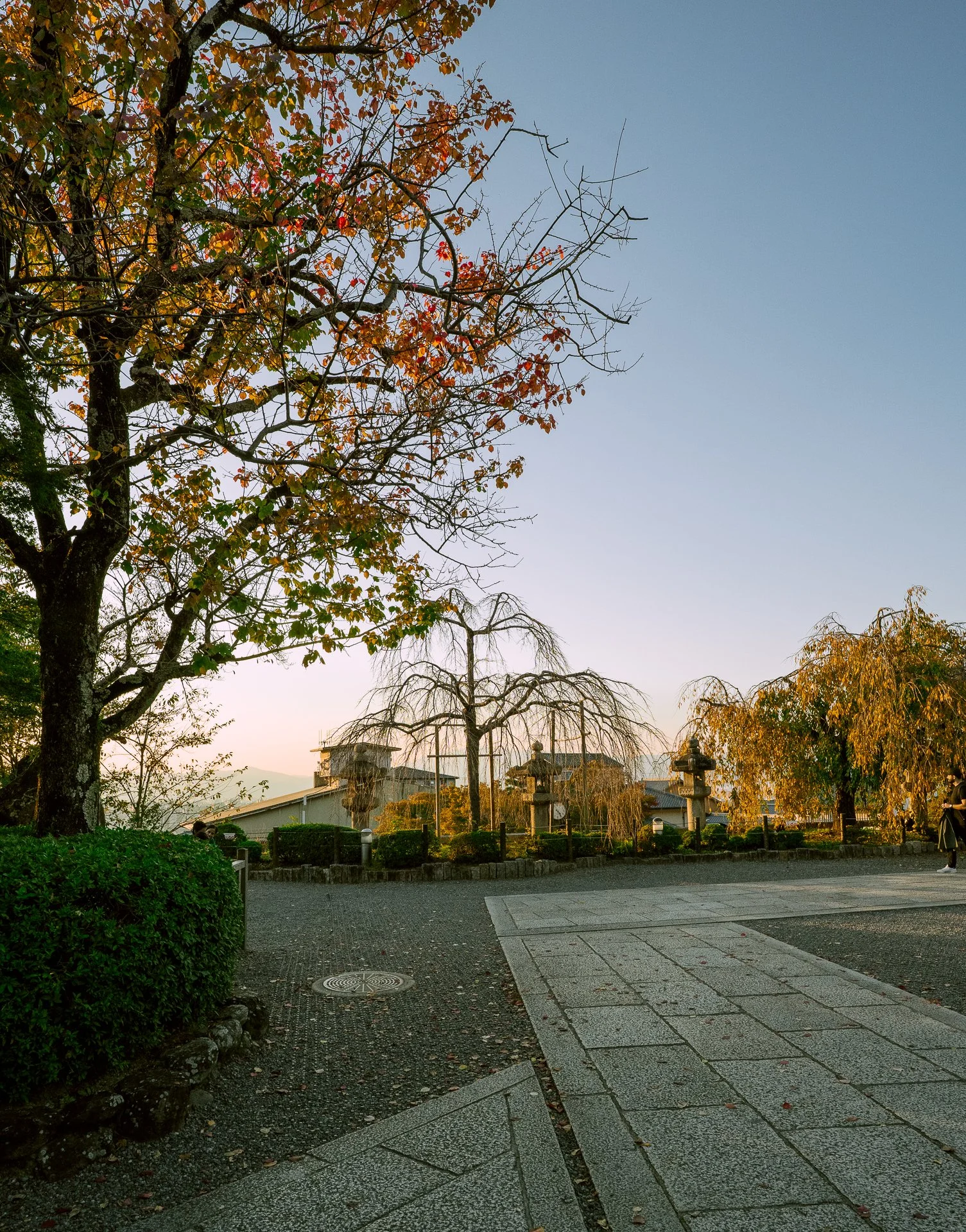
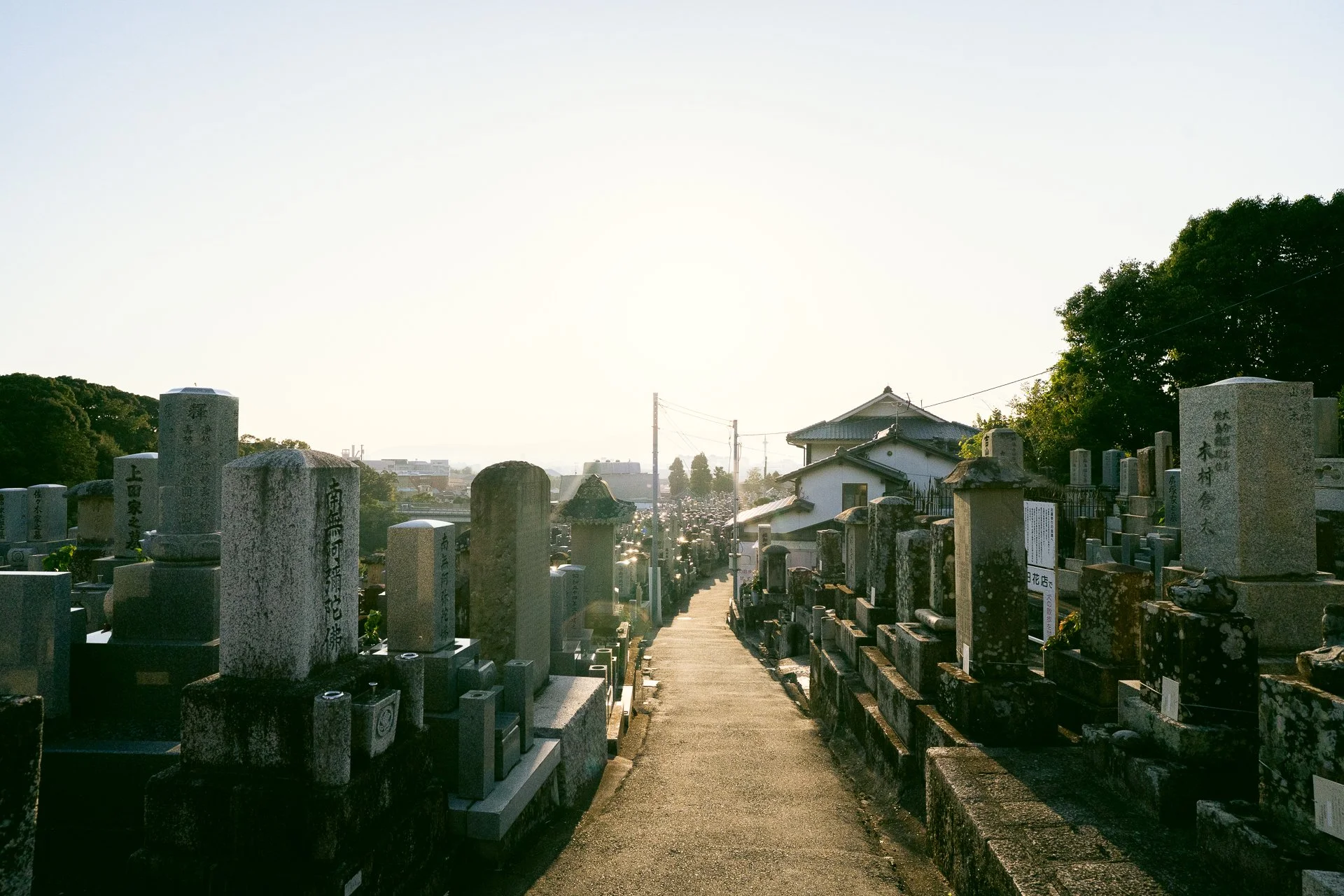
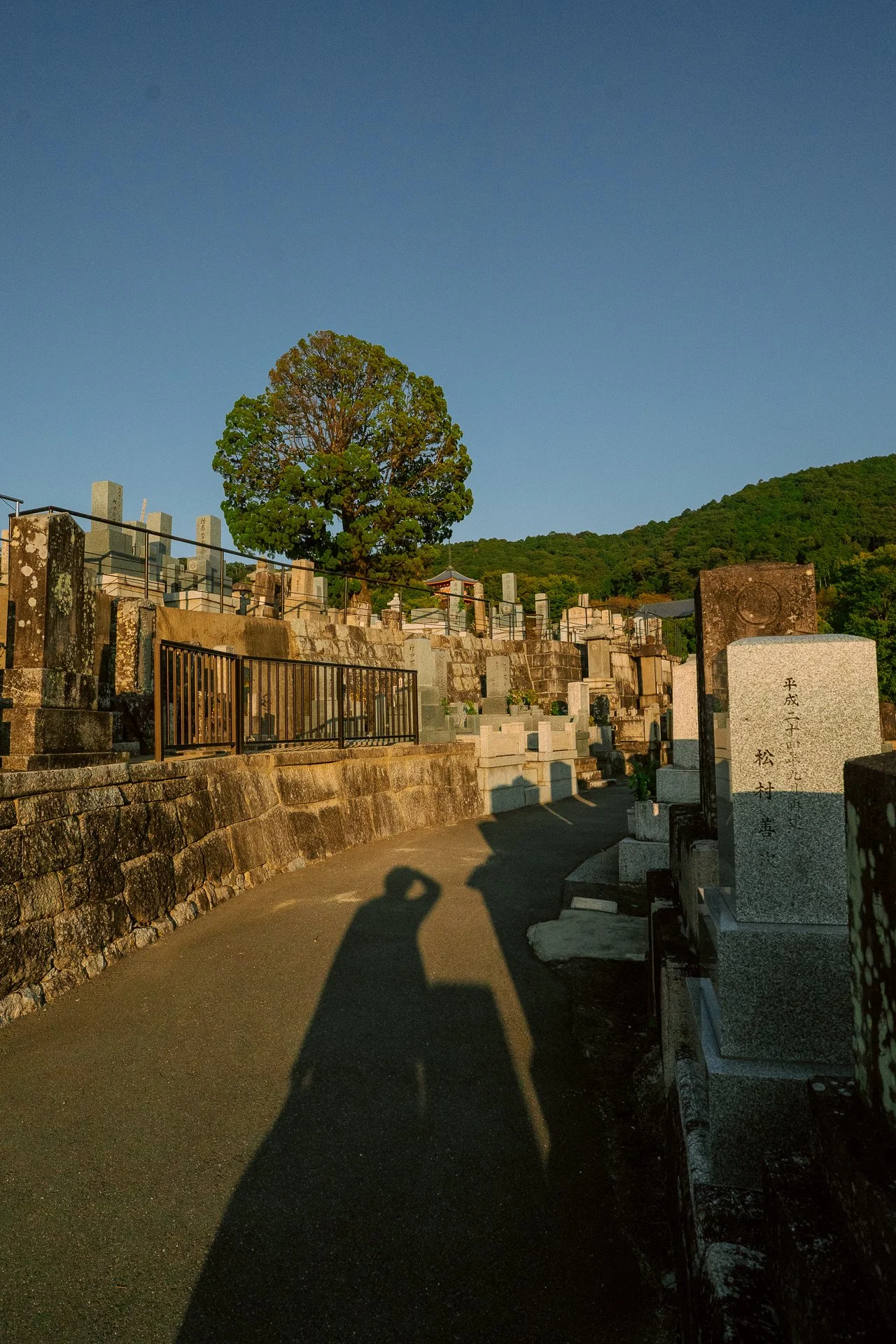
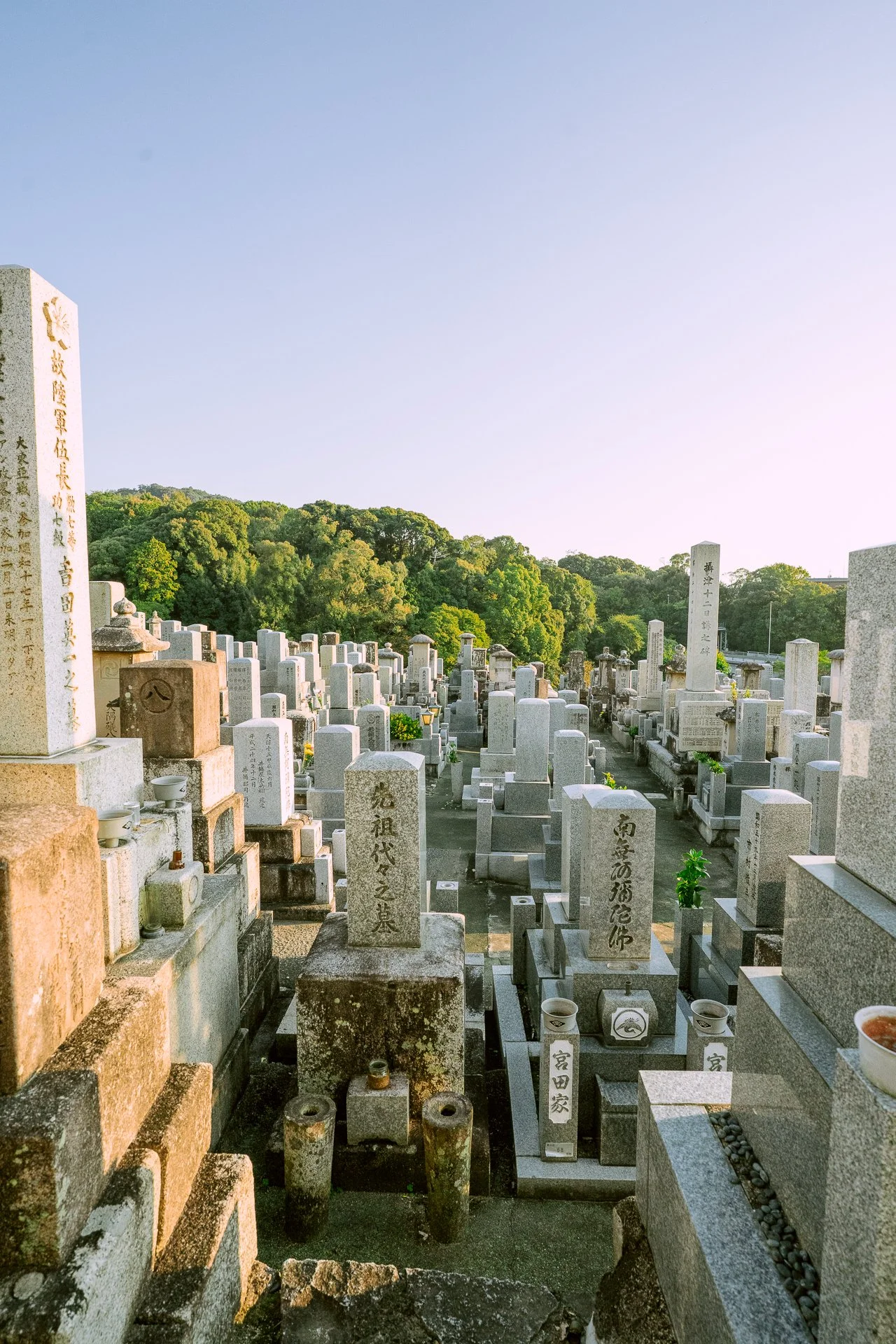
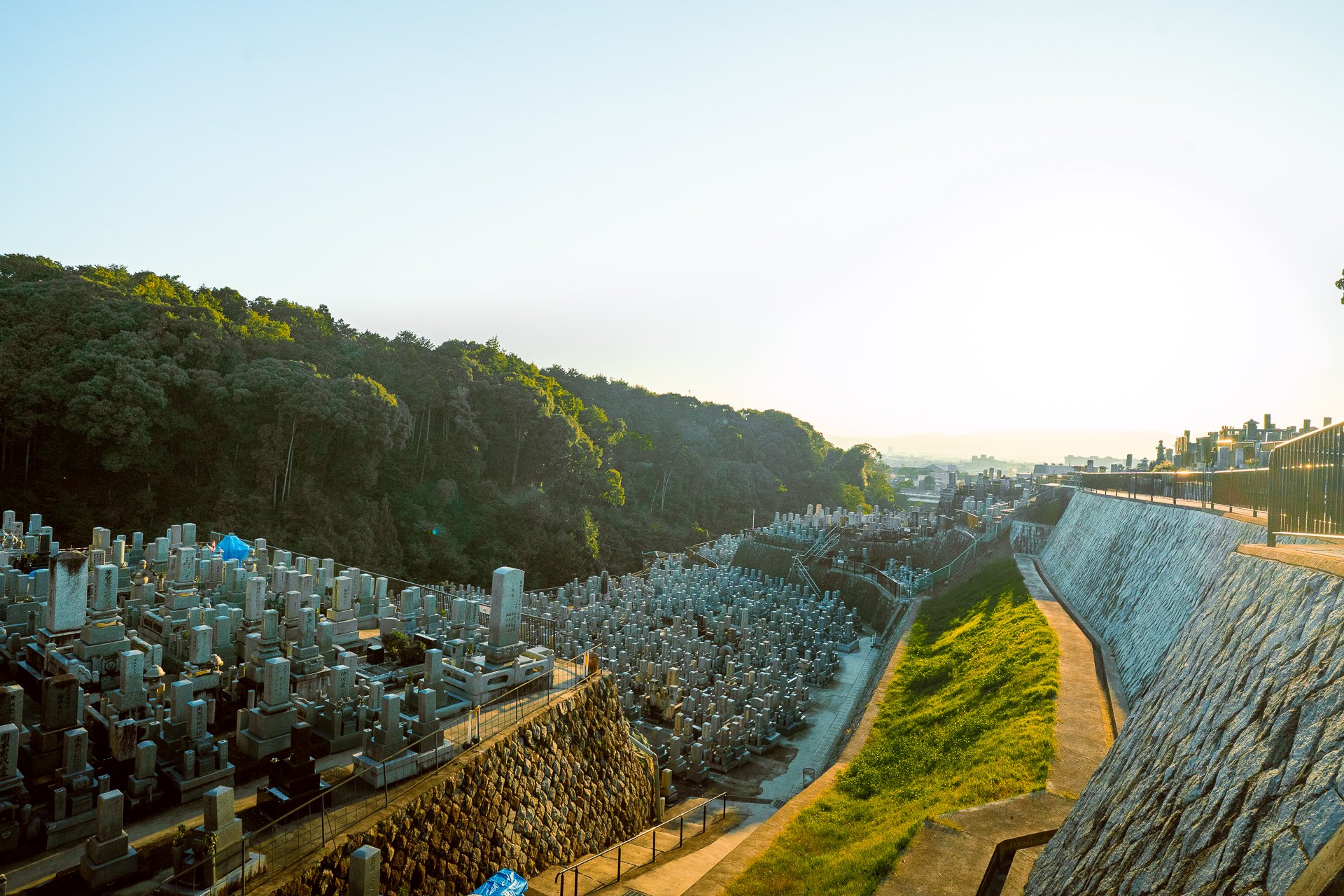
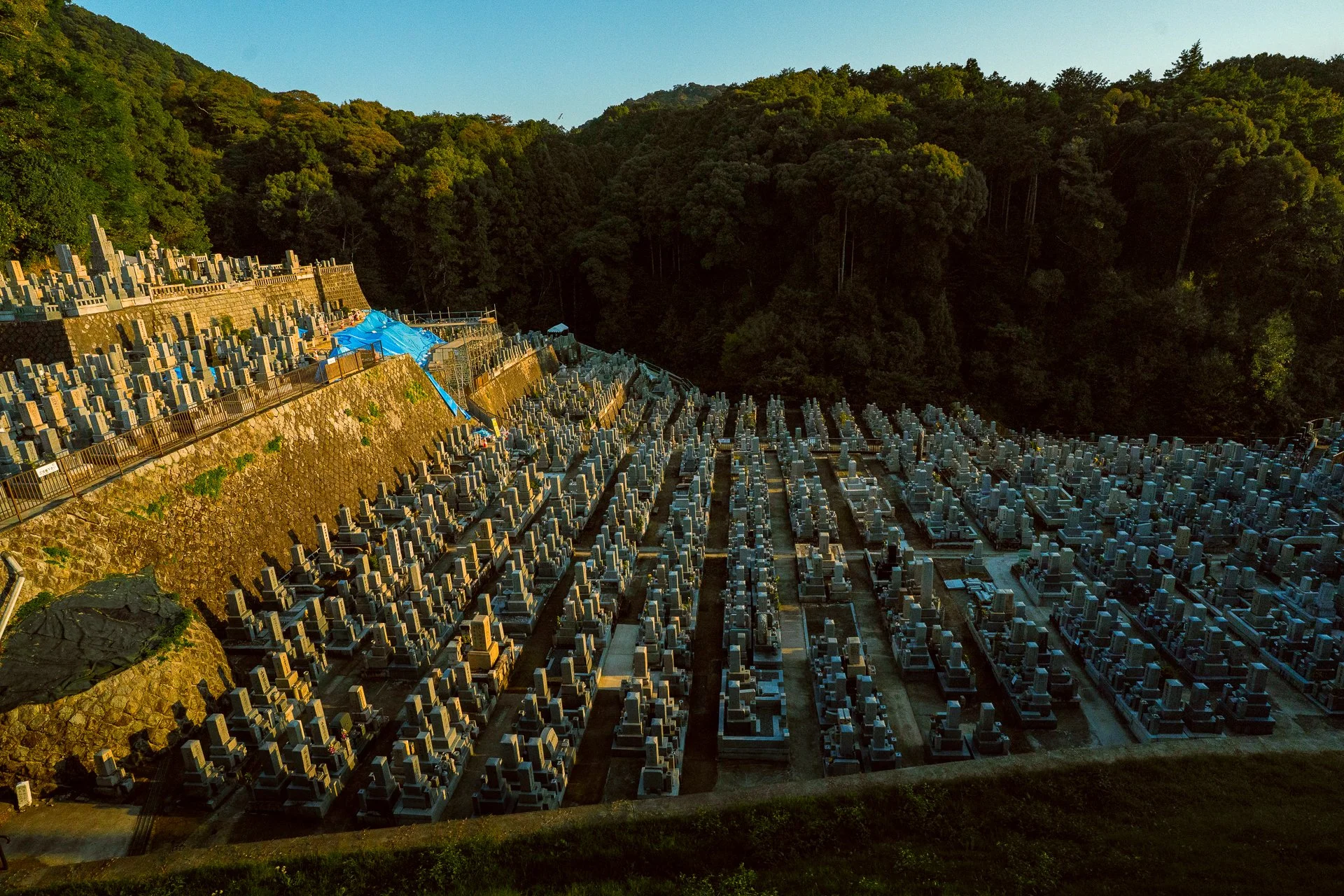
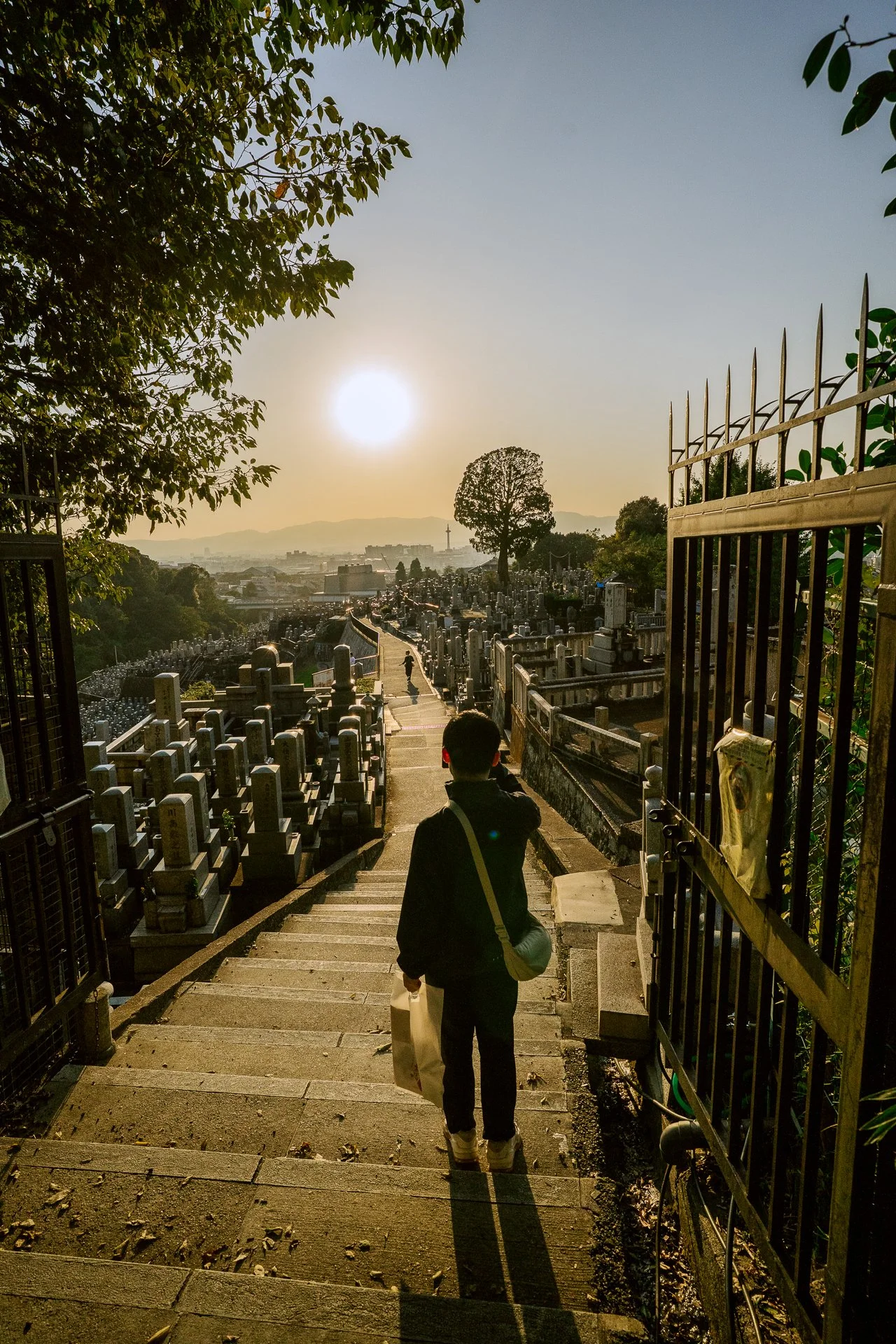
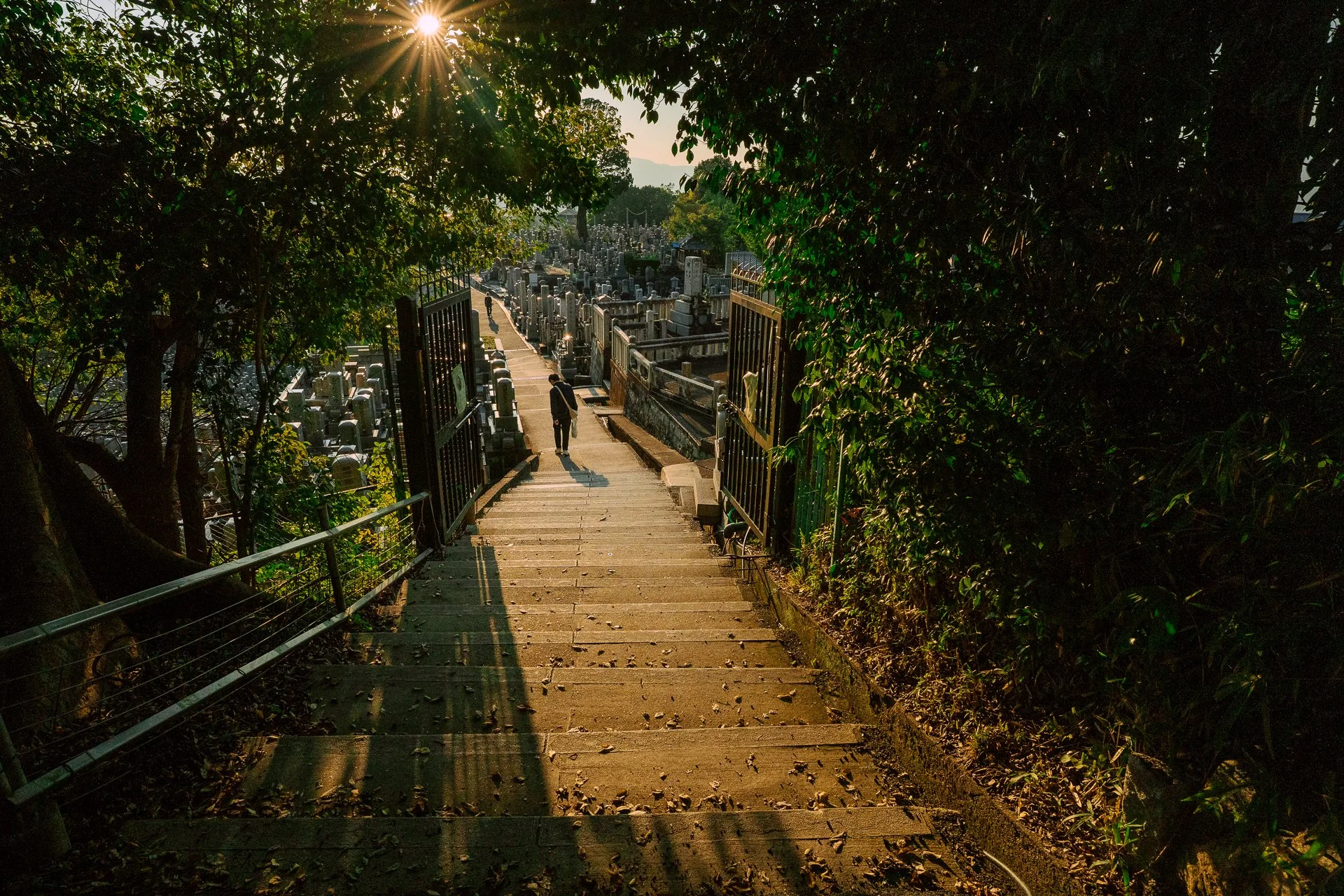
The wind is soft, the shadows are long and mysterious, and the light is loving. It is contentment made tangible and tactile. The shadows grew longer and so did our walk. It felt like we’d been walking forever. I had barely uttered (whined, definitely whined) “How far is the temple anyway?”- and we’d crossed a street and stepped behind a gate, and a little valley opened up before us. On the shallow hillside, many slept their forever sleep. The Otani Cemetery with its 15000 plus tombstones is a mysterious place at sundown. Golden hour turned the tombstones to flag posts of flame and bronze. The wind was a harpist, creating the most lilting of tunes and the shadows were filled with the very ache of having the living flaunt their everydayness, their routines, their mortal beauty to those who live in memories and abstract.
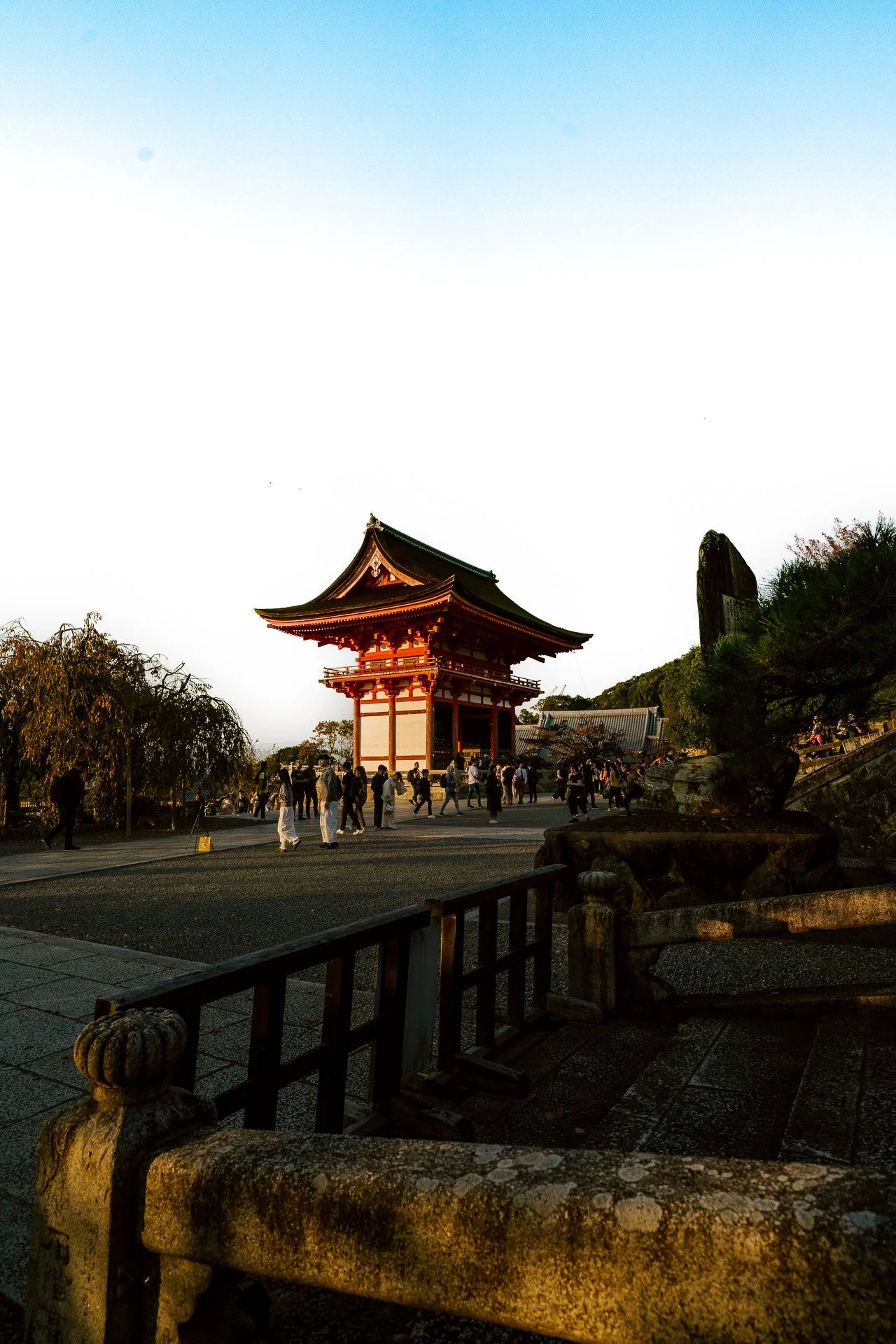
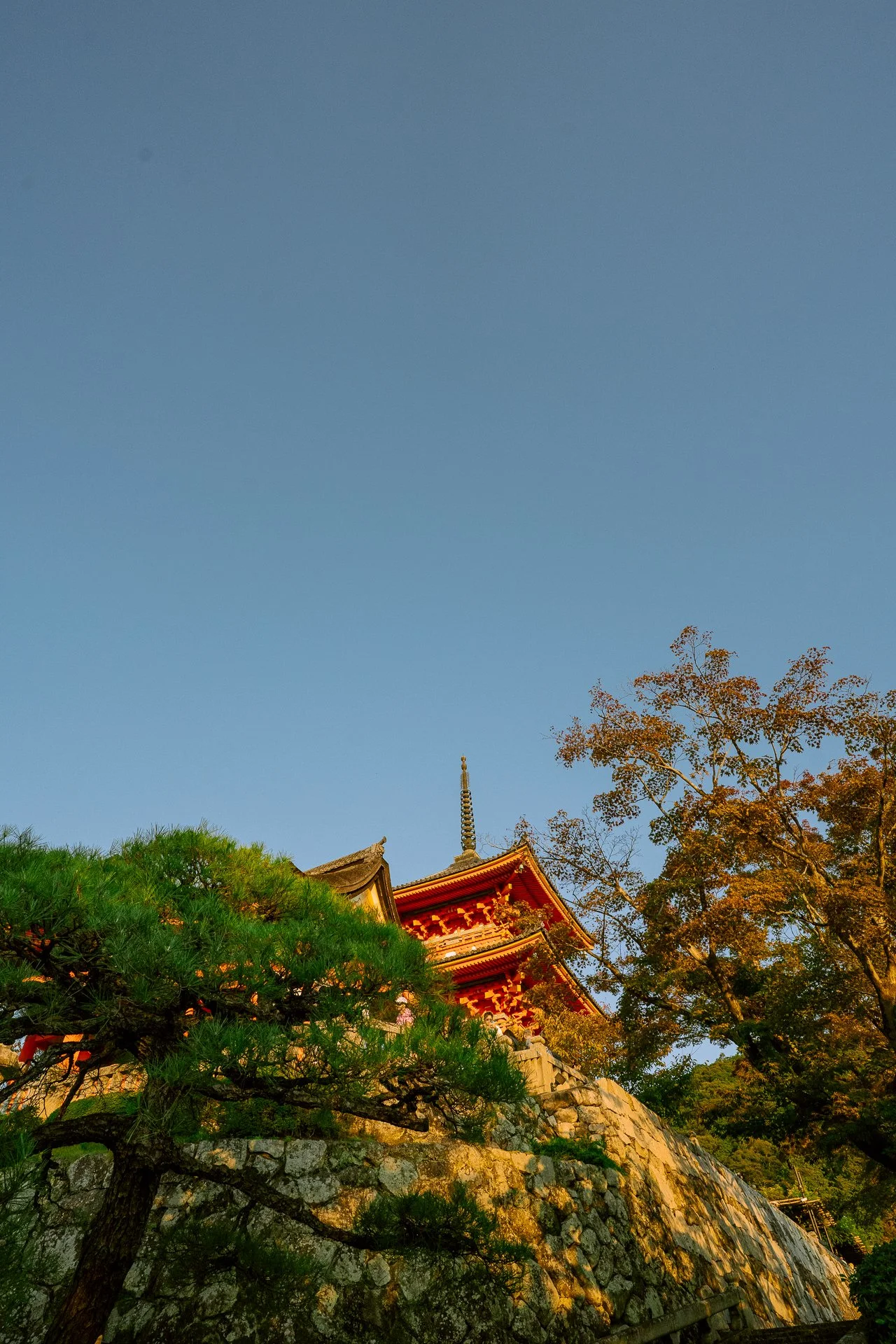
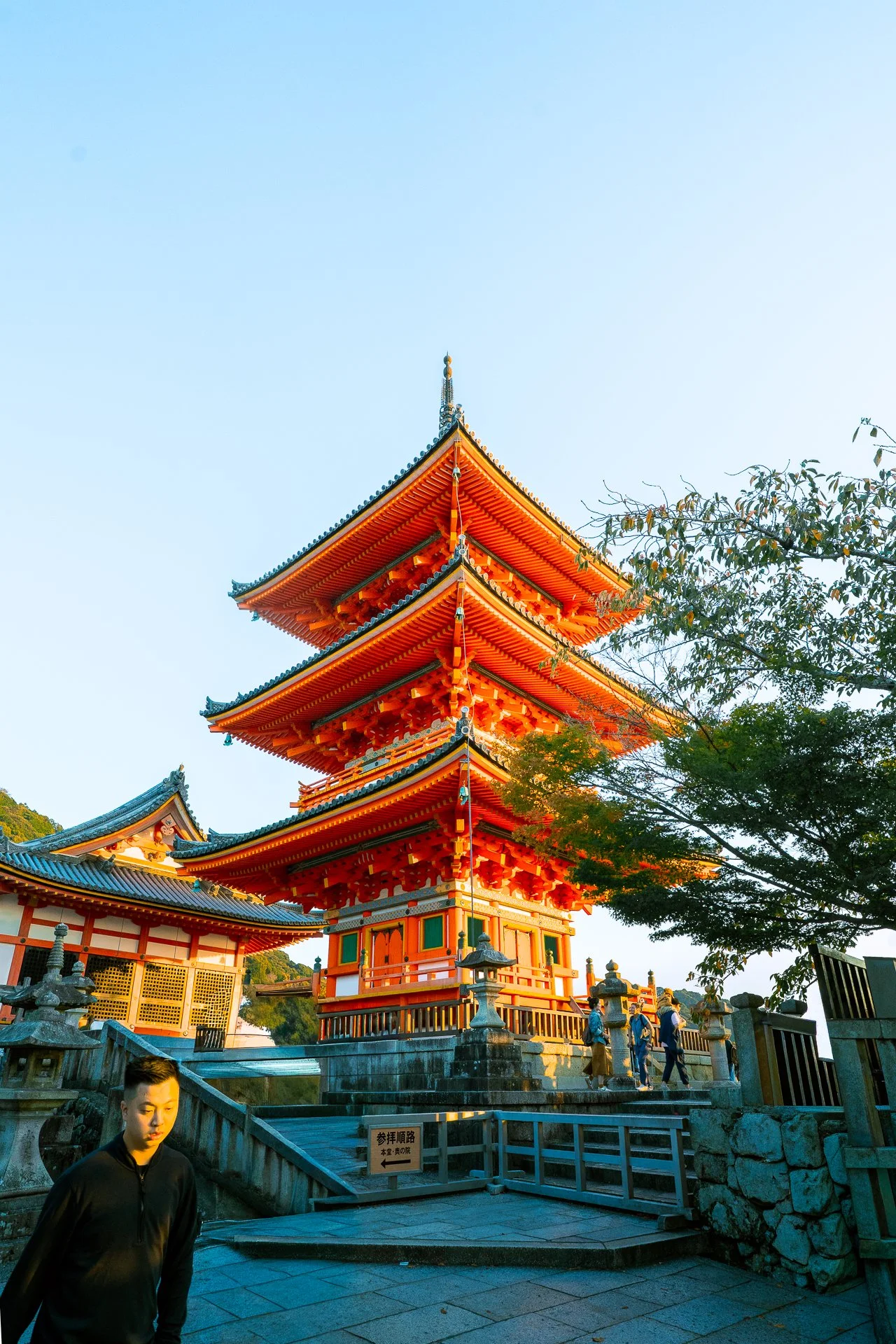
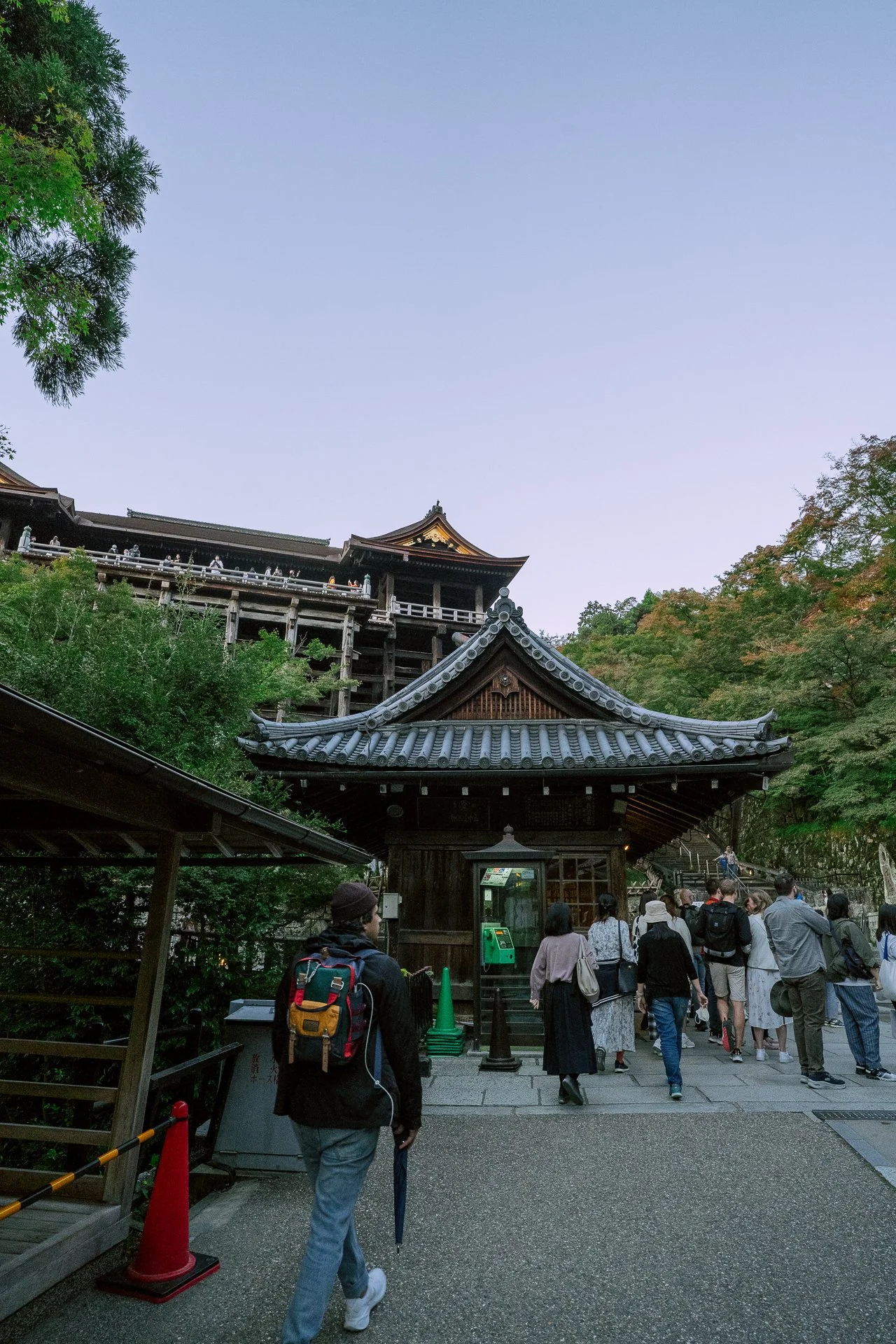
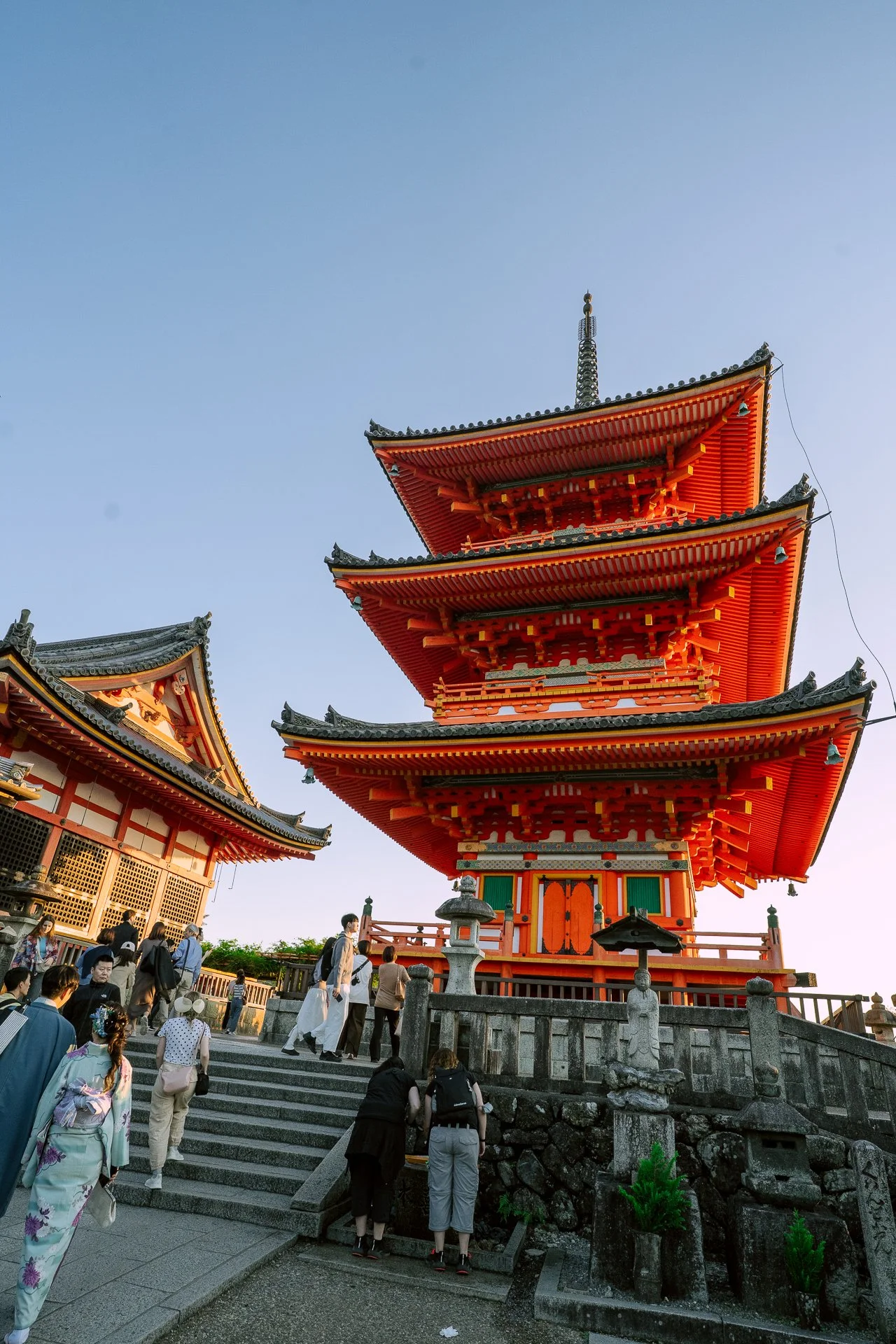
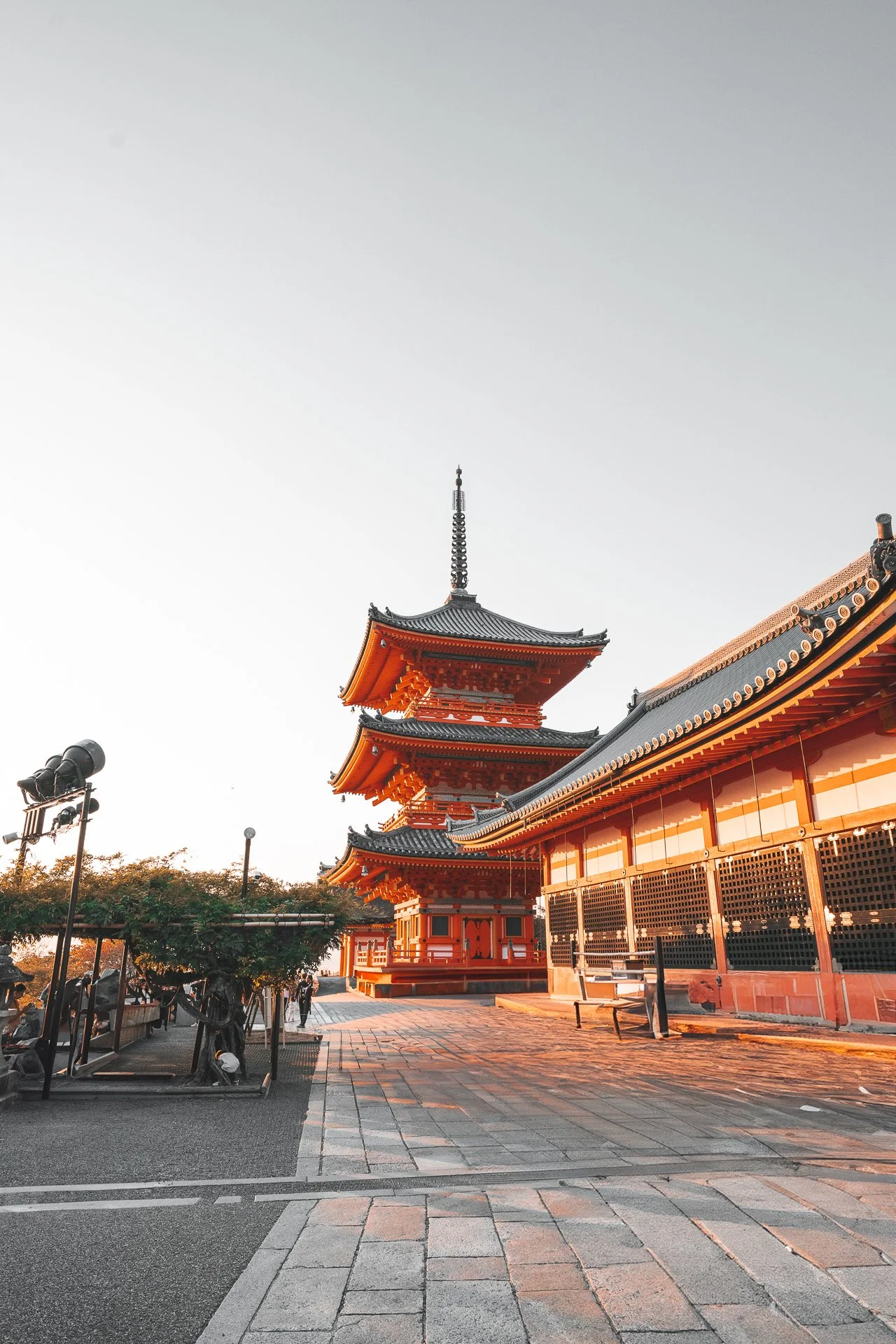
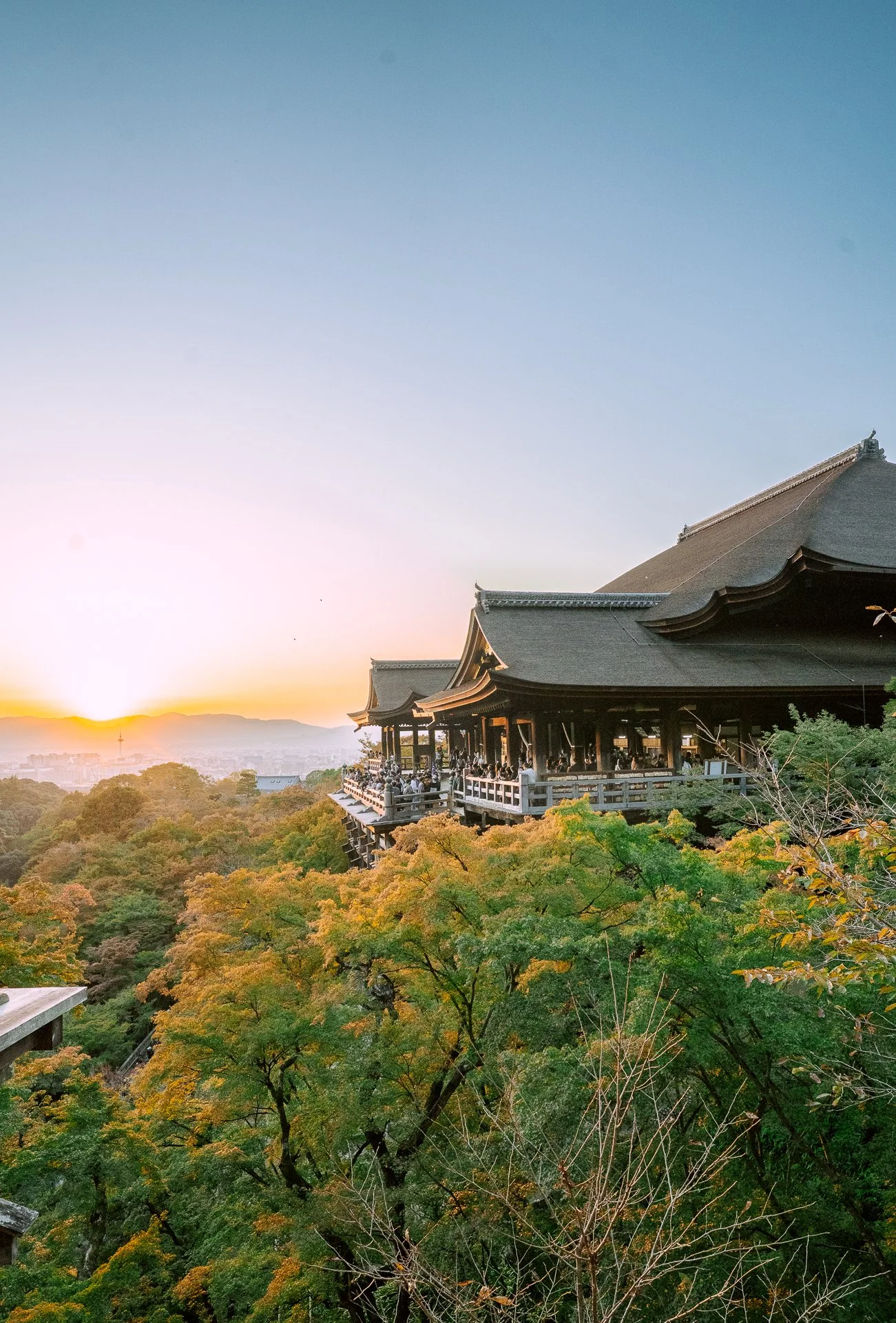
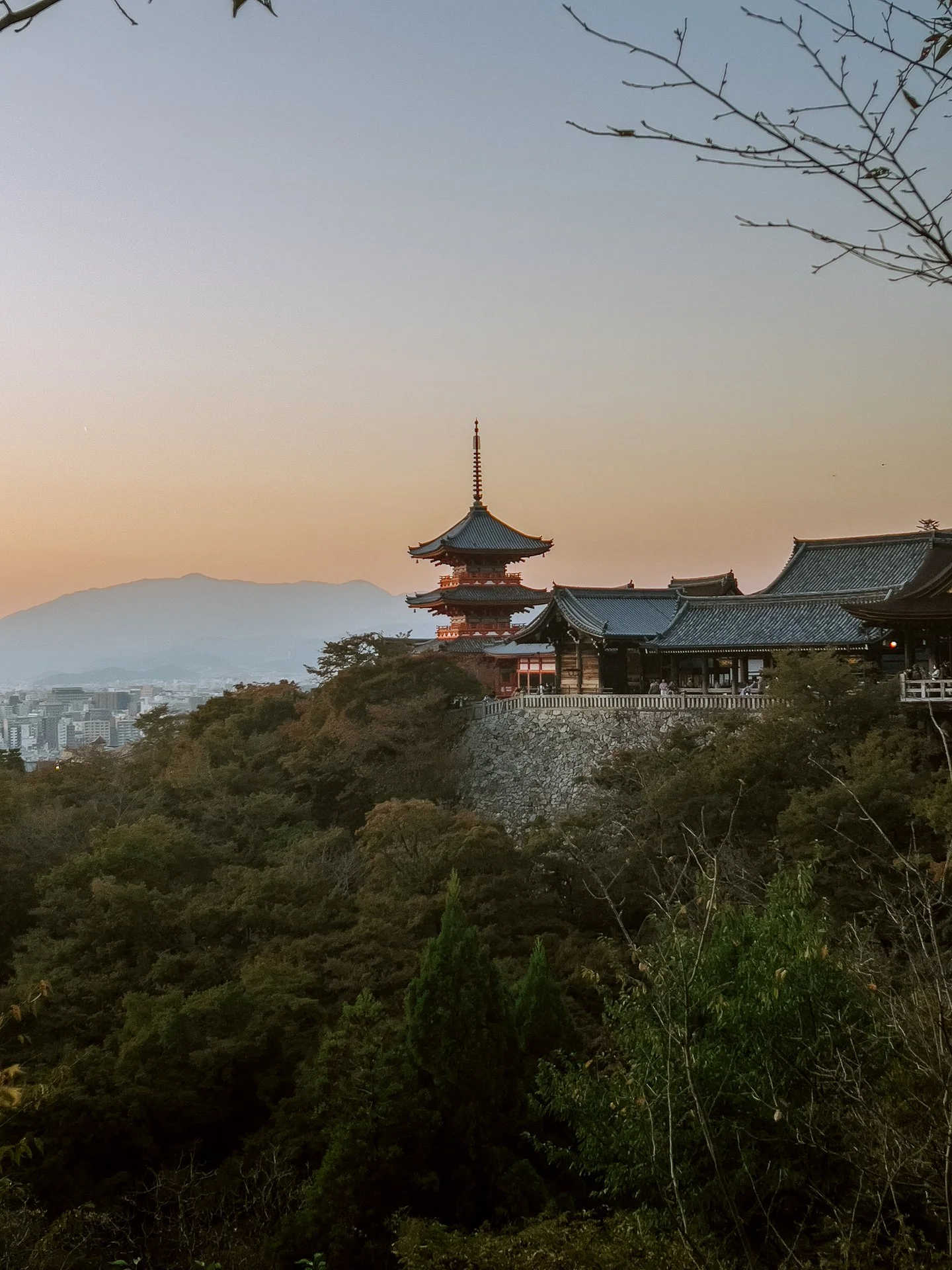
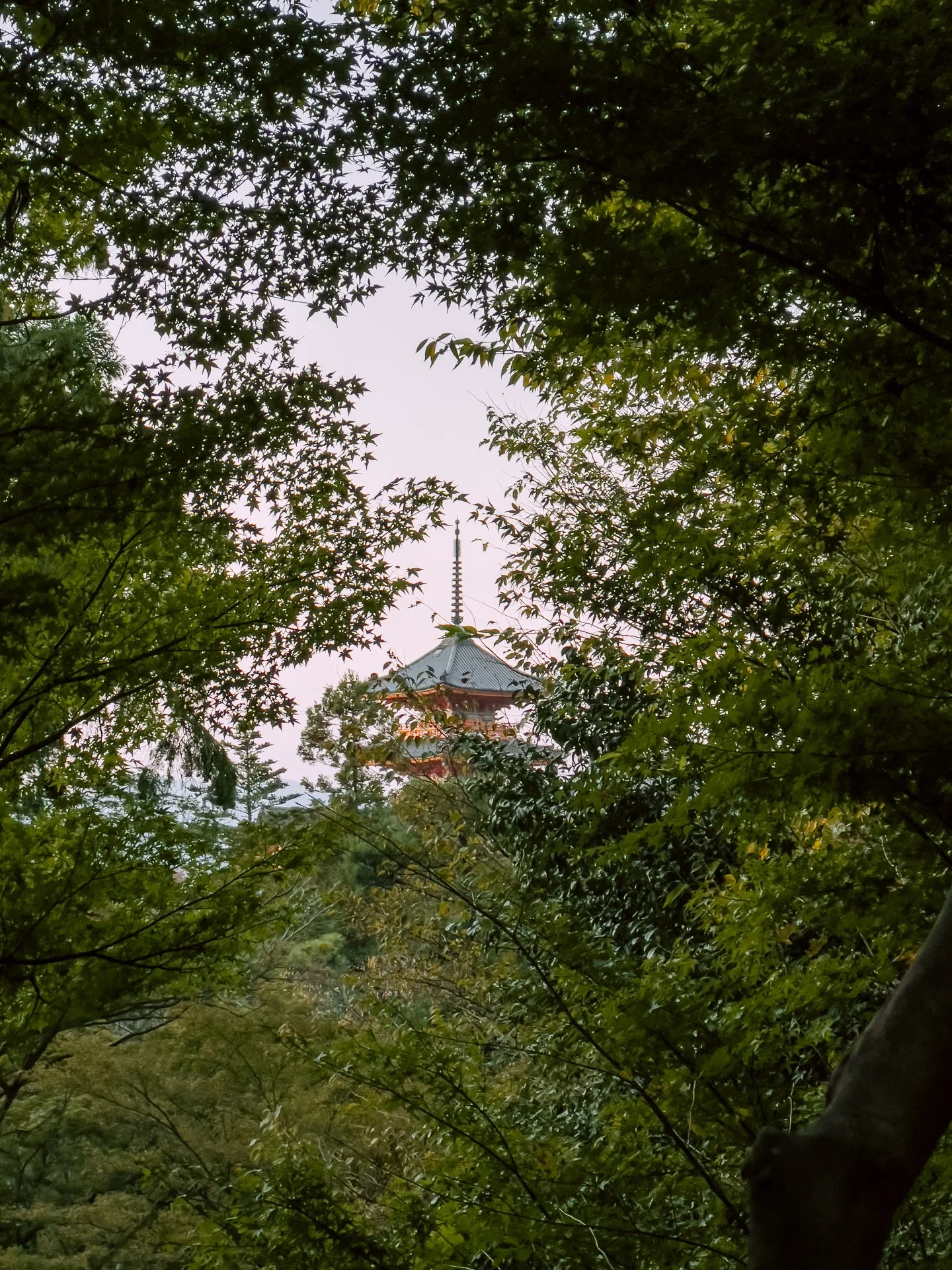
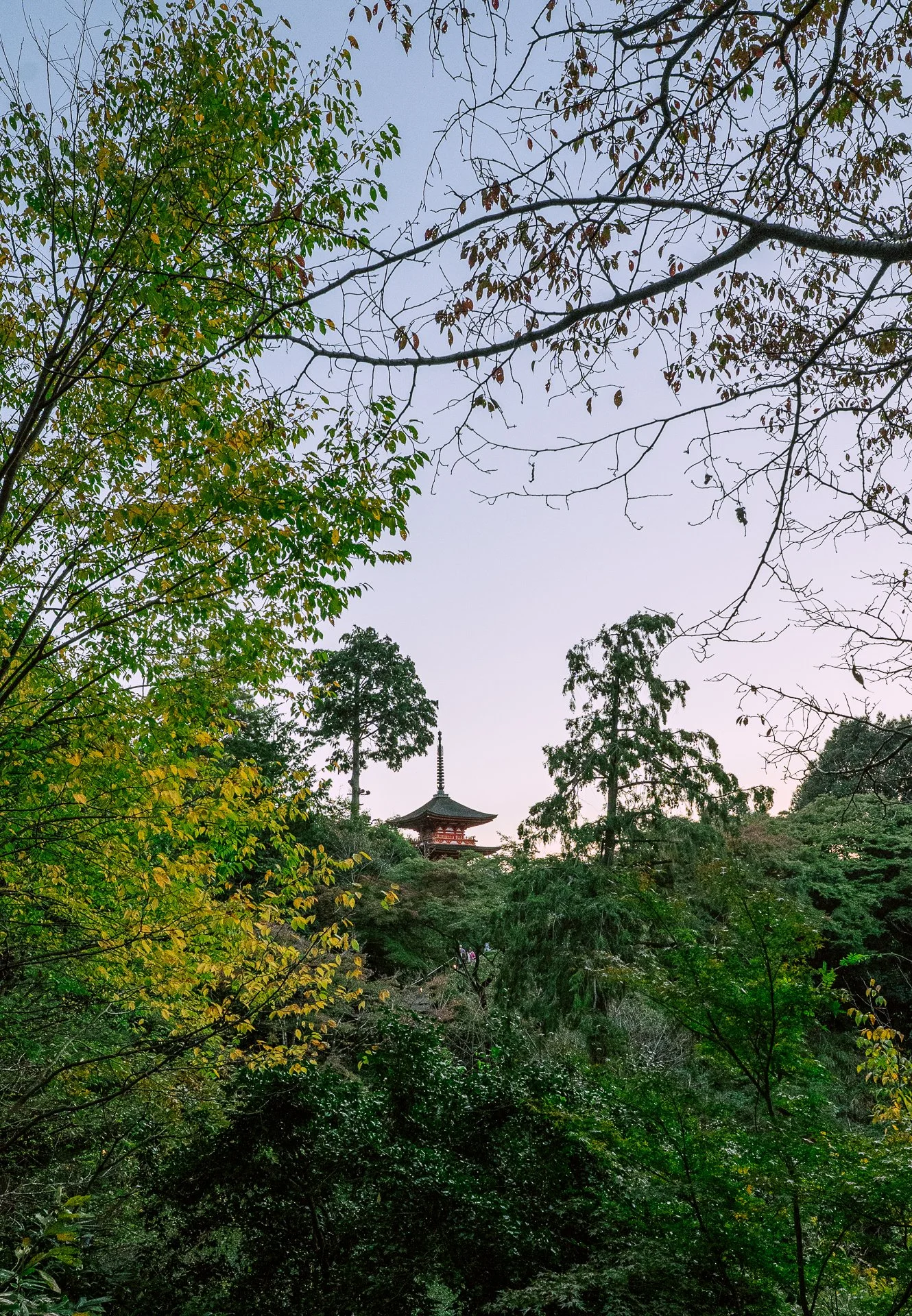
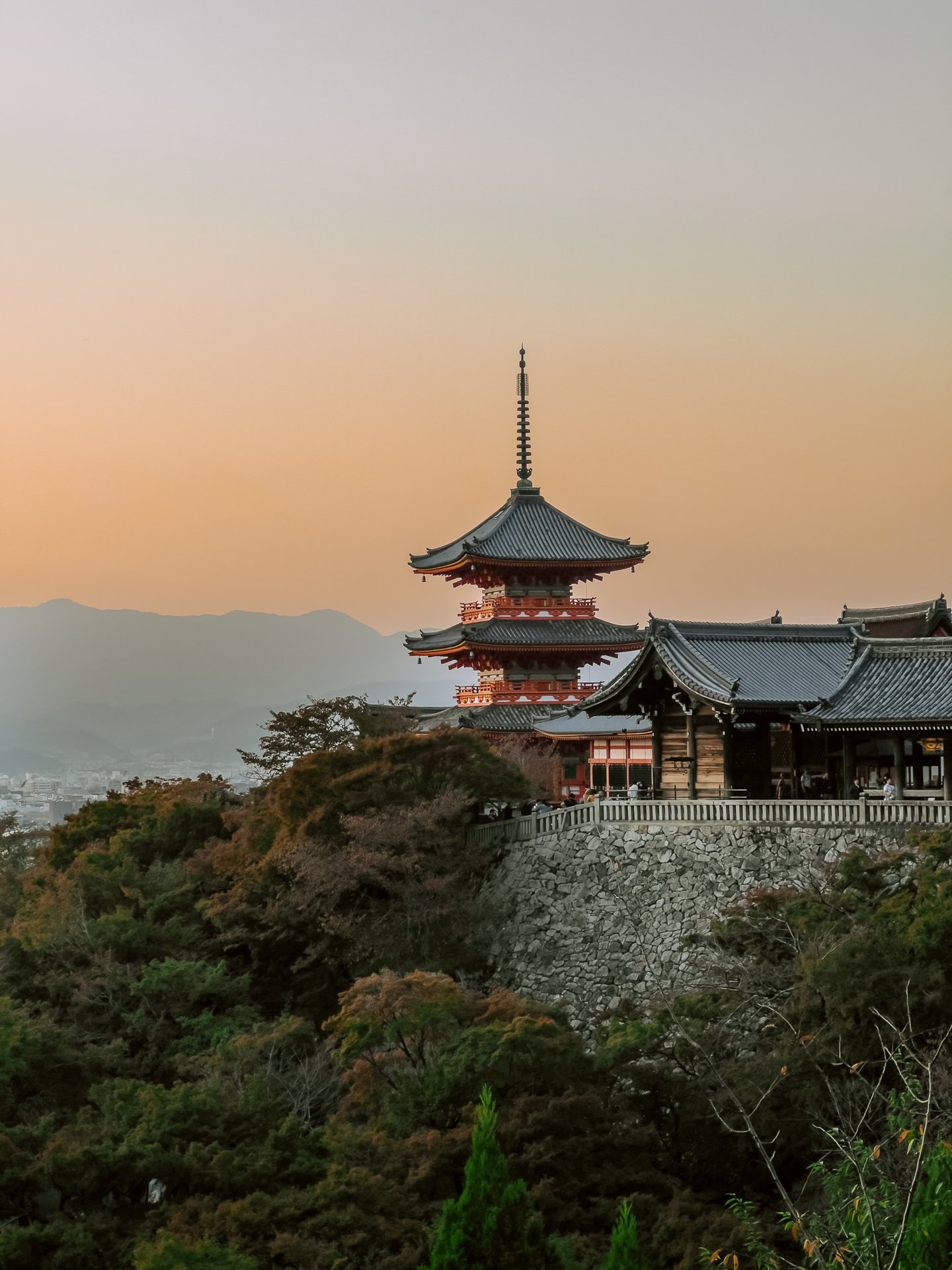
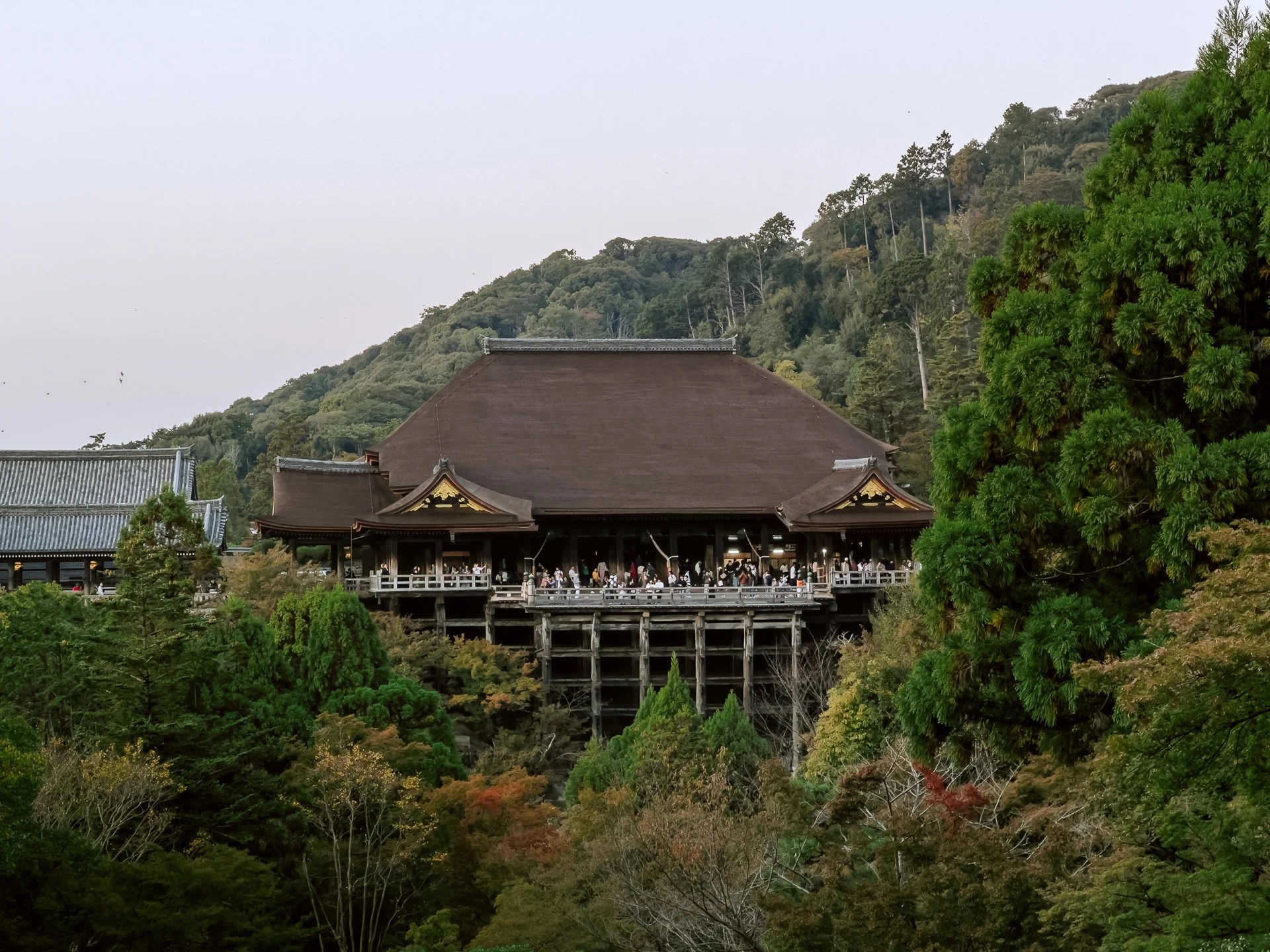
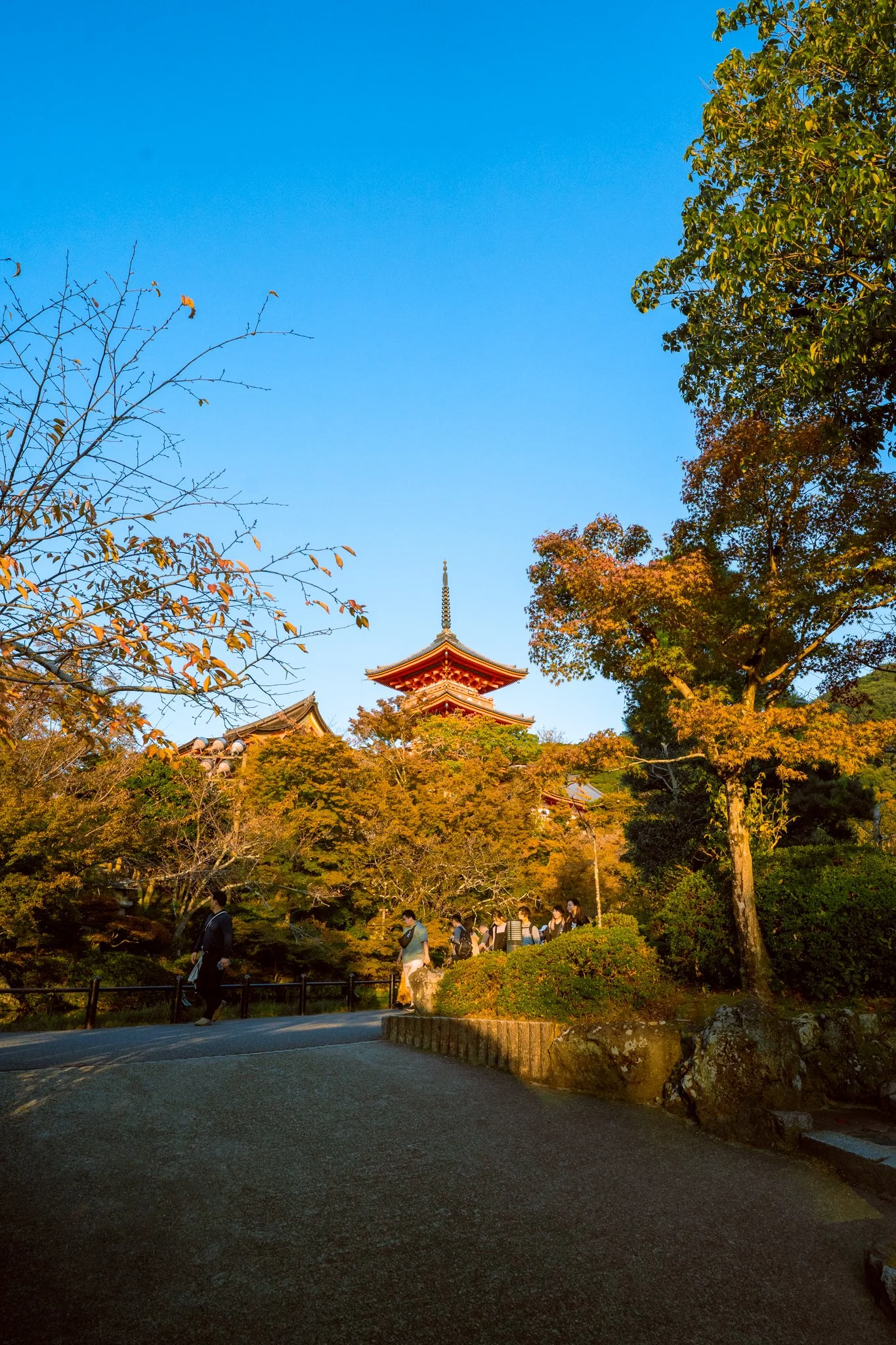
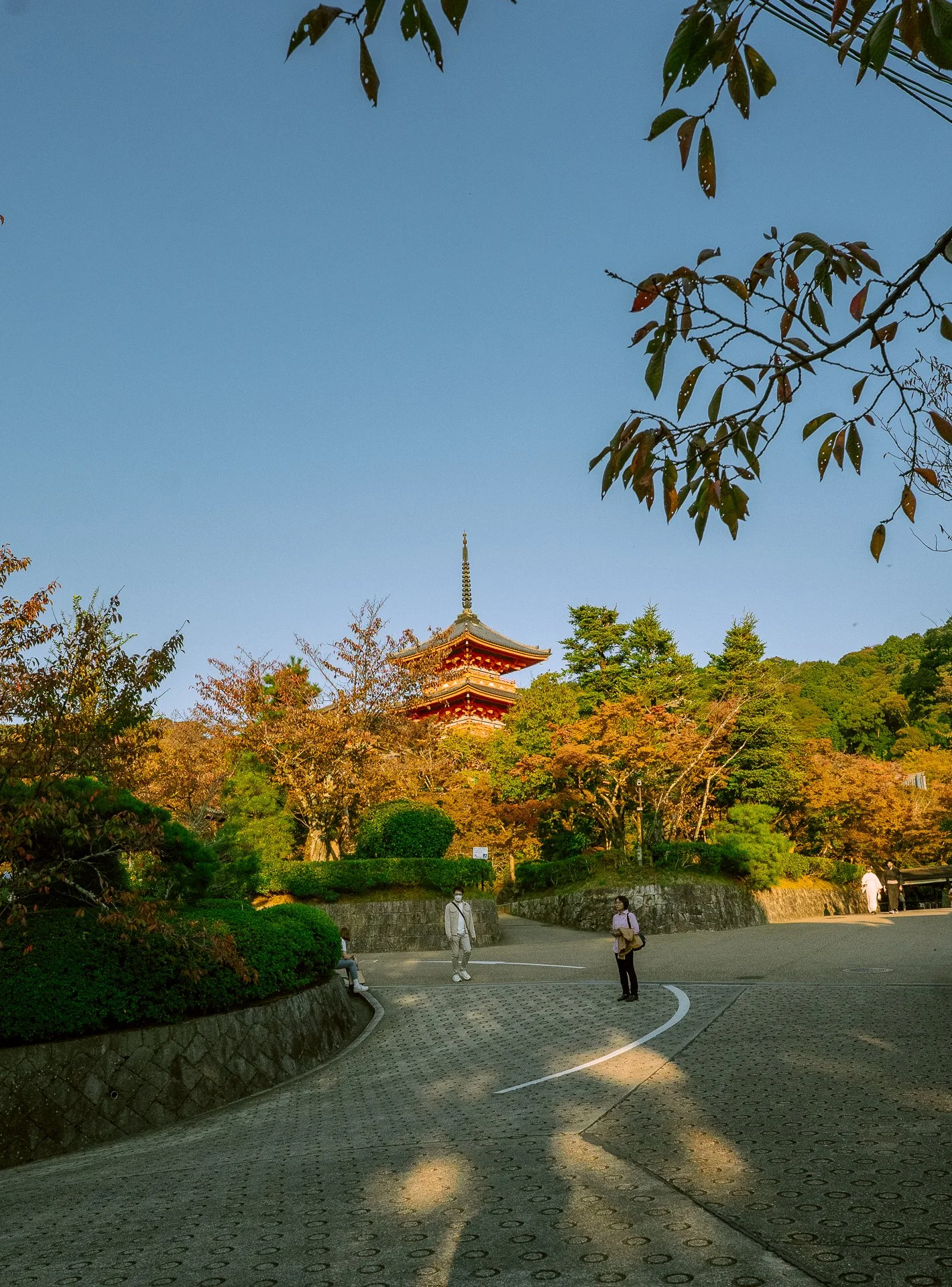
When I had decided in my head that we were certainly lost, lo behold on the immediate horizon, a pagoda floated into view. Kiyomizu Dera. Finally. And so far, we had encountered two other non-spectral humans. The belief in “less crowds in the evening” remained steadfast. Kiyomizu Dera is perched up on a hill and as we made our way up, we met a few more people. But nothing to really write home about. They were a smattering at best. But soon the smattering began mattering and by the time we reached the top level, it was a full blown crowd. We had come through the back and much less popular entrance. The main entrance and its paths were teeming with crowds. But again, all that just becomes background noise very quickly. The temple is majesty in itself, a guardian angel perched on the side of a cliff, watching over Kyoto like it has for over a thousand years.
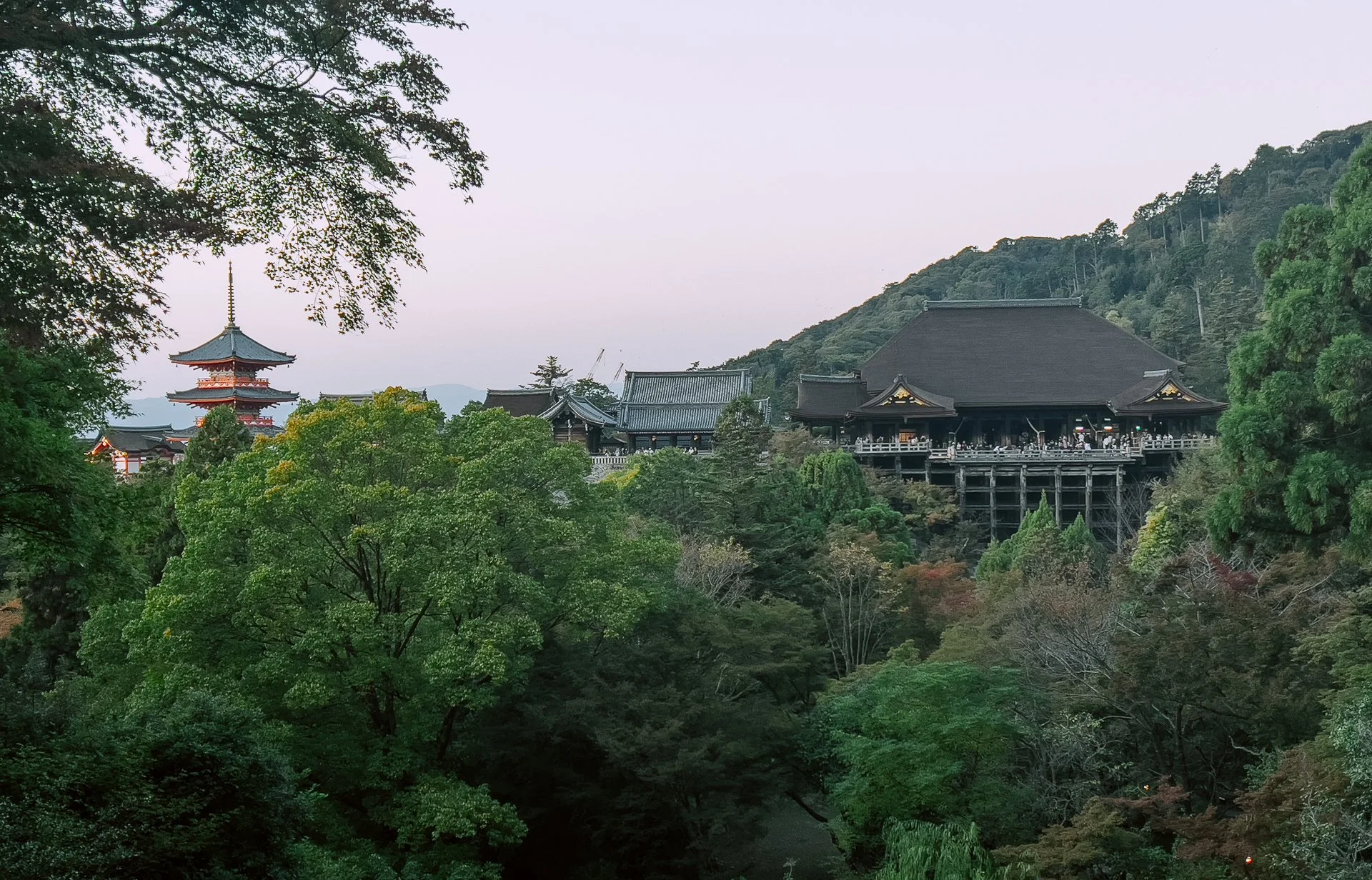
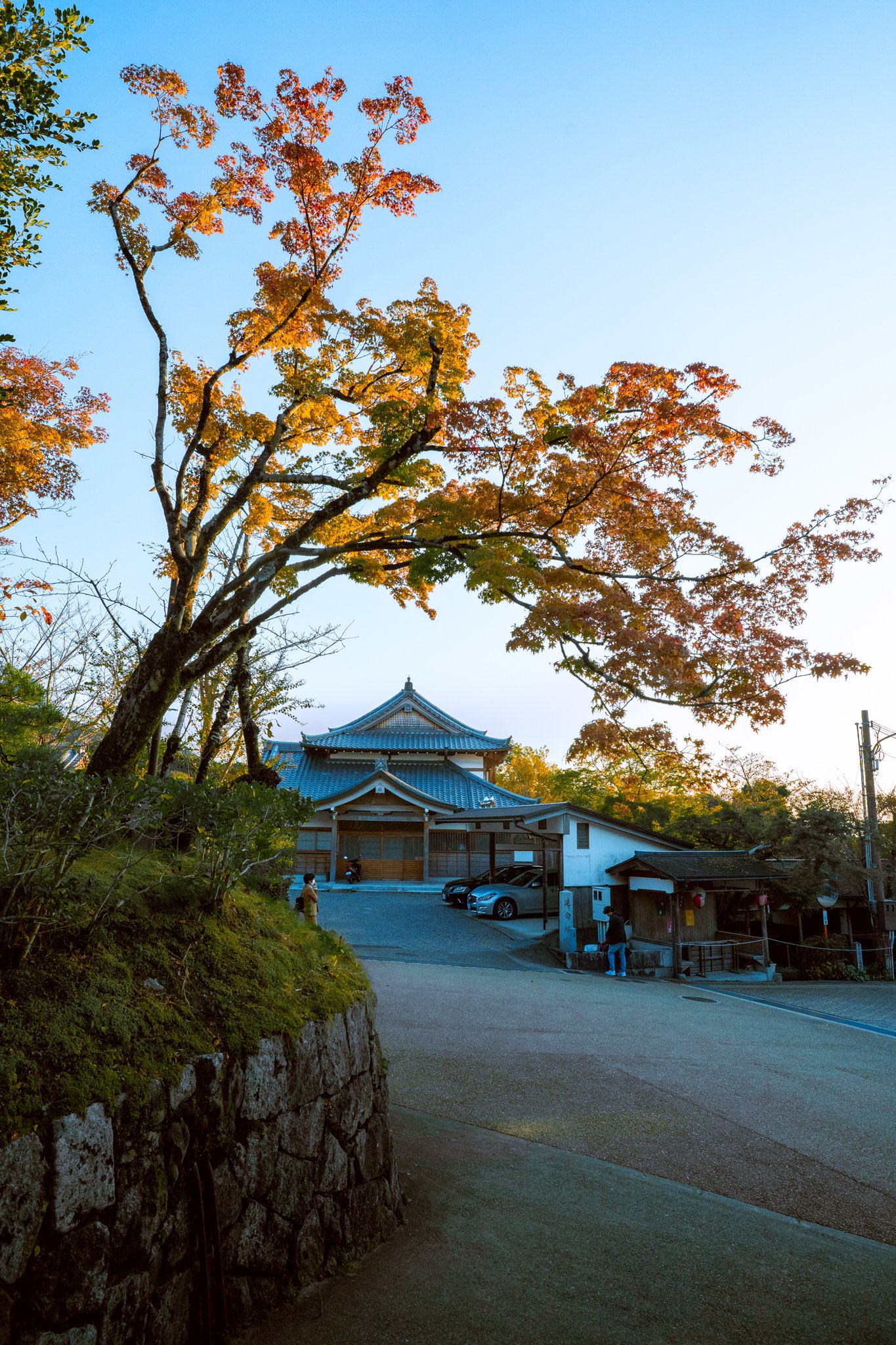
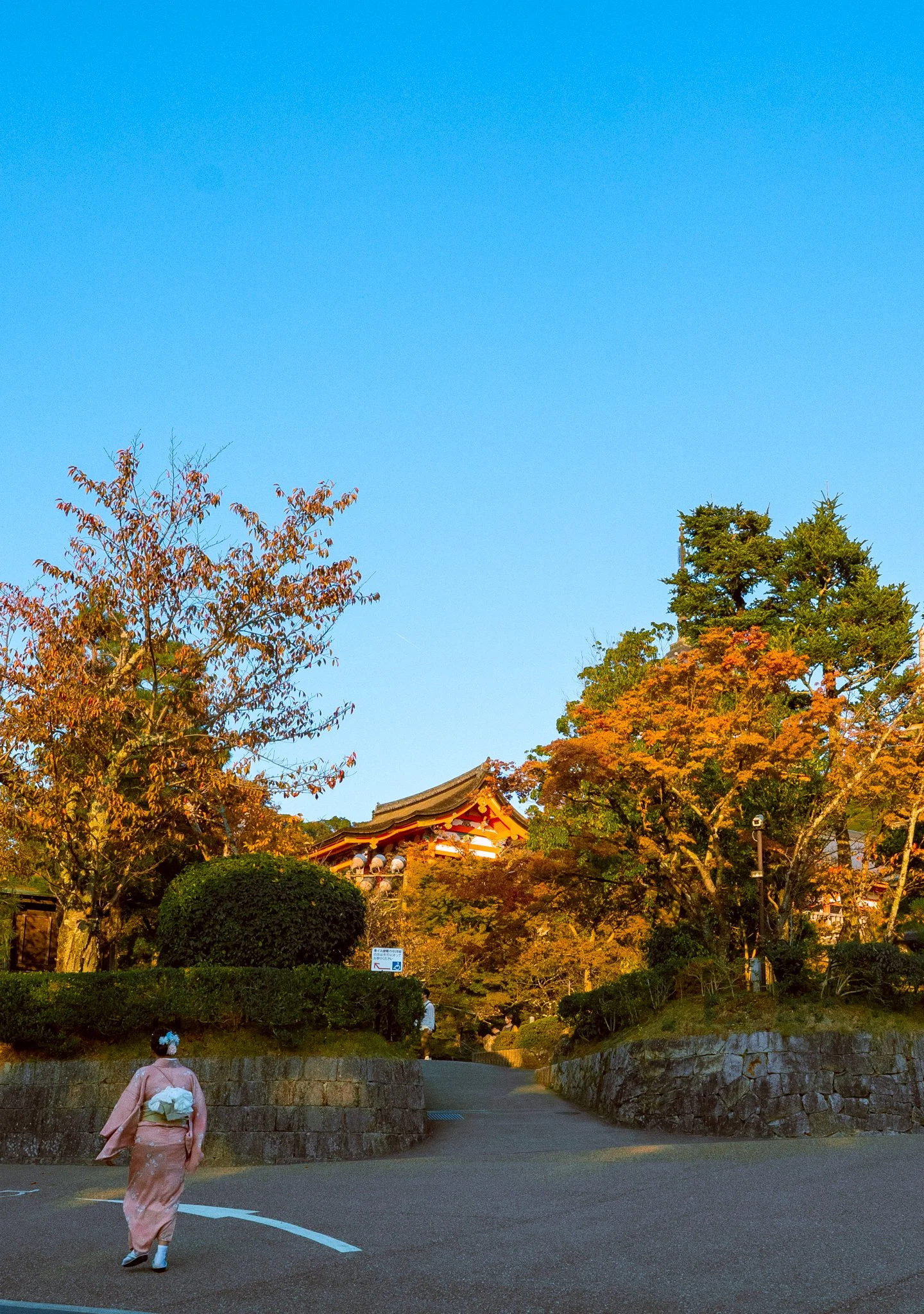
Kiyomizu literally means pure water and gets it name from the waterfall Otowa-No-taki. Drinking from the three separate streams apparently mean success in different, ermm, streams. Believers drink only from one stream, as the practice and propriety goes. The right stream is for health and longevity, the middle one for luck in matters of the heart and romance, and finally the left for academic excellence and success. The resident deity of the temple is Kannon - the Bodhisatva of Compassion. It’s no surprise then, that the temple has a very guardian angel aura. The Blue Dragon on the temple grounds is literally a guardian spirit of Kyoto and legend has it that it swoops down every night from the skies to sip from the temple’s sacred springs.
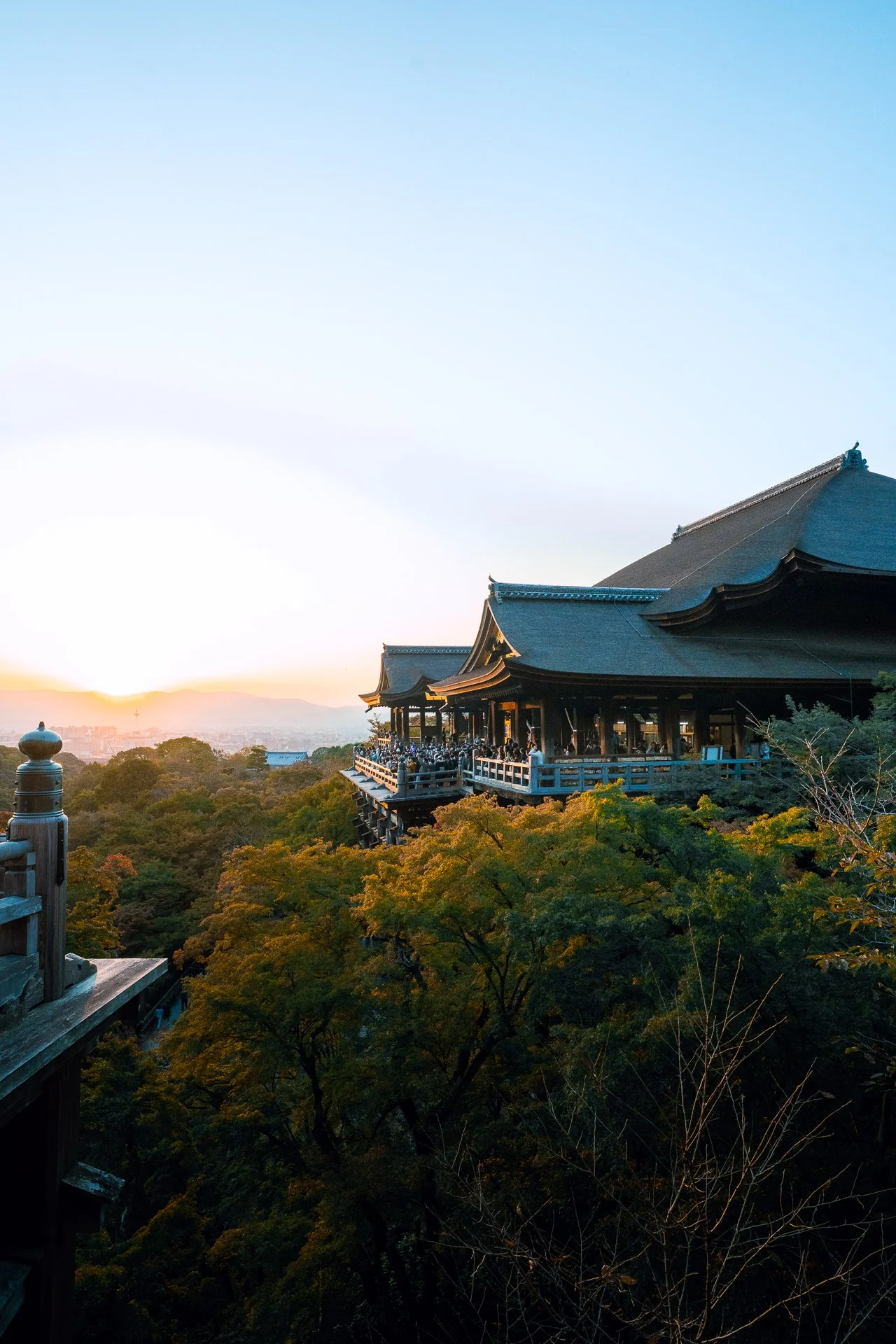
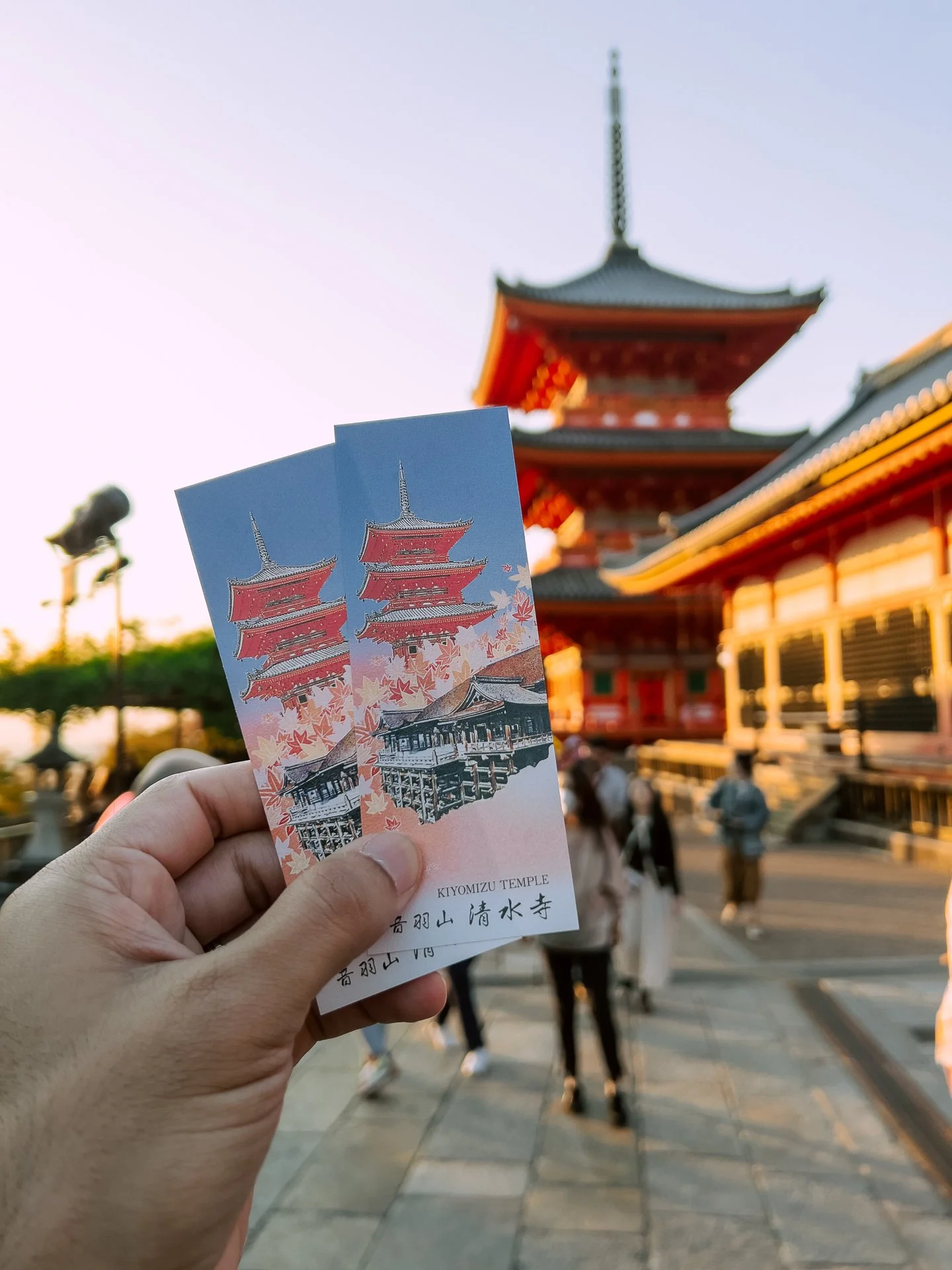
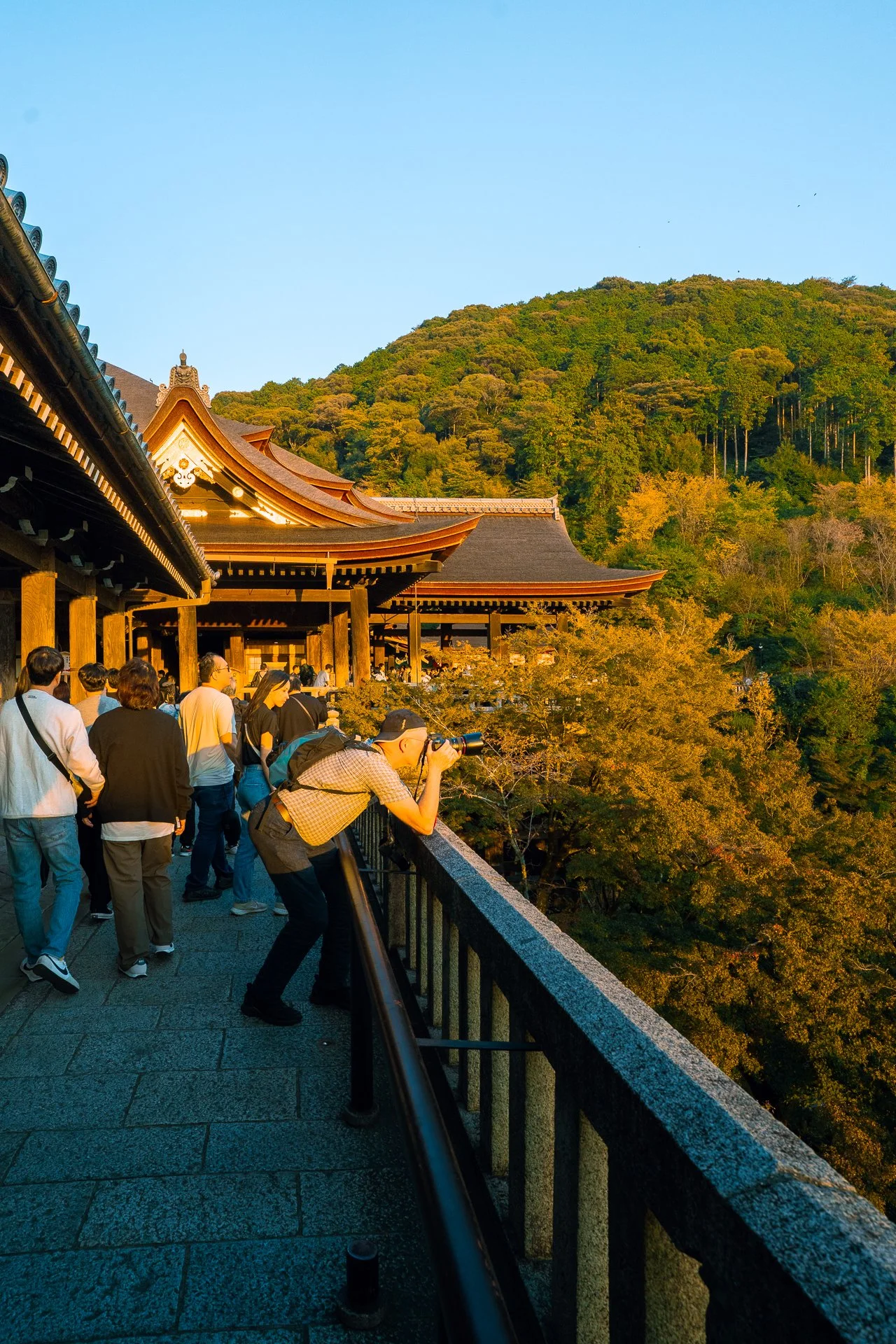
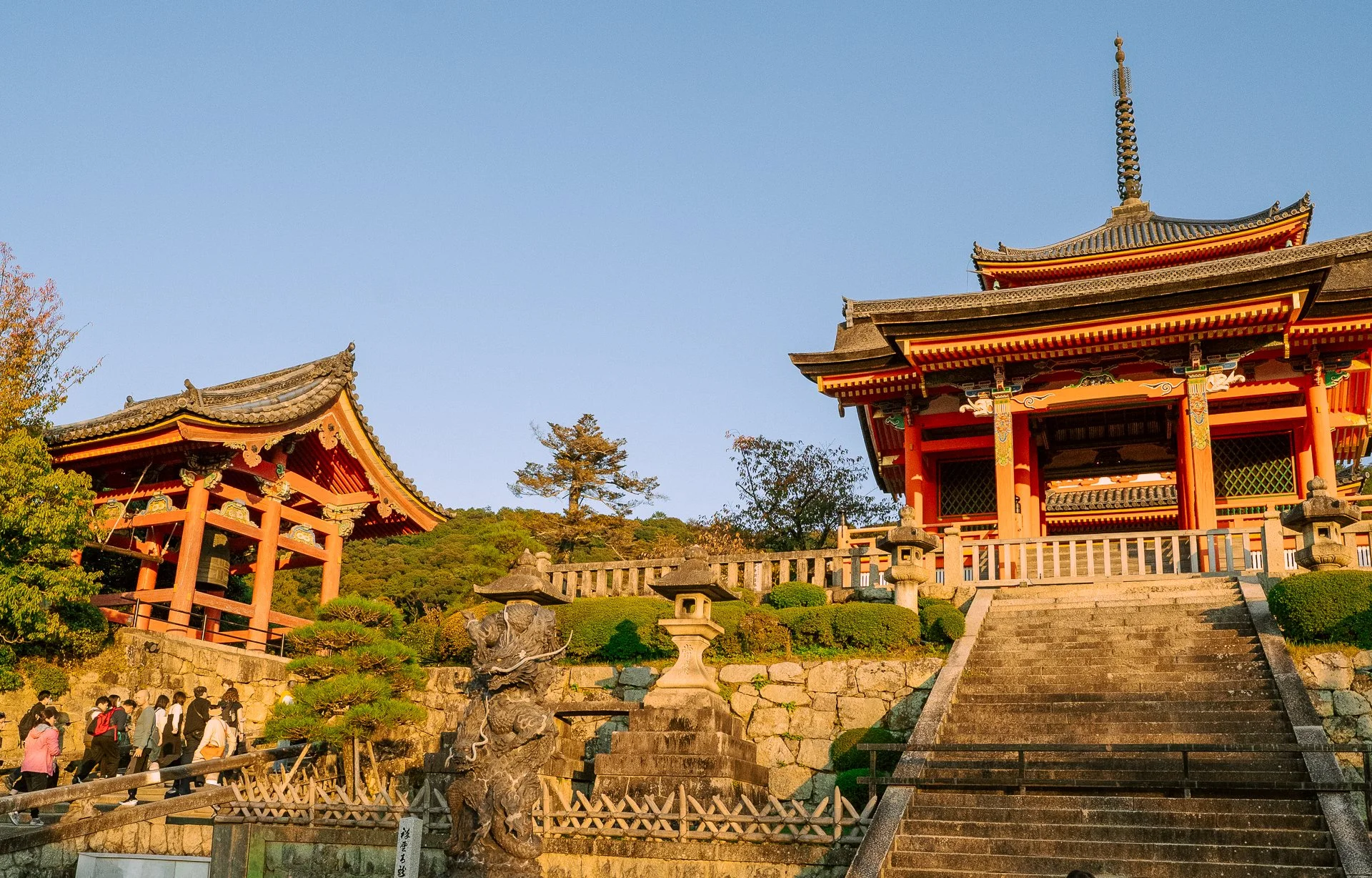
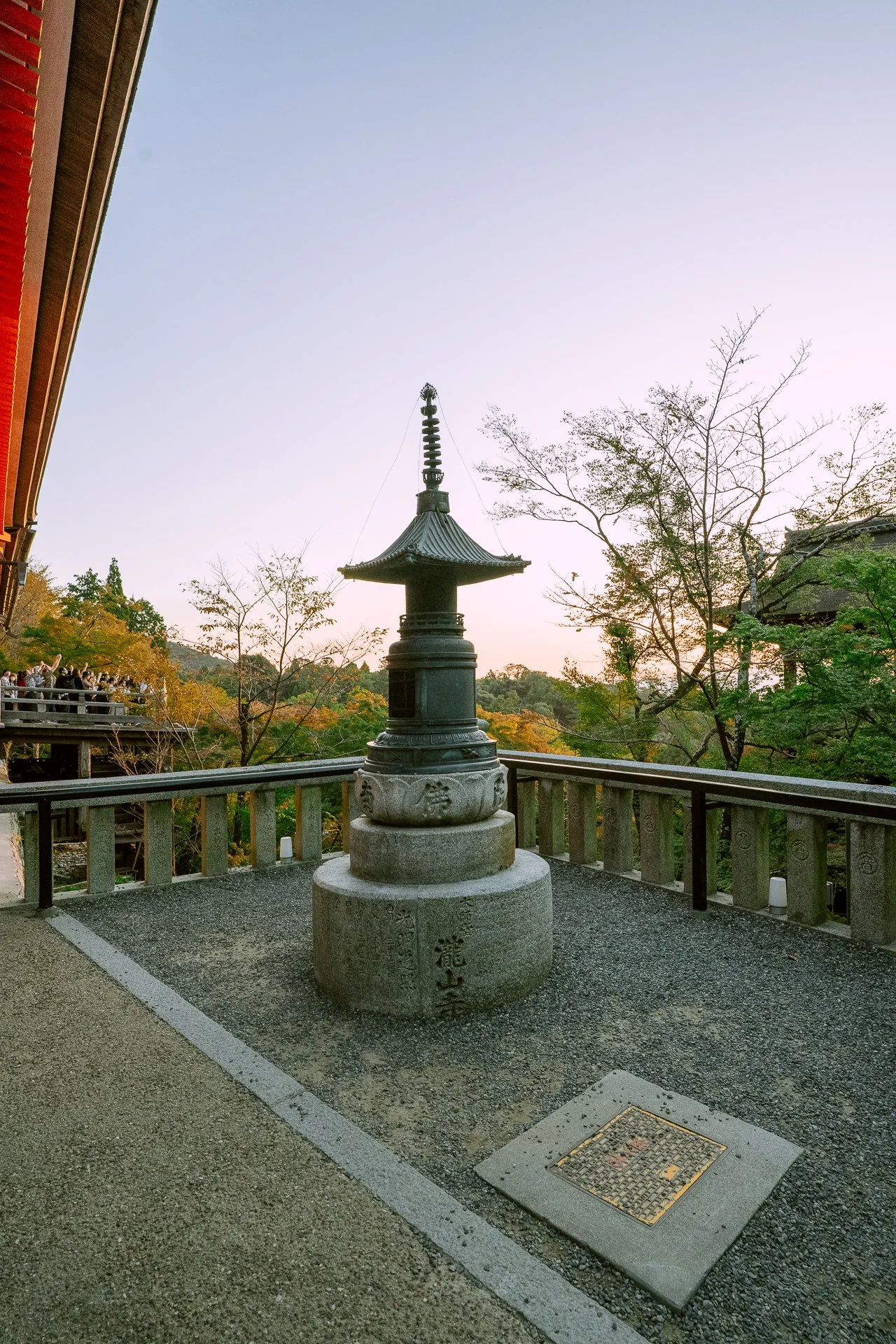
I couldn’t shake off the feeling that somehow the temple was engineered to include beauty and an appreciation for the everyday gifts of nature. The sweet caress of the wind. The diaphanous light filtering through a verdant cosmos of maple leaves. An epiphany of a sunset. The gratitude from knowing that you’re lucky to experience the precarious benevolence of nature and wisdom to not take it for granted. Kiyomizudera is a prayer in itself. And turns out that this very temple was popular for the practice of Nissokan - a traditional Buddhist meditation practice of looking at a sunset and envisioning the Western Pure Land of paradise from the West Gate or Sai-mon (mallu internal giggle). Life is a miracle and it was good to be reminded of that.
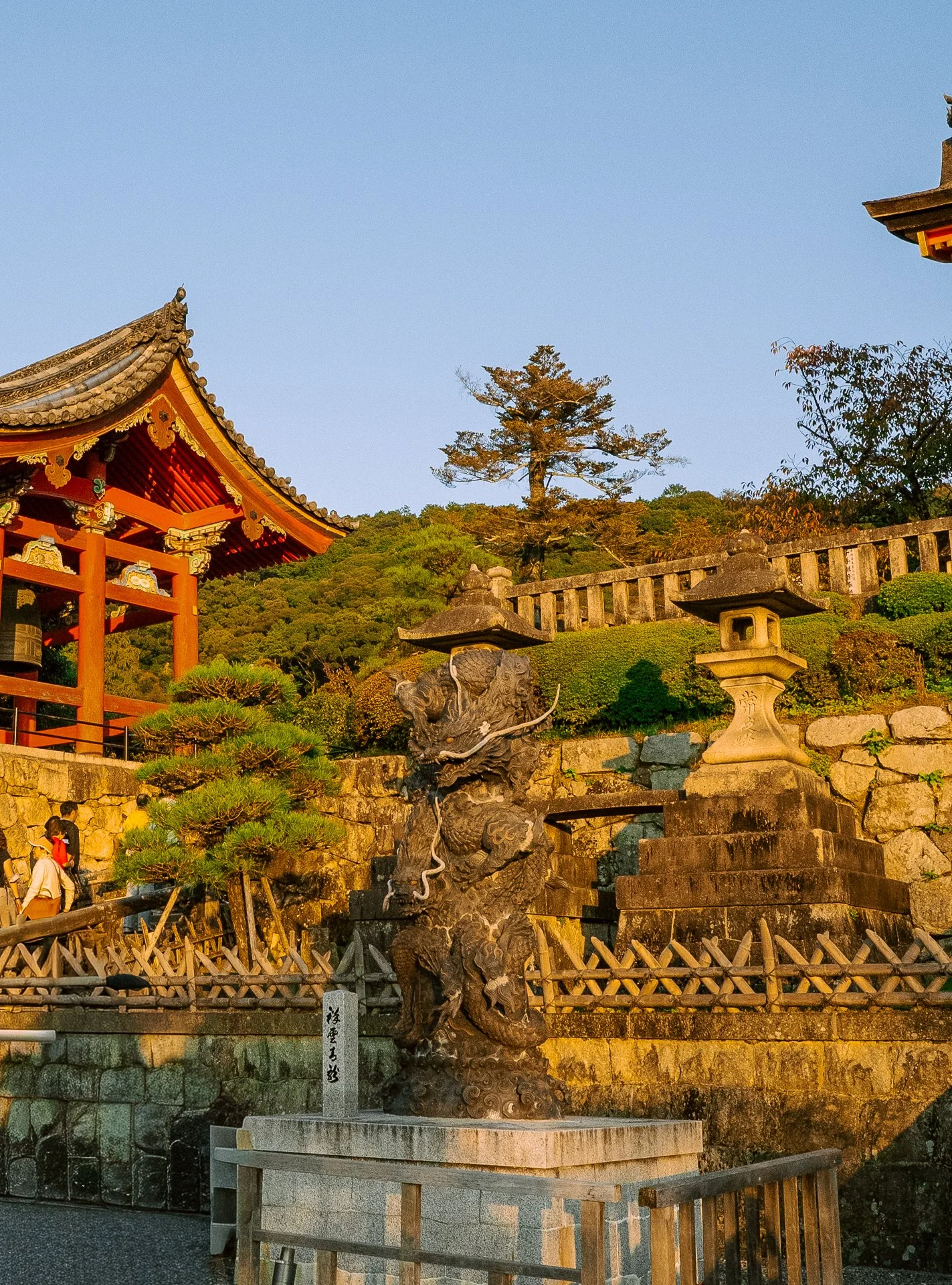
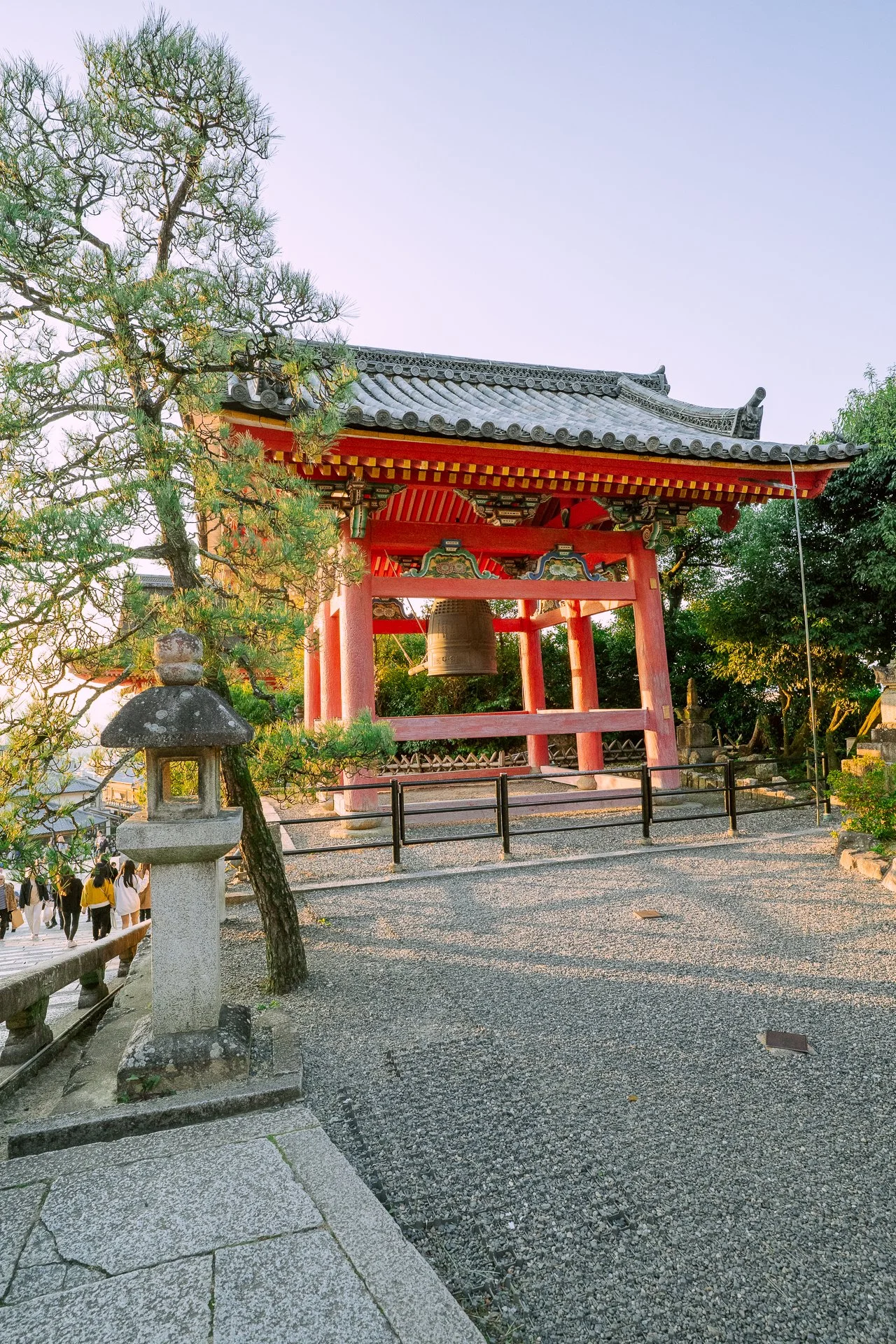
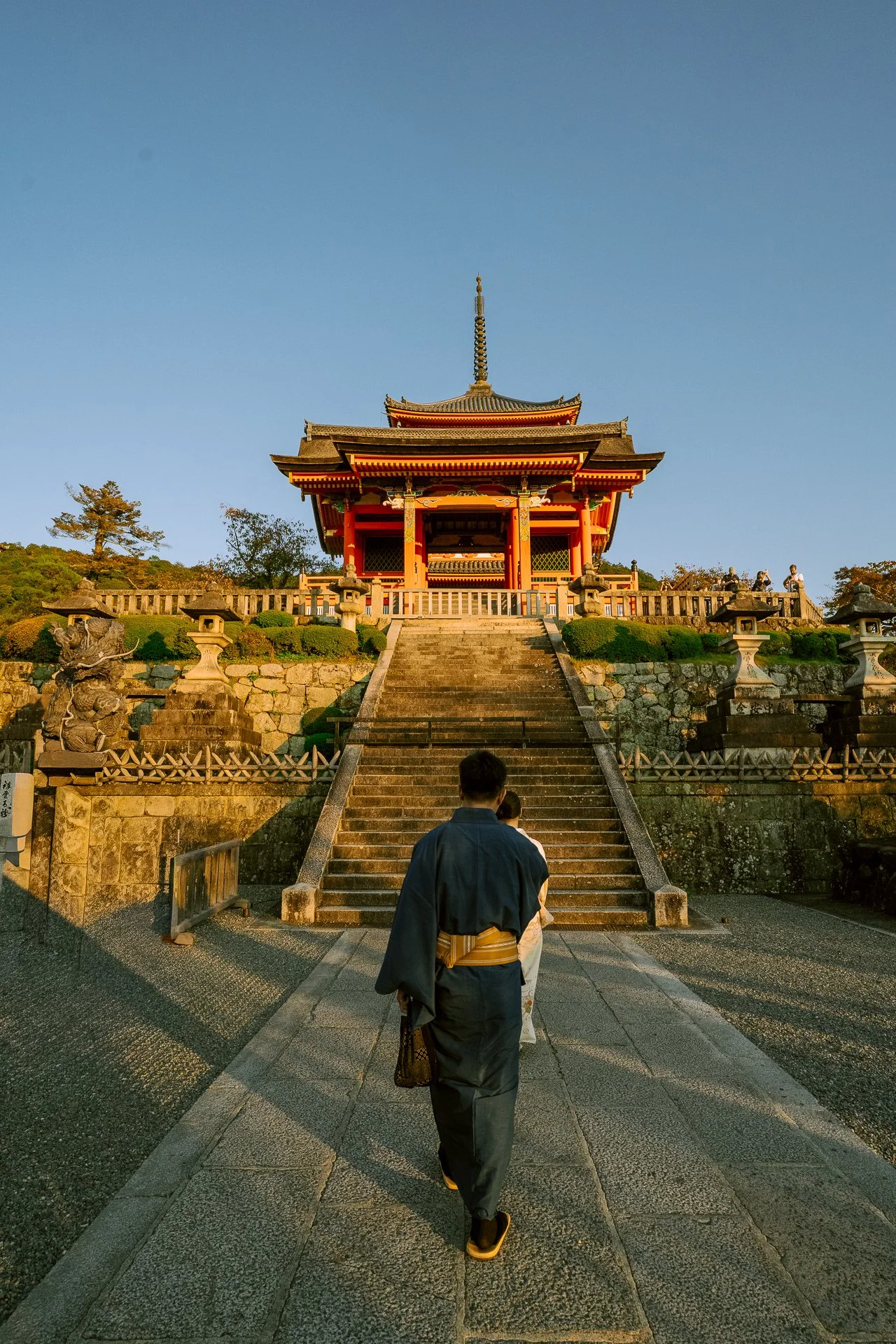
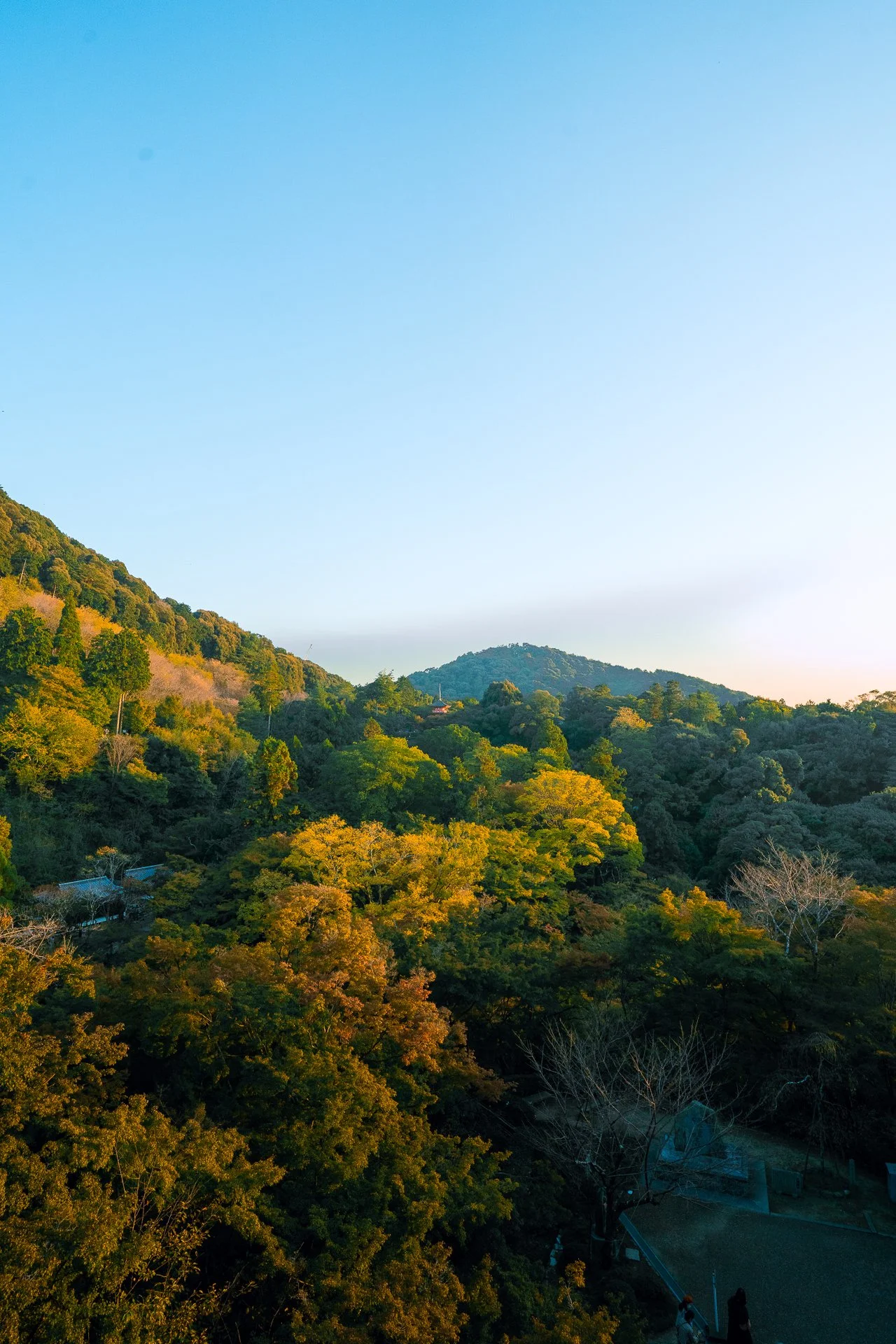
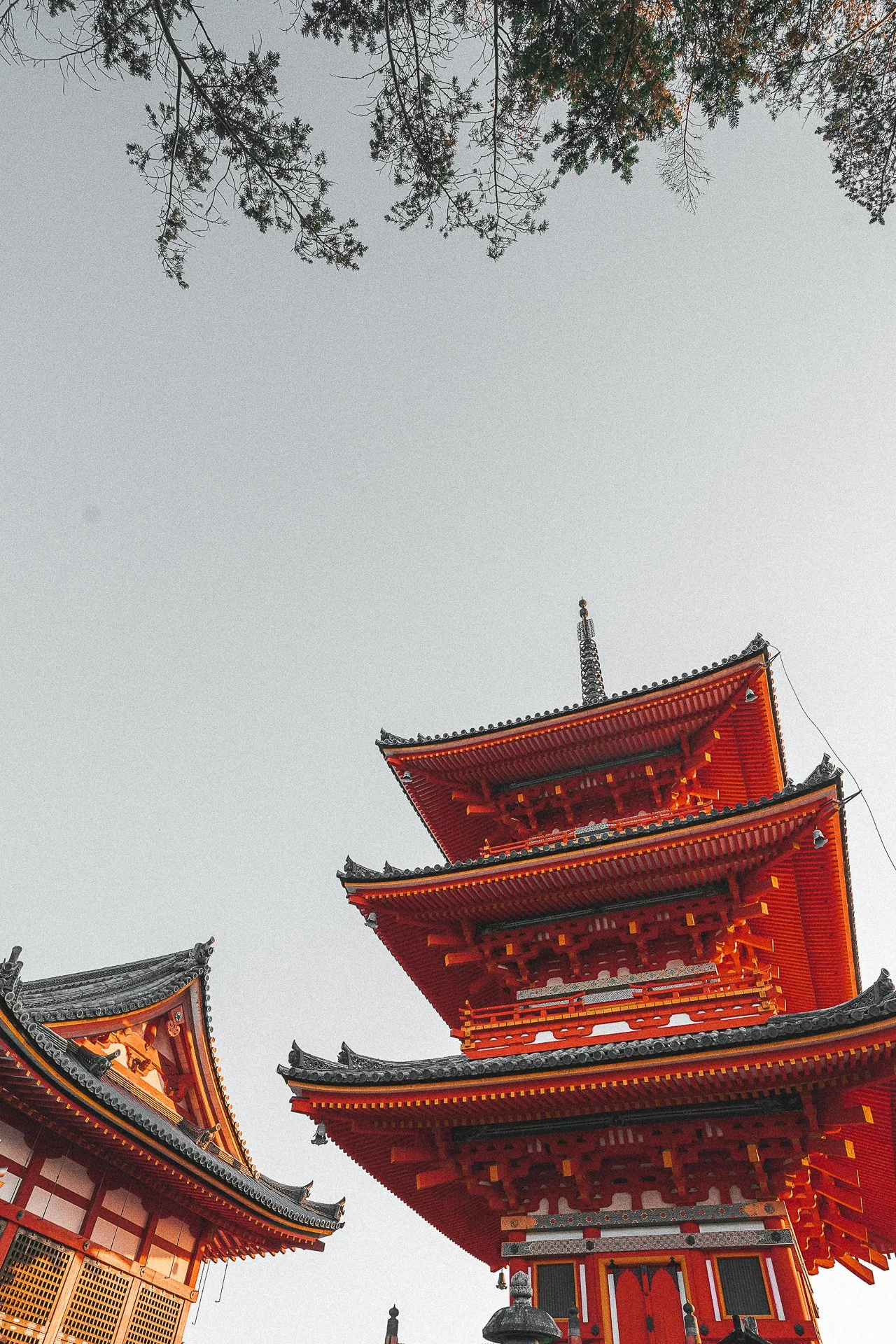
On this magical November evening, the angel and us enjoyed vistas of gold. Autumn wasn’t quite in full pageantry but it was beginning to bring out its finery, its *koyo*. There was a shiver of autumnal colours in the greens of the maples. A silken tapestry of topaz and amethyst. The reds of the pagoda burned deep, the jade of the maple leaves waxed sparkly, in an excess of filigreed shadows and silhouettes. The moments were generously portioned out benedictions. The seconds, punctuated with gasps and skipped heartbeats. If love ever was in the air, this was it. The universe reminding me that I was loved, that I was blessed and that I was always going to be alright. In the distance, Kyoto Tower waved out to us. Kyoto sunsets are indeed made to be remembered.