Kyoto Day Trip - Arashiyama: Magic, Mystery and Masses of People
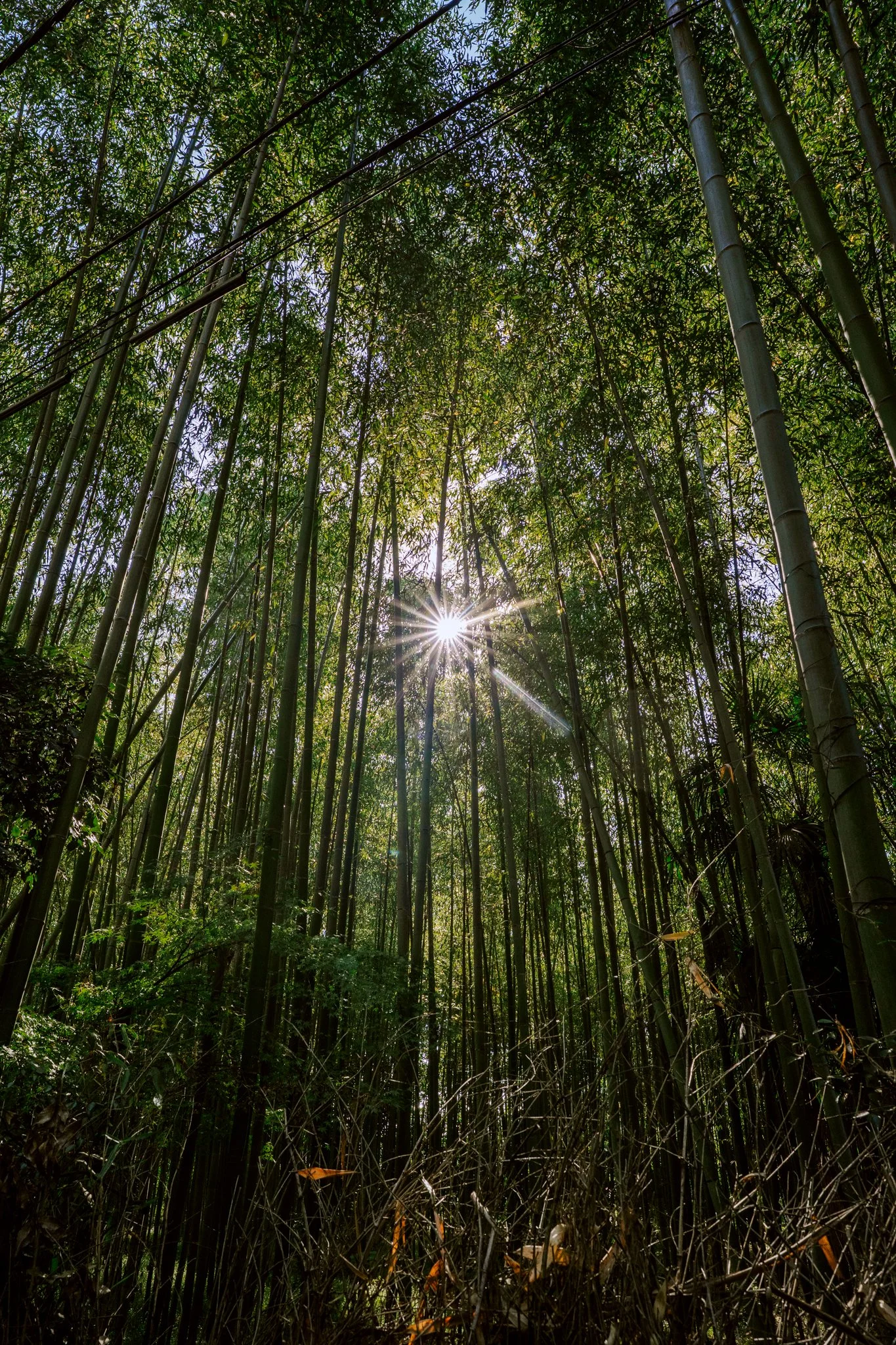
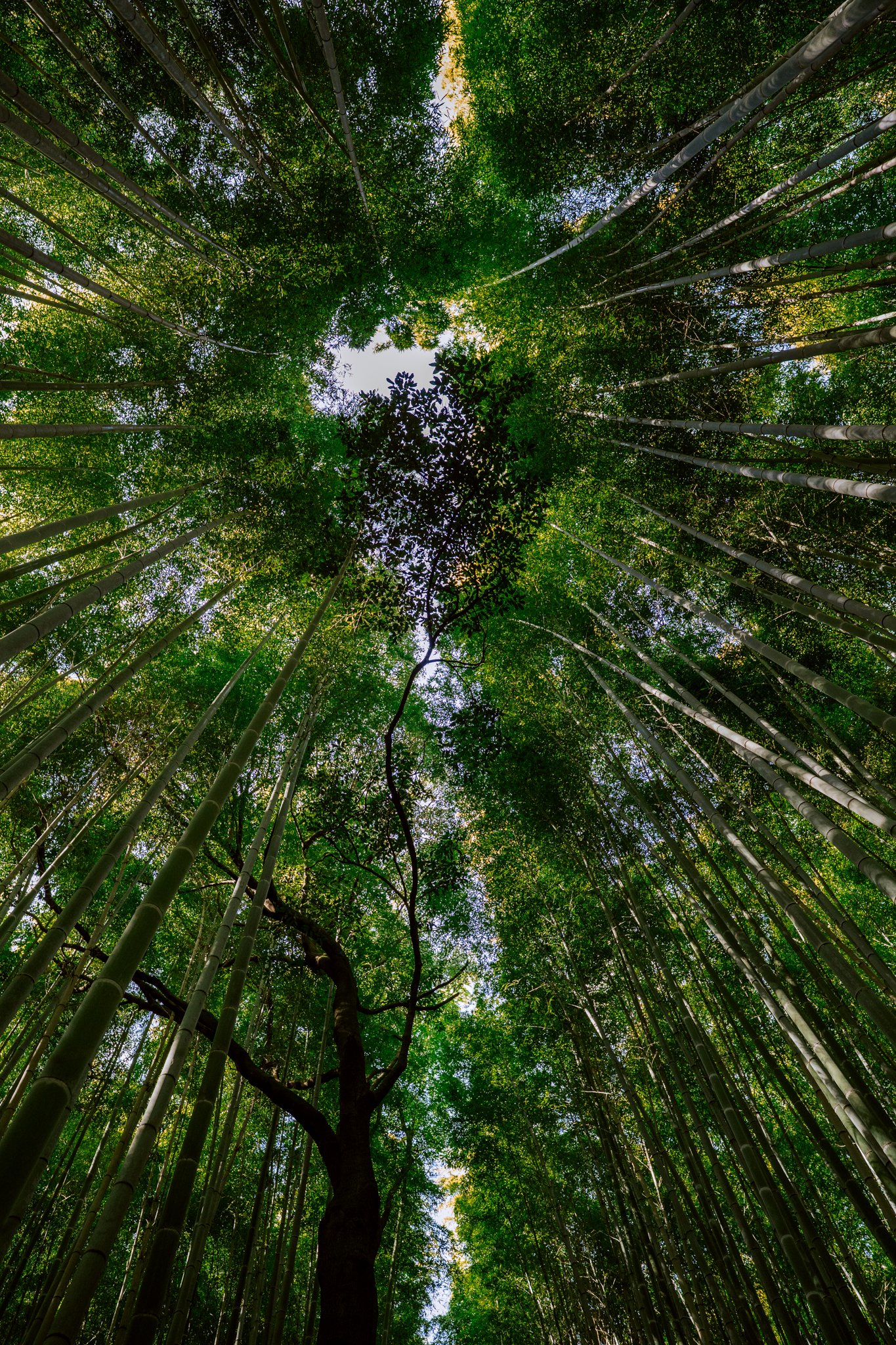
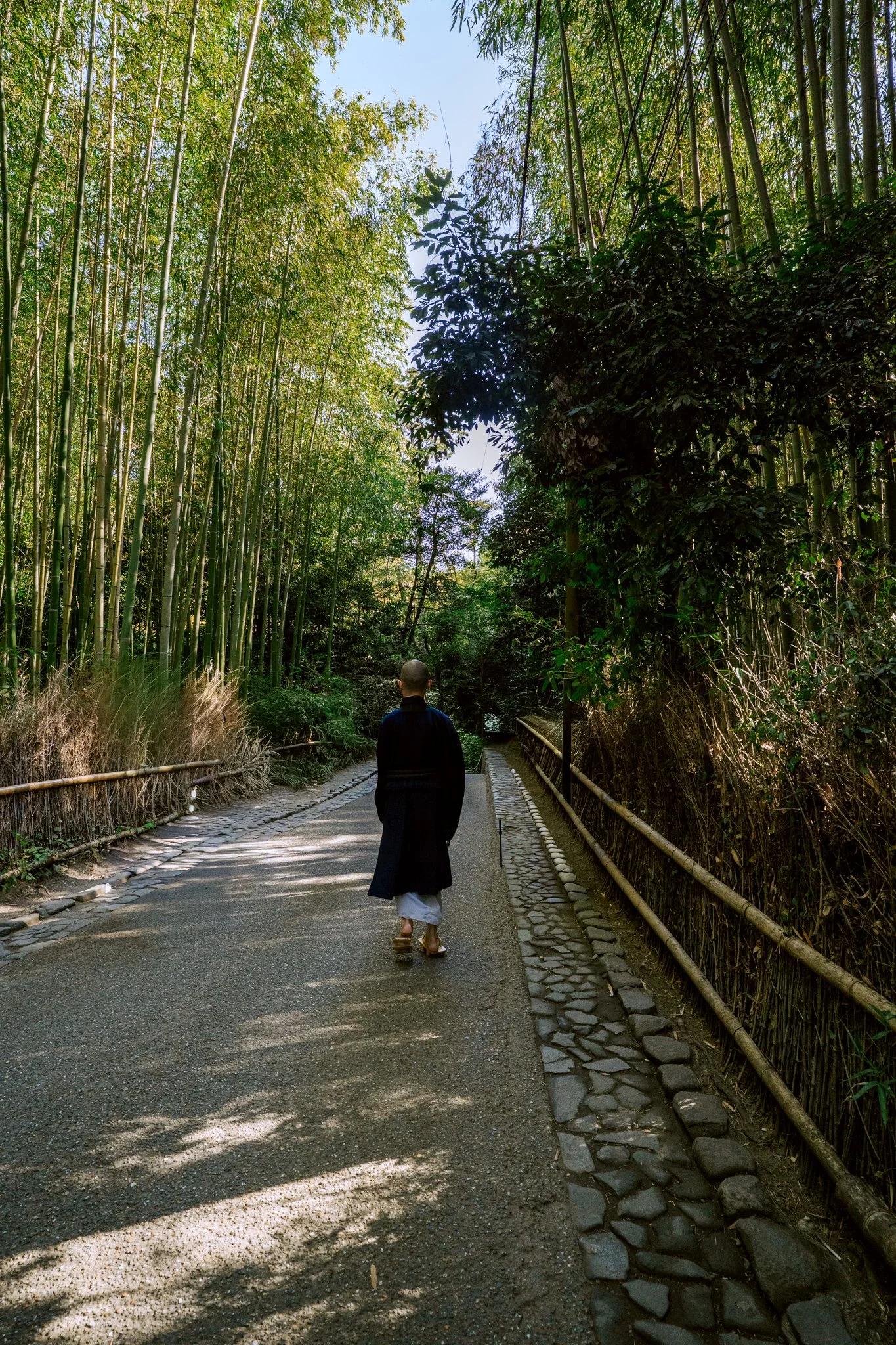
Arashiyama is a lot more than just a crowded bamboo grove. Though I must say, the bamboo forest is quite magnificent. Despite jostling for space with countless fellow tourists, this jade corridor holds light in the way that only gem stones know how. You never quite forget how the sunlight filters down layers of shimmering bamboo leaves, to caress your face. You won’t forget that absinthesque air that bewitches you from the moment you enter this living, shivering canopy. And you won’t forget trying in vain to get one decent photo. But hey, the gods must have favoured me because I got a few.
But I’m getting ahead of myself. Arashiyama is a very crowded 20 minute train ride from Kyoto. A prelude to the crowds you will encounter at Arashiyama, if you will. We found Kyoto Station quite easy to navigate, even though multiple distractions (so many fun shops) twist your neck and attention span in every which way. We found our way to our platform with just one incident of getting lost. Mid-morning is usually when the bamboo forests are at peak crowd status - and of, course we were going to be part of peak crowd.
Entering Arashiyma is like slipping into a jade-versed phrase in the book of time. An older phrase but punctuated heavily with modern day styles. The casually dressed tourists stick out in this place that is heavy with old world charm, the tourist traps withstanding. Its beauty is so uninhibited, that despite the tourists, the crowds, the abject in-your-face-ness of if all, Arashiyama remains unforgettable. And if anybody tells you that it’s overrated, don’t believe them. Following the crowd from the station takes you directly to the Togetsukyo Bridge. The Katsura River is silver with autumn river sprites that invite you to linger around for longer: to take in the deepening colours that slowly turn the hillsides gold and red. There is a nori-like crunch in the air, and you really want to stay on this bridge that looks so ancient that it feels like it connects not just geographic shores but also historic ones. A mere traverse upon this bridge puts you in dire danger of becoming a poet. This eternal witness to the seasons having their way with the Arashi hills - the pink blooming, the waxing verdant and the goldening and deep crimson blushing - several centuries worth of enchantment must have rubbed off on it. You can feel it in your bones, this electricity that makes the very light prismatic. An emperor once observed that it appeared like the moon made it way across the bridge as the night progressed, giving it its name Moon Crossing Bridge. Perhaps a bride making her way to fulfil her tryst with her groom. Or a soul making the passing to the other side. The silver water laughs its silver knowing laugh at your fancies. You’re not the first to be so bewitched and you won’t be the last.
We could have stayed there all day, but Arashiyama is a treasure trove waiting to be experienced. In retrospect, it’s embarrassing that my research was so shallow that I’d specifically researched just two places and the rest were just happy gifts, acts of benevolence from the gods of Arashiyama.
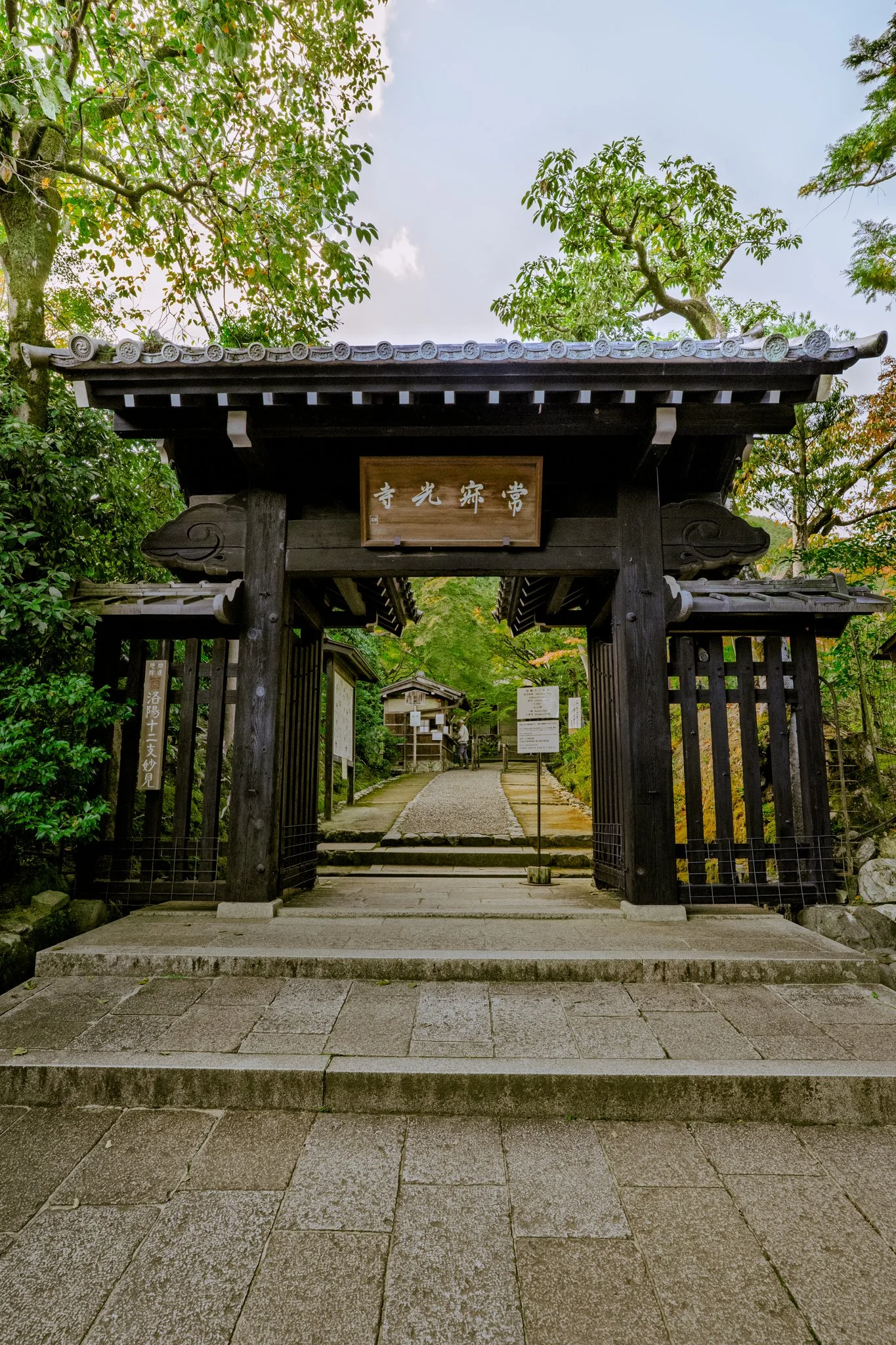
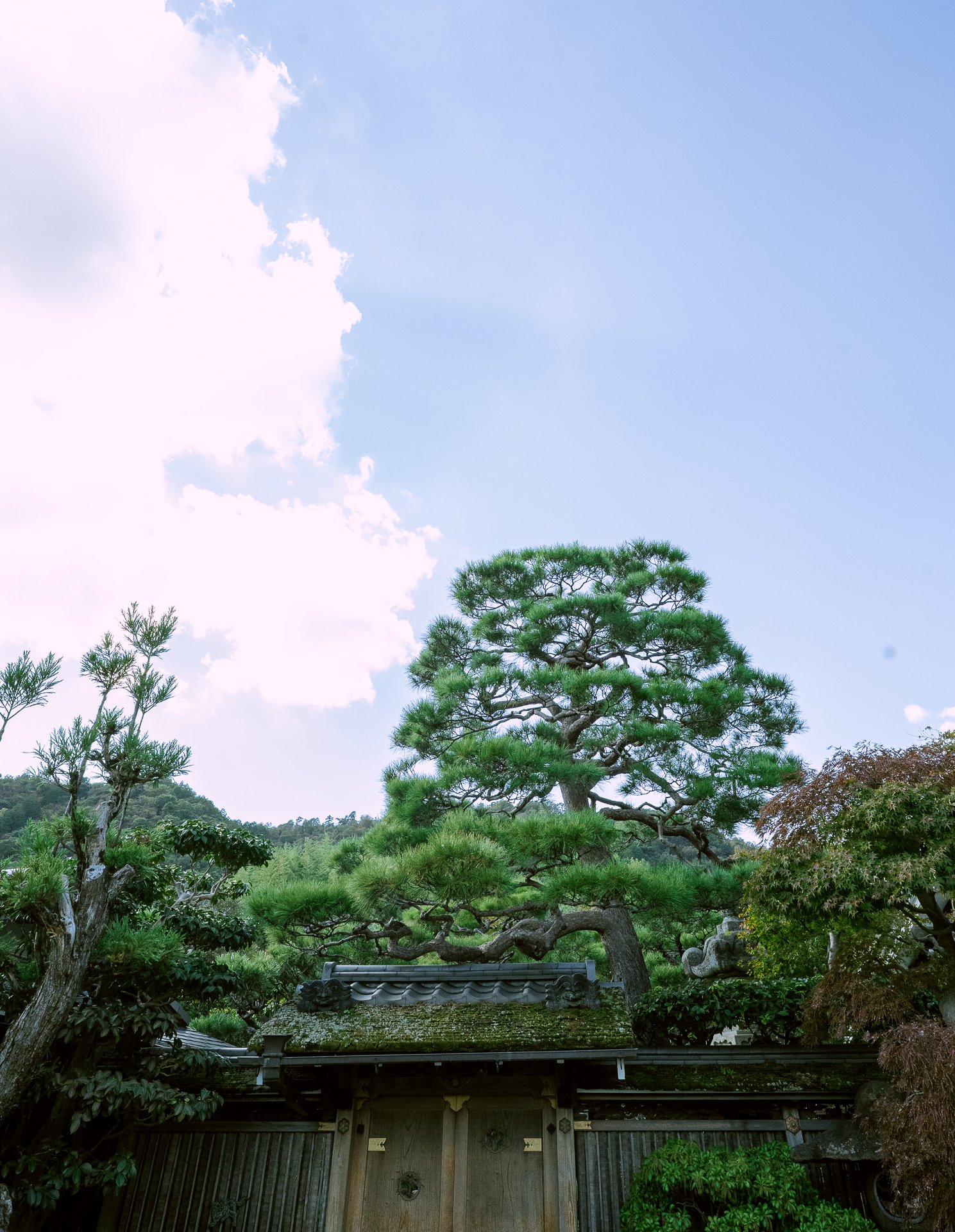
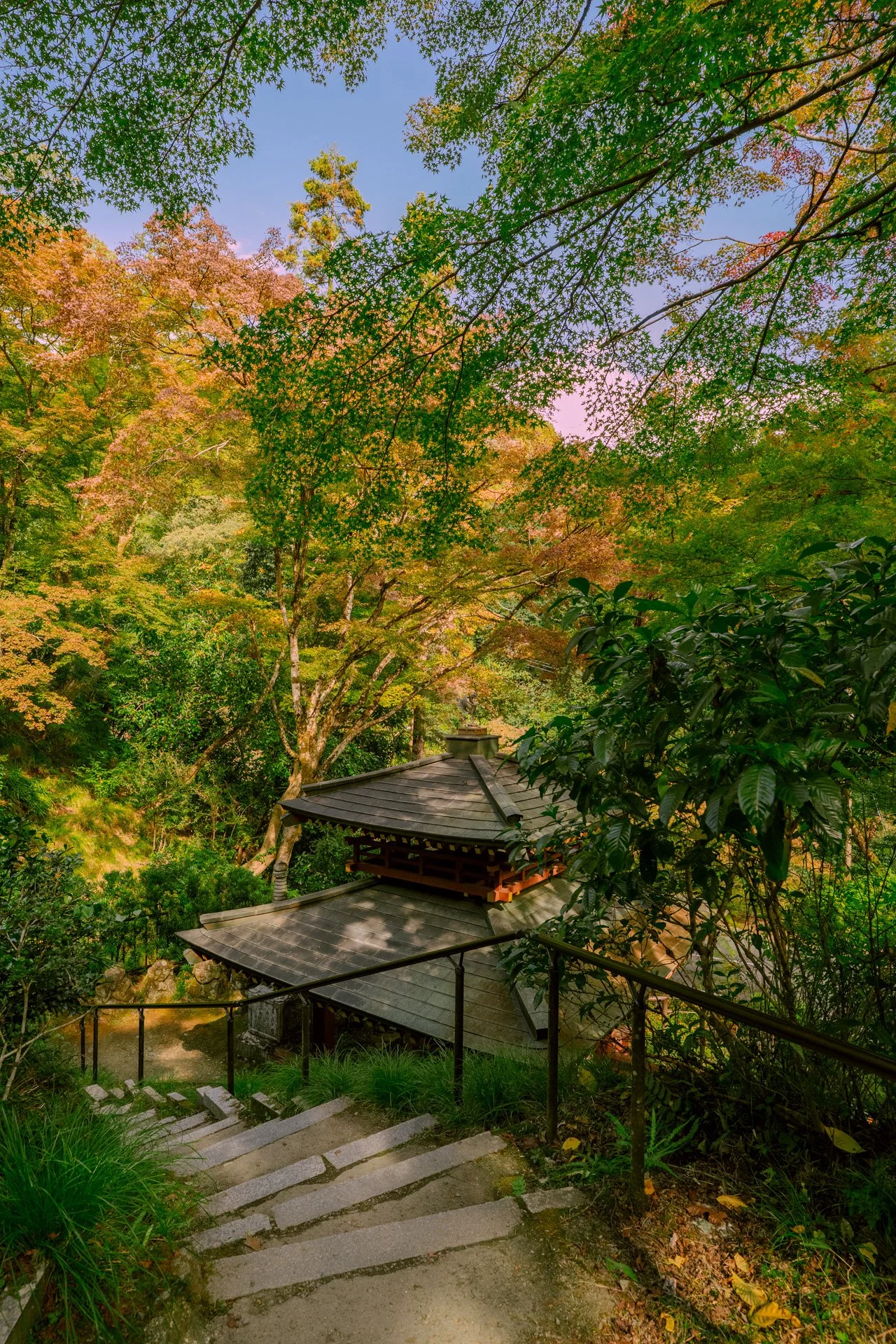
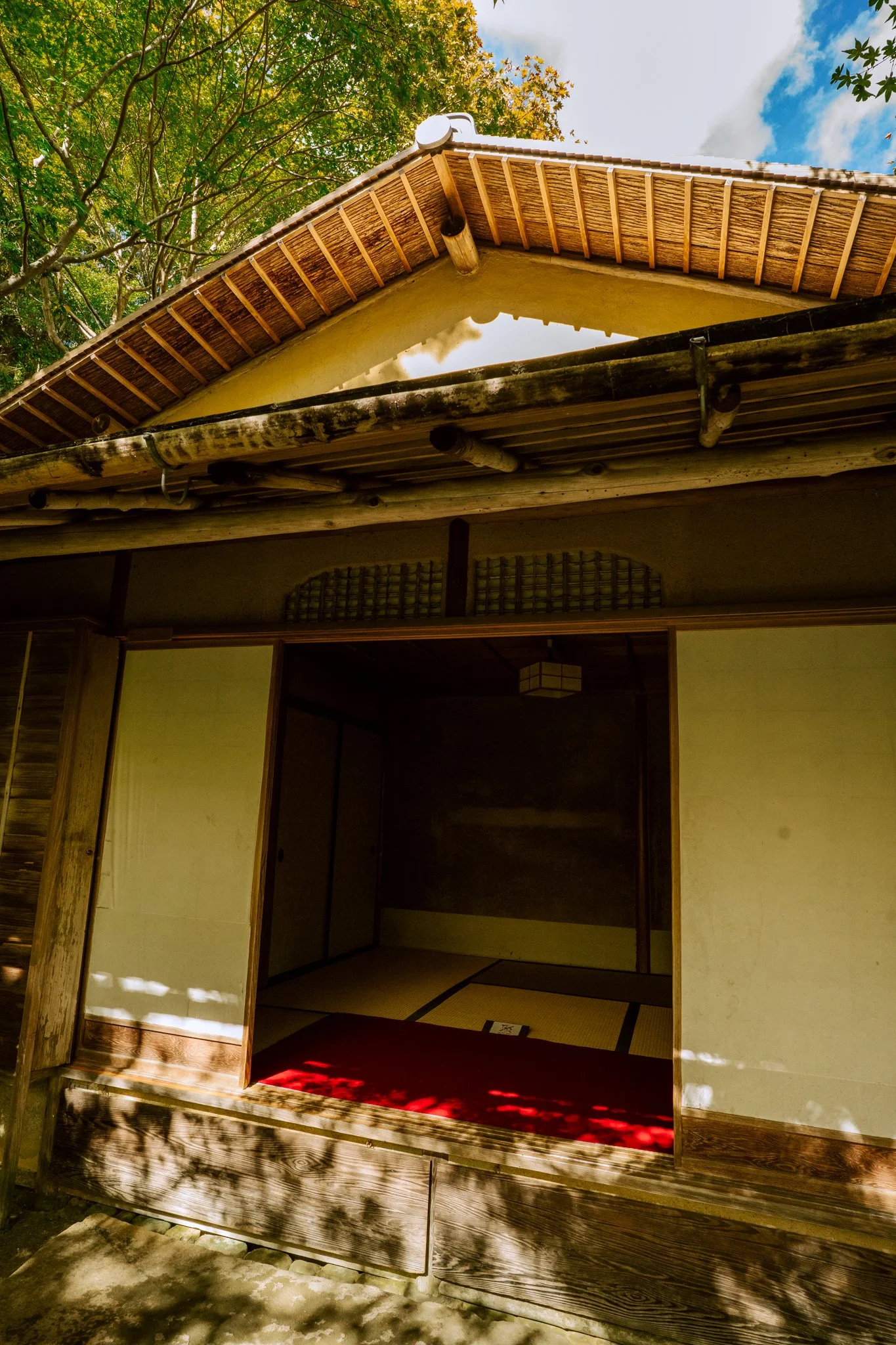
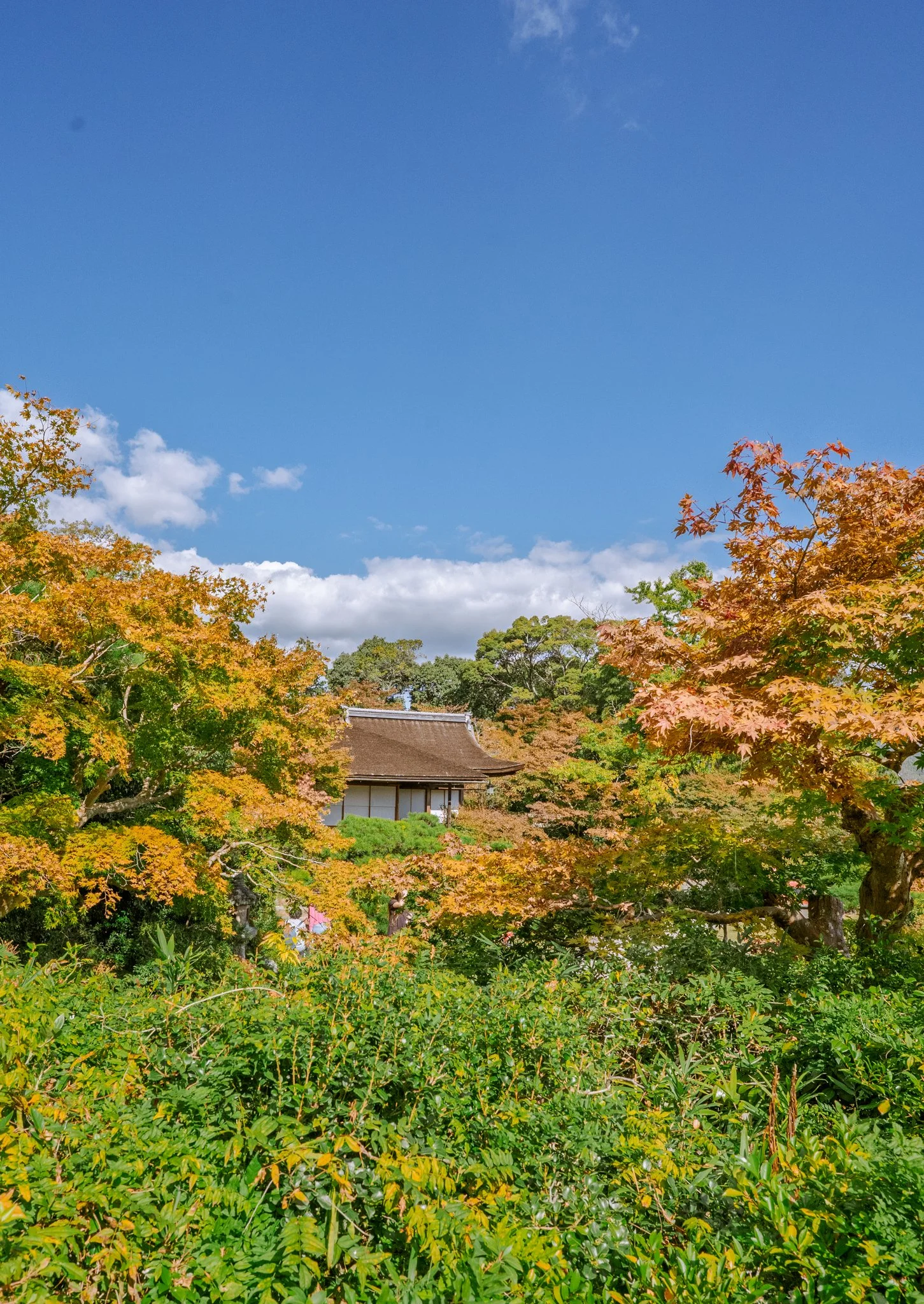
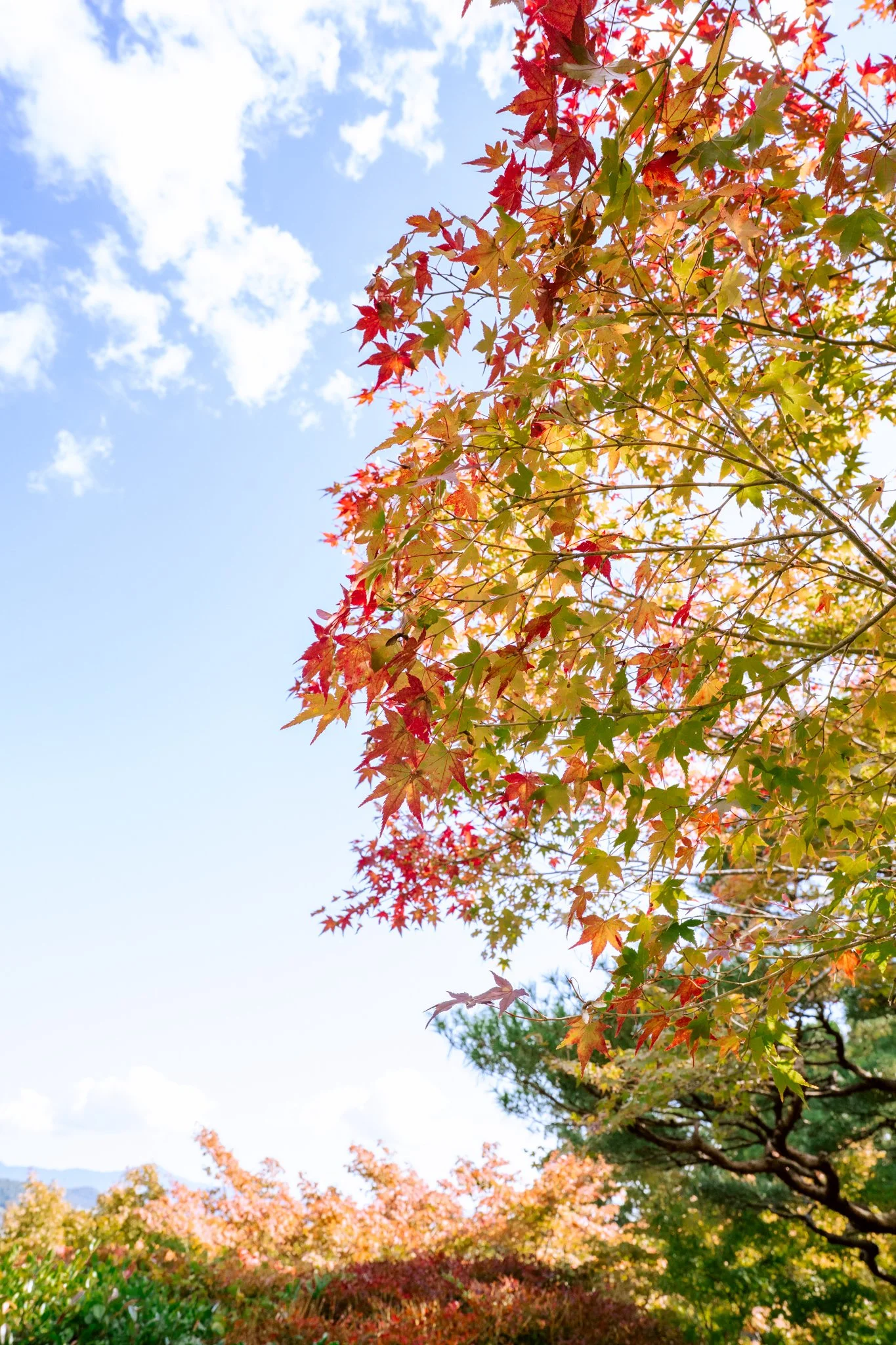
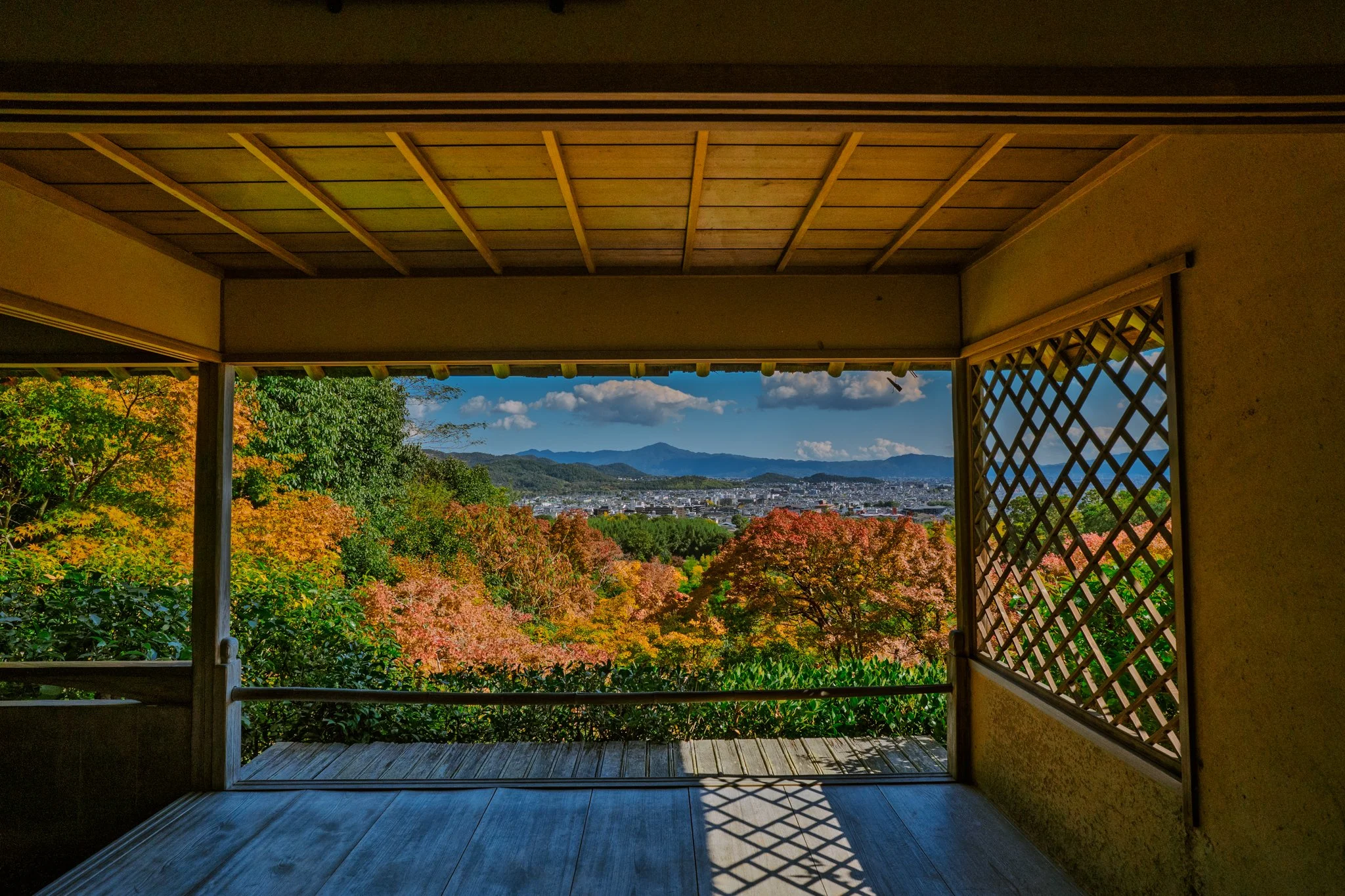
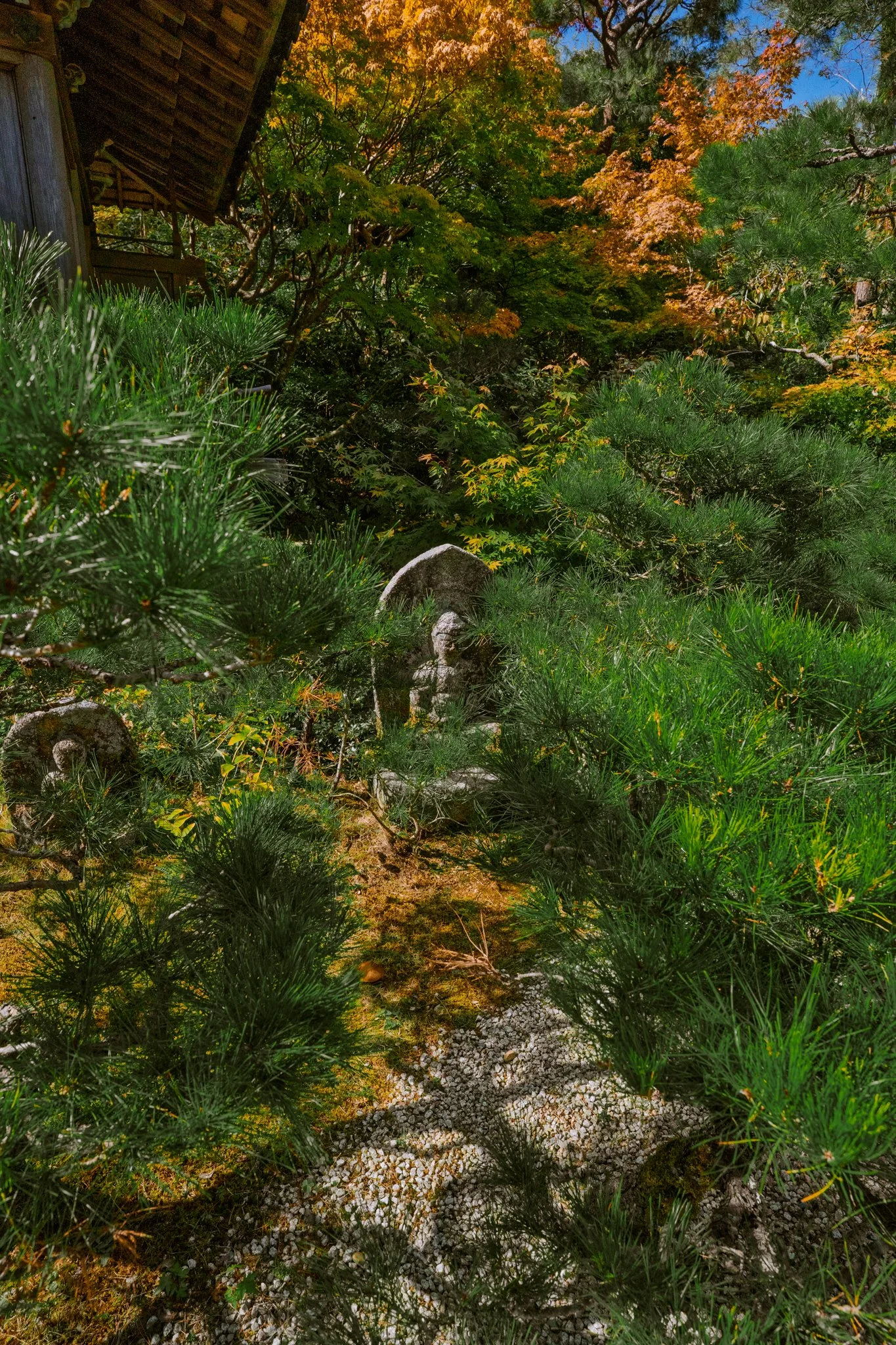
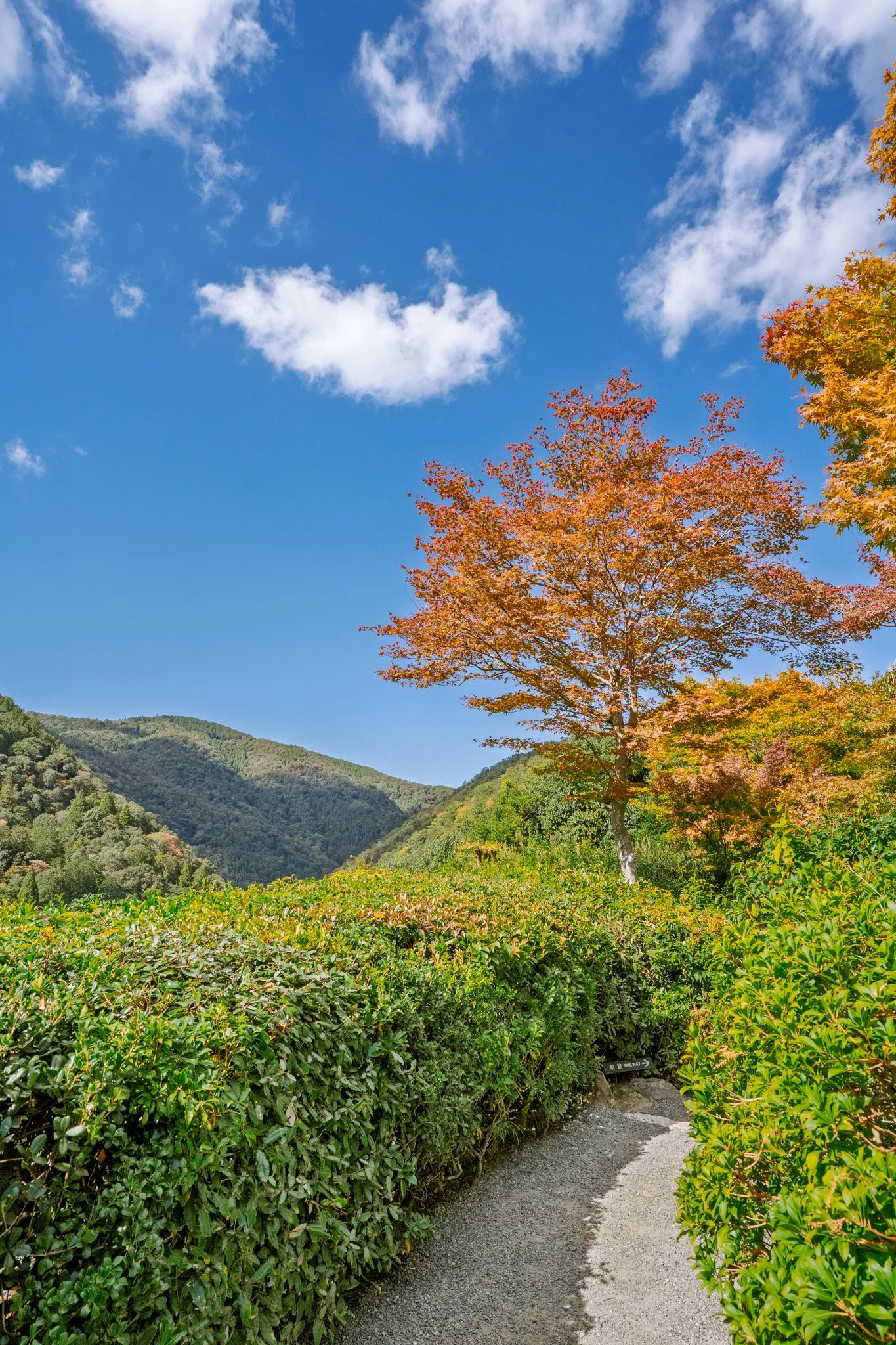
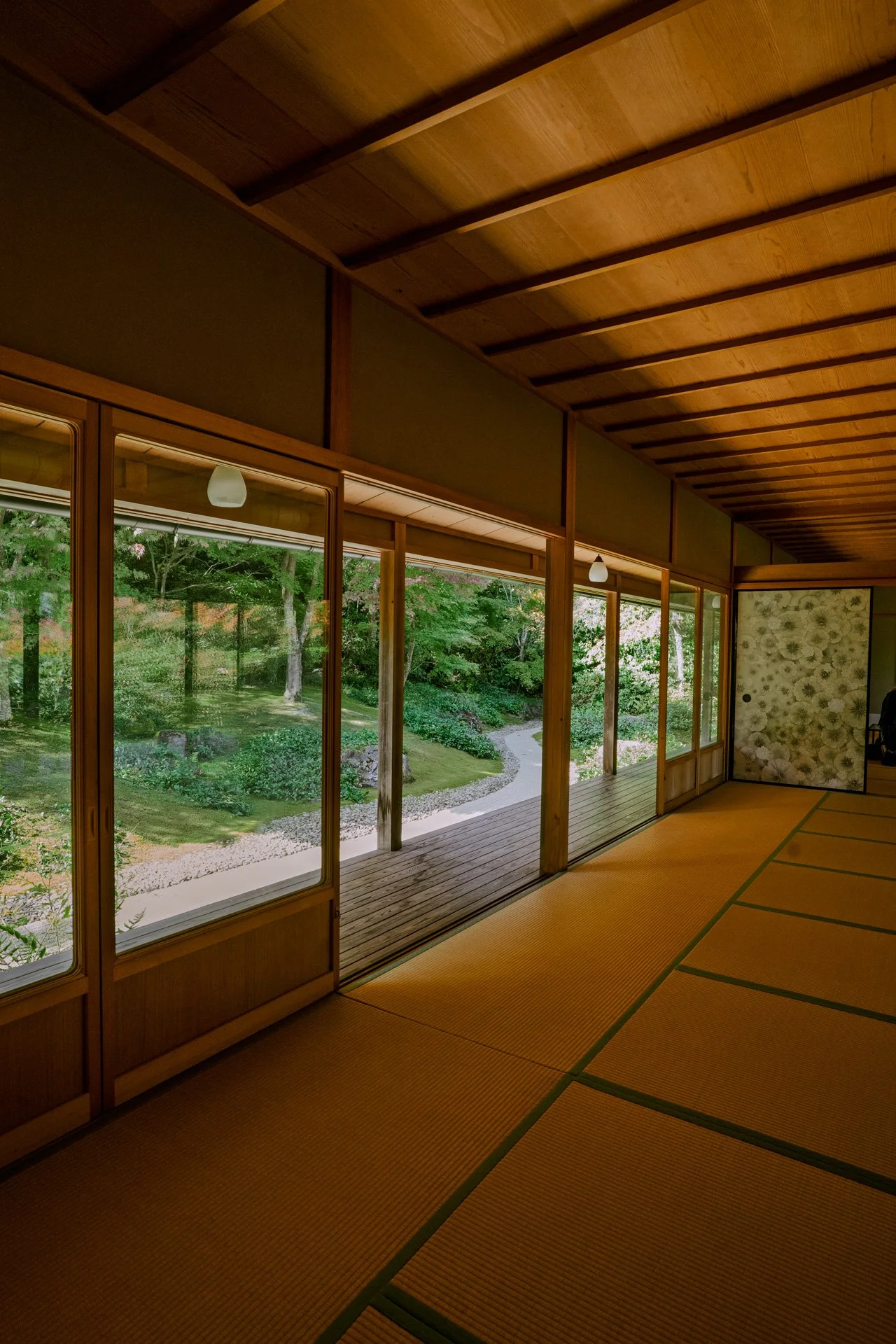
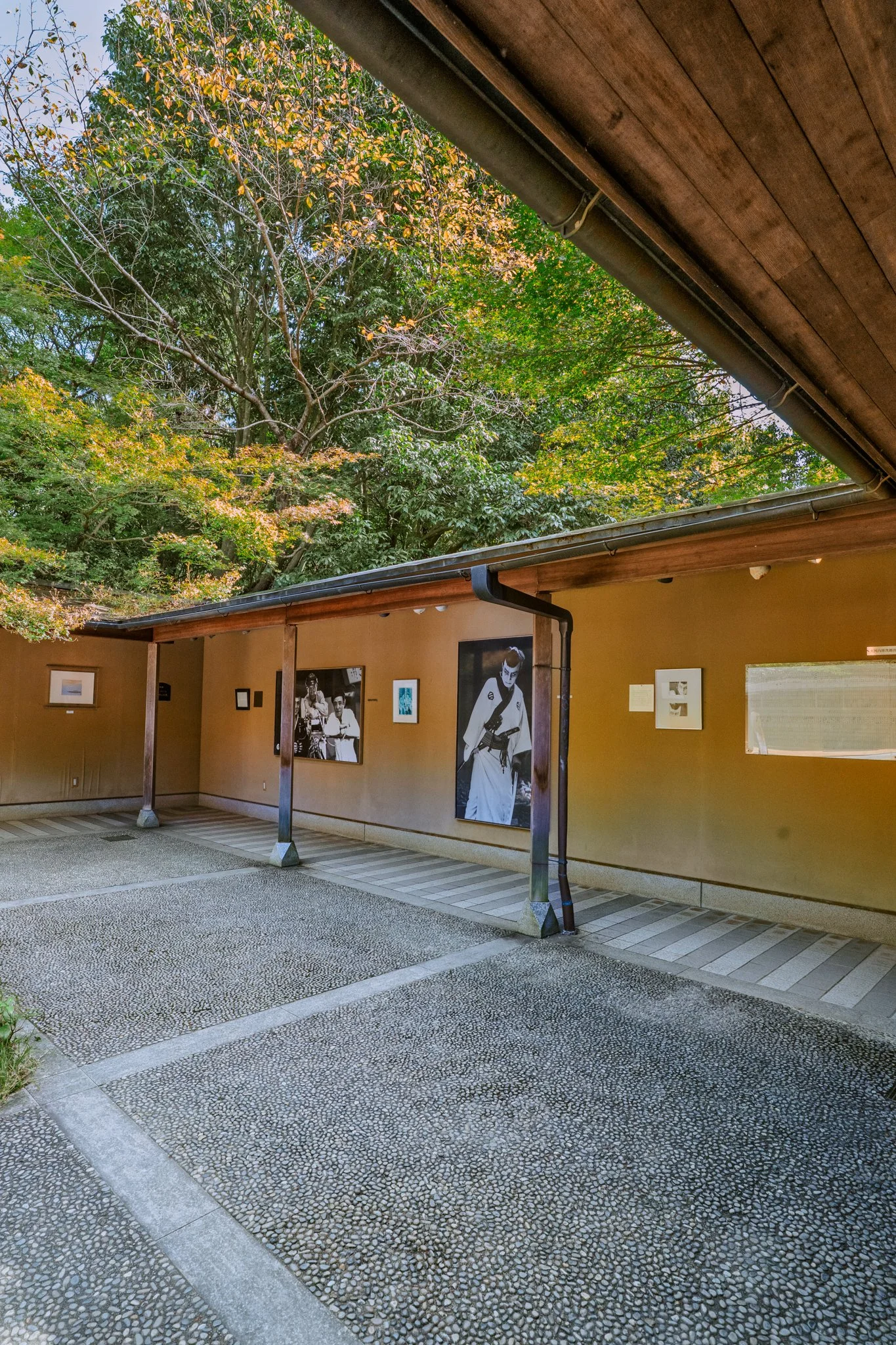
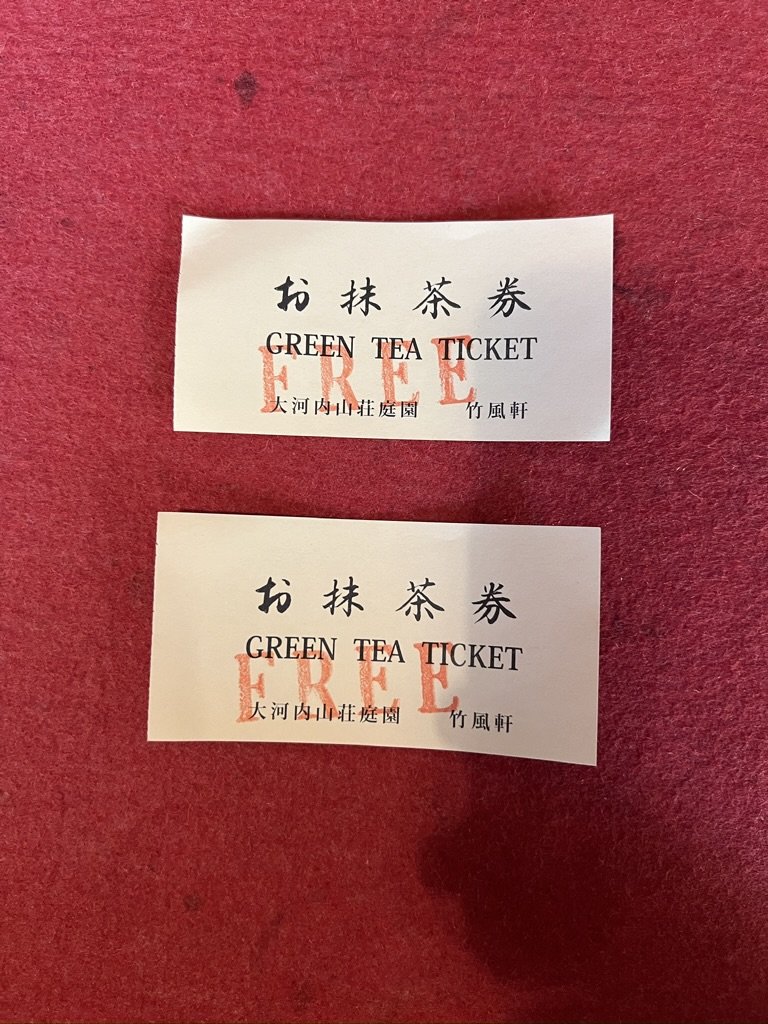
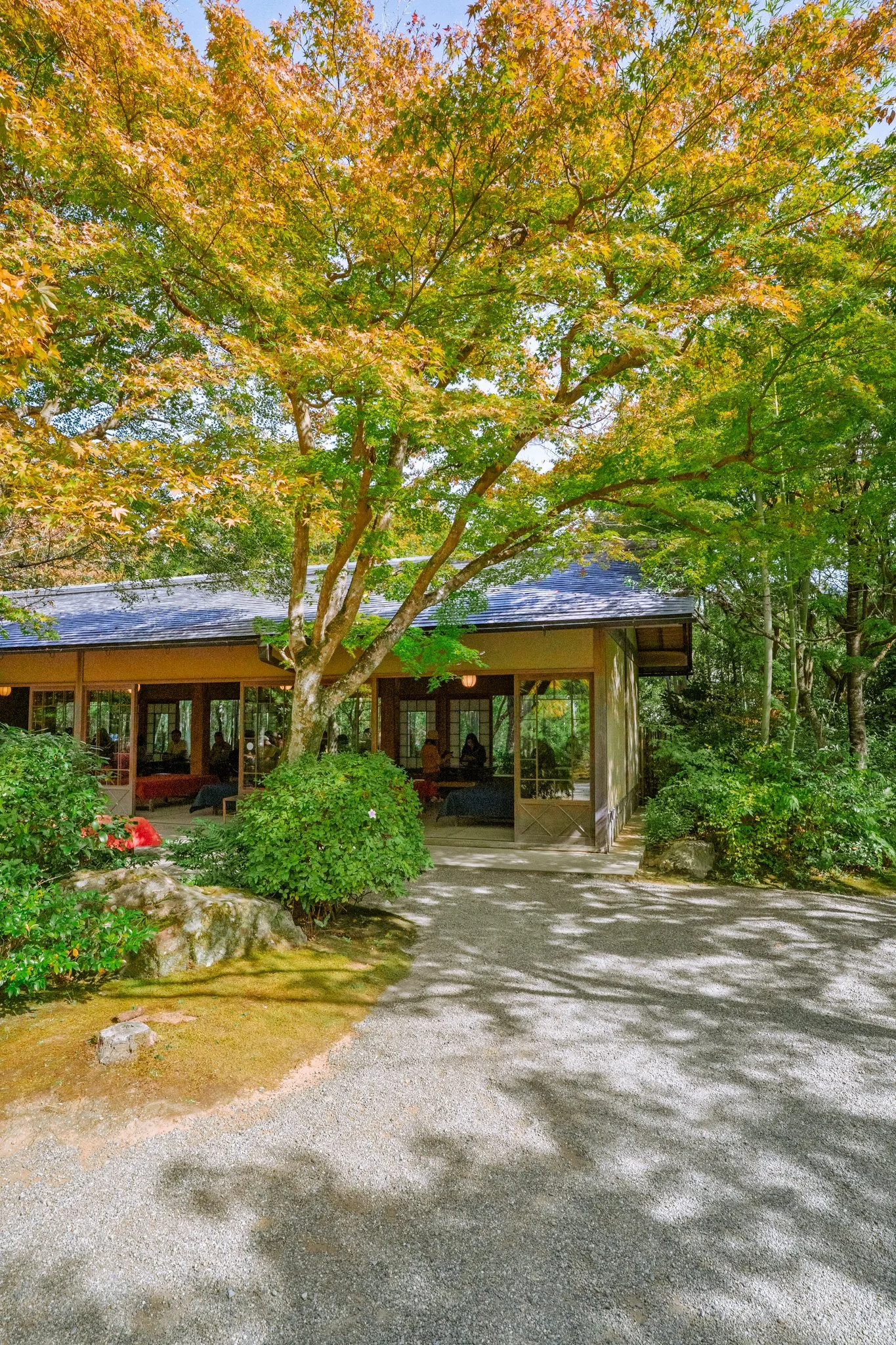
Beautiful temples with vast temple grounds beckoned from either side of the road but we hurried down, making our way towards the bamboo forest. The capital of crowds - the later we got, that much crowded it was likely to get. And at 11 in the morning, we were walking elbow to elbow with other tourists. The sun taunts from above, peering through the tops of the bamboo stalks, as you jostle below in a crowd porridge. A thicket of bamboo outside the path and a thicket of people within the path. But all this doesn’t make the Bamboo Forest any less magical. I hear that these days, the crowds are such that it makes it tourist-trap unpleasant. There are separate paths for those who chose the rickshaw rides. The path meanders after a bit and we saw some people break off from the main path to take a little one that went up a little hill. Looking back, I’m so glad the path called out to us, for it led to the rambling property that is the Okachi Sanso - the estate of the Japanese cinema icon Okachi Denjiro. This has to be one of the most beautiful walks I’ve taken in my life. These gardens are a labour of love dedicated to the magic of the four seasons. In early November, it is a study on the various ways sunlight filters through foliage that deepens from emerald to autumnal tones. From filtered maple-gold starlight to deep green shadows to holographic jade. The garden commands a gorgeous view of the surrounding hills. Cute little structures wave from opposite hillsides. Lone trees create a silhouettes of whimsy. And a little pavilion with a gorgeous view of Kyoto city offers a worthy spot to catch your breath. While you buy tickets to the garden, the women helpfully inform you that there’s a free matcha and sweets at the end of the tour - and they insist that you must not miss it. And for good reason - the matcha was lovely, and that’s when we knew - we were matcha girlies! Yes, Sahit also.
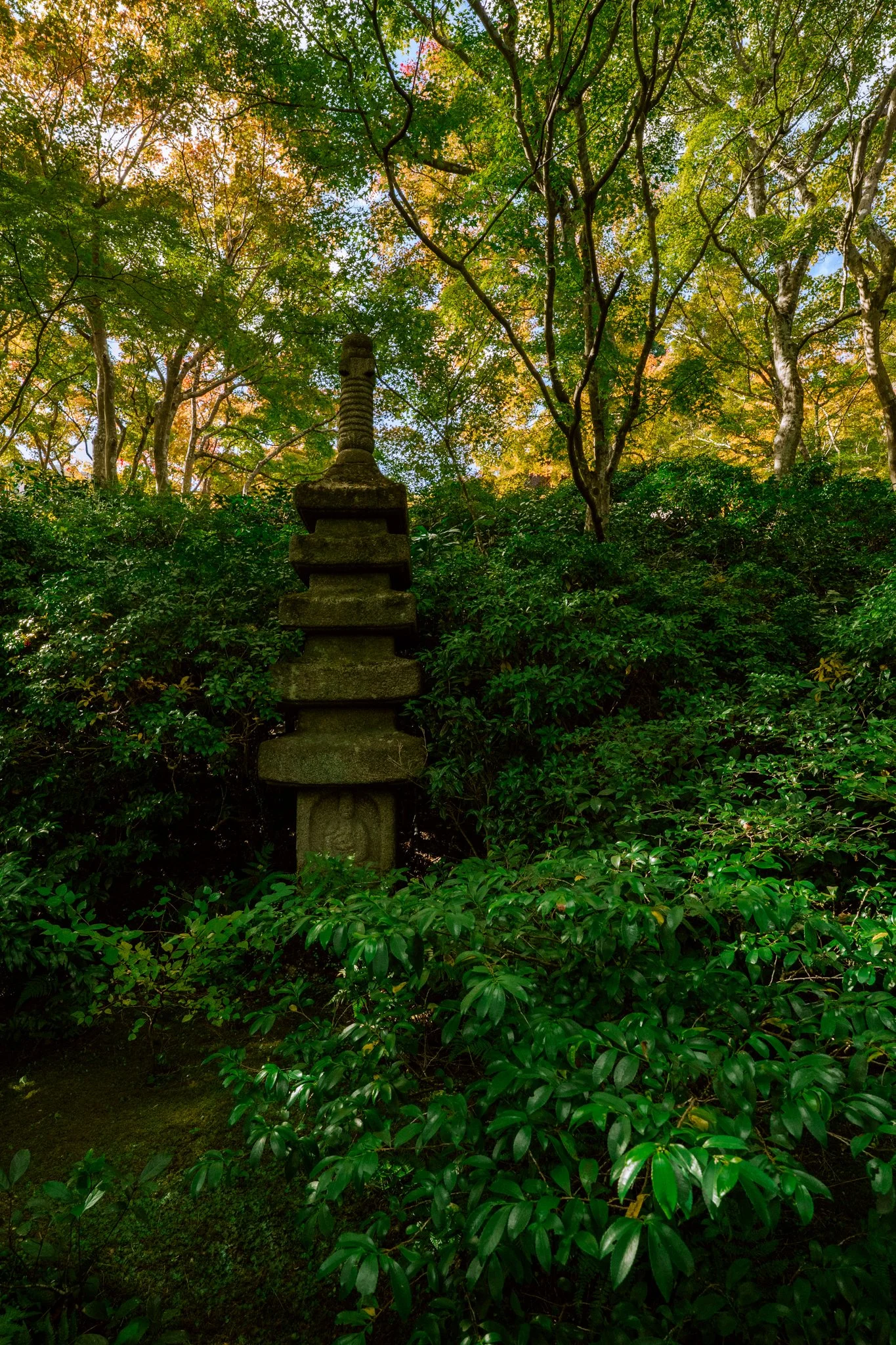
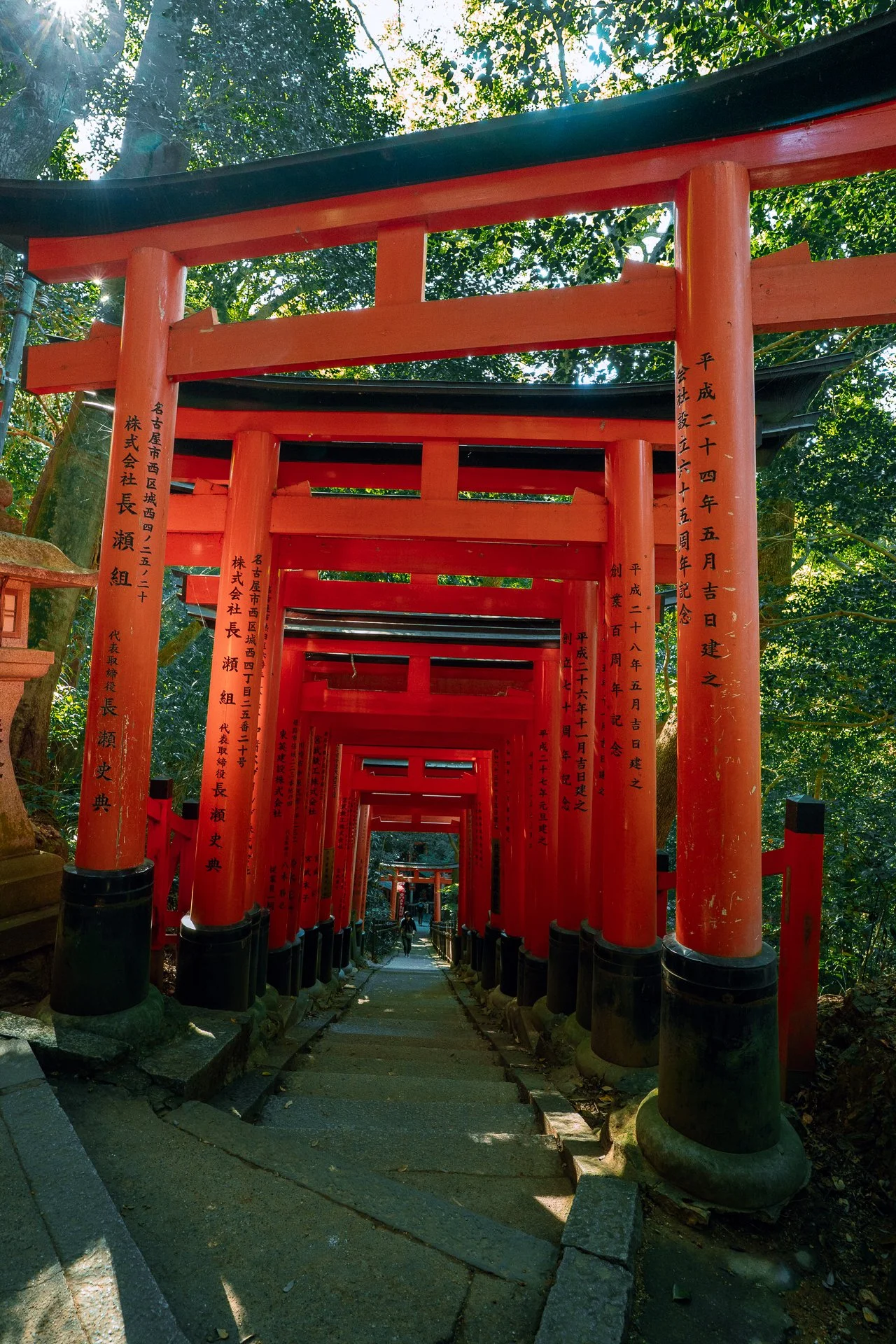
Powered by matcha, we decided to make the long walk to Otagi Nenbutsuji Temple. On the way we stopped at the Nonomiya Shrine, a small diminutive shrine that looked like it sprung up like a giant old mushroom with a stark, black Torii gate. It had no walls or fencing other than a sort of brushwood fencing that reminded me of the coconut-frond fencing that was popular in Kerala during my childhood days. This shrine is pretty popular for its power to grant wishes, especially in the love department and the fertility department. We emphasised to the Kamis that be that we were all for the love and non of the fertility. The temple’s even got a salamander shaped wishing stone. In times bygone, it must have been a place of mystery and austerity, as befits a shrine where imperial princesses destined to become priestesses, completed their purification rituals. I can’t help but wonder how many love-lorn, royal hands touched the stone praying for another fate.
We stopped by a little spot that had snacks, refreshments and restrooms. The old man selling pork buns got excited about my Indianness and informed me that he liked India because we had Suzuki and Honda. Even though I’m very weird about public restrooms, I tried this one out. And in typical Japan public restroom style, it was clean. And to my horror, I realised that another ‘Japan public restroom style’ is to not have paper towels. That’s why hankies are so ubiquitous in nearly every store. The Japanese carry their own little hanky towel. I wiped my hands on the back of my pants, hoping nobody noticed. I love wearing black!
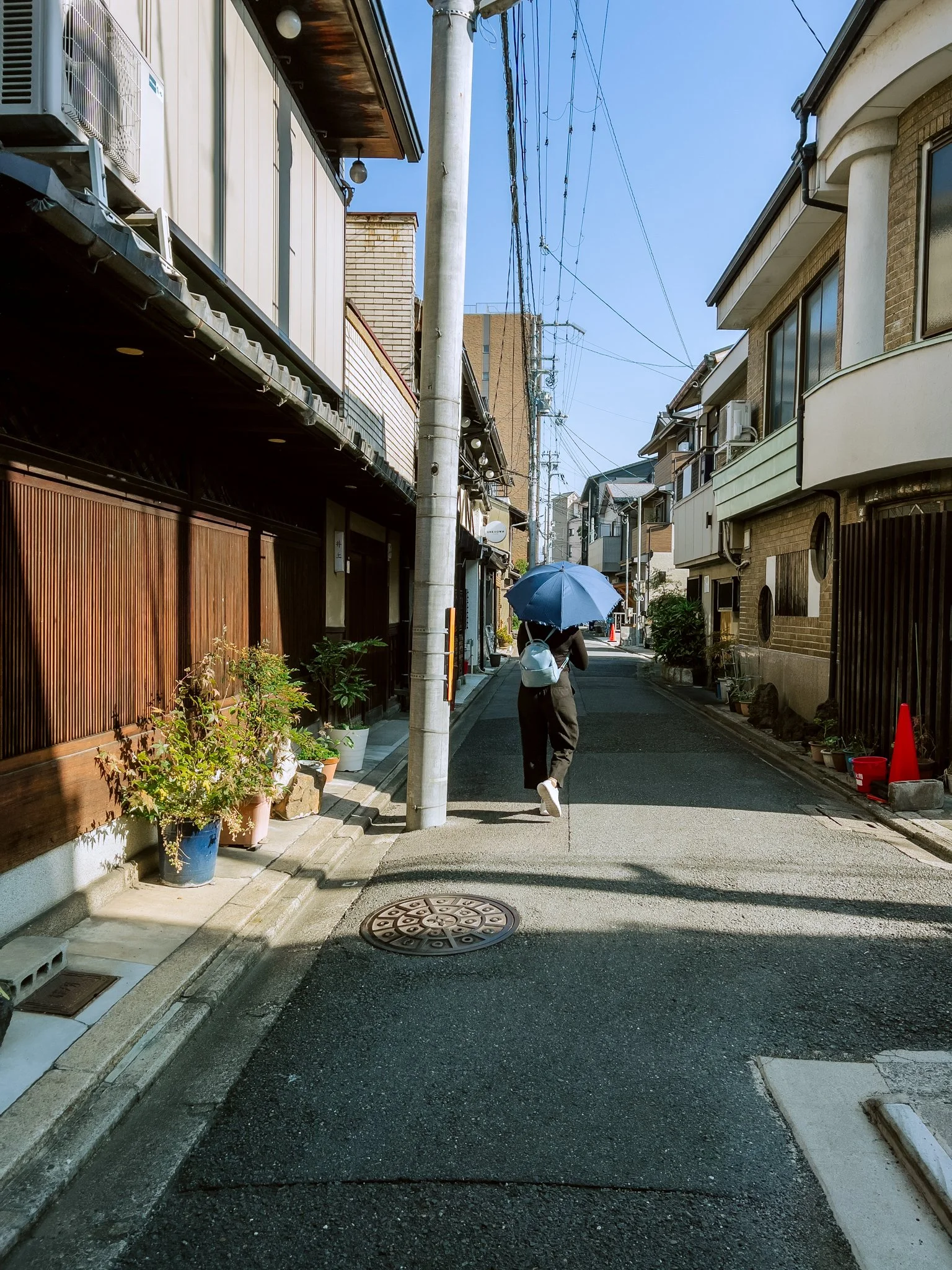
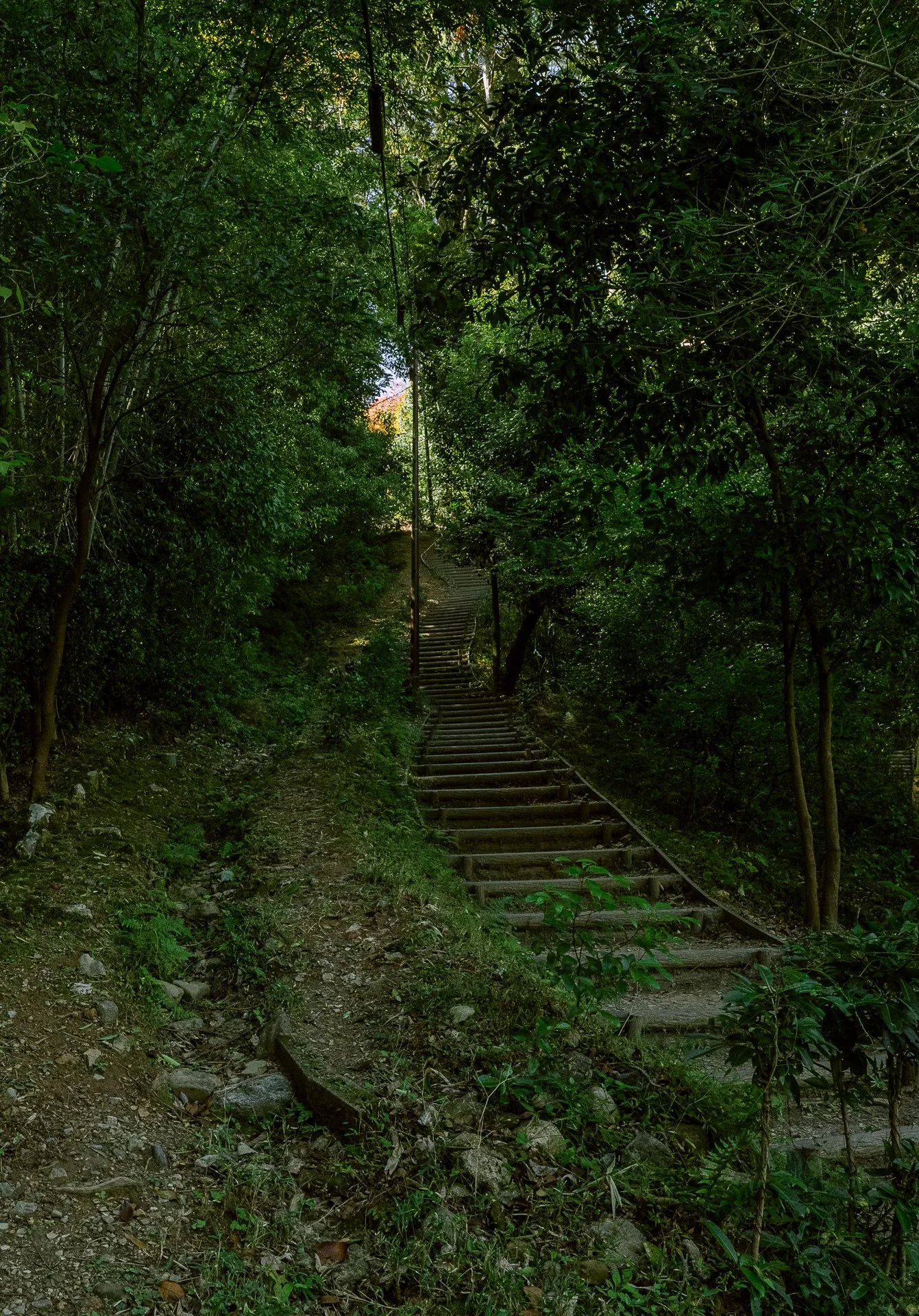
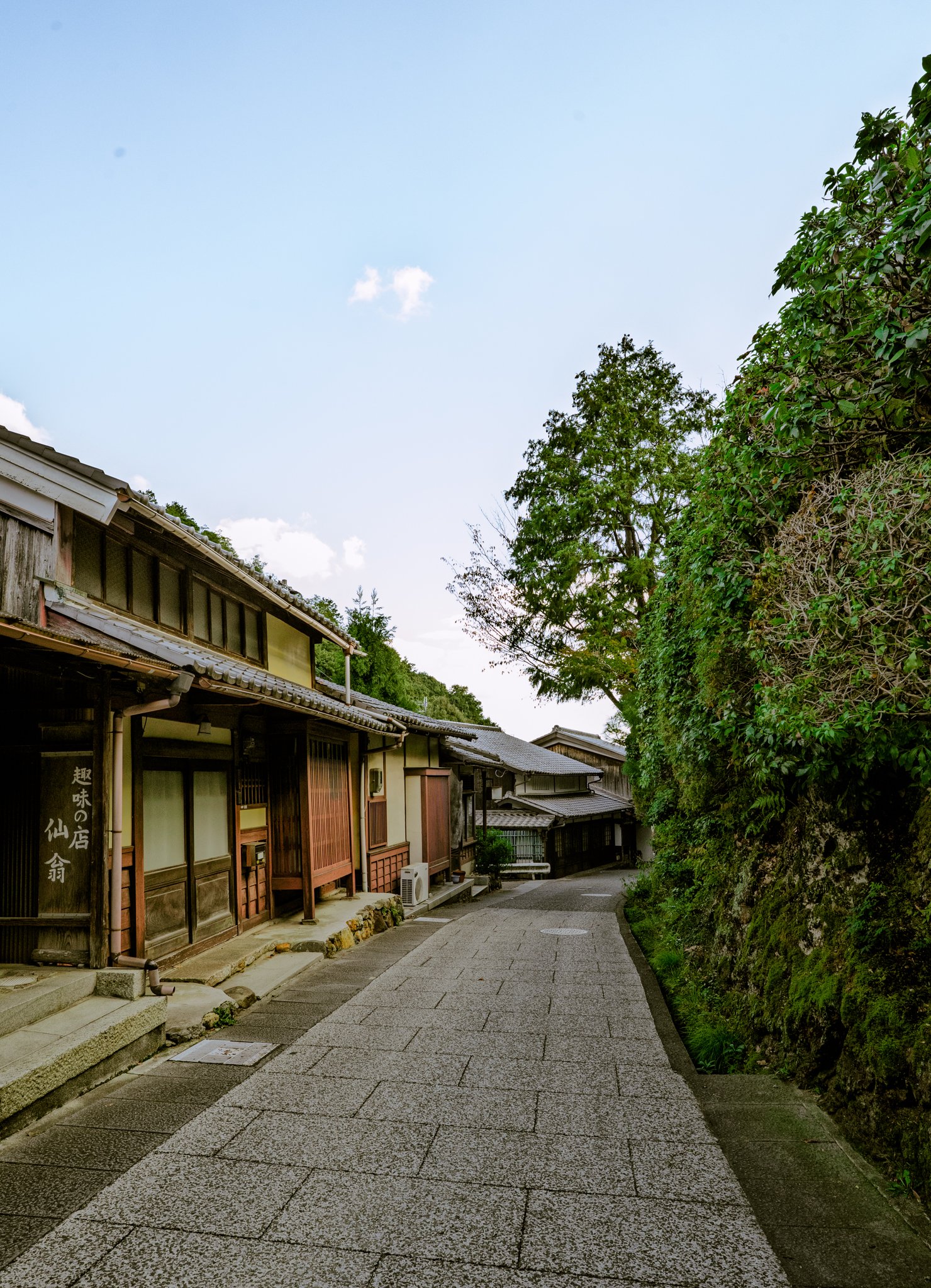
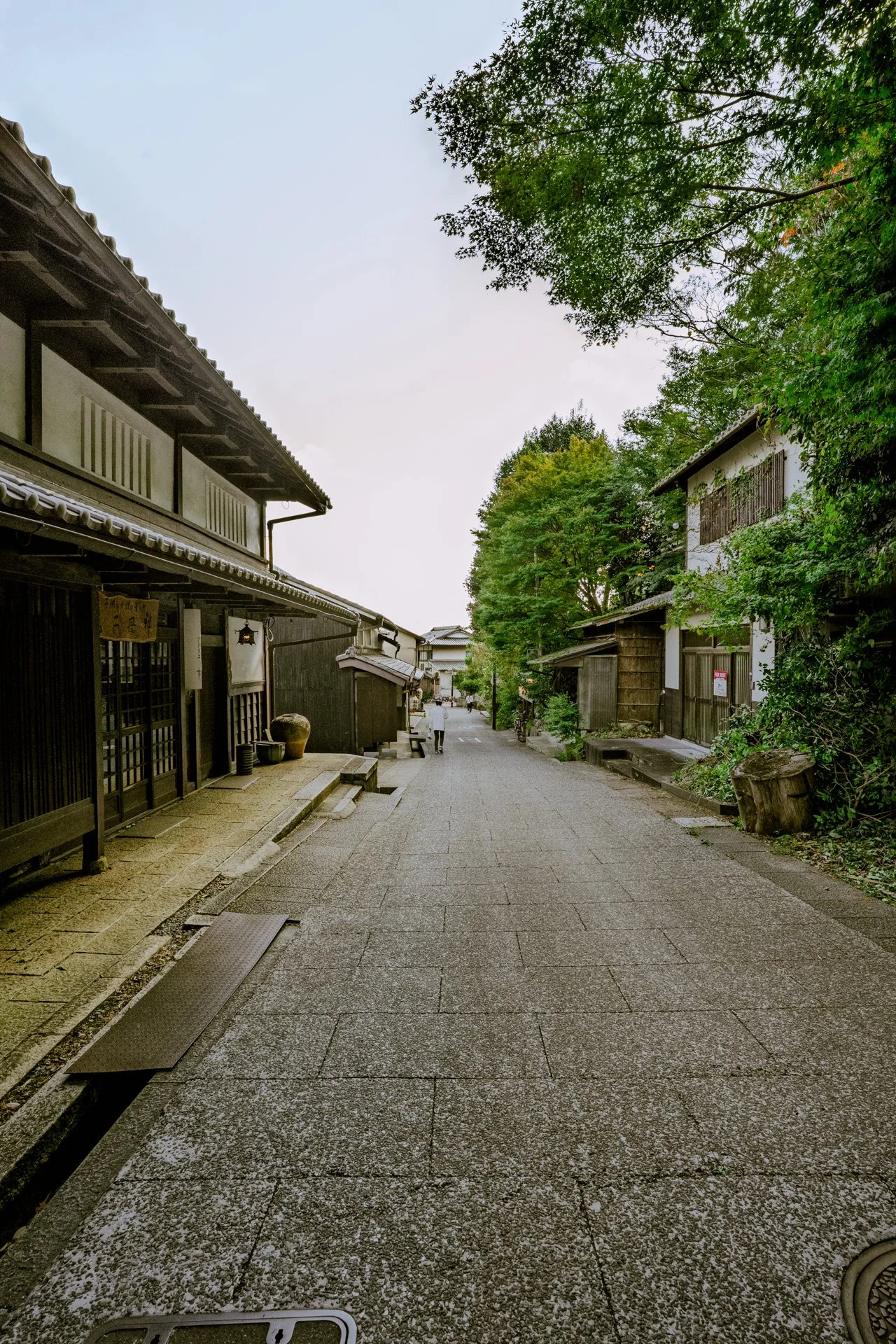
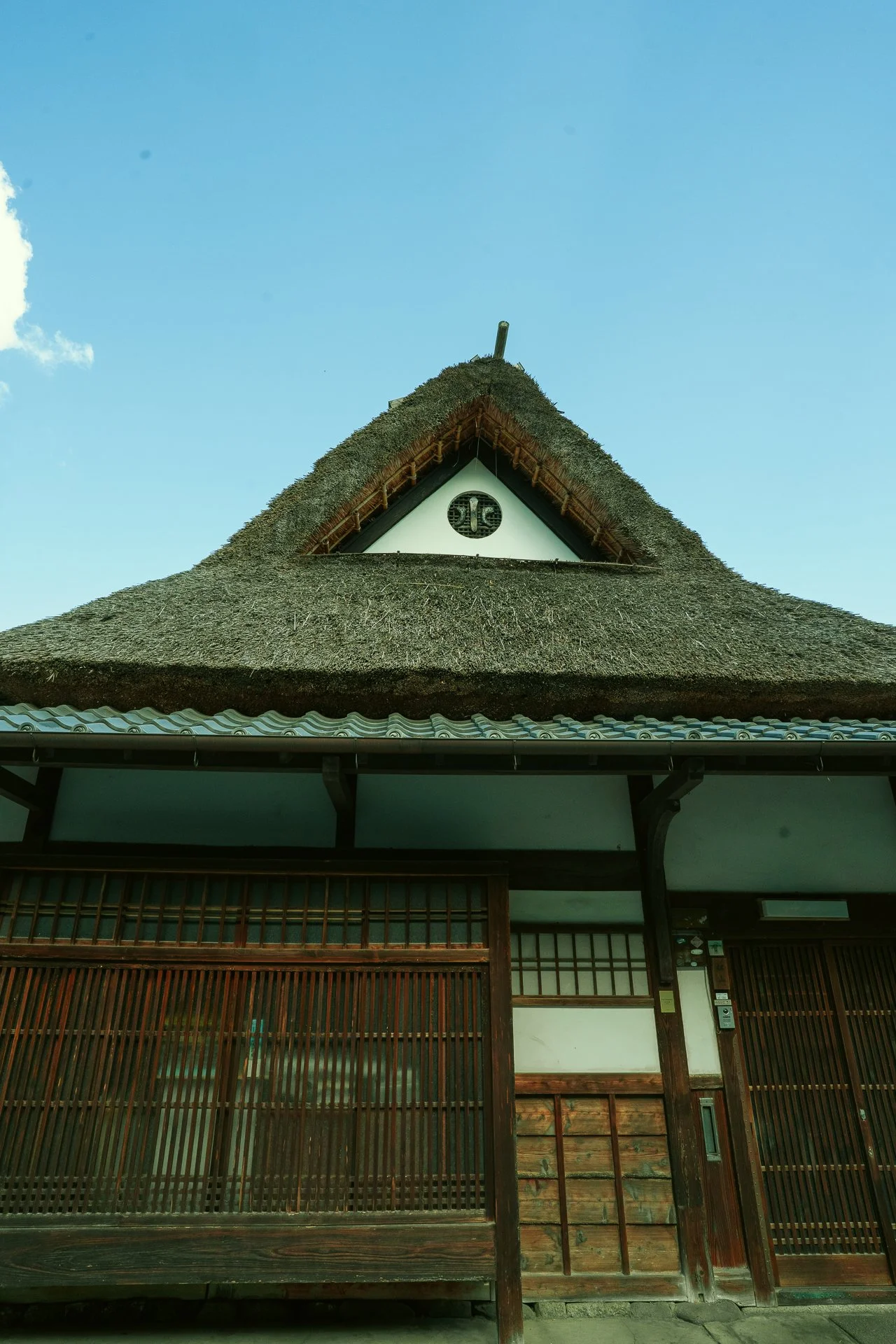
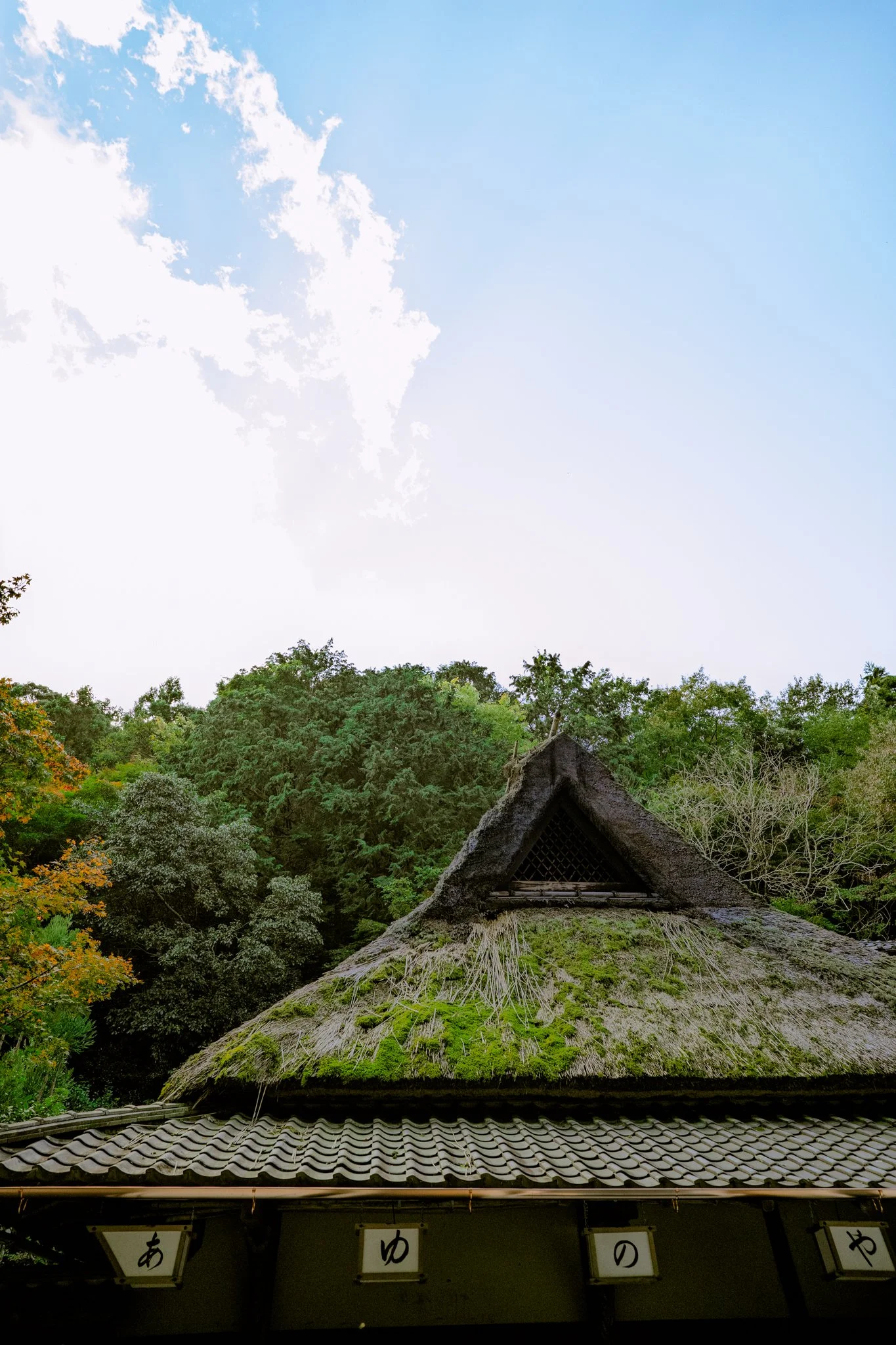
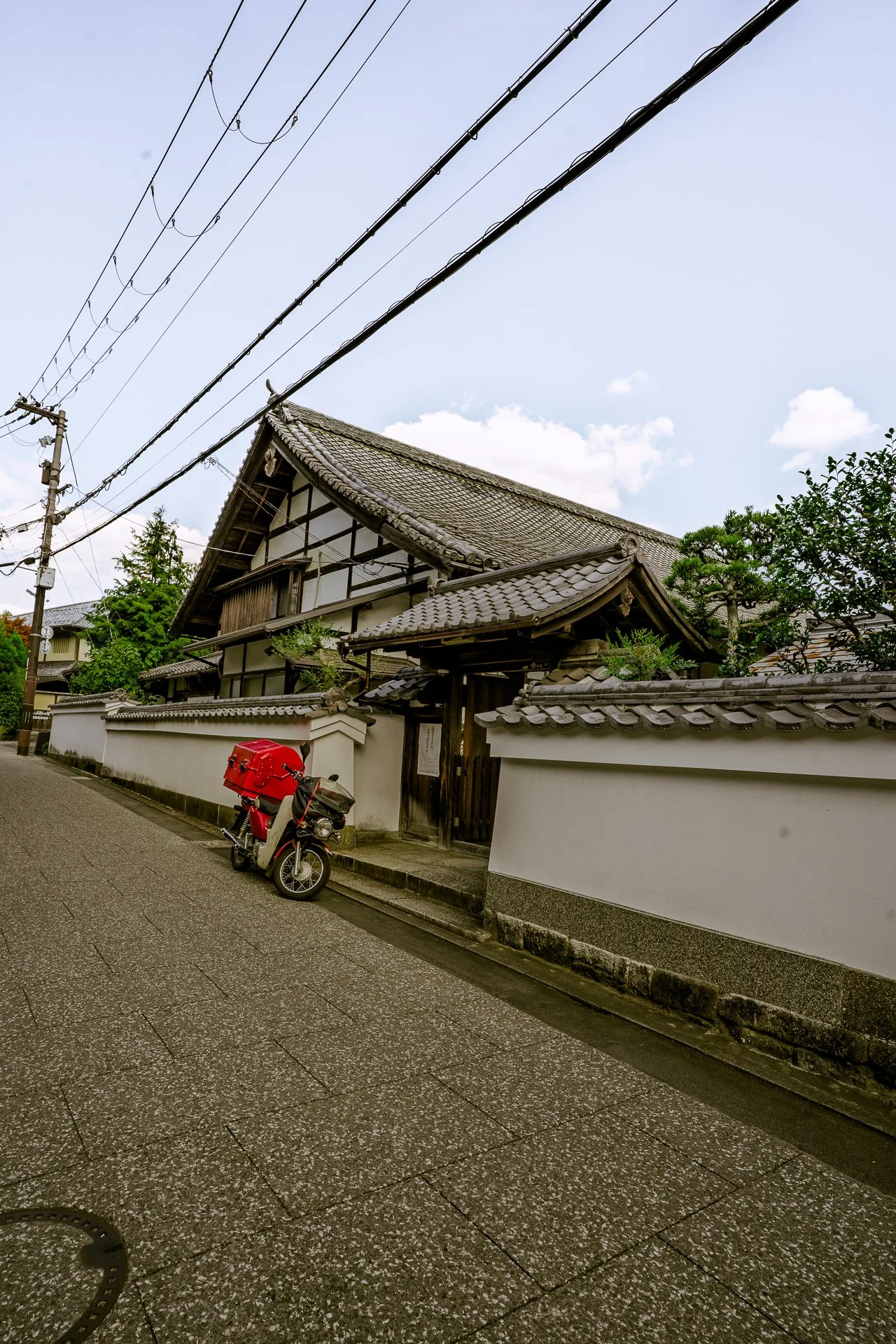
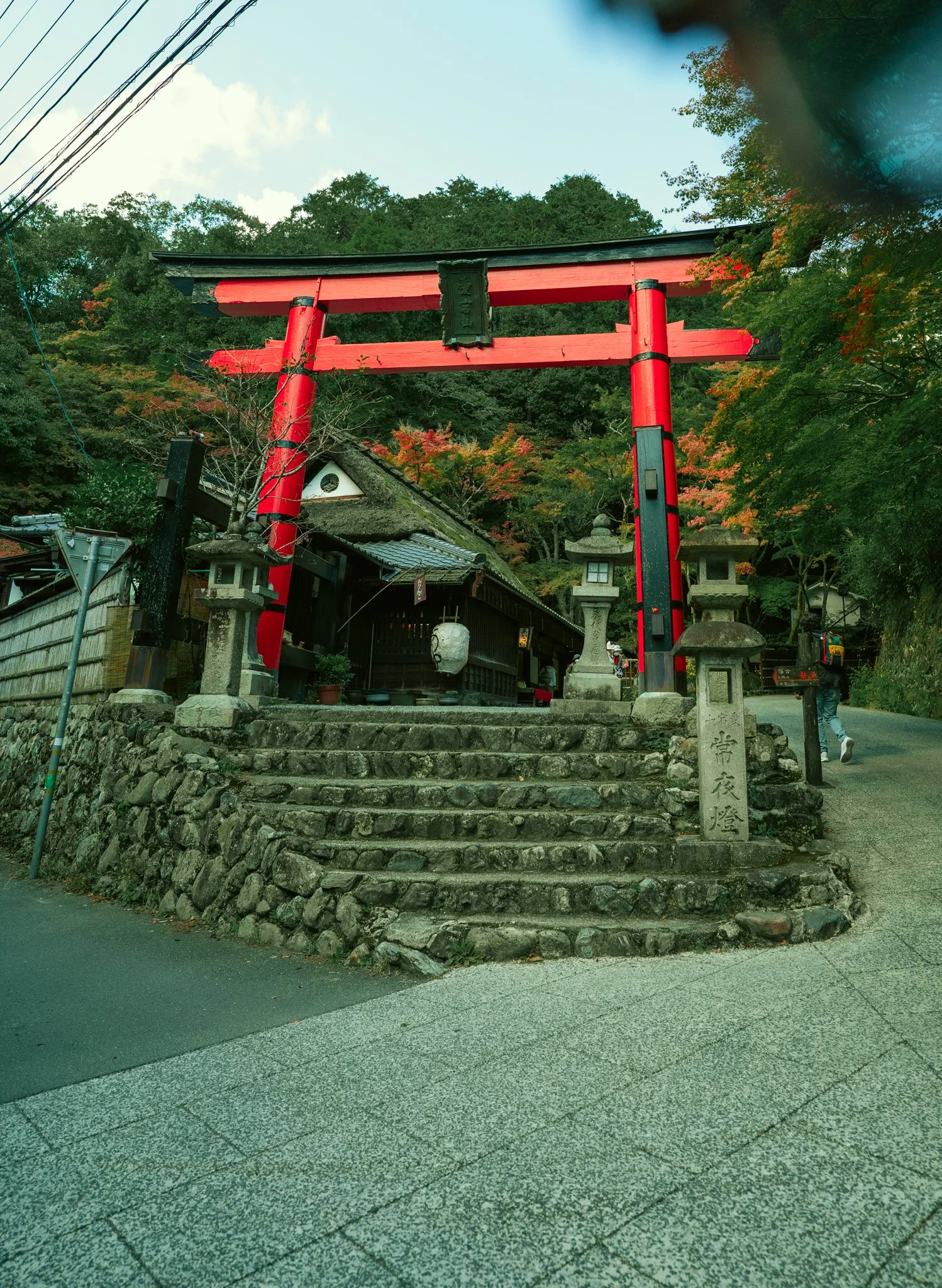
The walk to Otagi is a bit of a steep, long walk. A bewitching walk nevertheless past mysterious stairs cut into hillsides that disappear into secret boughs - allowing you access only if you commit to the climb. Past huts with thatched roofs, making you wonder if you’re shifting between centuries. This is the preserved street of Saga Toriimoto - and little has changed here since the Meiji period. We were there in the post lunch hours and barely anyone was on the street. But in the morning, the homes have shopfronts and workshops with artisans working at their wares.
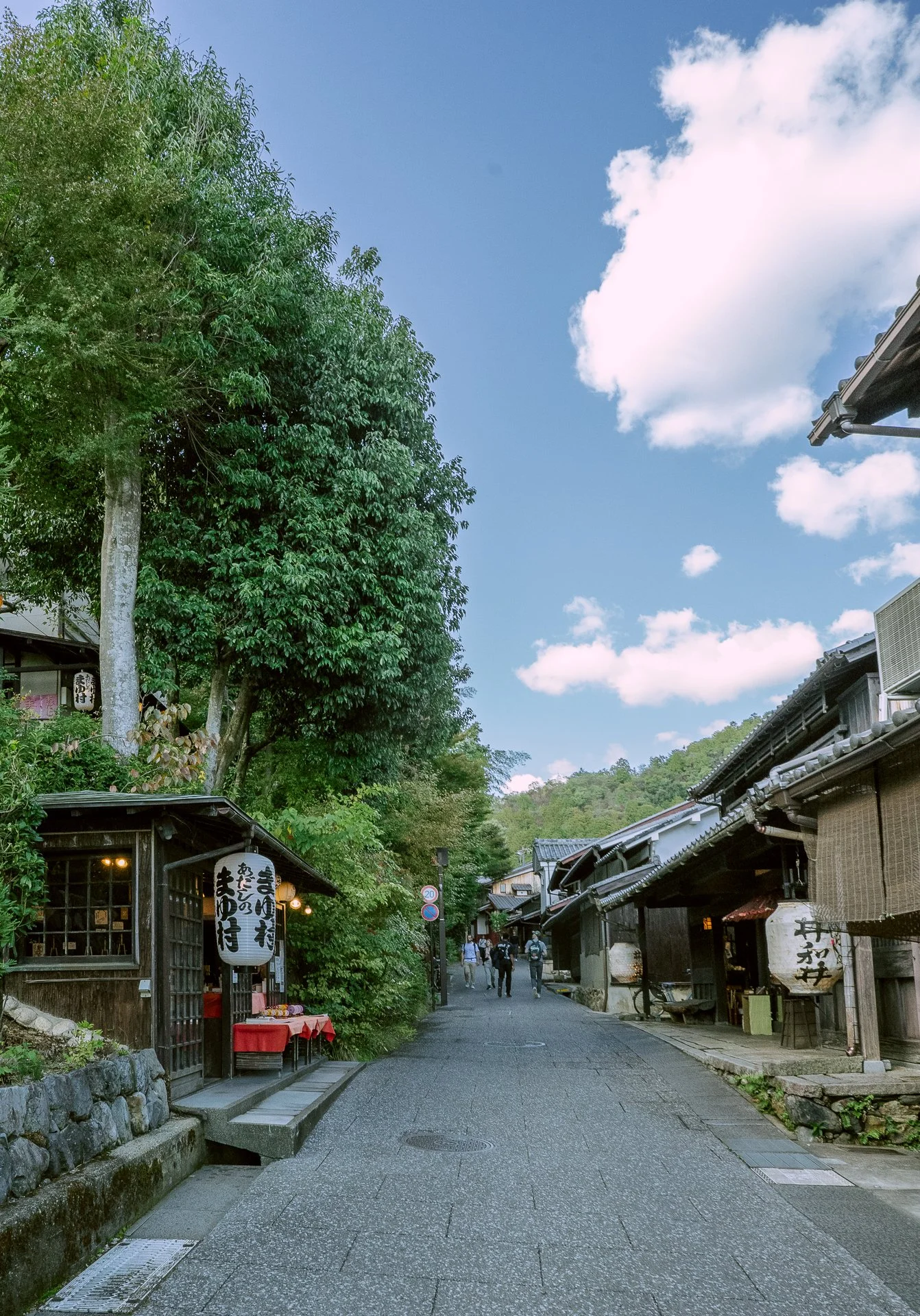
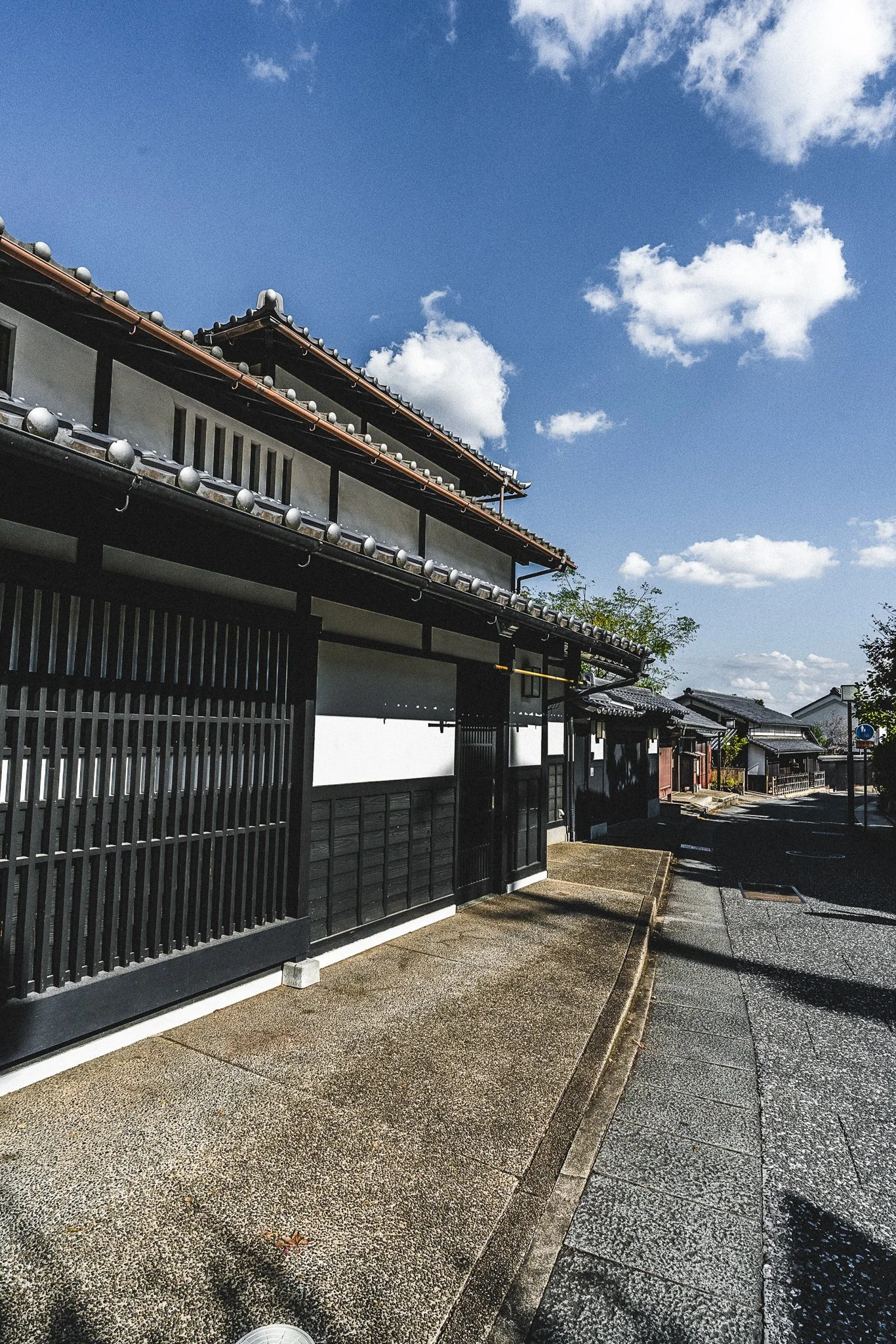
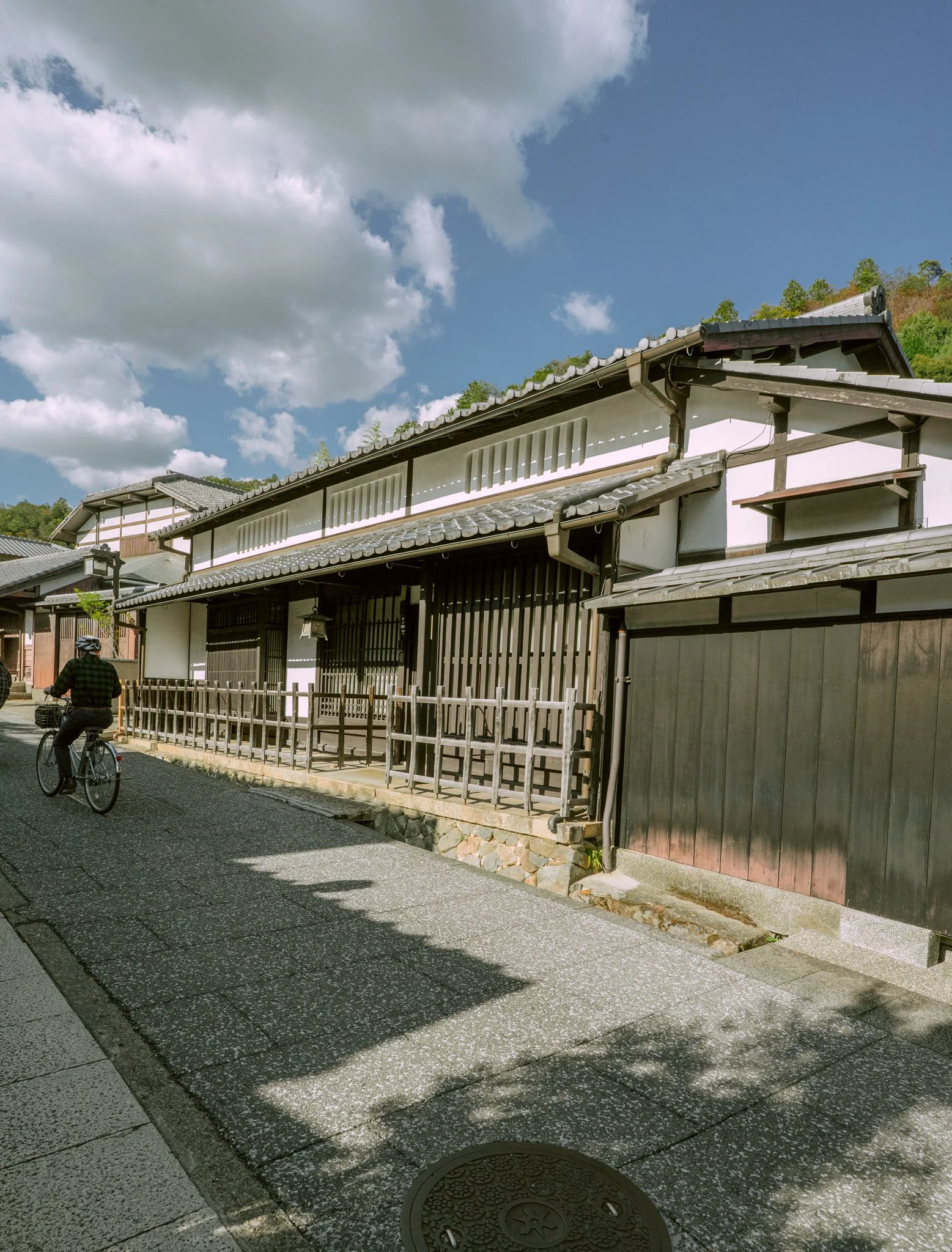
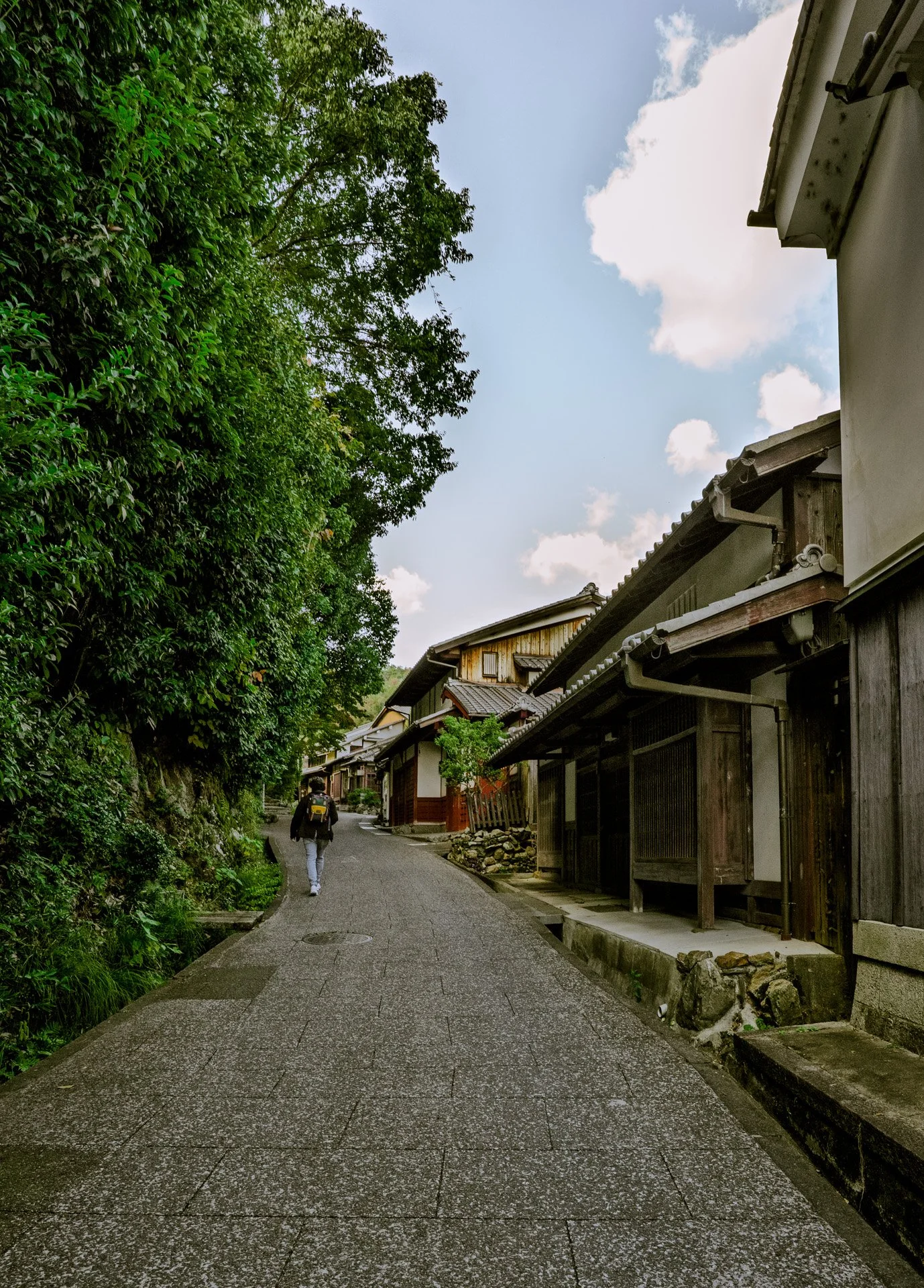
My calves began to make bargains with me. My quads started to conspire with the voices in my head - telling me to let it go, to turn back, that this walk is much too arduous. Honestly it was a very humbling, bordering on shaming, commentary on the state of my fitness. But my heart - dear hammering, overexerted, resolute heart told me to keep on. And my god, am I glad that we did indeed, keep on. A line of cabs suddenly appearing on a road that barely saw traffic was a sign that the temple was near. Yeah, smart people choose to cab it rather walk to this temple.
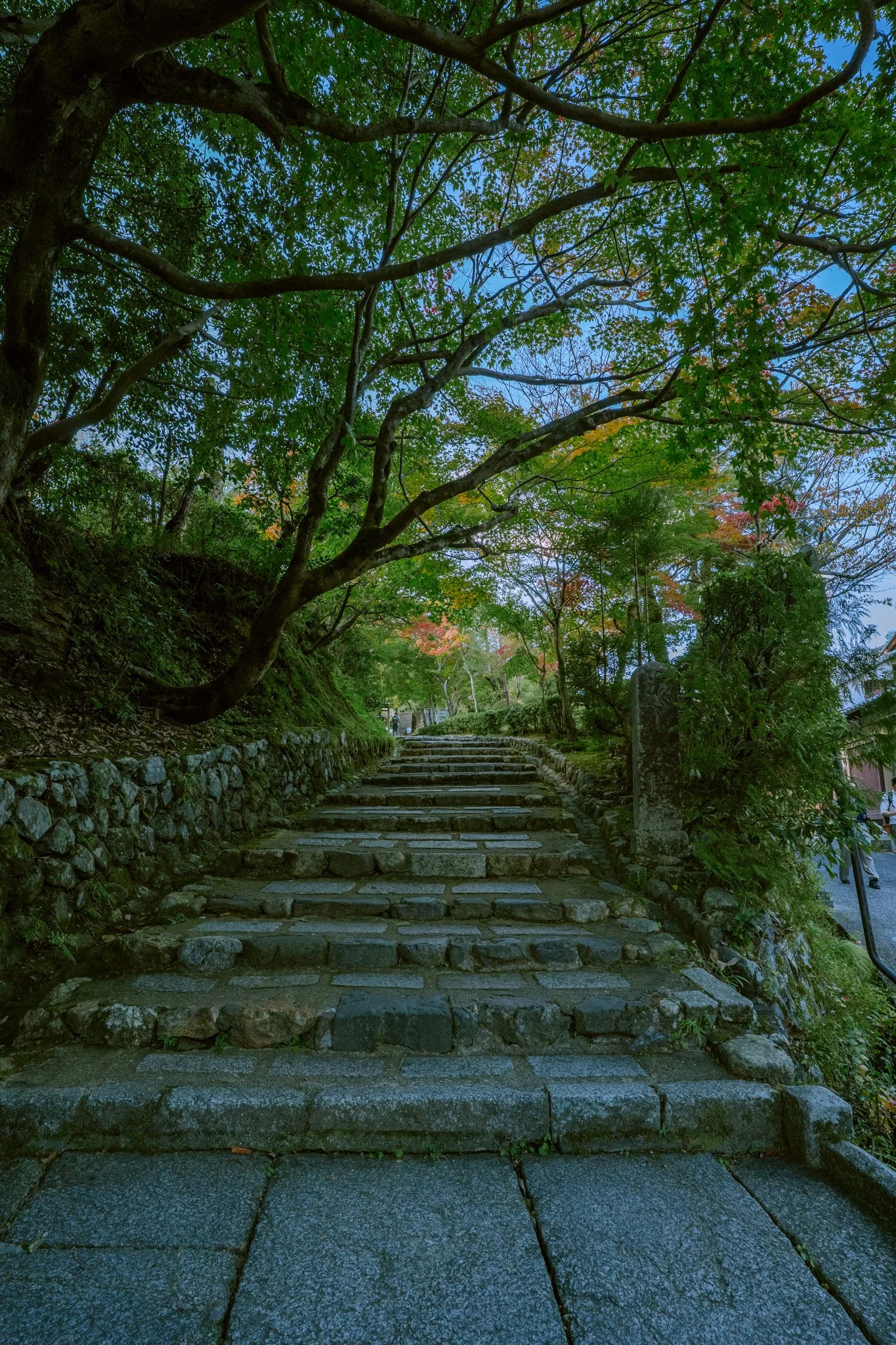
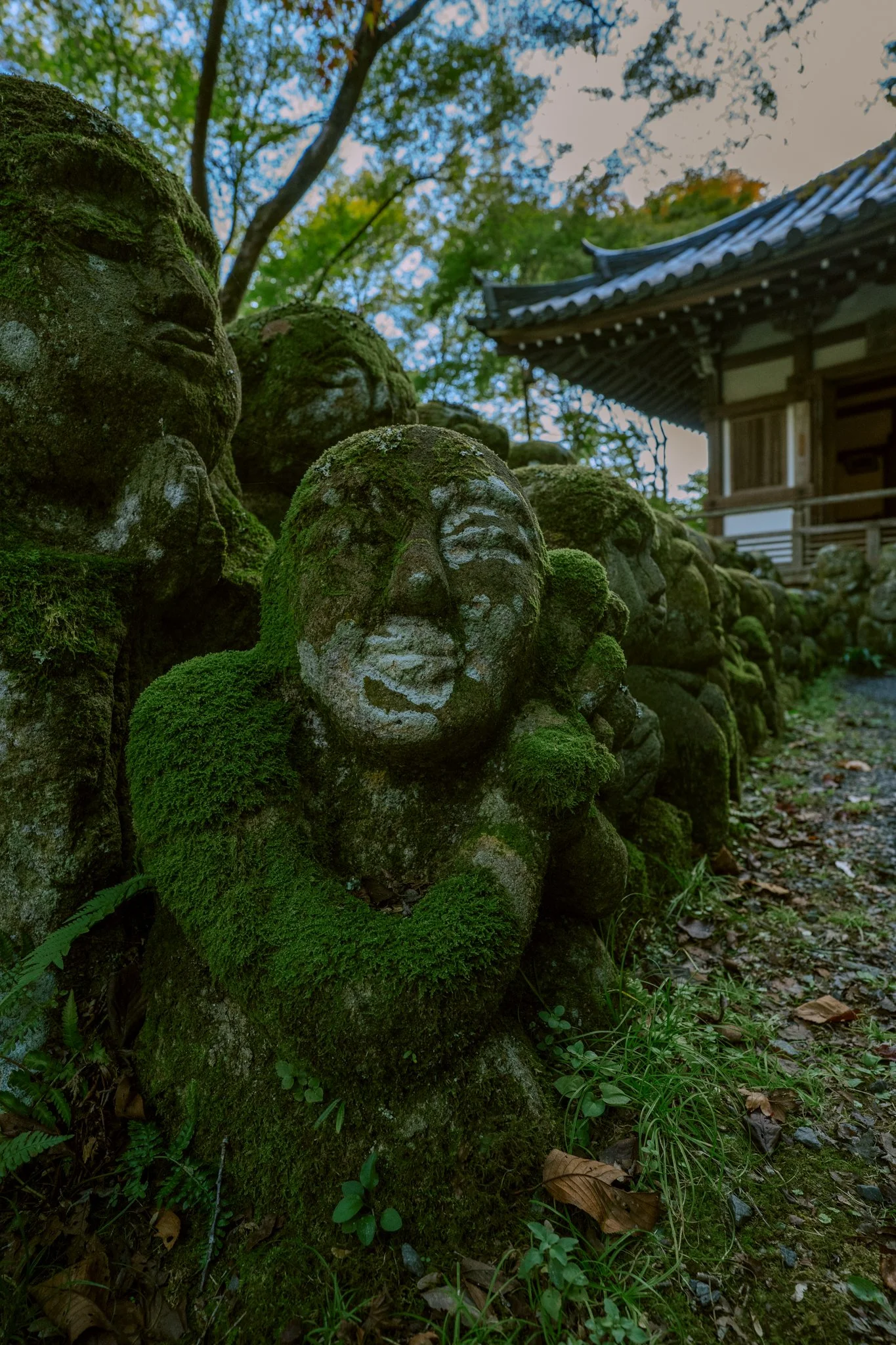
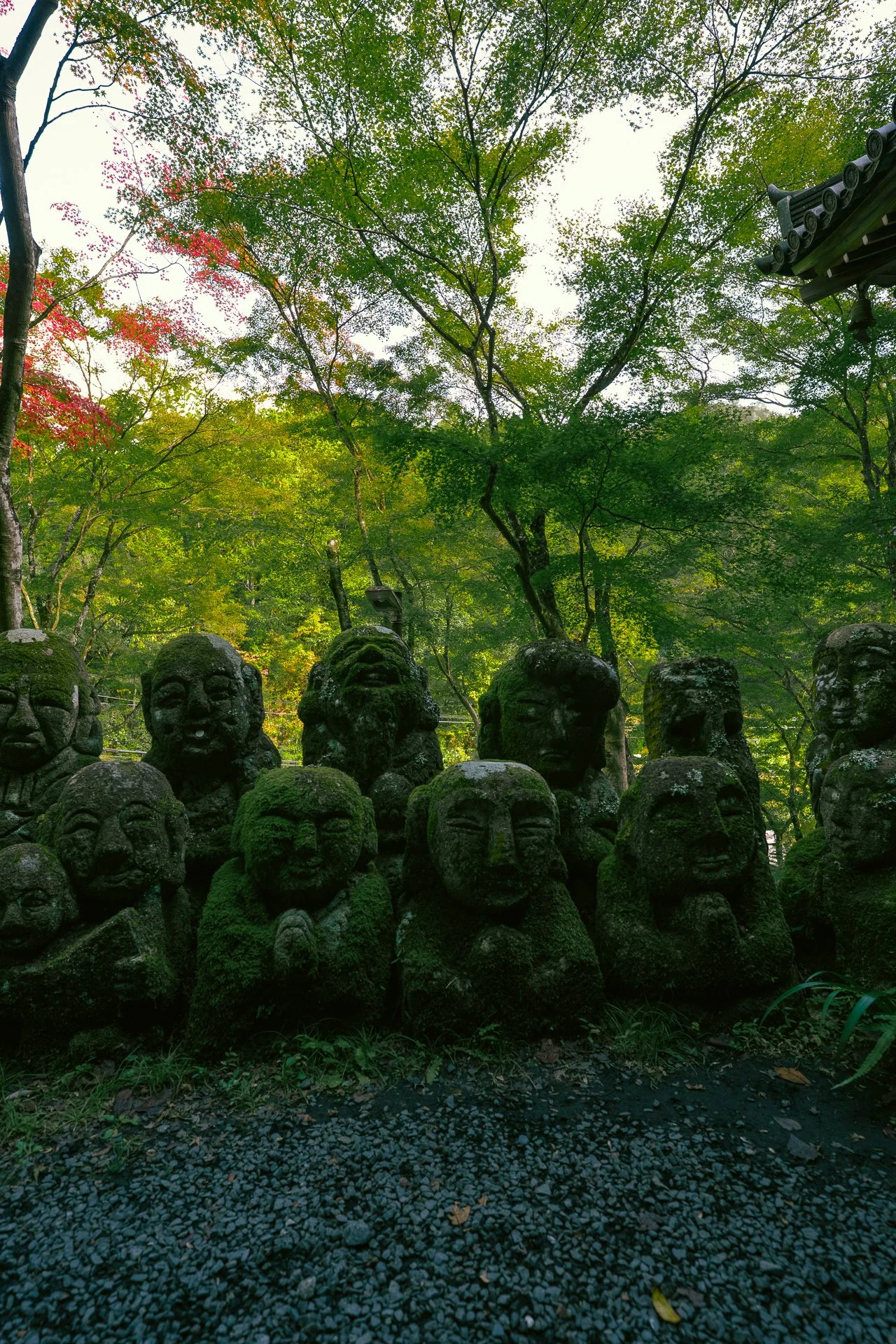
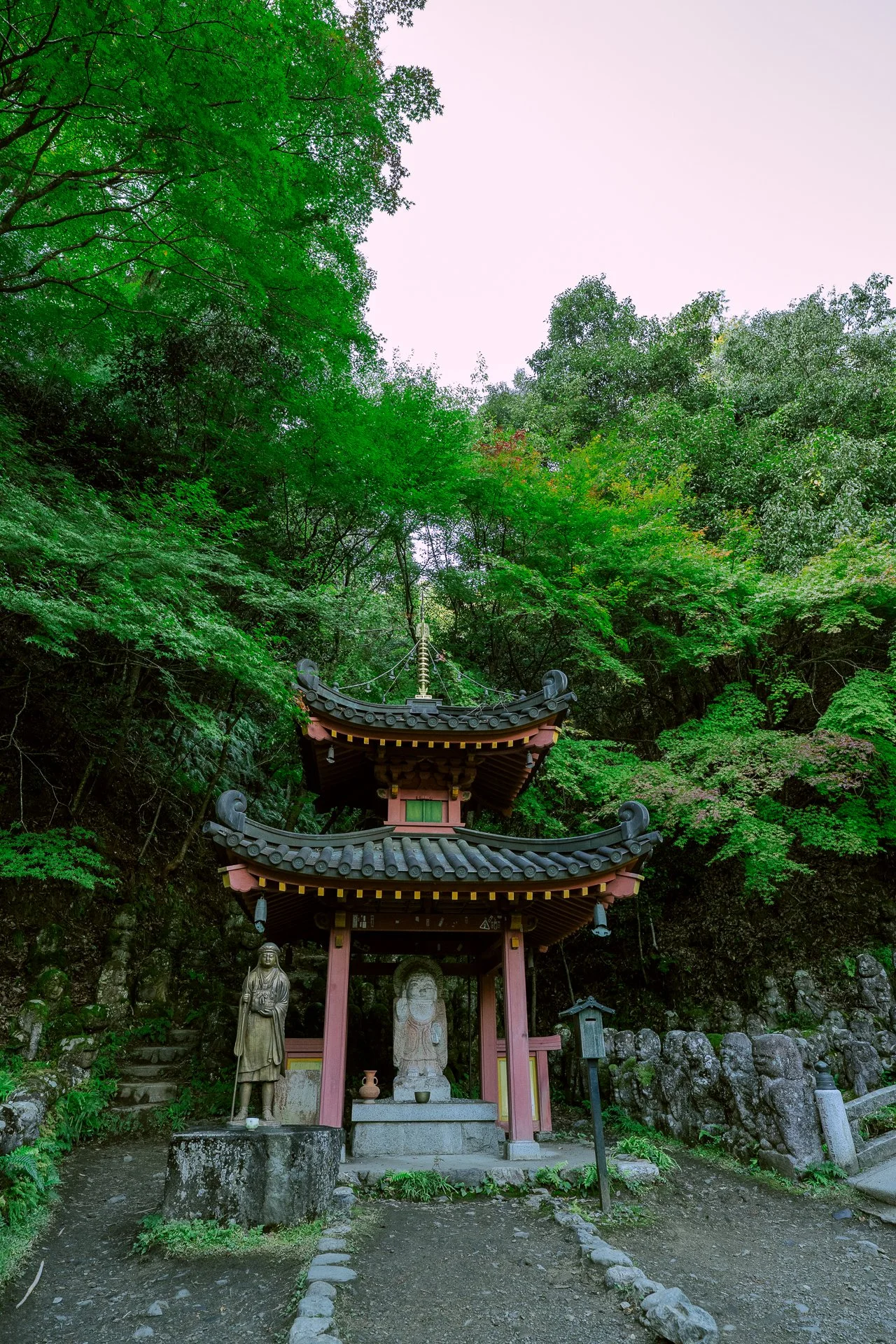
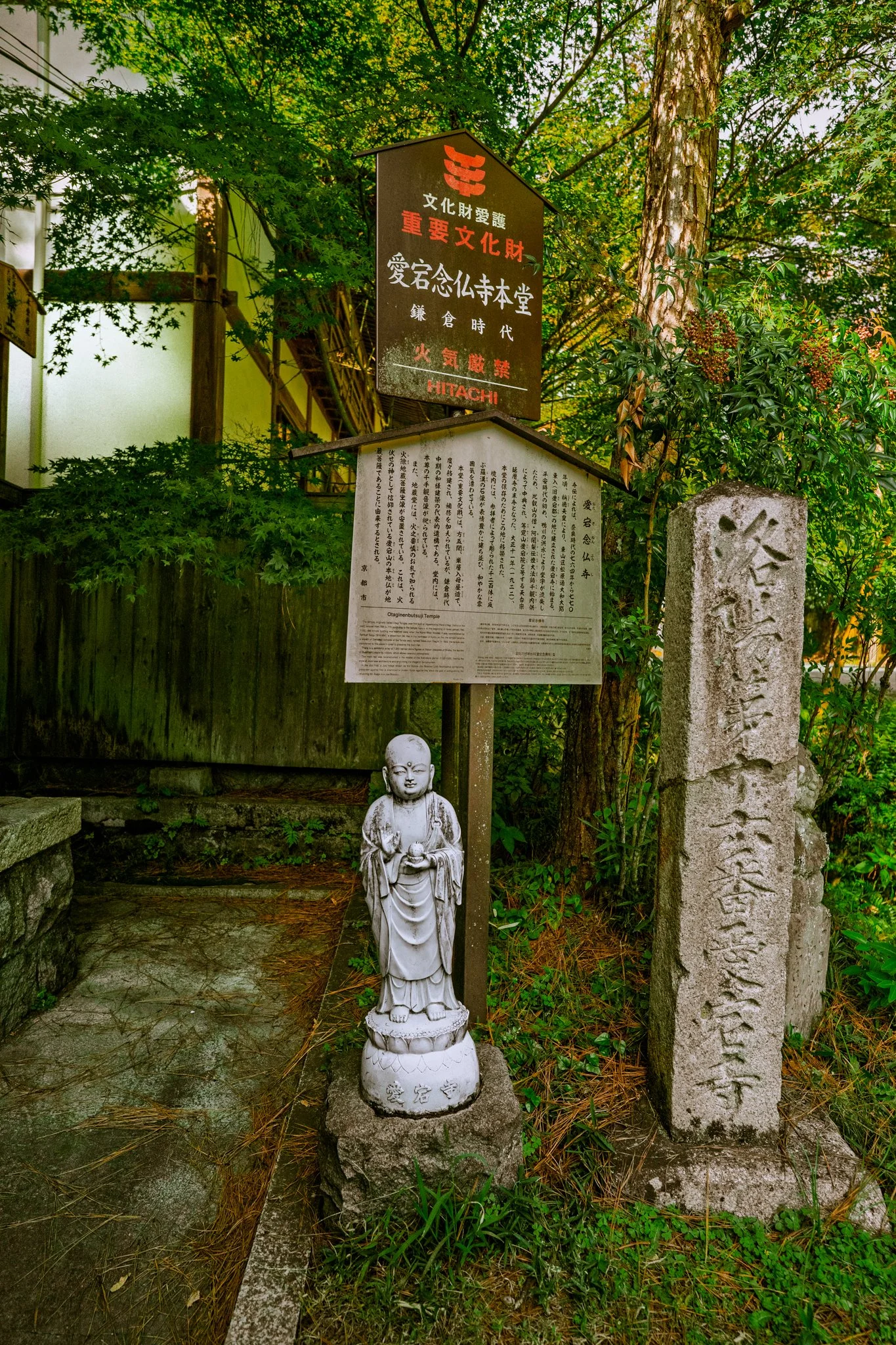
The original Otagi Temple sat way away in prime location Higashiyama back in 770. A flood washed it away, a little too hard, in my opinion. And the temple was re-established in the north-east of Kyoto. Misfortune followed the temple until 1922, when the authorities dismantled what was left of the temple and gave it a new home at the present location, only for a 1950 typhoon to pummel it again. The temple finally caught a break in the mid 1950s when the new temple priest, Kocho Nishimura renovated the temple and got visitors to create a multitude of sculptures under his guidance. And perhaps, these laughing, praying, singing, cat-cuddling, gossiping, almost living stone folk and the energies passed on by their creators have kept this temple safe.
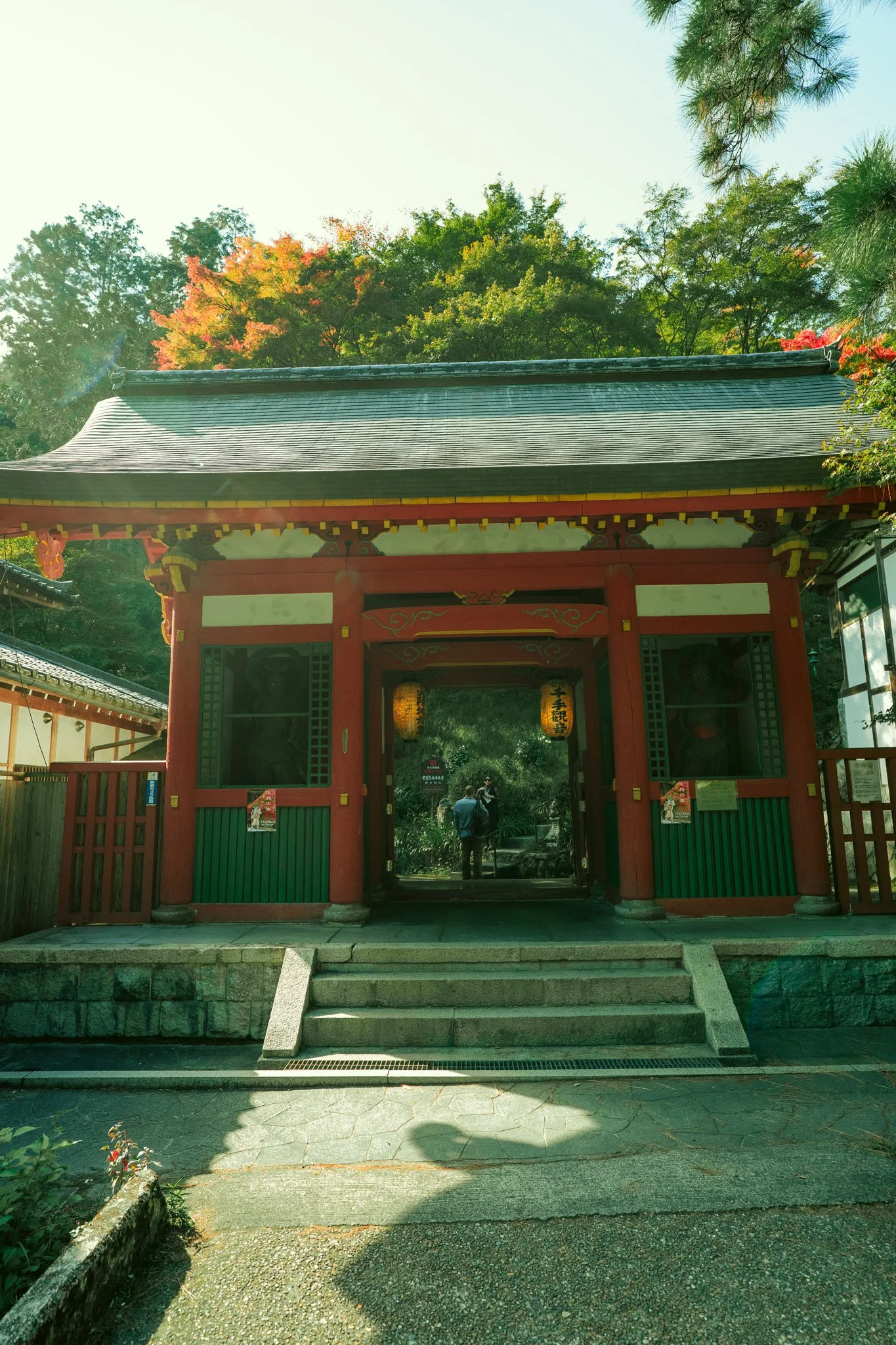
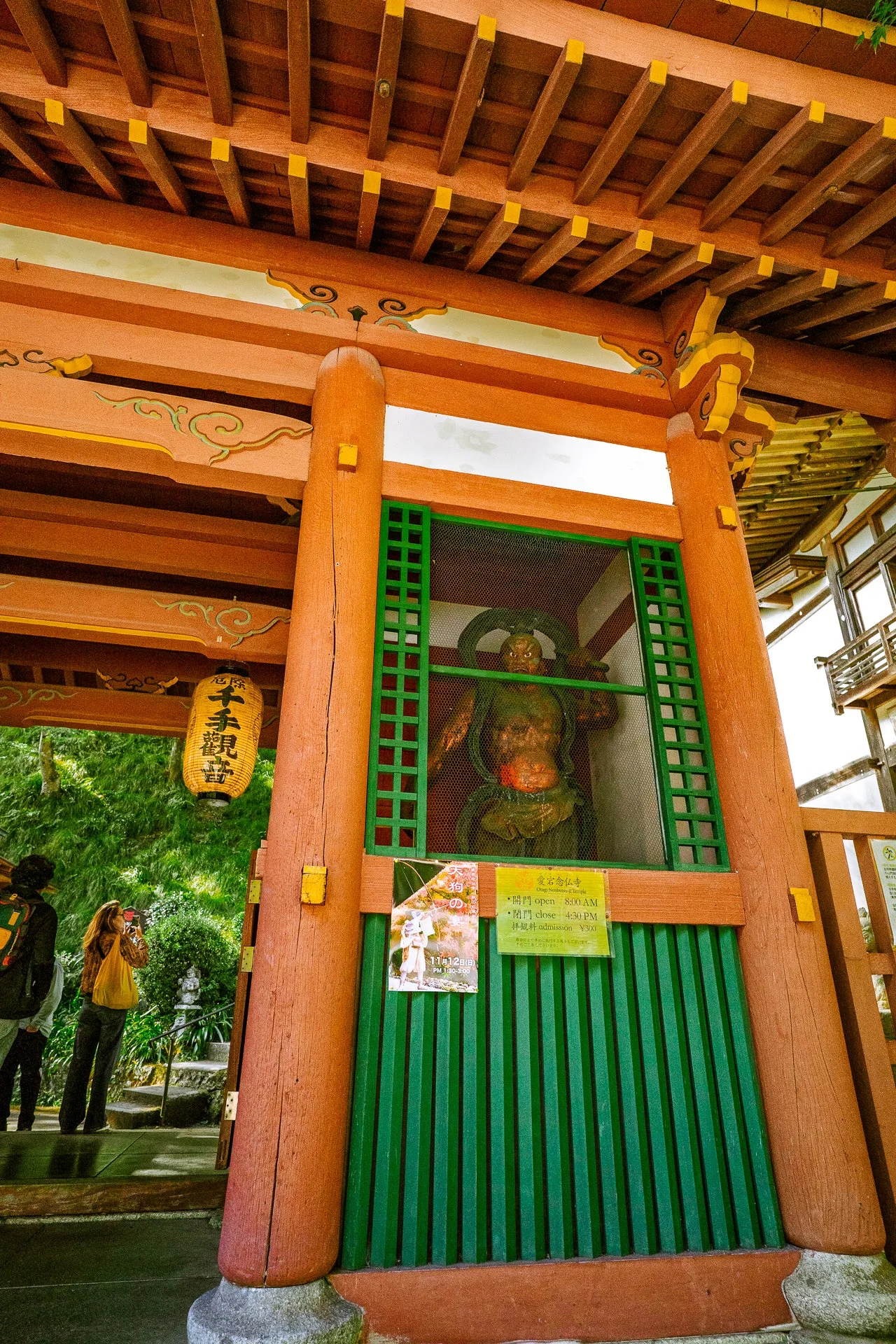
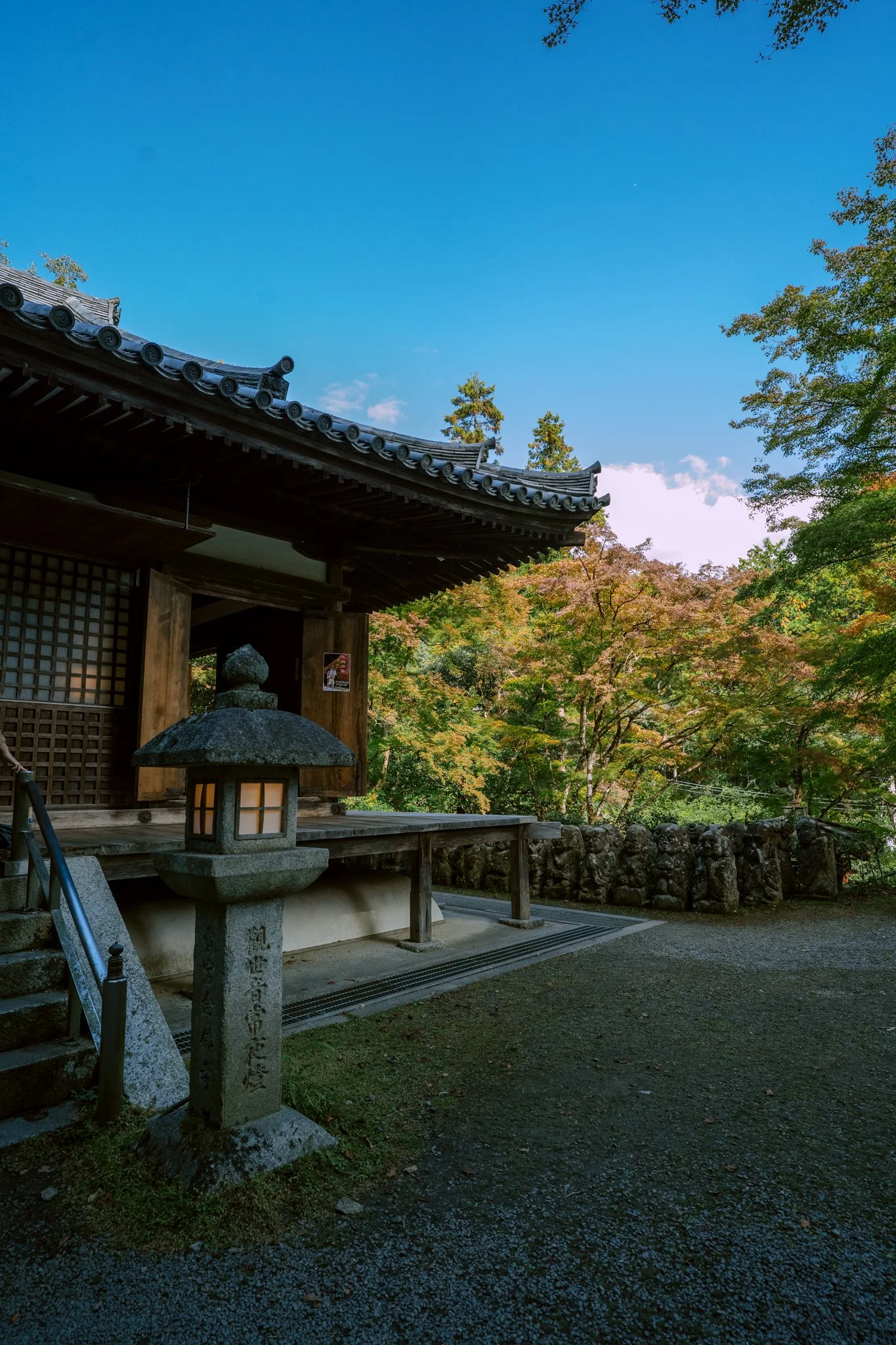
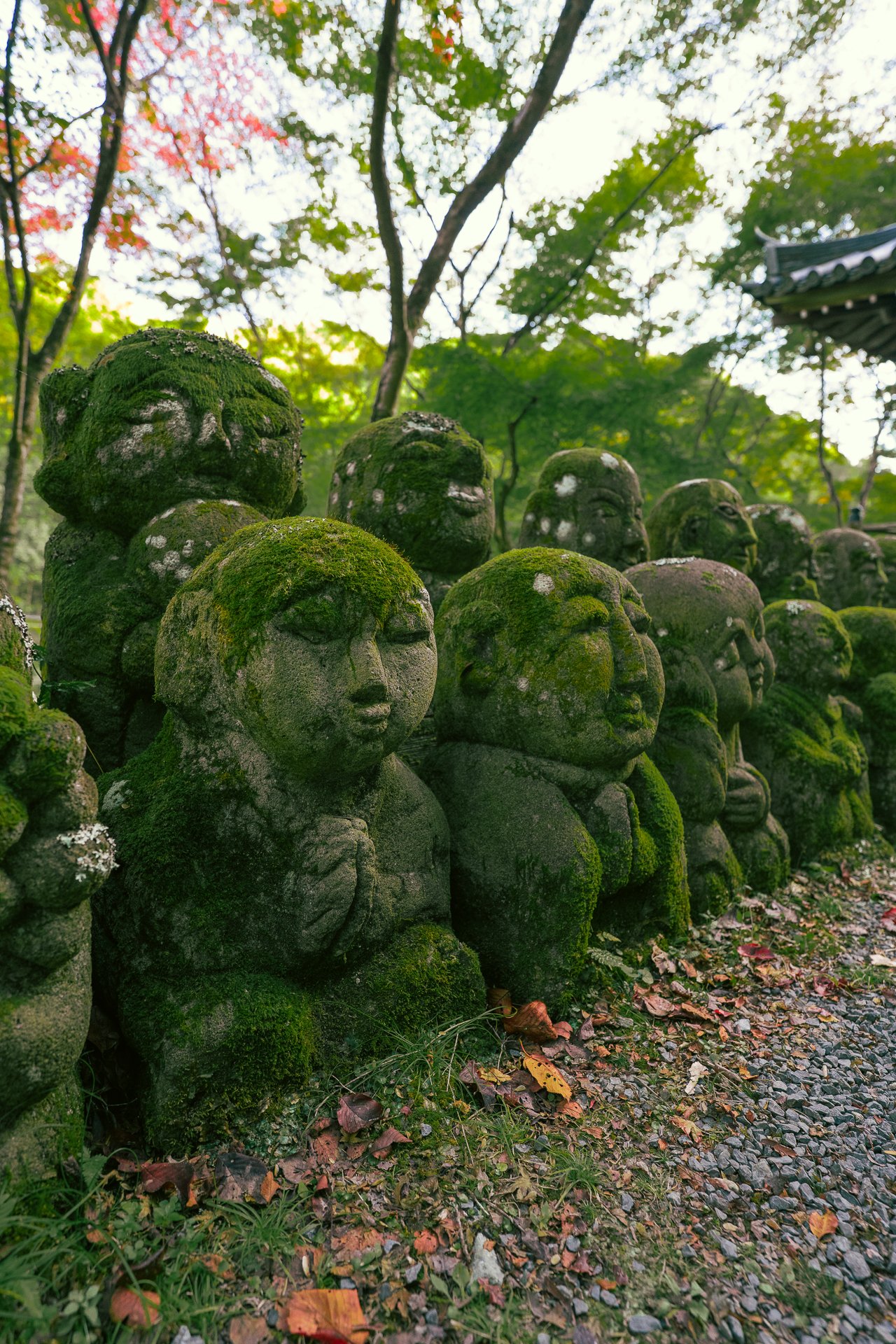
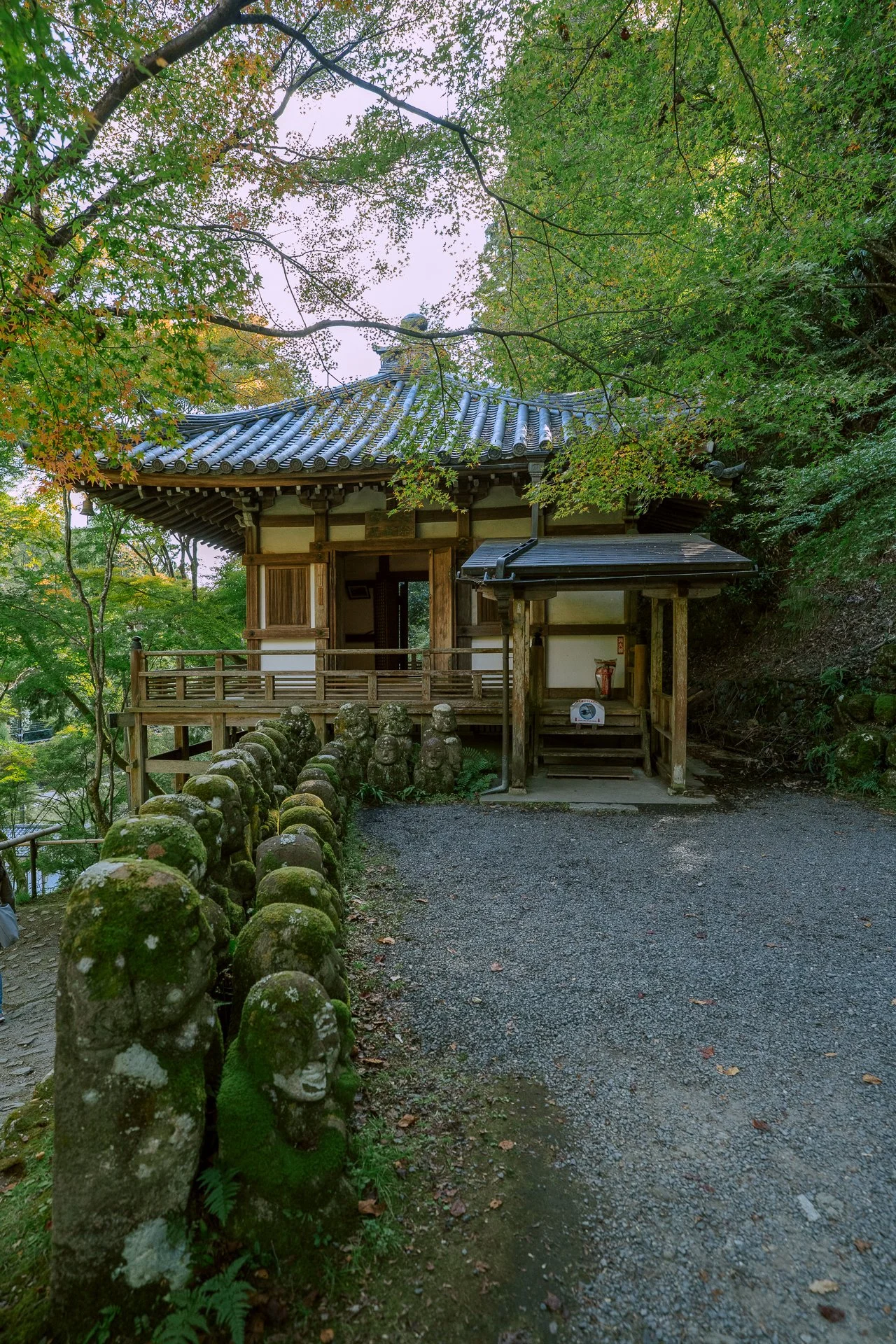
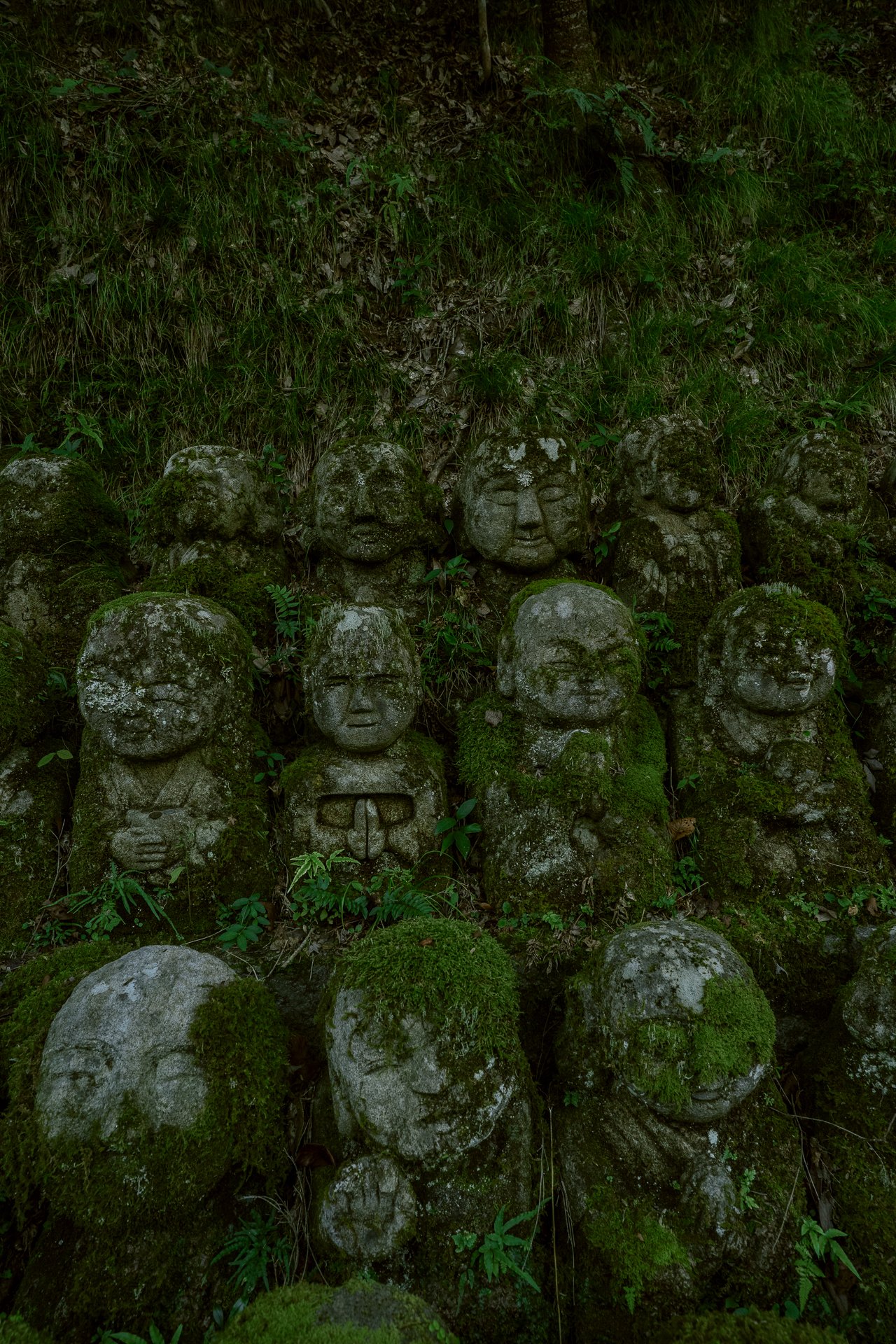
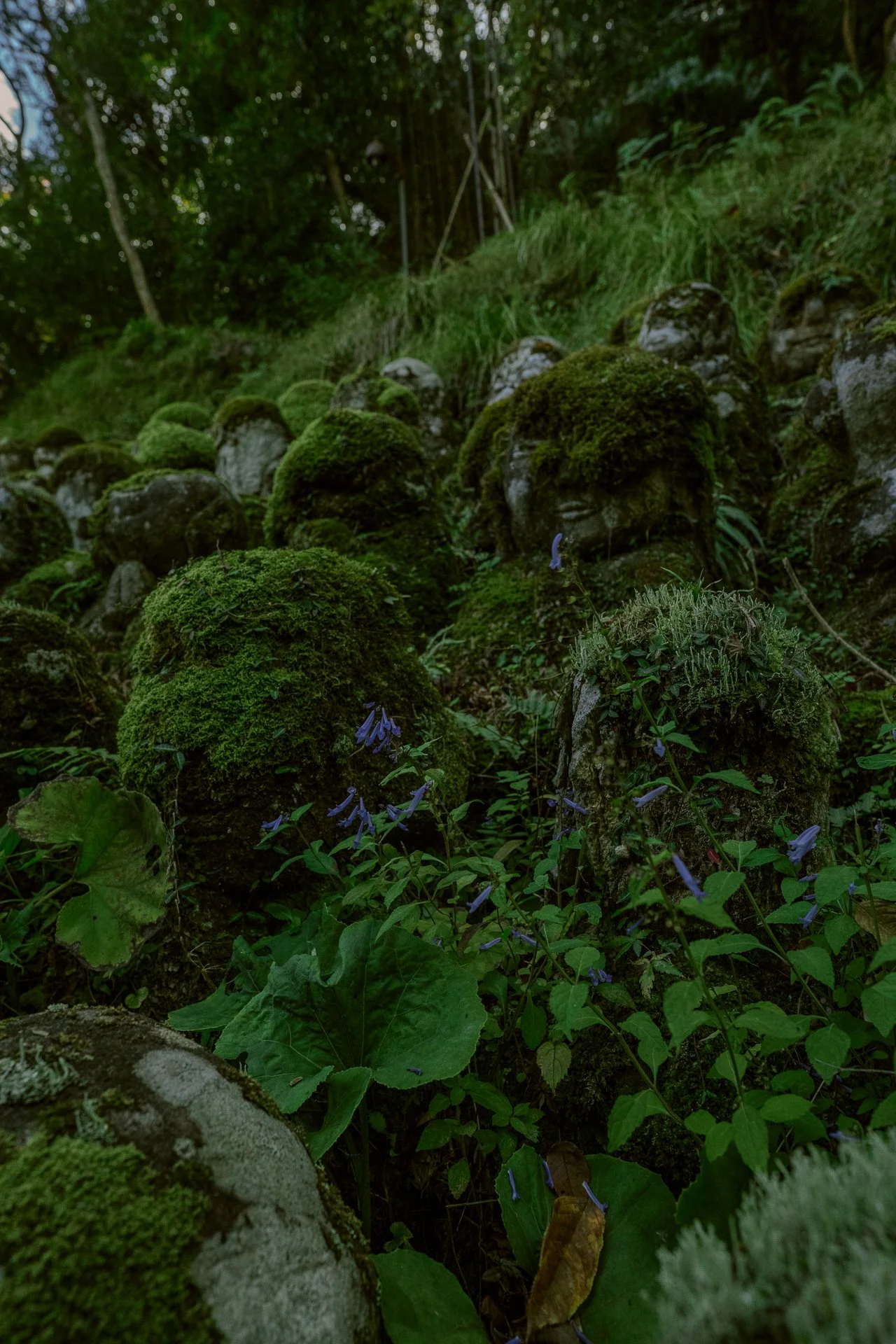
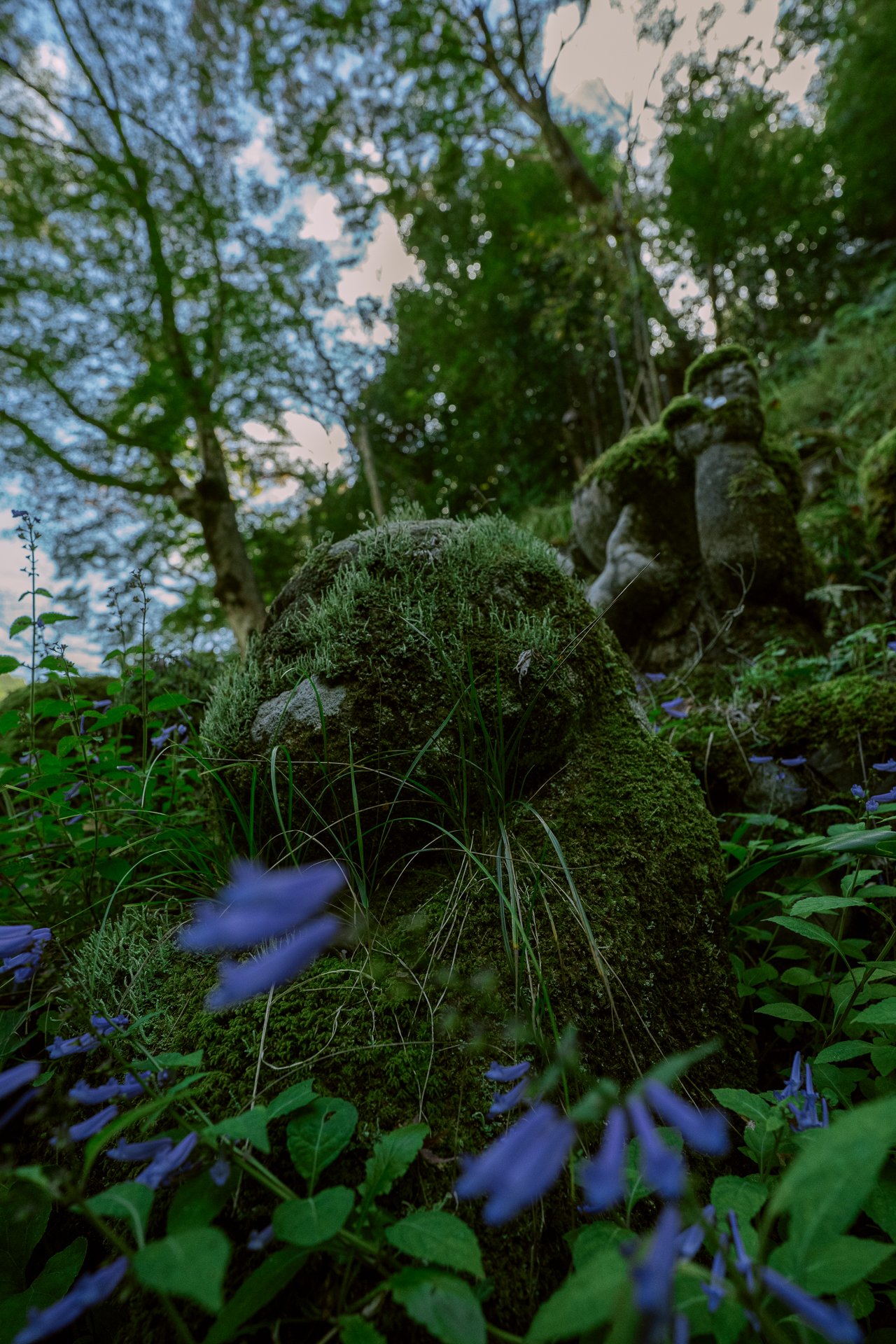
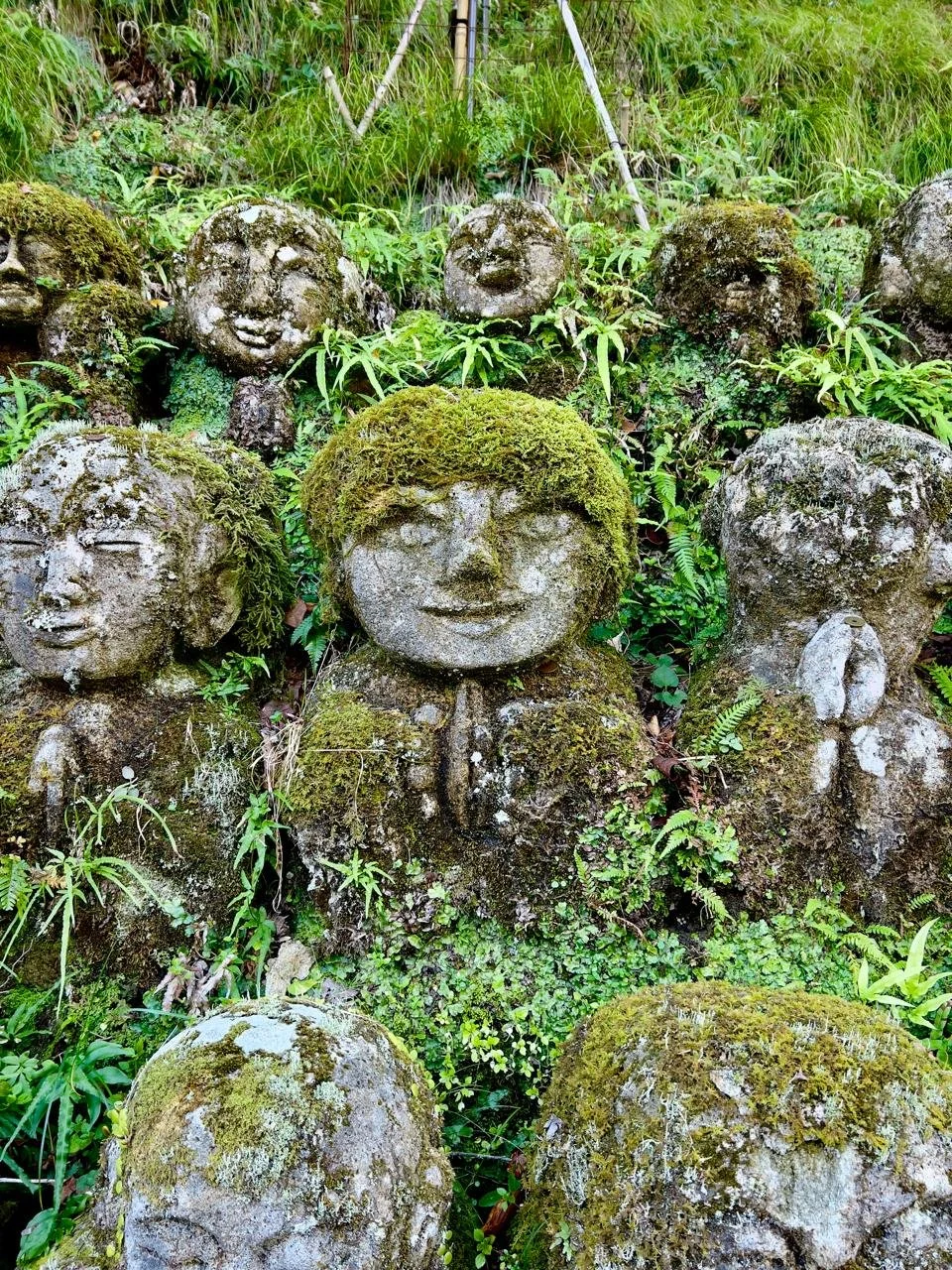
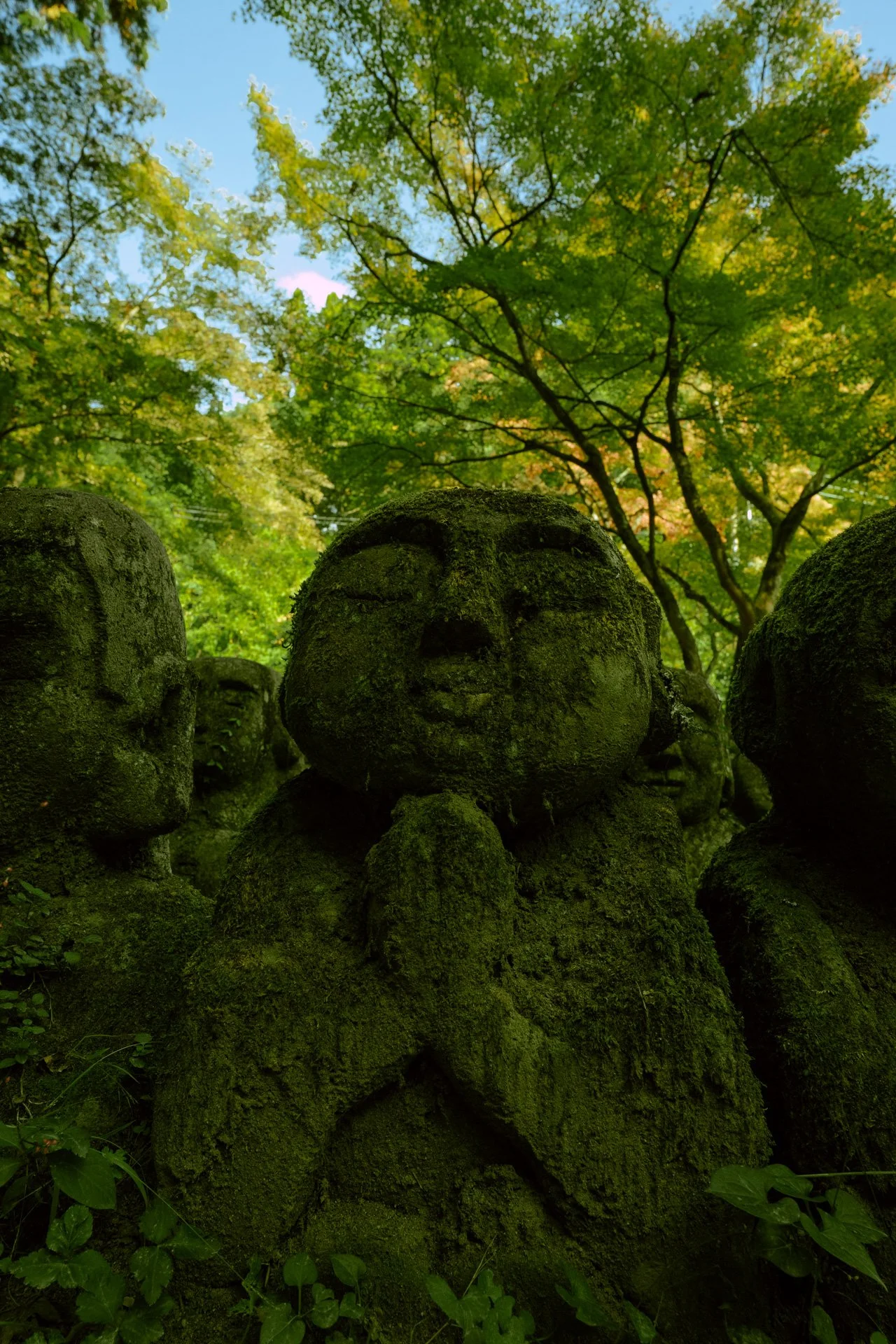
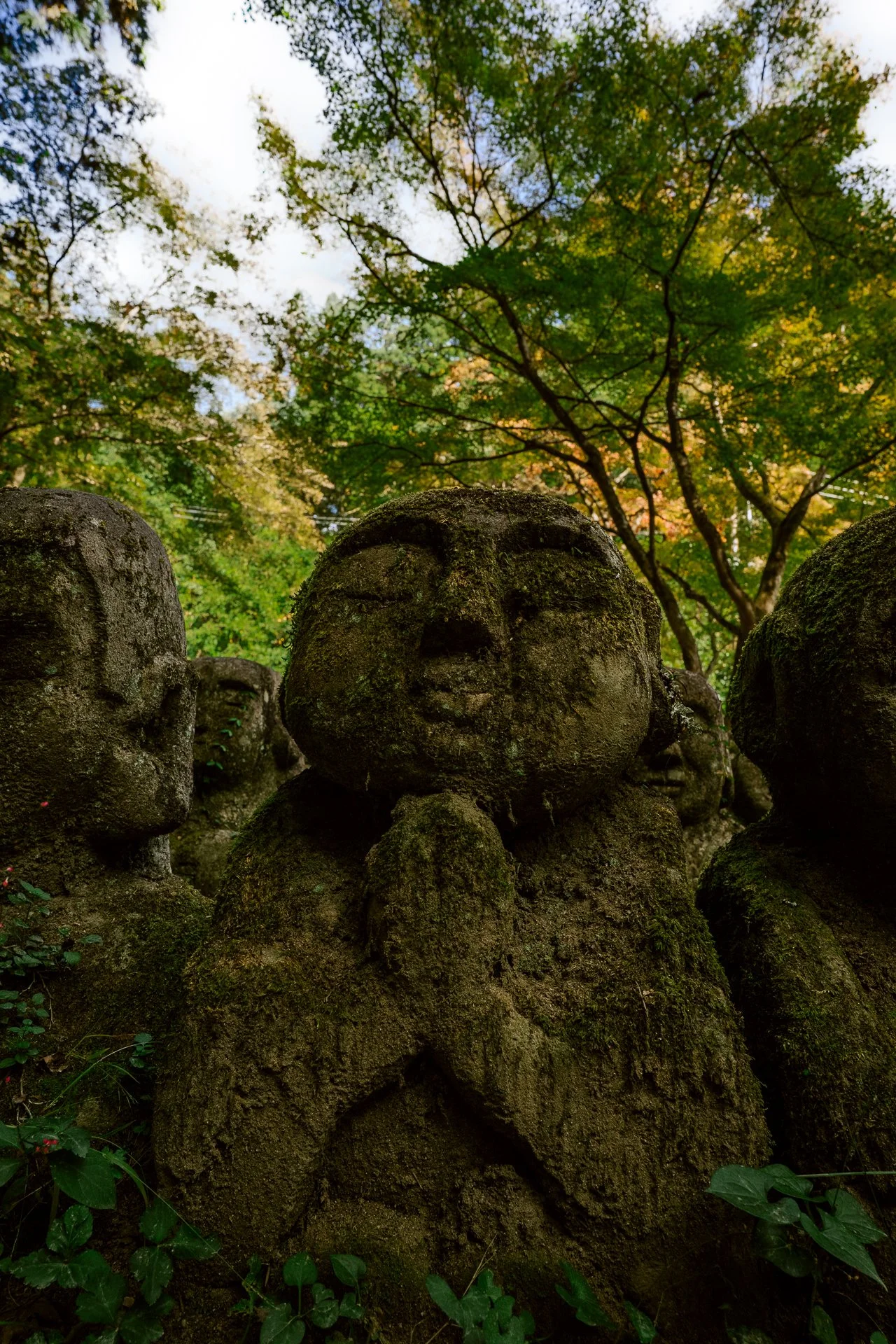
How do I begin to describe the instant spiritual connection that this little temple establishes. The countless faces, living, emoting things of stone and moss. An enterprising priest got visitors to carve individual statues for the temple to represent the rakan or disciples of Buddha. Chances are that you will find your stone doppelgänger amongst the faces. I found mine pretty quickly. Or at least, Sahit did.
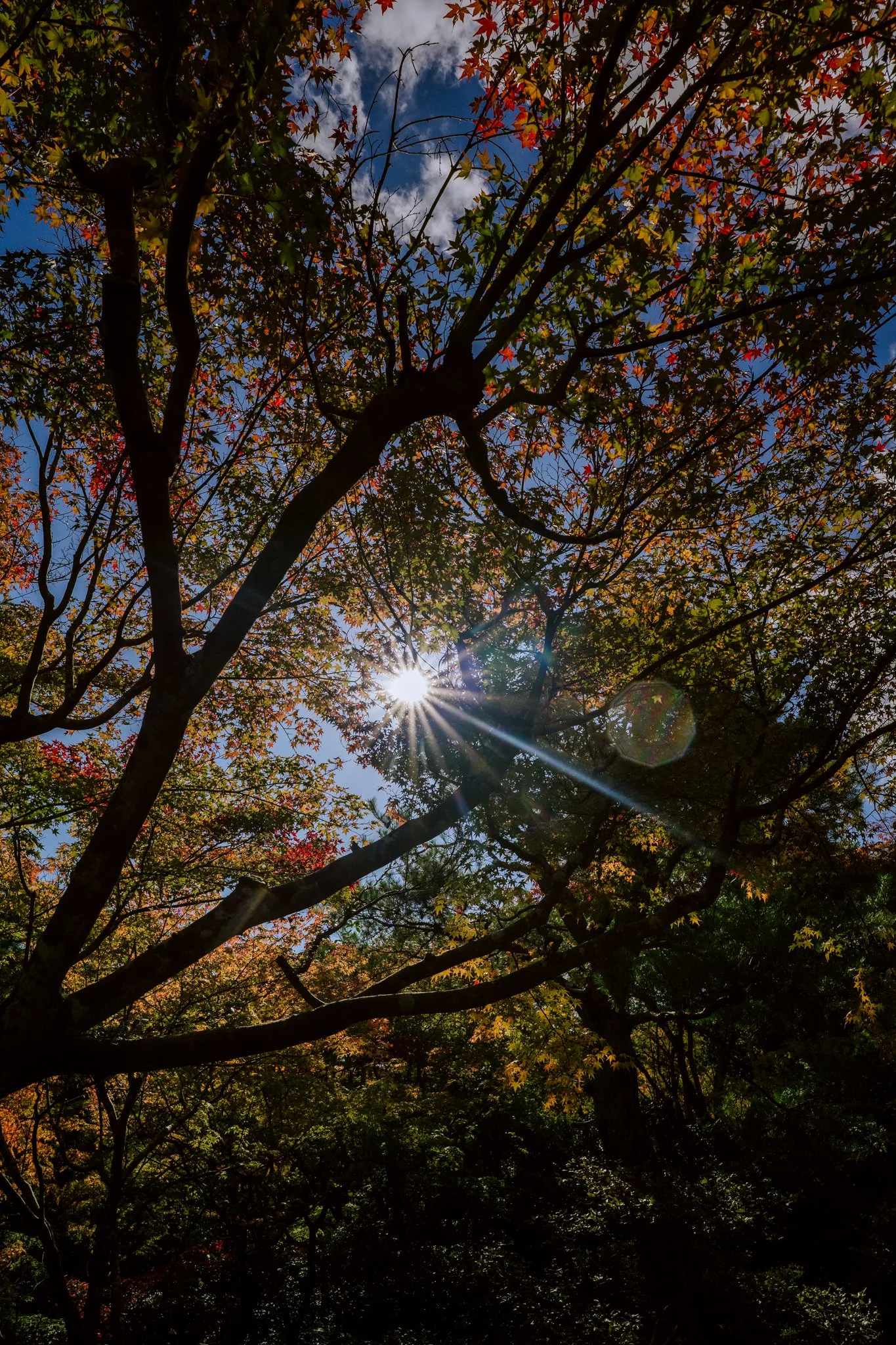
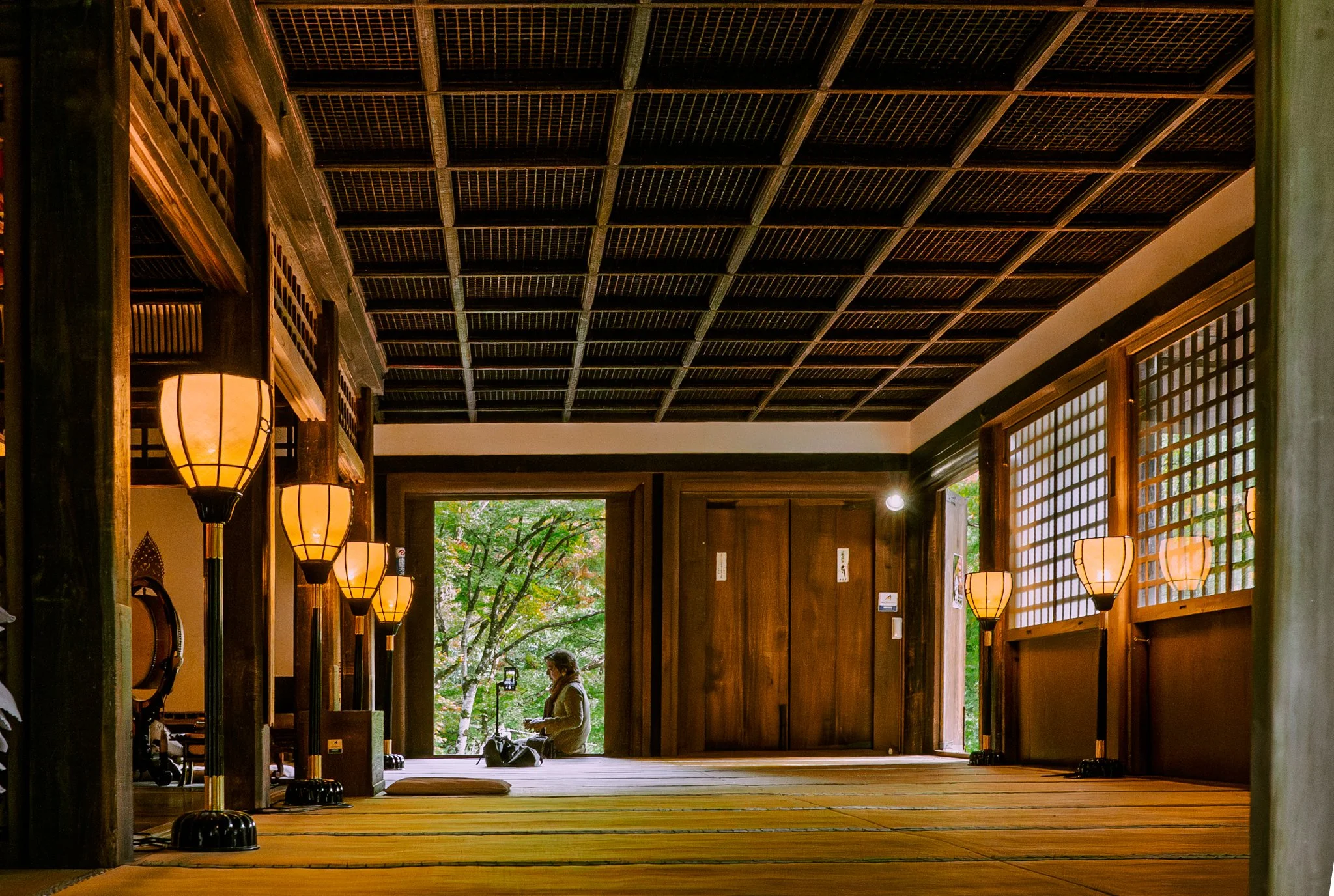
Autumn had begun to touch the tips of the maple trees, casting a distinct crimson nebula on the leaf edges. Dimples of light fell softly on the statues, giving them fleeting life-likeness. It’s a magic that escapes words. Across the temple hall, I noticed a woman, rather quietly, taking self-portraits. I was beyond impressed at her dedication. The pictures, I could see on her camera screen, were magnificent. I admired her for being able to shut the world out and focus on what she had to do. It was almost prayer-like.
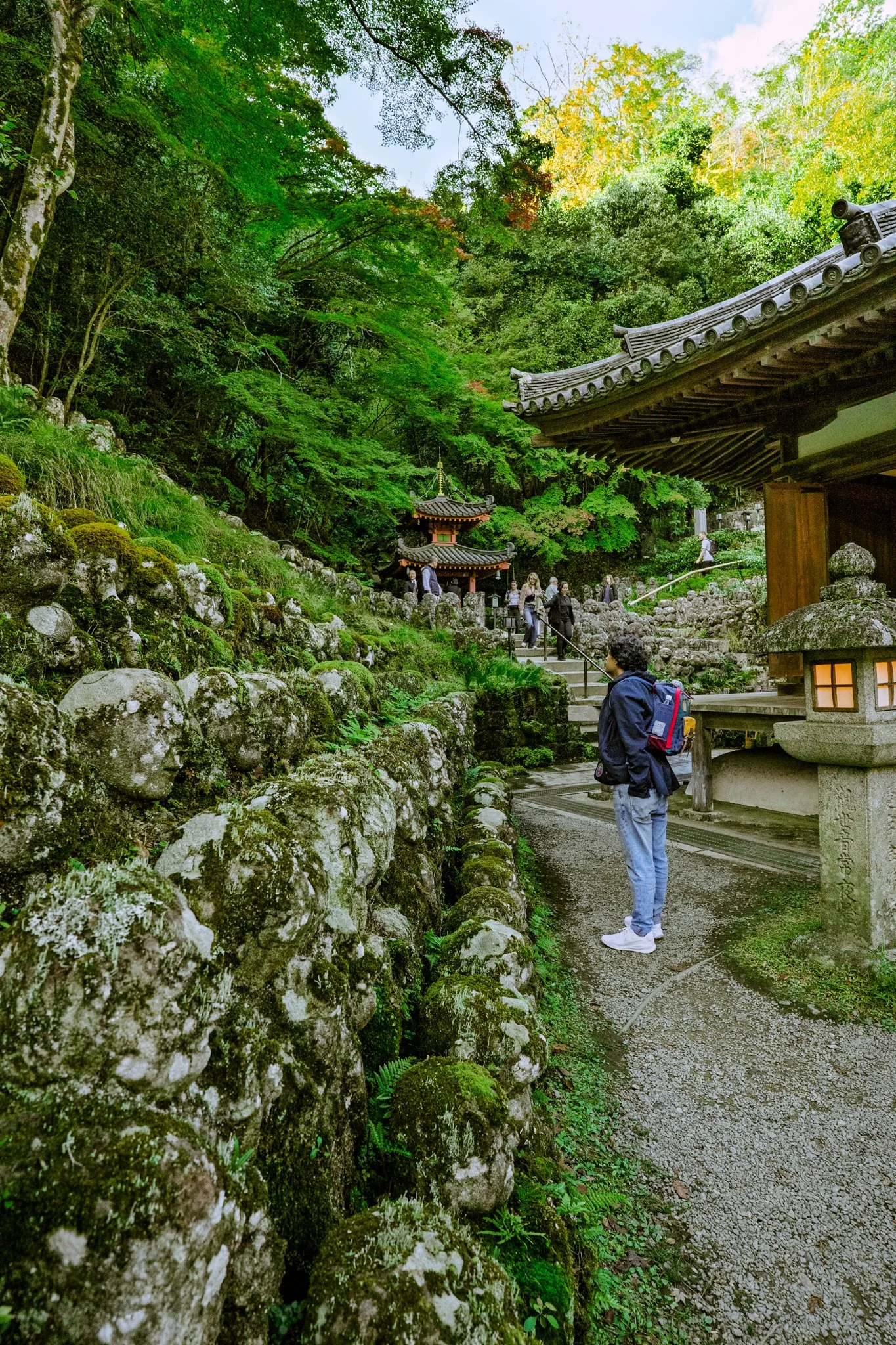
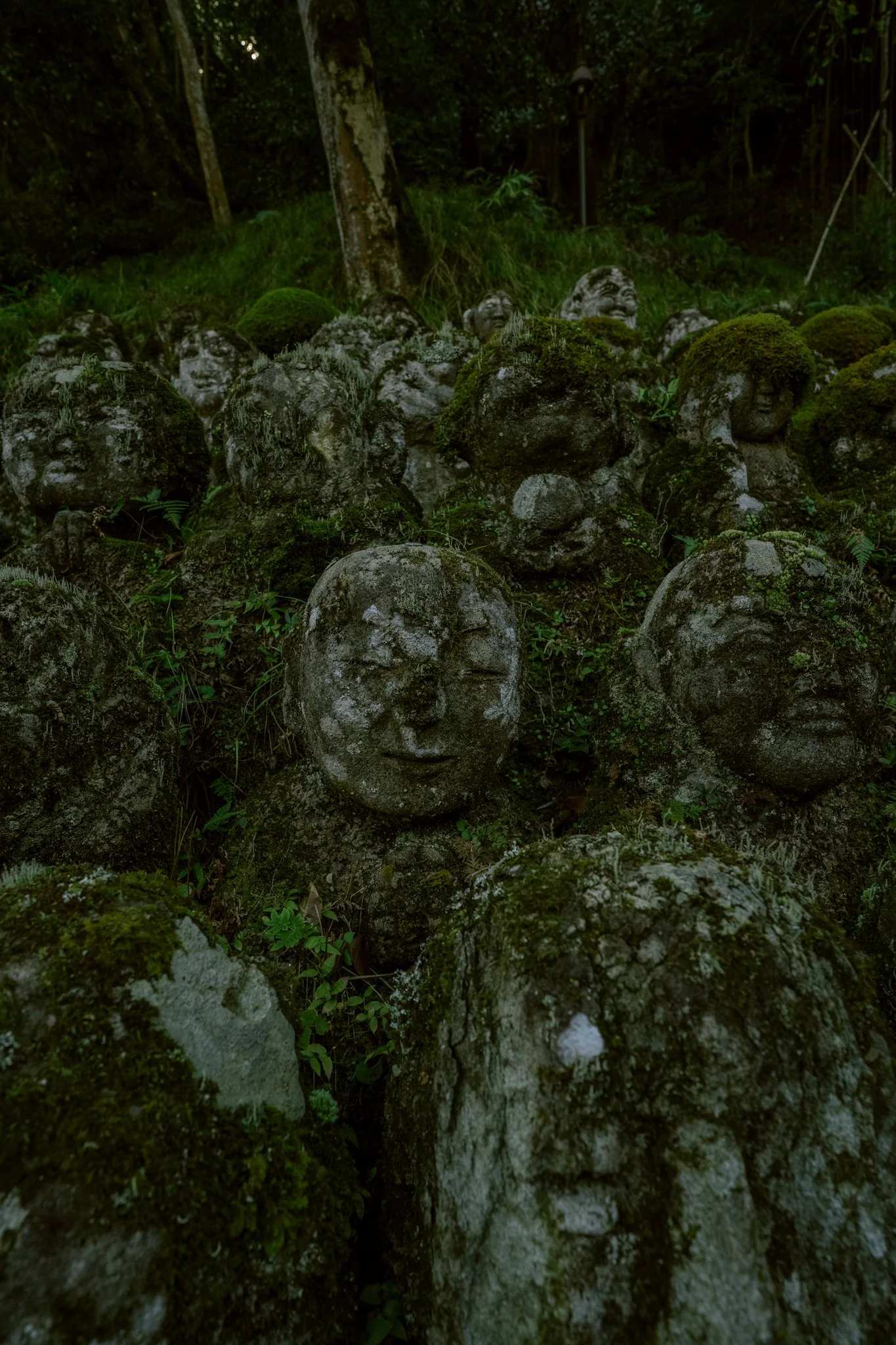
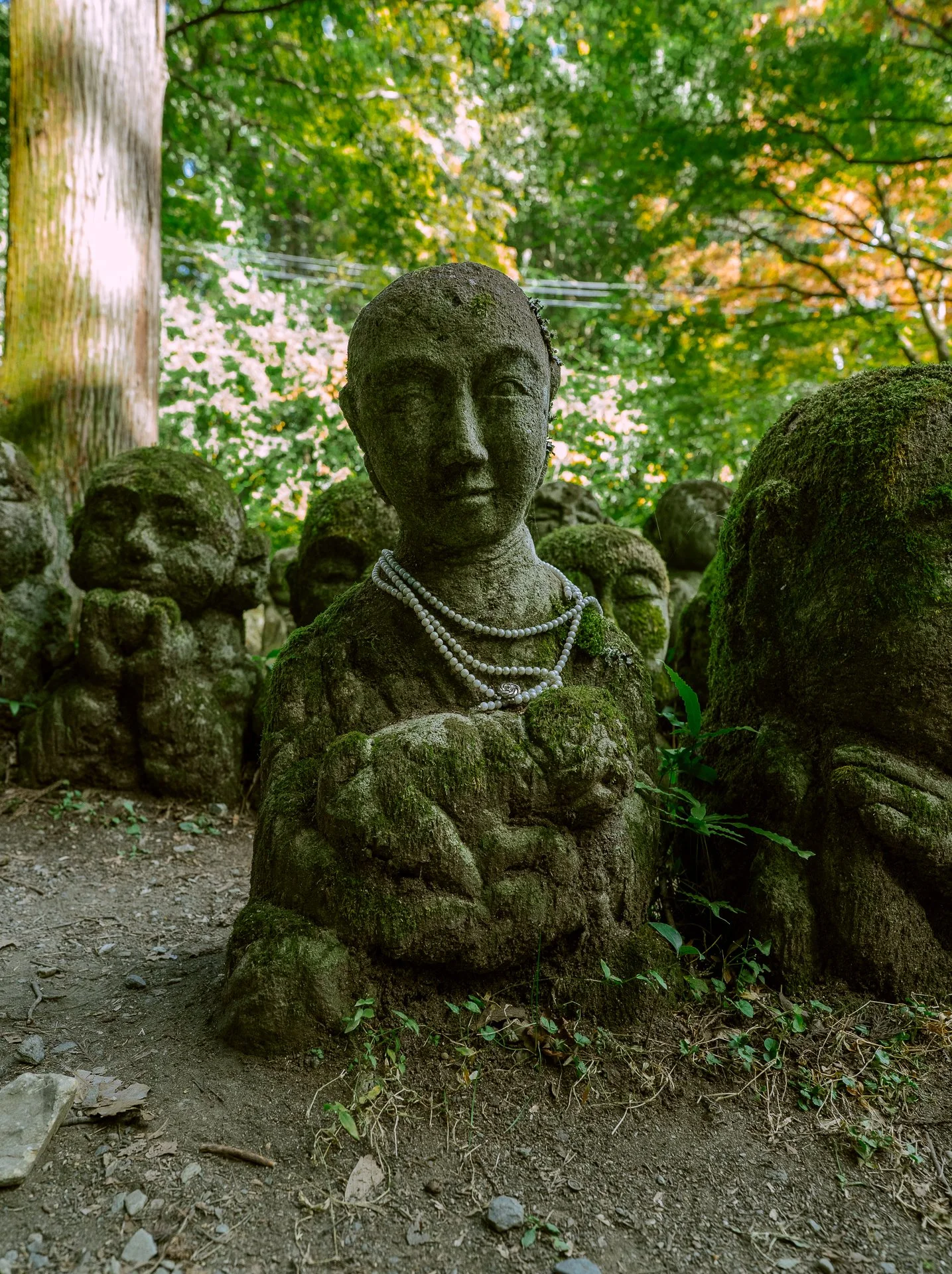
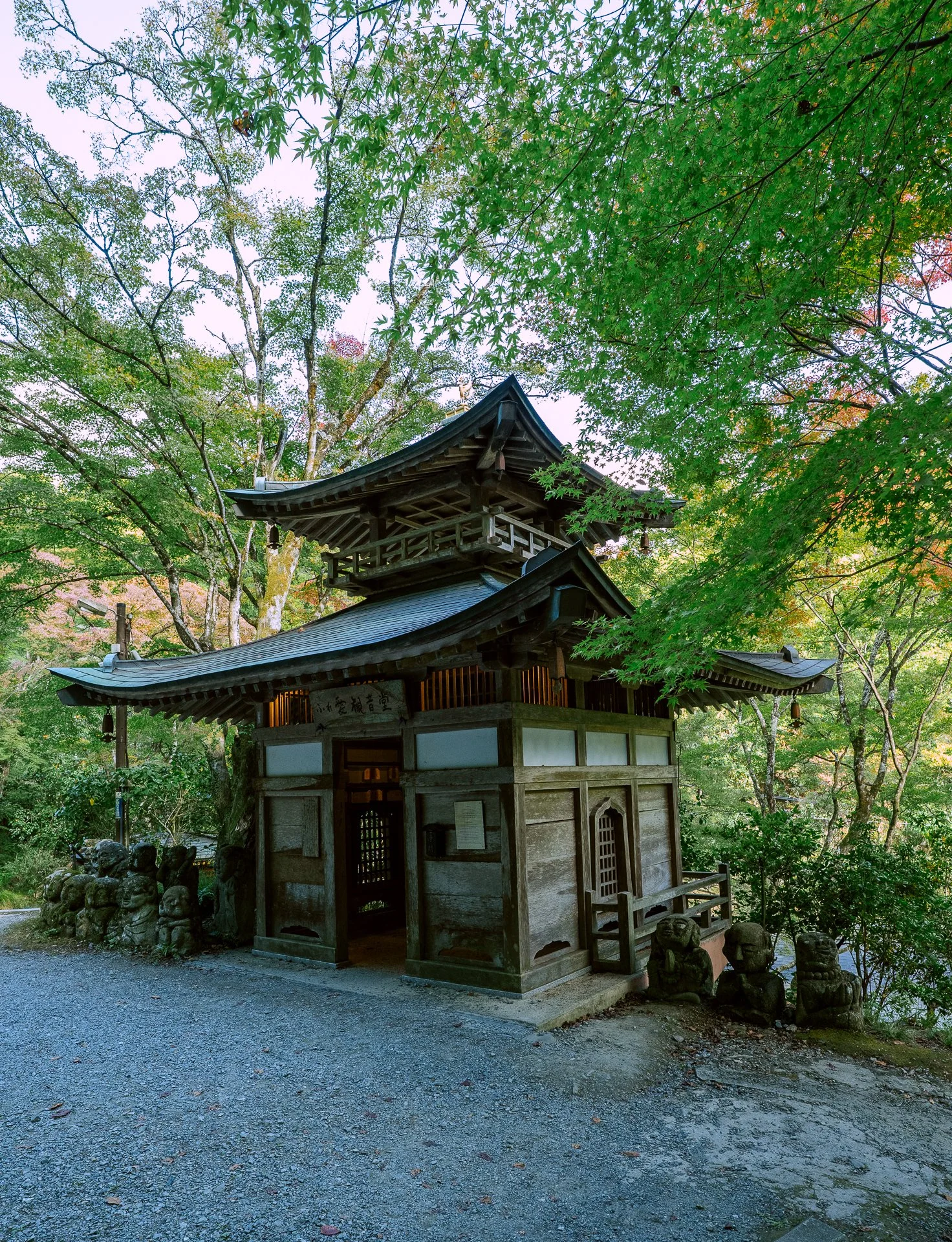
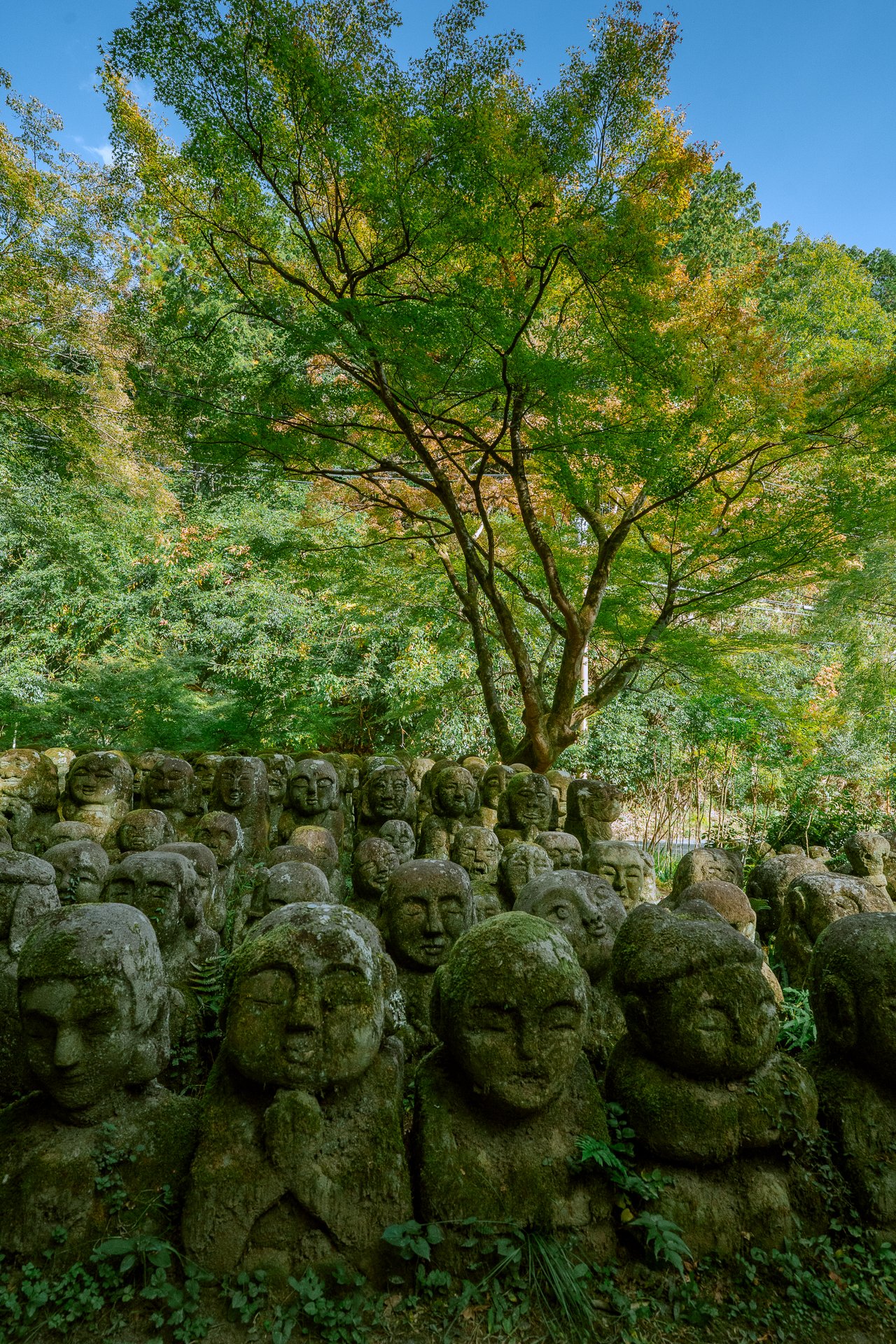
We were quite exhausted and took the opportunity to rest for a bit. A dragon-headed water spout provided a steady, calming hum of flowing water. The leaves cast their soft early autumn gold komorebi while the wind hummed a calming tune. And just in front of the garden bench, she stood, calm, zen and absolutely at peace. A statue with a distinct resemblance to amma. I stared, whisper-called Sahit. He simply nodded. We were still grieving. It had barely been a month since we lost her. Our decision to go ahead with the trip was a bid to break the trauma that was the last six months. And truth be told, we were still pieces held together by a sheer need to focus on the future. We were kind of running blind, hoping to be out of the darkness that was her final months. And here she was, bathing in golden maple light, reminding us that she was always with us. Reminding us that the years she spent with us were her happiest. Letting us know that she was alright and she wanted us to be as well. The tears came and the heaviness inside us became a little lighter. I wonder if that was reason for populating the temple grounds with so many rakans. So that people would find doppelgängers of themselves and the people they lost. That we would find at once amusement and solace. That we would contribute appeal to the forces and influence the energy of a temple with an accident-prone past and keep it safe.
Though the Adashino Nenbutuji Temple with its hidden bamboo forest and solemn memorial statues was pretty close by, we were directed by our stomachs that were quite mad with hunger by now. Even though it was quite late in the afternoon, we found a Chinese restaurant that was still open and had ourselves a great lunch.
Our lunch place wasn’t anything particularly special but the food was quite delicious. Kyoto exists to challenge your accepted limits of what is beautiful, what is possible, what is whimsical; it exists to make you feel that “love like no other” feeling. Including the act of sitting down and eating. Throughout our stay we chose small places that just beckoned to us and we almost always got lucky with the food. But if you are looking for extraordinary experiences, Arashiyama and Kyoto in general have some places that make you feel like you’re in some whimsical machinations of someone’s imagination - someone extremely imaginative at that.
To conclude this post, here are some of Arashiyama’s most famous lunch spots. Perhaps you’d like to try one of them when you’re there.
Arashiyama Yoshimura This restaurant offer such picturesque views that feels right out of a painting. The rushing river, the looming forested mountains and that “straight out of period movie” bridge really up the romantic score of mere act of partaking in victuals. But the long waiting lines are sobering enough.
Shorian This restaurant that specialises in tofu makes you wonder if your stumbled into some forgotten alcove in time. The walk through hillside woods, the traditional design, the startling greens of the forest and the whisper of the river promises a veritable battle for a table. Or you can make a reservation online.
Tofu cuisine matsuge Again located near the Togetsukyo Bridge, this place offers more varieties of tofu, including the famous checkerboard green tea tofu. Kyoto cuisine includes a lot of tofu specialties for reasons both historic and geographic. As the imperial capital, Kyoto was also the centre for Zen Buddhism, and the temple kitchens developed the shojin ryori (vegetarian temple cusine). Tofu became their primary source of protein. Kyoto also has high-quality water running through its veins which is perfect for making rather sophisticated and smooth tofu. So all these tofu specialty restaurants are yet another flex of the imperial capital.
Arashiyama Itsukichaya An idyllic riverside lunch that features the most freshest of Kyoto cuisine or Obanzai. You’ll probably see signs that announce Harenohi Gozen - which simply means special occasion setmeal. The meal often includes high quality items like wagyu beef, prawn tempura, etc, which explain the slightly elevated rates.
Kyoto Kibune Though not exactly in Arashiyama, this foresty village located a little further north has some really whimsical ideas of dining. Firstly it’s famous for Kawadoko or riverside dining - the dining platforms are right over the flowing river and is open from June to September. The second one is the very viral Nagashi Somen, available in the summer months, where cold noodles flow down a bamboo chute to the diner in a setting that’s unbelievably pretty - beside mini waterfalls and beneath foresty boughs.