Dan Loves Japan Part 2: Shibuya
Day 2 and another yummy breakfast. I knew I was going to miss these breakfasts, as “hotel-buffet-y” as they were. This was the day we were going to take on Japan’s formidable and no less, famous metro. We were headed to that capital of commerce and crowds - Shibuya. I have a habitual wave of trepidation when it comes to tackling a new place’s public transport. Probably a hangover from my childhood, when I lived on a “few-buses” route - and the buses were always unbelievably crowded. Even yet, I can’t the public transport system in India reliable or comfortable. I’m always worried that I might not be equal to the task of figuring the system out. Also, special mention to those multiple reels that promised Tokyo’s metro system was mind-boggling and could get really crowded (argh more childhood PTSD).
We shuffled down the Asakusa Station stairs to subterranean Tokyo. The weather promised to be good, and it delivered. Deep below, we discovered that buying a ticket wasn’t too bad. Just that you had to have enough cash at hand. As designated travel treasurer, Sahit was about to learn that Japan meant having to deal with a lot of coins. When we first travelled, there was a Suica shortage, also we thought waiting in line was a far more simpler, even if time-consuming, solution. There are also day-passes - up to 72 hours - which are pretty simple to use. Though I can’t begin to imagine braving queues in Spring, buying tickets the old fashioned way in November - 2023 wasn’t so bad.
There was a very quintessentially Japanese looking, quintessentially Japanese helpful railway staff with excellent English skills to help travellers. But so far, the so-called daunting transport system, was so-far not so terrifying. We were to take the Ginza line - the golden yellow line - and as we later realised, rightfully so, after we visited Ginza. But about that, later. It’s quite easy to follow the directions, once you get the hang of it. And you get the hang of it quite easily. Provided that you silence the anxious voice inside your head, who is finding this intricate and well-networked transport system, all too much to taken in. And hence resorts to screaming that you’re lost. Just trust the signs.
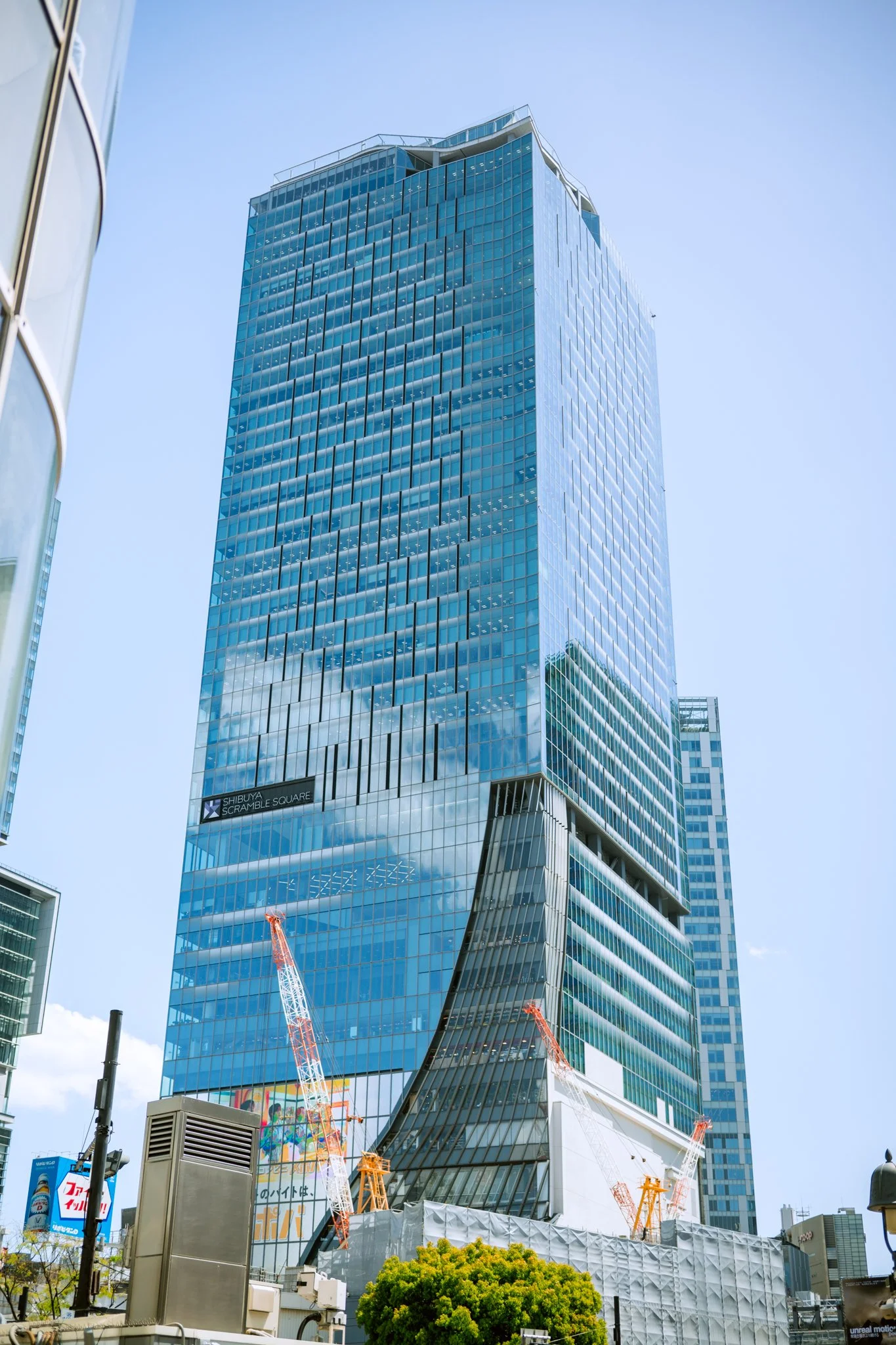
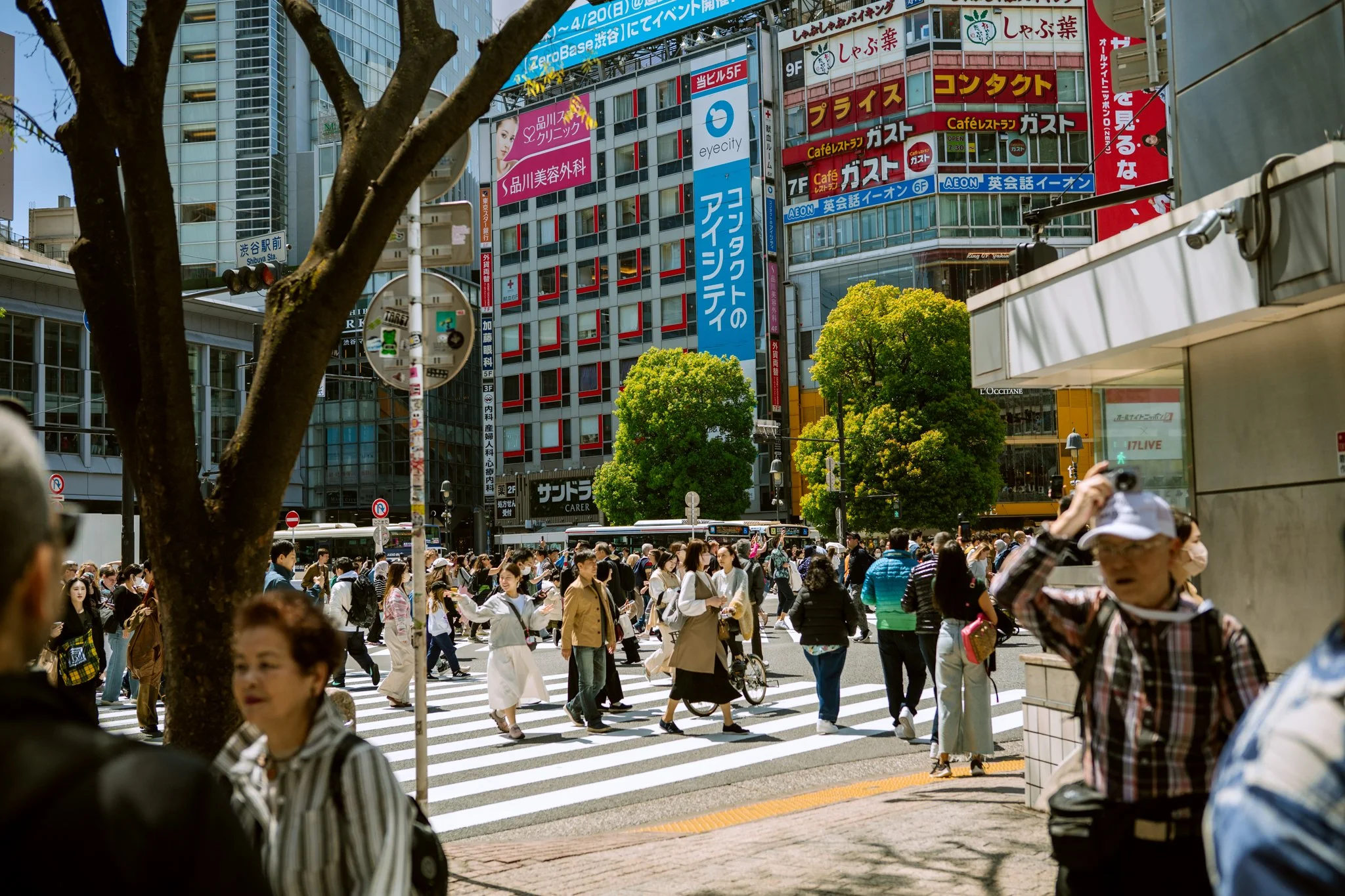
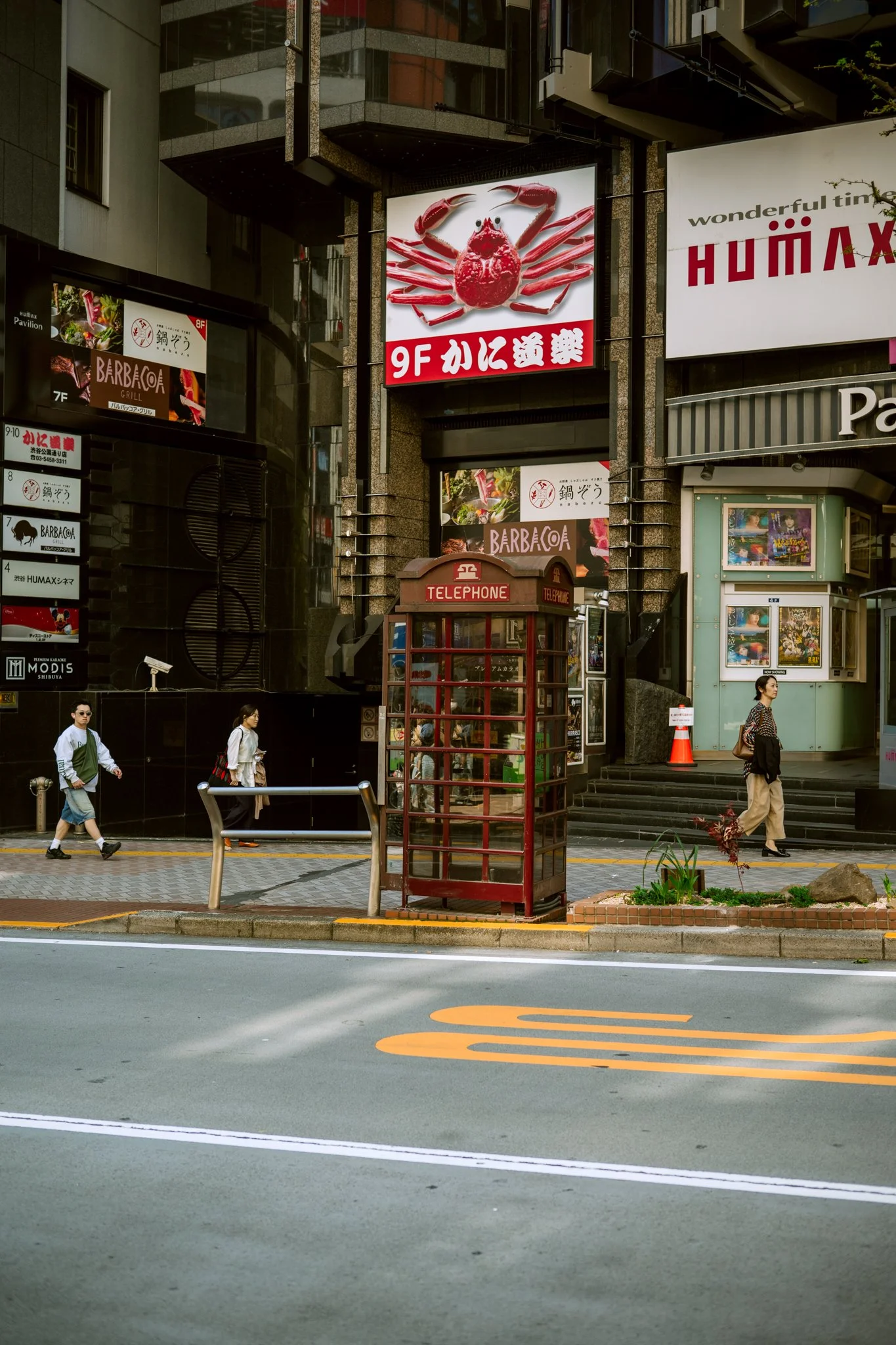
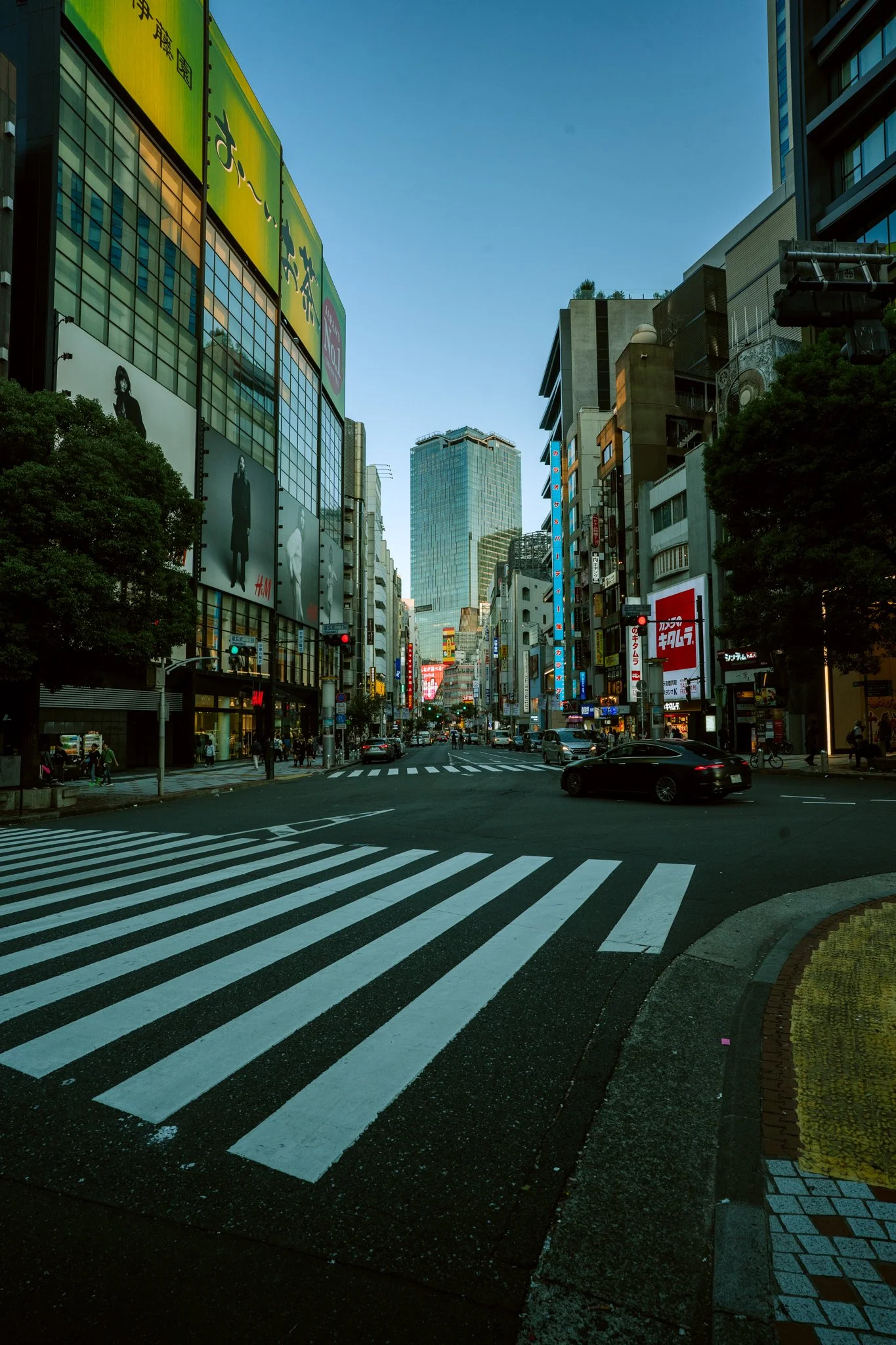
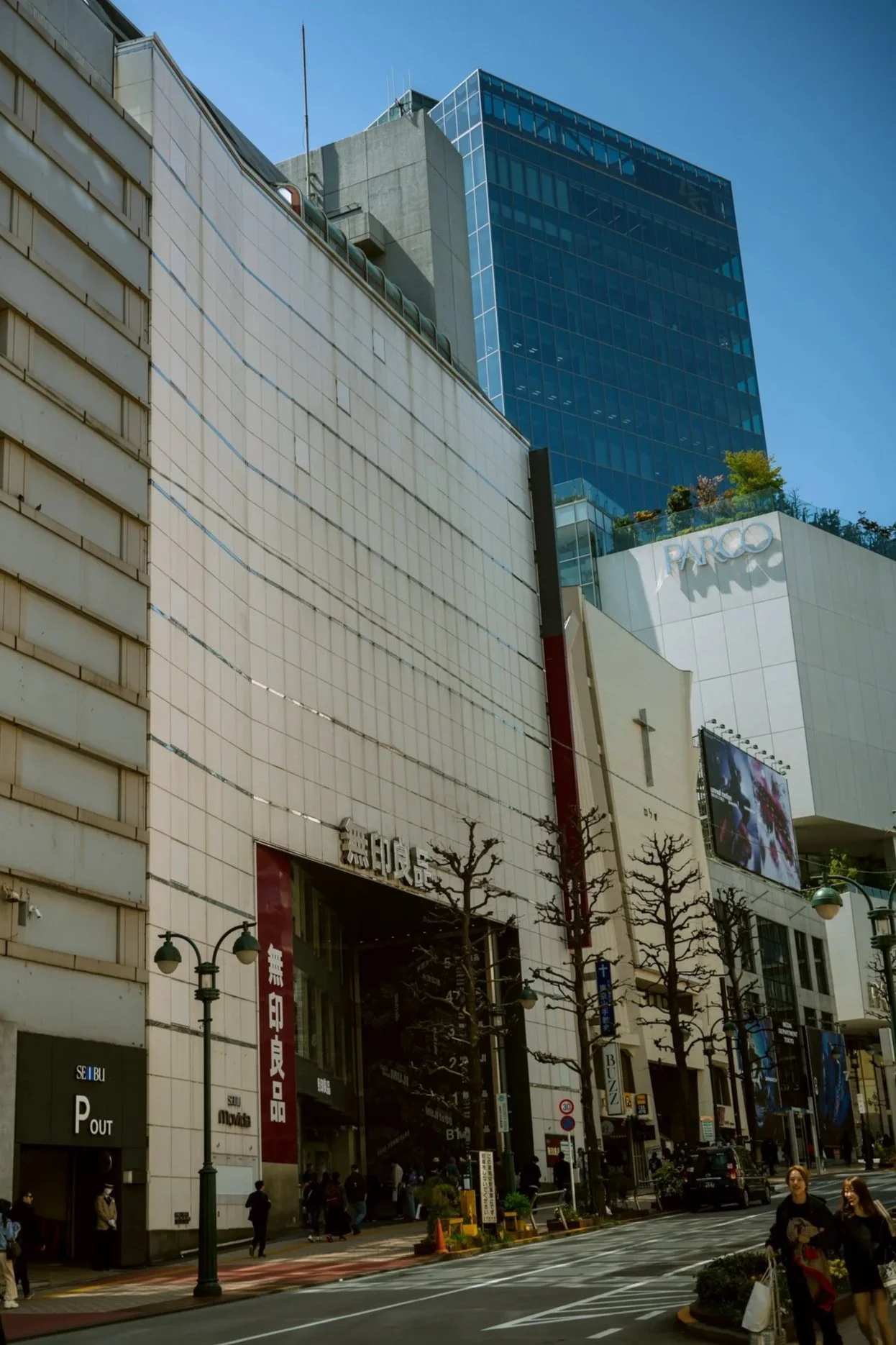
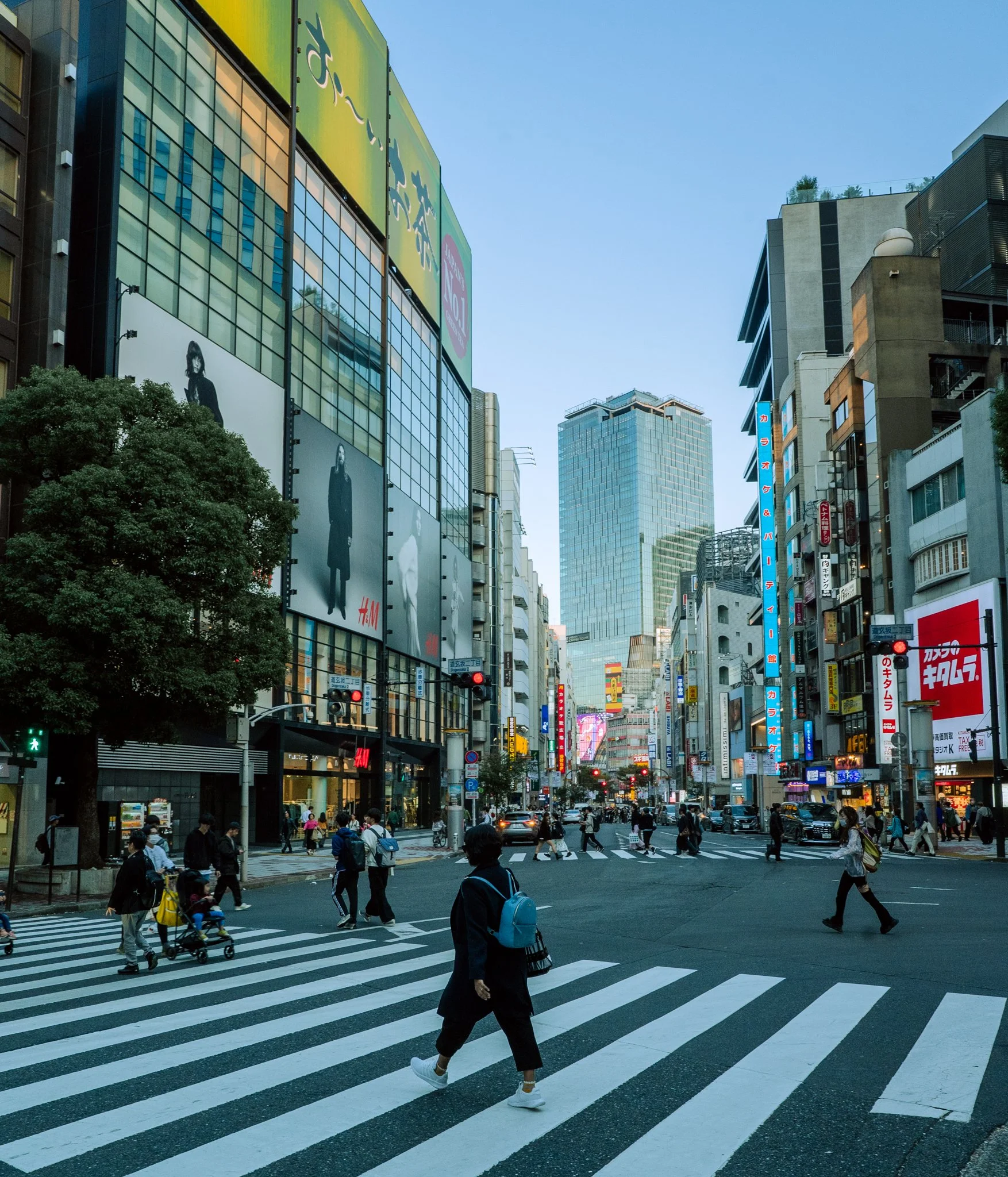
Shibuya is a lot to take in. It is buzzing. it’s non-stop. And it is crowded. This is movie-famous Tokyo. The scramble is wild - the tourists just add to the mayhem. All around, mobile phones document this incredible feat - of crossing a road. The Japanese simply have to perfect the art of being “removed” from their immediate surroundings, as politeness often requires of you. To remain unreactionary to your daily commute being a sort of amusement park must be nuts. But also, what a genius of marketing - making a pedestrian crossing a must-do on every Tourist’s list. Wow! Meanwhile Hachiko waits patiently for his master at one end of the Scramble - a long line waits to take pictures with the world’s most famous Akita doggo. I wonder how he feels about the mayhem. Also I cannot for the life of me imagine Shibuya Station in any state where a dog could wait for (and successfully find) its master - even if it was in the 1920’s. I refused to let go of Sahit’s hand for fear of getting lost. And through this crowd, this routinest of dailyness, Tokyo is still stunning. Every corner preens with urban choreographic perfection, as though inviting you to take a picture. The 3D billboards are marvels. There is symphony in the chaos of glassy-faced high rises. There is something about the light in Japan. The contrast is perfect for the geometry of the cityscape, that even the shadows of people make the photos all the more interesting.

But at this very moment, what was looking very interesting was this mini intersection with a lot of shoe shops. So Sahit and I had made silly shoe decisions on this trip. We were both wearing shoes that simply would not get with the programme of extensive and excessive walking. We are slow travellers, who love wandering around aimlessly. This means we miss a lot of the “must-see’s” and “must-do’s”, but there is something about this low-on-efficiency high-on-random-experiences travel habit of ours that we can’t seem to or want to break. Back to the interesting interaction with the shoe shops. This is where you’ll find the ABC Mart with relatively nicely priced sneakers.
You’ll find Onitsuka Tiger with some wildlife like customers - the staff deserve a Nobel Prize or something for having the patience that can put saints to shame. But the one we went to first was a cute store called Shoe Daiwa - the shoes were amazingly priced with a great selection. It wasn’t too crowded in the store, so the staff could really help us. They had all kinds of cute stuff - sneakers, high boots, loafers, ballerinas at the cutest of prices. Gaah. But for now we settled on sneakers - and left the store wearing them. Sahit reviewed my shoes with a “You’ve become a lot nicer now!” - a not at all veiled reference to my pinching shoes influenced pinched personality.
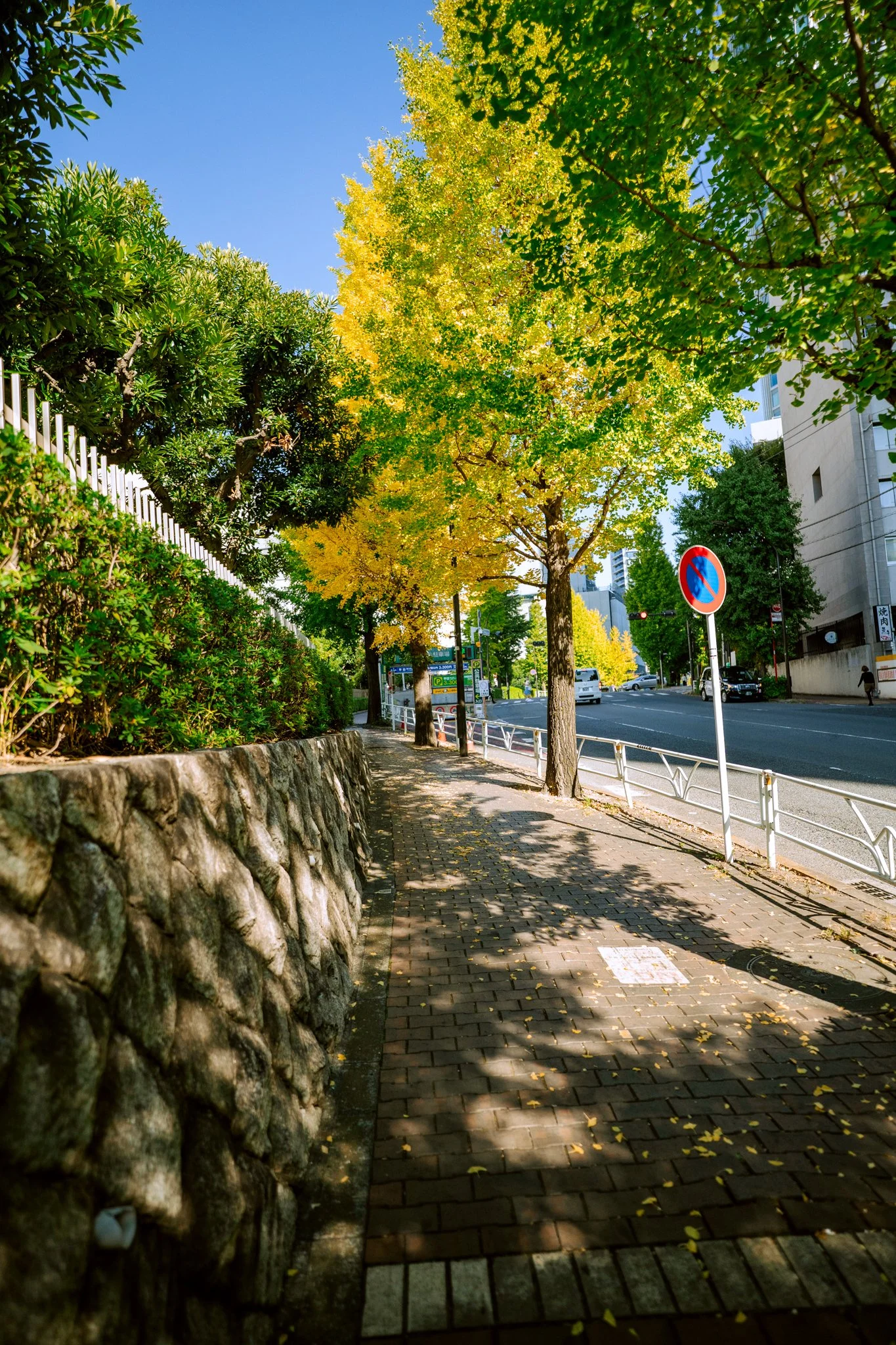
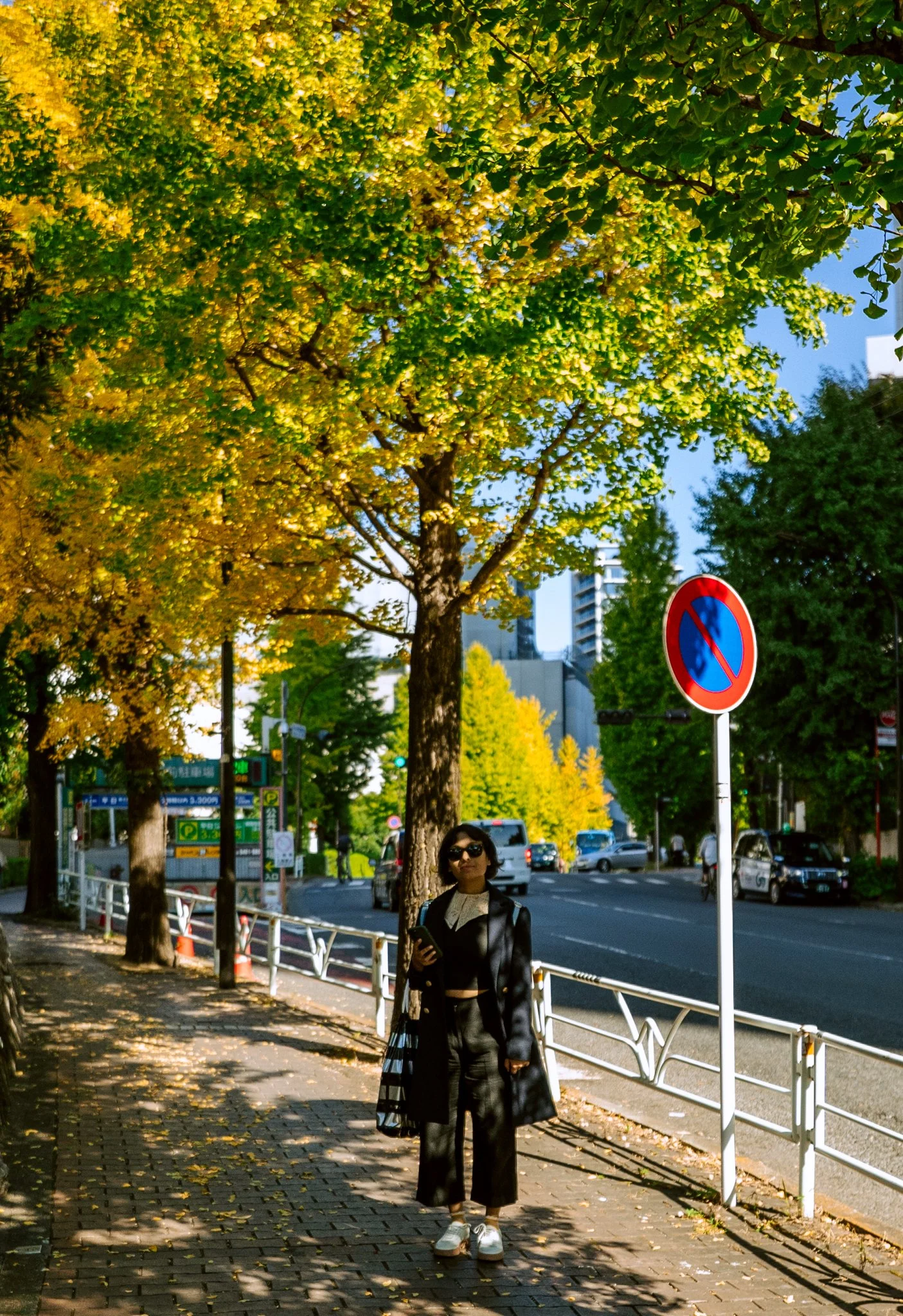
Empowered by these new shoes, we took wandering to another level. We wandered around Shibuya and then when we wanted a sit down, we wandered (somewhat circuitously) in the direction of Yoyogi Park. The leaves on the gingko trees were in the beginning phases of bringing out their autumnal gold. The koyo - or autum leaves in Japanese, is almost as popular as the sakura (cherry blossom) season is. Though early November is hardly autumn, we could see the signs of heavy tourist activity. But that morning, Yoyogi Park belonged to the locals. It was quiet. Old trees cast comfortable canopies of shadow, filtering in baby sunbeams in a very pretty way. We perched on a park bench, made a little picnic of it with cookies and a cool drink. Put our trash back in our bags, as Japan would have us do, and stowed it away for when we found a garbage can.
Japan has a gnarly past with trash cans. Apparently they removed all the trash cans after an incident where the cans were used to conceal sarin gas in a terror attack by a cult.
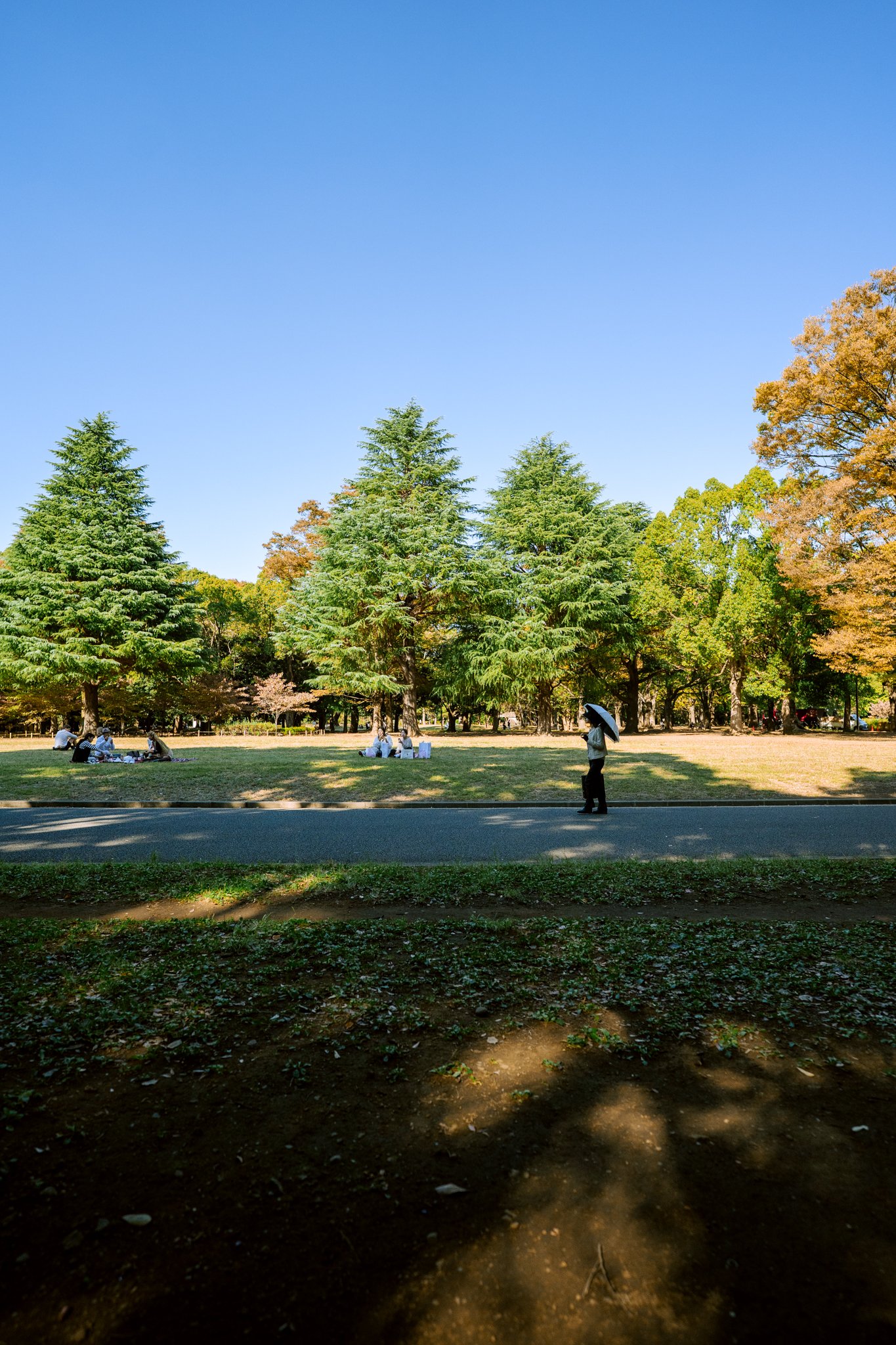
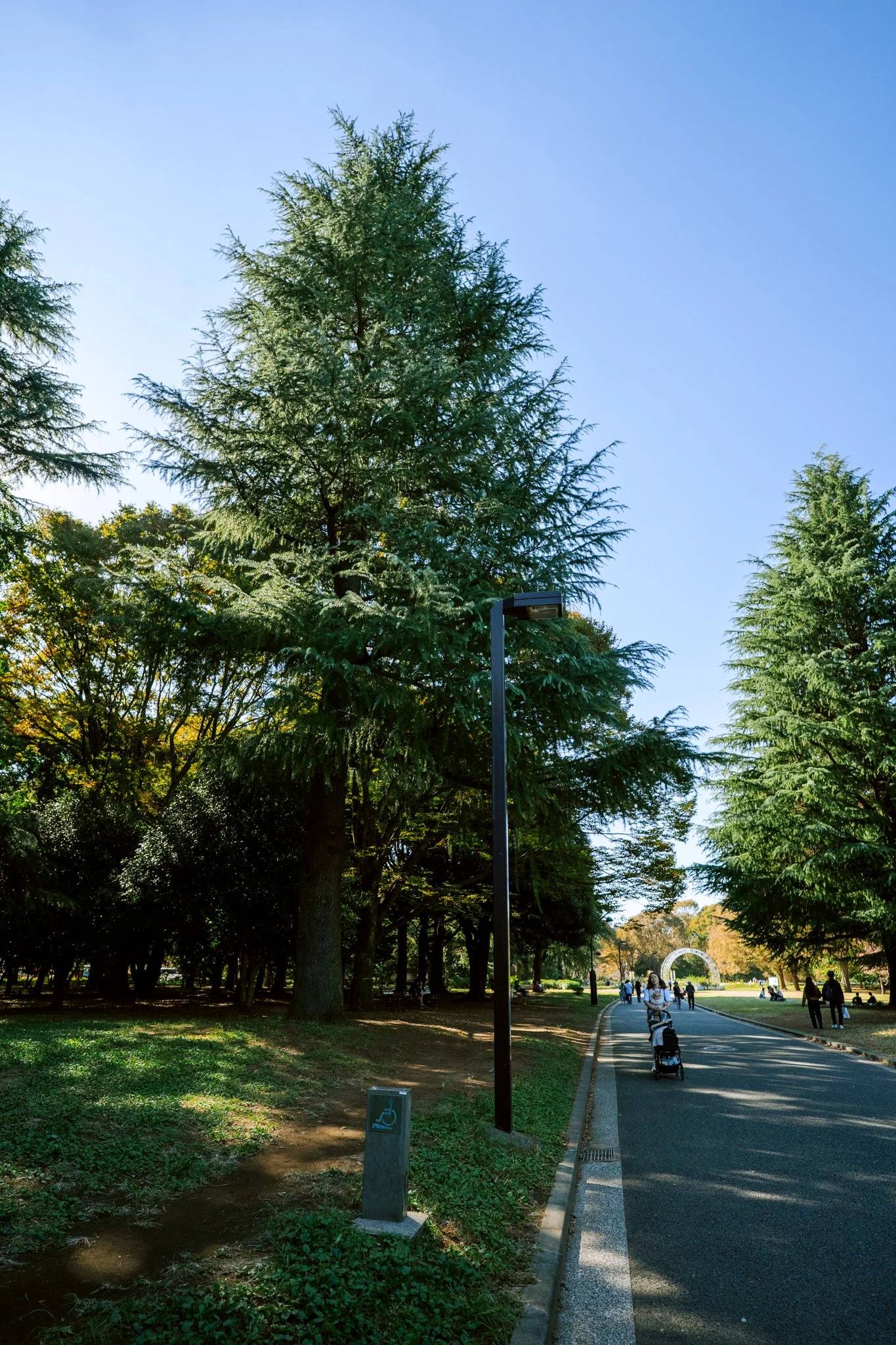
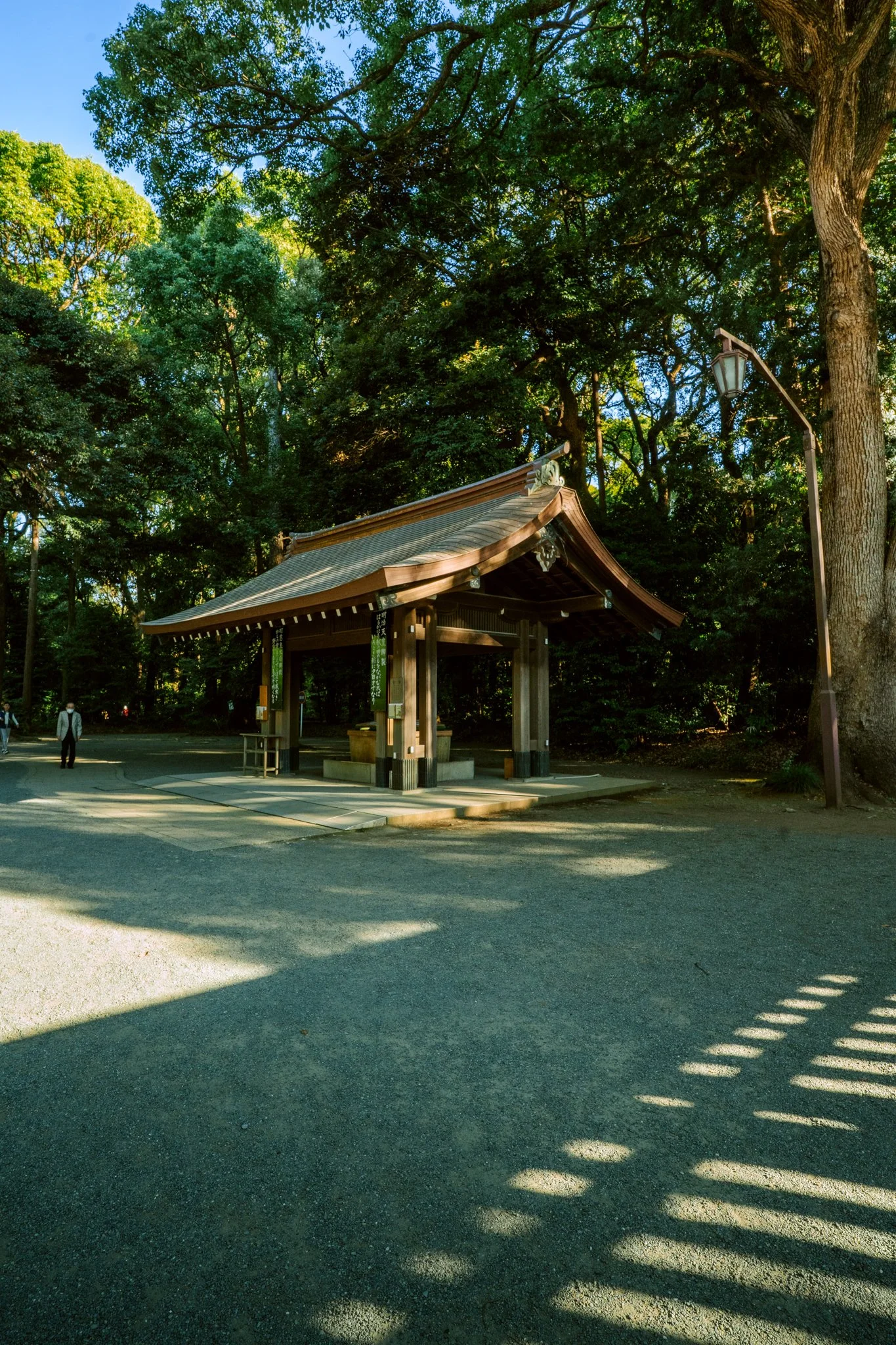
I’m sure Yoyogi Park must be a sight in full spring or autumn colours. Somewhere you could spend an entire day. But that morning, after we had our quick recharge under leaf-light, we were ready to move on. We headed in the direction of Meiji Jingu Shrine. The walk to the shrine, which begins with some epically massive Torii gates, feels like slipping into another dimension. Also one thing about Torii gates, you’re supposed to enter from the side - the middle is reserved for the path of the gods. Within the Torii gates is a city forest. Tokyo’s ability to slip from urban concrete to lush, nature is disconcerting and also so, very enviable. Travelling abroad always makes me so aware how little access we have to nature in our hopelessly unwalkable Indian cities. Meiji Jingu has an aura, of being insulated from the fate of everything around you.
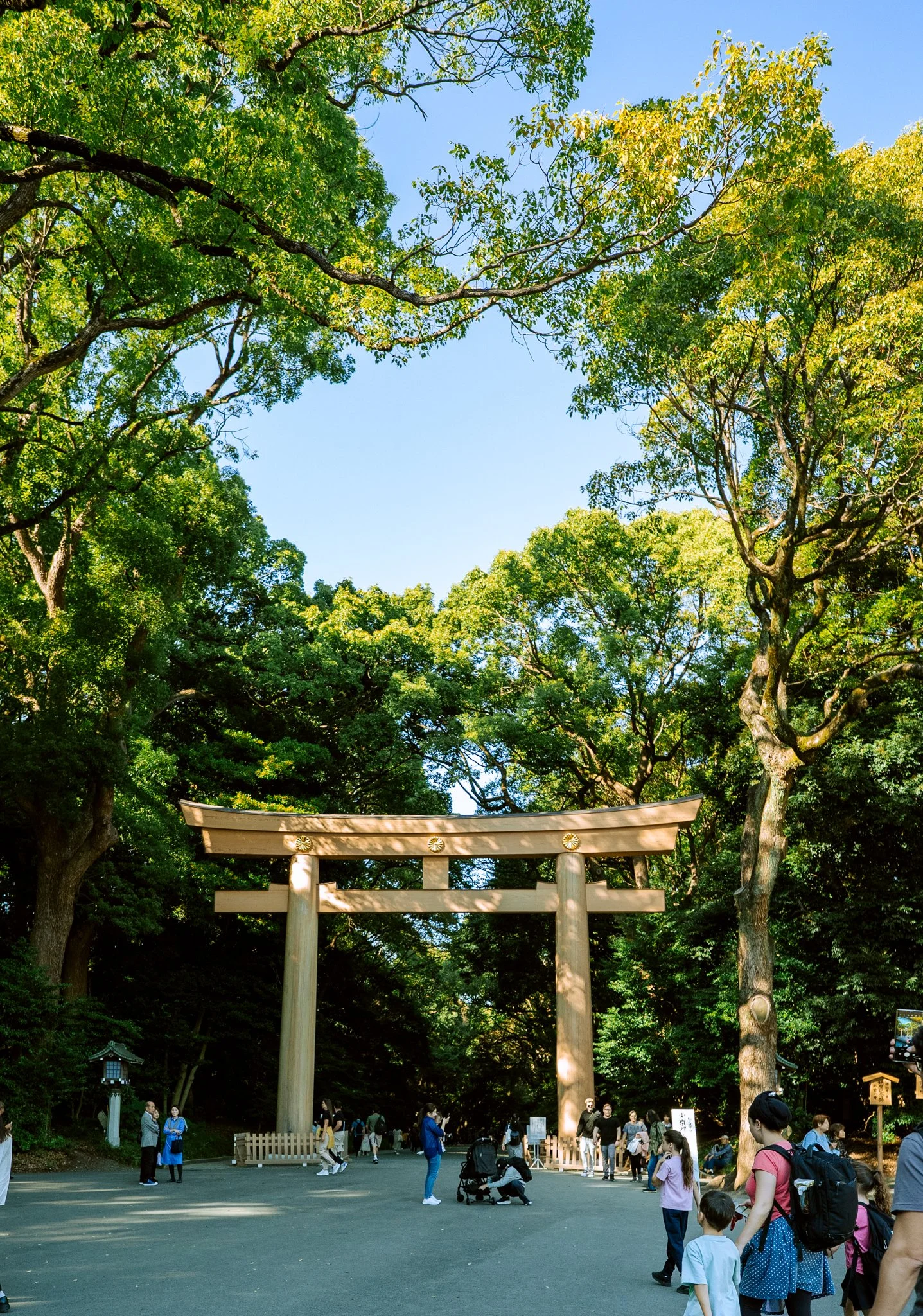
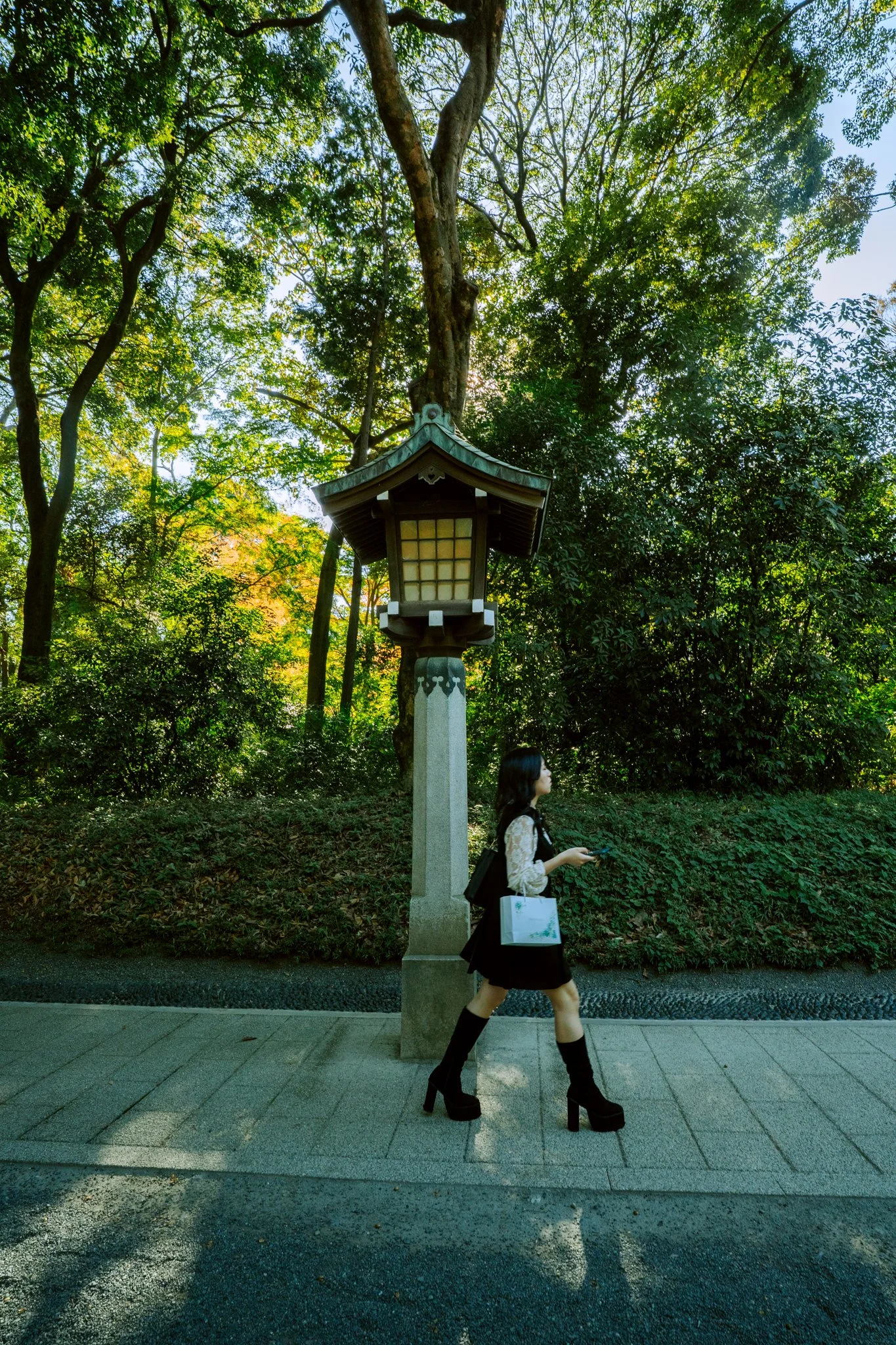
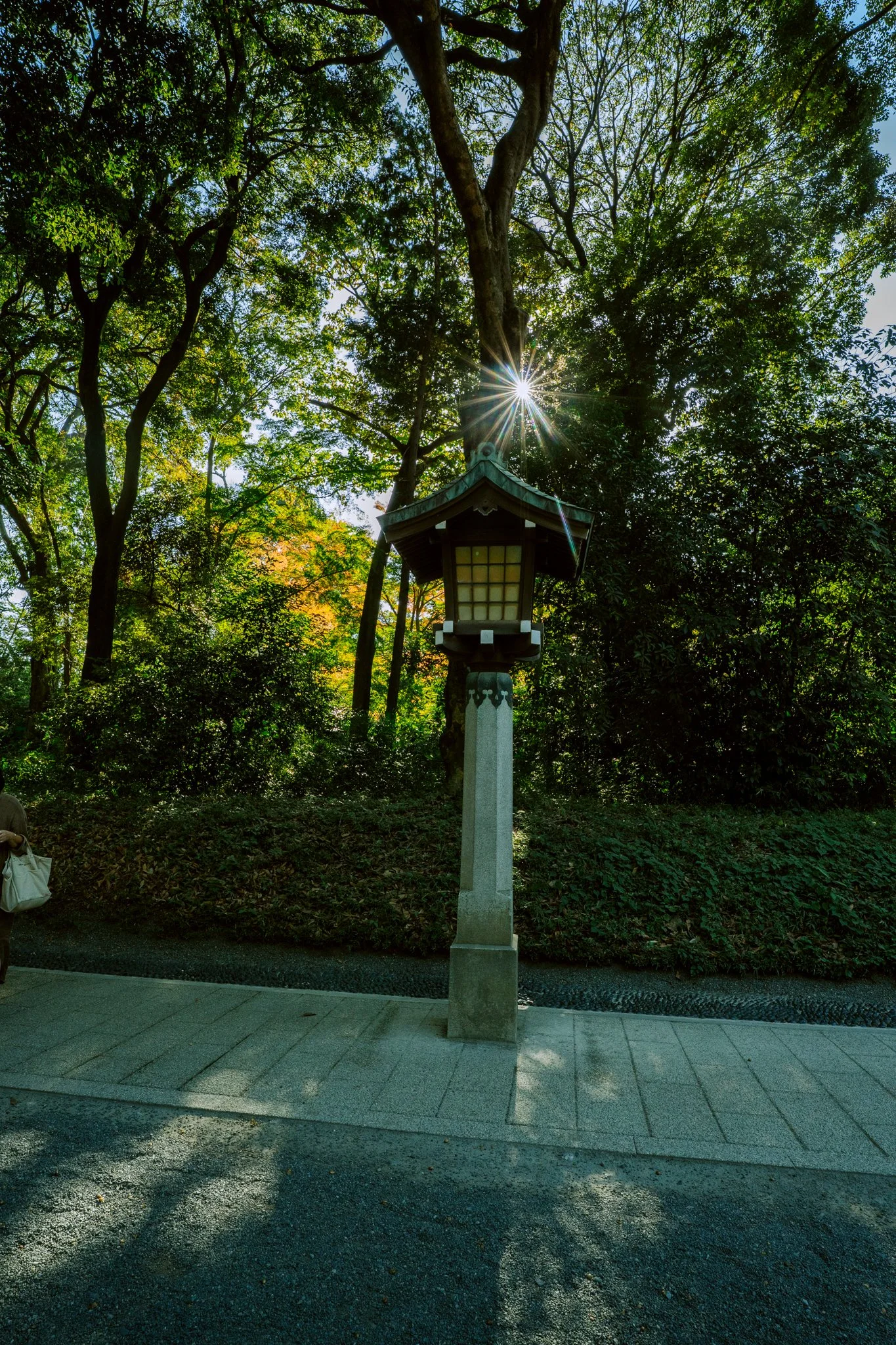
The minute you walk through that enormous torii gate, you are in a quieter world - even the hushed chatter of tourists feels hushed. In the dappled air, where leaf light and leaf shadow twirl in an endless, mystic (ver)dance. You understand why terms like shinrin’yoku (forest bathing) and komorebi (the way light filters through the trees) is formalised in vocabulary in Japanese. This is a culture where you don’t have to be lost for words when describing a need to be close to trees. When you don’t have to look far when you feel you need to be connected with nature. The words and the object that they’ve been allotted to, hold a place in lexicon and space, as far as Japan is concerned.

Halfway down the path, we encountered the wall of sake barrels, which has become a quite the motif for Tokyo on Instagram - standing shoulder to shoulder with the Tokyo Tower, Cherry-blossom-lined avenues, moss gardens. There’s something quite cheerful about these squat, round colourful barrels. Like they literally contain laugher and good cheer in them. These barrels are donations made by breweries - sake apparently is the equivalent of an access-controlled highway to the gods. Cause you know, you’re feeling good when you’re drunk and feeling good is being closer to god. Being inebriated = feeling connected with god. Okay, then!
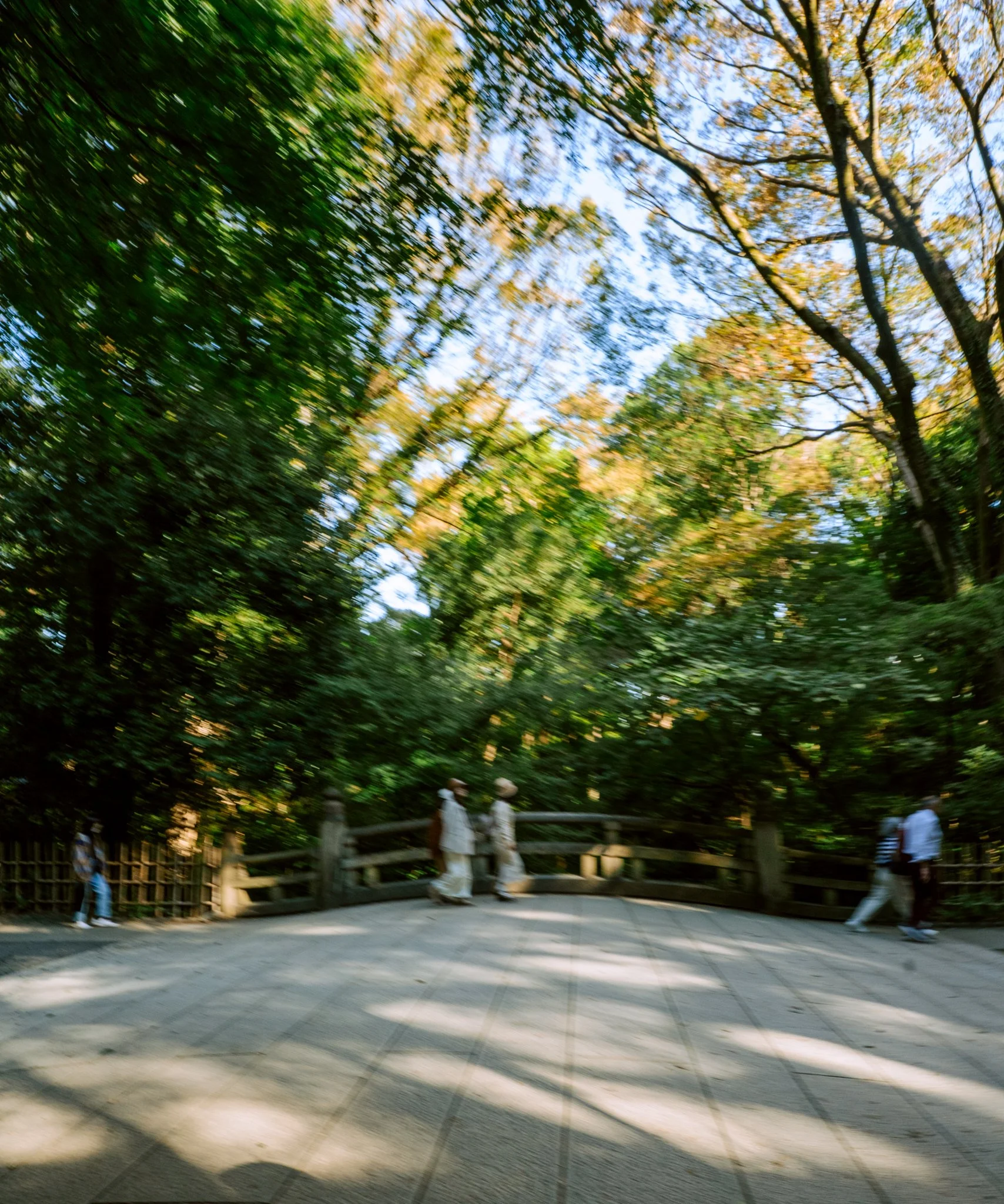
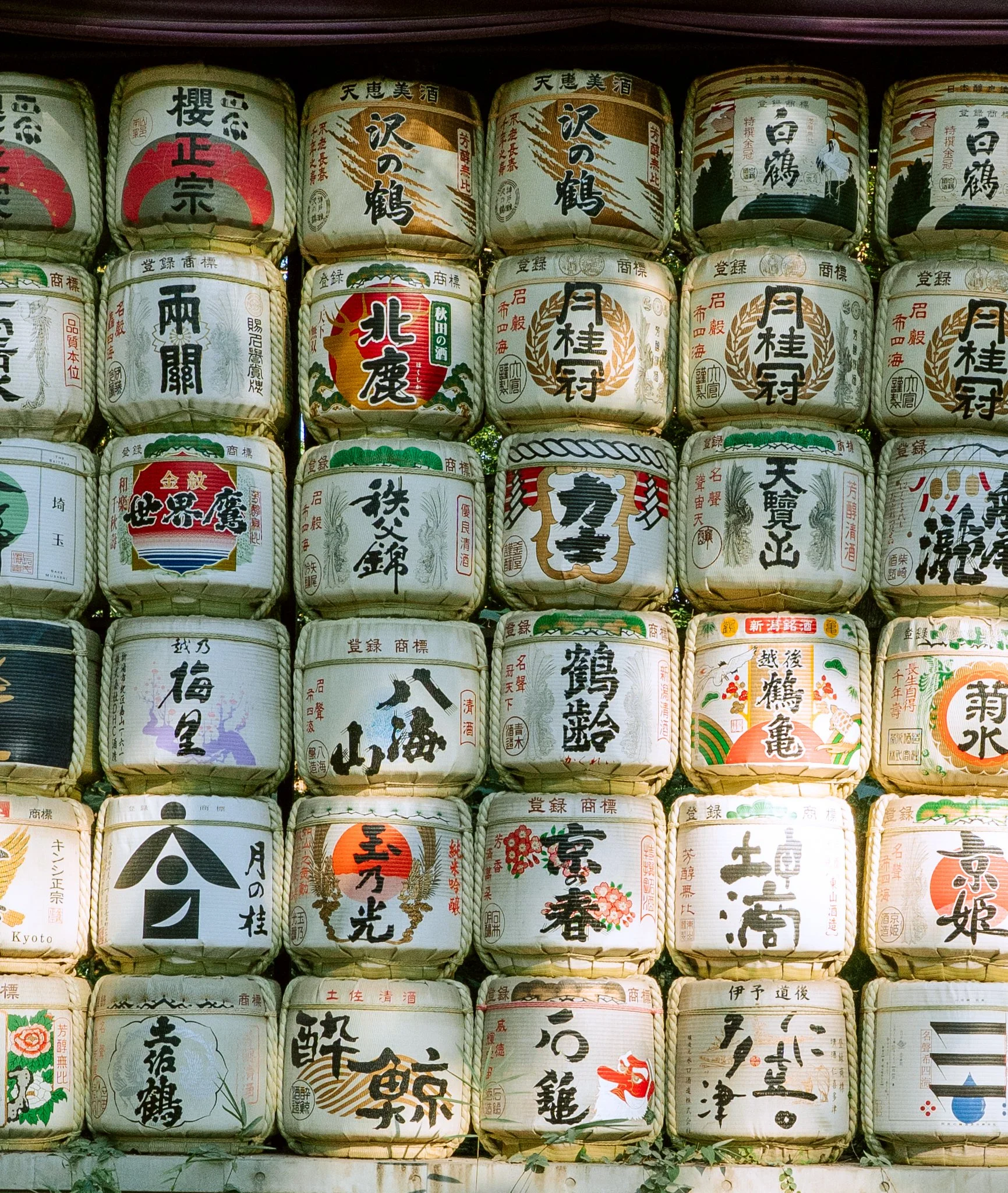
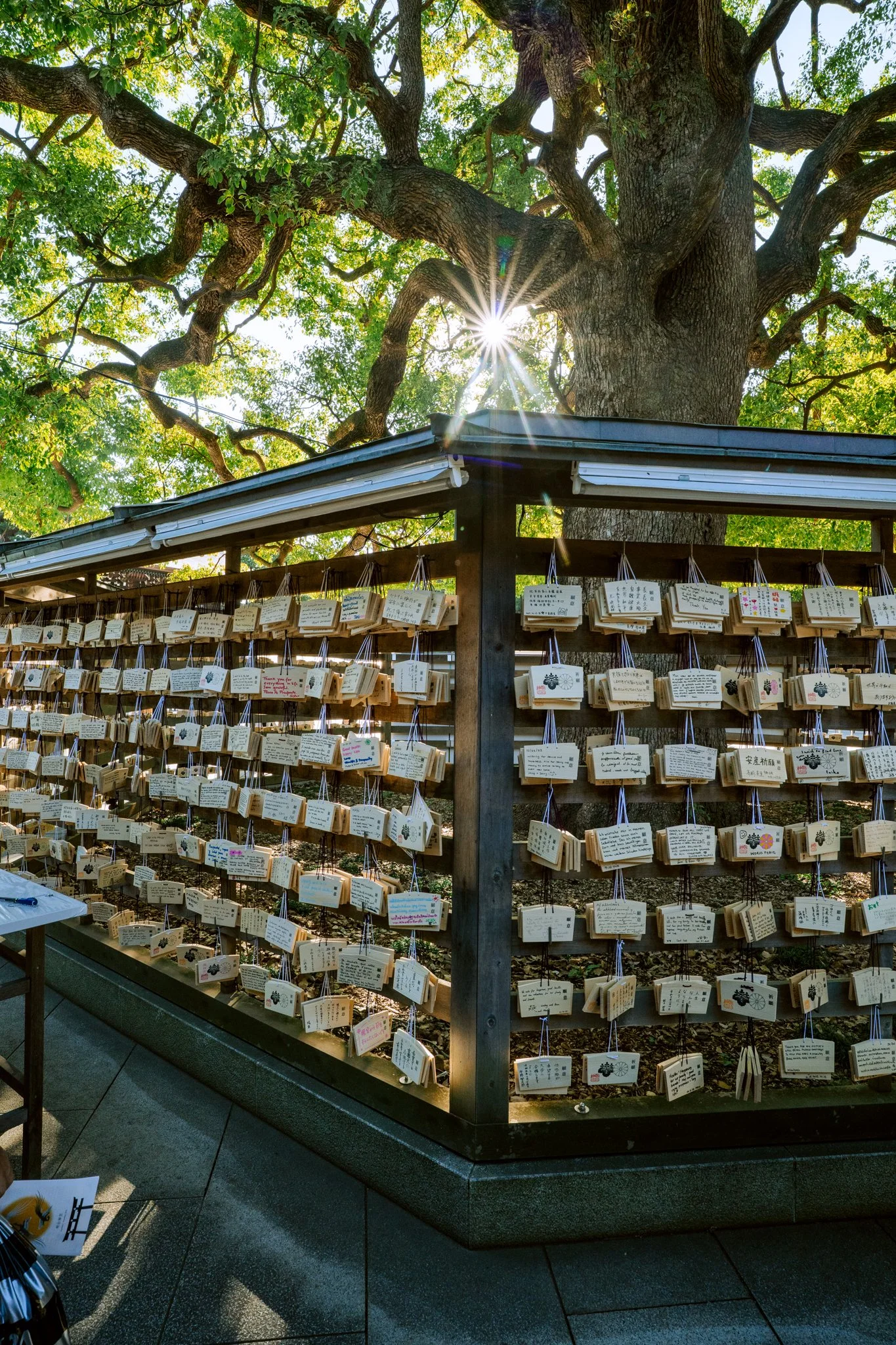
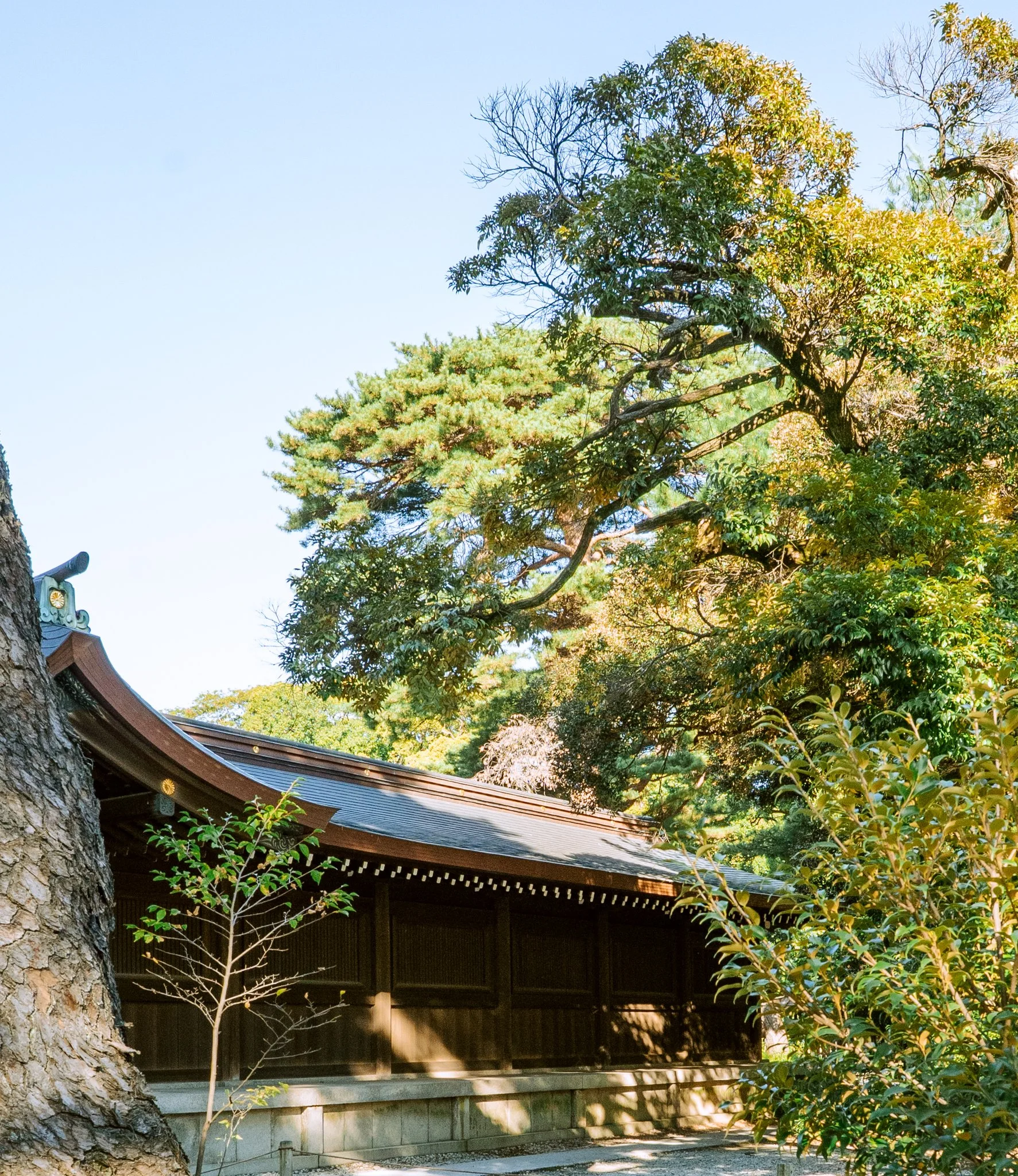
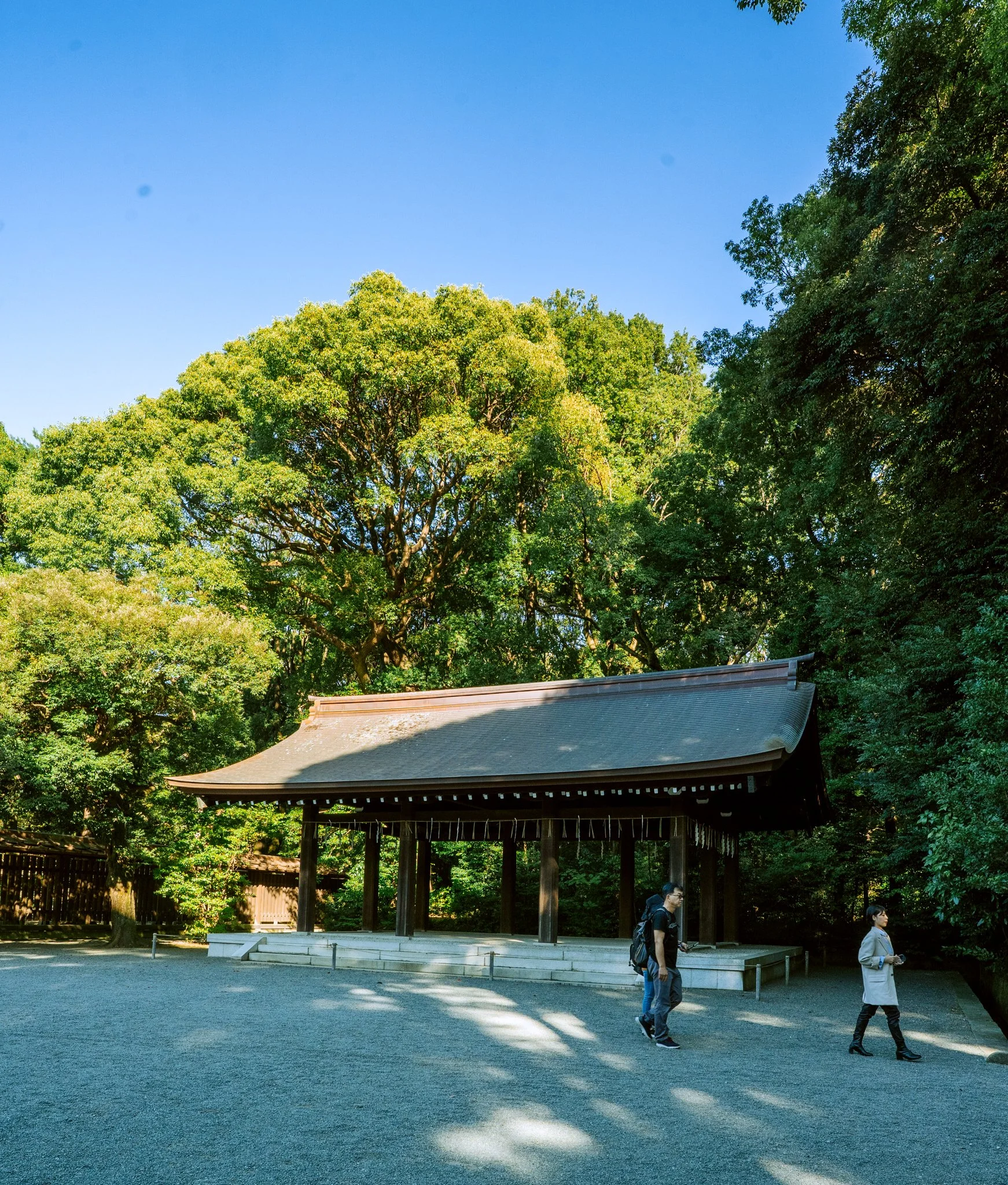
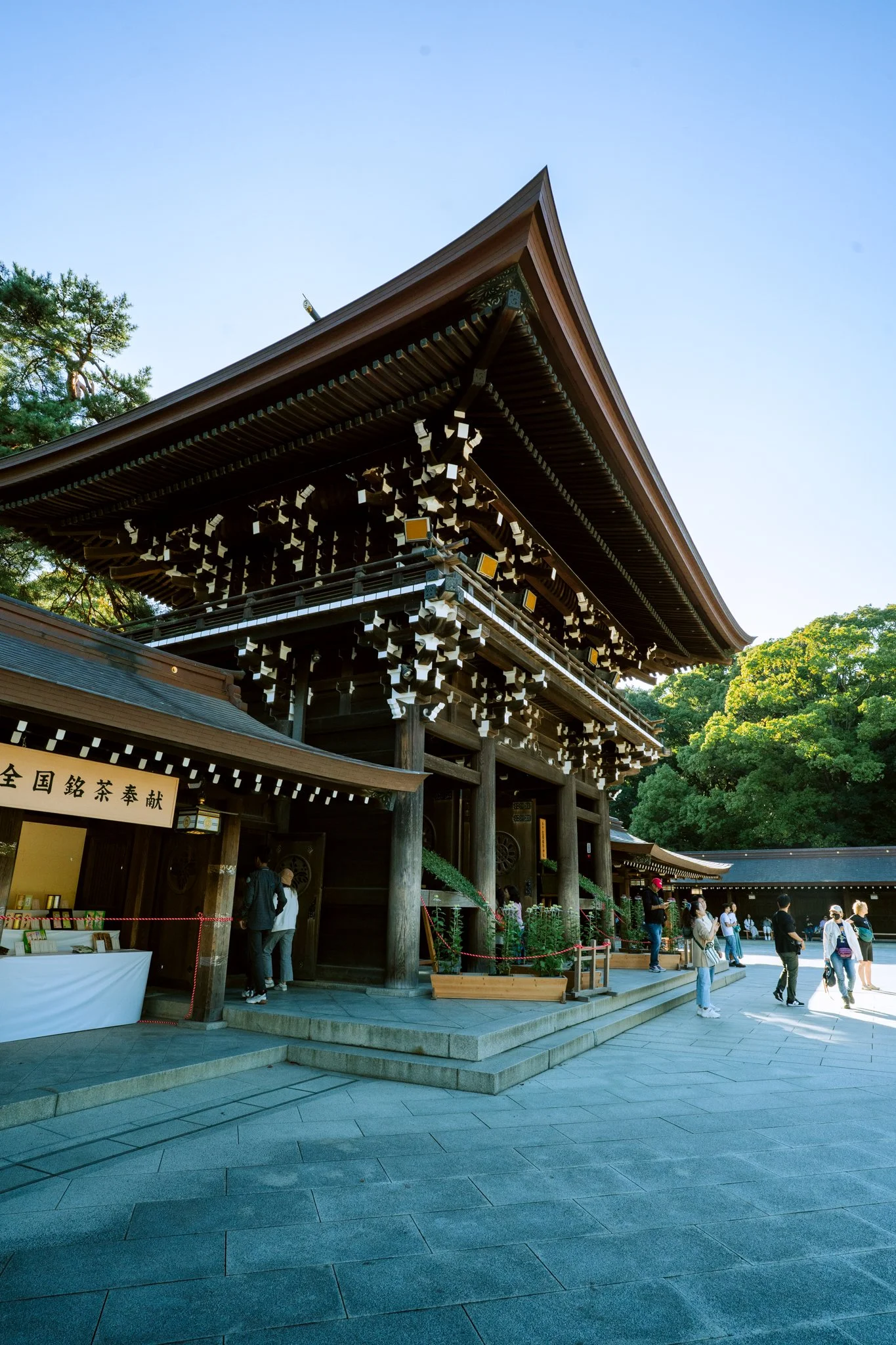
Except for this, not on purpose touch of irony, the shrine is a very sober and solemn place. Dedicated to the deified spirit of Emperor Meiji, the shrine marks Japan’s transition into a modern, global power. This shrine again, reminded me of Kerala temple architecture. Though not in an apples for apples way, something about the massive sweeping roofs with their statement gables, the austere style, the wooden gates right outside the prayer area that look like Kerala temple gopurams and the quiet grace with which worship is conducted felt familiar.
I keep this website to keep me honest and it’s mostly for an audience of one (me). it’s where I am autotelic. I write expecting nobody to read it. But in case you landed here (Wonder of wonders #1) looking for real Shibuya advice (Woner of Wonders #2), here are some of the Must Do’s that I didn’t do.
1. Shopping - Shibuya like I mentioned is great for shopping. 109 is whole shopping mall dedicated to women with some very cool clothes. Though the sizing of the clothes and the store staff is intimidating. Harajuku, a very fashionable neighbourhood is just around the corner and has some very cute shops. There are a lot of reasonably priced stores, along with the fancy ones. Don Quixote’s Mega store is a labyrinth you could get lost in - if you’re up to long check out lines, by all means, shop away.
2. Shibuya Sky. For 2500 yen, you have a great bird’s eye view of Shibuya and Tokyo. But I’m guessing it’s going to be crowded. I haven’t been, so I can’t really tell. Apparently the Hikari, Fukuras and Parcos buildings have terraces that not many people know about and offer just as stunning views.
3. Karaoke. Even if it’s not my life’s biggest sorrow, not having gone Karoakeing in Tokyo is in the TOP TWENTY for sure. The Japanese regulate their feelings with a good, session of Karaoke and it’s probably keeping the therapists from having the blooming career they could have been having.
4. Nonbei Yokocho. This is one of Japan’s drinking alleys. It looks a little seedy, but promises great, authentic experiences in terms of food and alcohol.
5. Tower Records. No way in any day are you going to find this place not crowded. But for a feel of yesteryear physical music, this is the place. Reliving finding that particular CD was like striking gold back in the day, and I see what the draw is.
6. Ota Memorial Museum of Art. There are some paintings that we knew belonged to Japan way before
7. Tokyo Plaza has some very interesting architecture - like you’re in an early-2000’s music video.
8. Kyu Asakura House. About 1.7 km from the scramble is this Taito Era home with quiet Japanese gardens. I personally love me a typical Japanese “old-house” feel. All soft shadows, moss gardens, flowing water, tatami mats, wooden screens and the dance of sunbeams, leafshadows on stone steps. It’s a great reset.
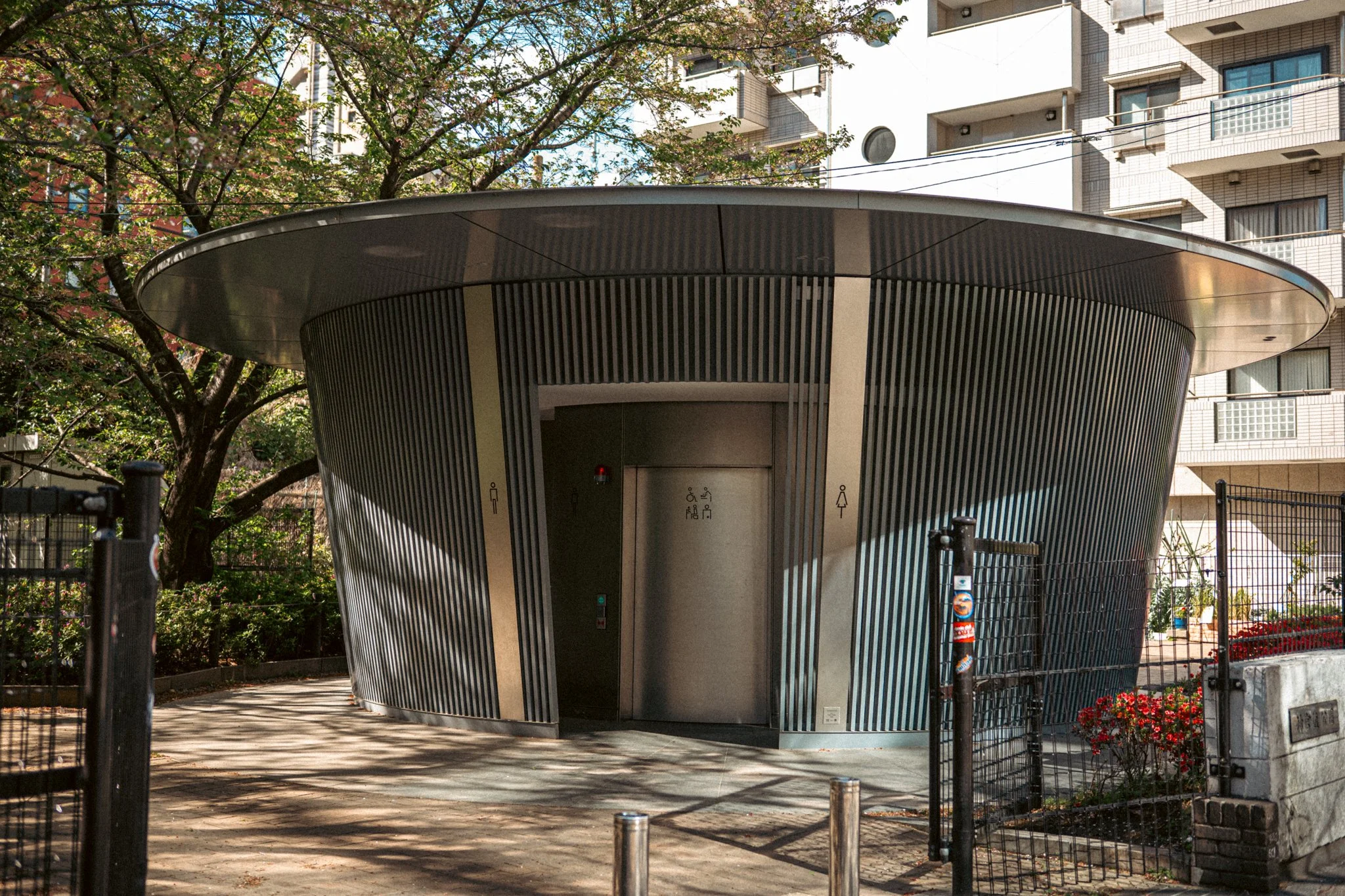
9. Toilet architecture. Yeah, toilets are architectural wonders in Japan. And why not. It’s the place where we are at our most vulnerable, authentic best and we deserve to have it better when we’re sitting with our ass in the air. Japan gets that. Not to mention how clean they are - it’s a bit hard to find an unclean toilet in Japan. It’s the one place in the world i’m like “Kegels, who?”. We saw some really cool restrooms across Tokyo, but Shibuya seems to have the most interesting ones. Below is one of those that are featured in the movie Perfect Days. If you haven’t watched it yet, please do - it’s magnificent. As for the toilets, Japan is so proud of them that they have them all curated right here - check it out https://tokyotoilet.jp/en/
Sahit didn’t feel done with Shibuya. In fact, I think he’s still not done with Shibuya. Two trips later, I know he would return to Shibuya in a heartbeat. Also let’s just dissect this name Shibuya, ya? Shibu is a fairly common name in Kerala. A fairly “not glamorous” name - a name that suggests a tad bit of laziness, when it came to the business of naming one’s bundle of joy. Even though Shibu and Shiva are essentially the same name, the former just doesn’t have quite the effect that latter name does. It’s giving lesser version. But in Japan, the Shibus of the world simply MUST feel a tad bit smug, no? To share your name with so nigiyaka (meaning lively in Japanese - a word I know thanks to Demon Slayer and Duolingo) a place. So “how do you like me now?” types.
To this very Malayalee-name-sounding, glamorous commercial behemoth we headed back. On foot. We stopped by this cafe - they warned us that they would be closed in an hour and that we couldn’t really hang around - we didn’t mind. One matcha latte and chocolate cake later we felt restored. At least, till the waist and upwards. Would have been nice if we could directly transfer some restorative thingy right into our feet. Though I have to say, Japan has a whole list of “feet” products to address the ouchies.
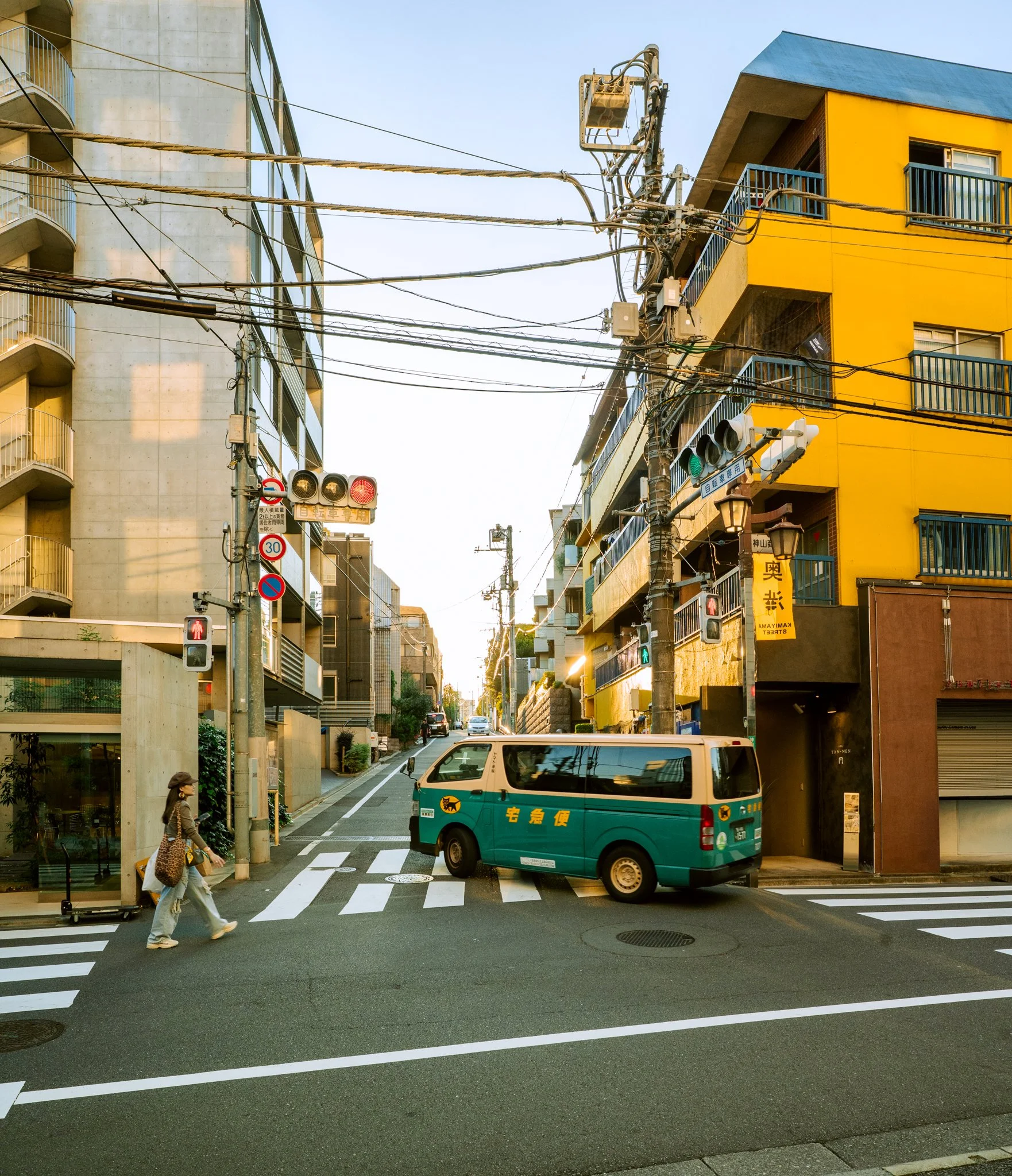
The walk back to Shibuya cut through some of the more residential parts of the district. And even though the commercial centre and the residential part stood cheek by jowl, they feel like different universes. Beautiful photogenic, though in completely different ways, universes. The setting sun was taking its time, giving us a rather long and luxurious golden hour. Beside us, urban street photography paradise. Above us, airplanes headed for Haneda, felt so you could touch them. We stopped for photographs - ah, the luxury of just having photographable immediate surroundings! A woman in kimono walked up to me and asked me if I could take some pictures of her on her phone. I spent the next ten minutes capturing her. She asked for a picture - I gave her twenty poses worth of photos. She must have thought I had a major case of people pleasing. I was so happy to photograph someone else other than Mister I Will Grimace For Pictures.
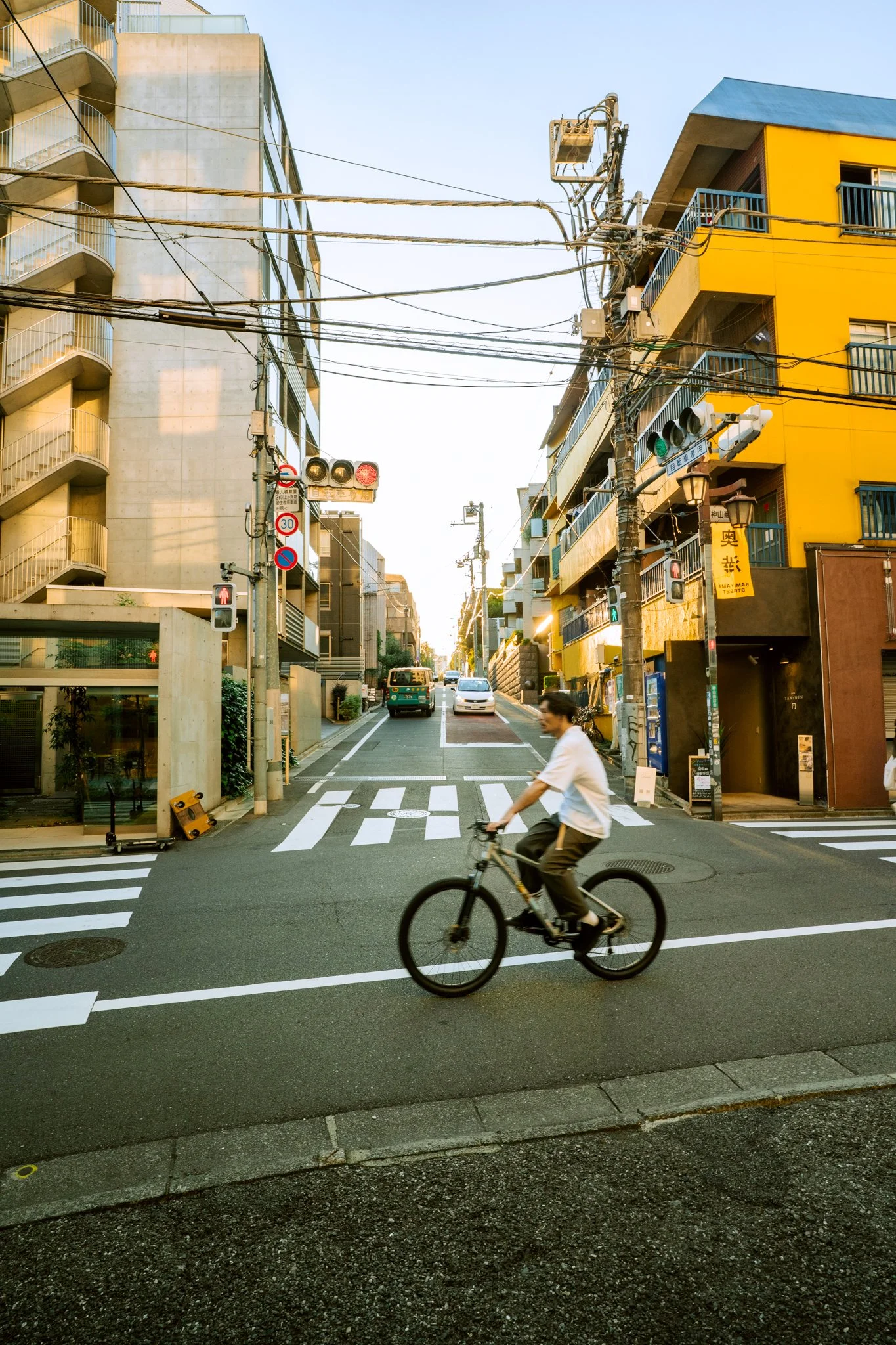
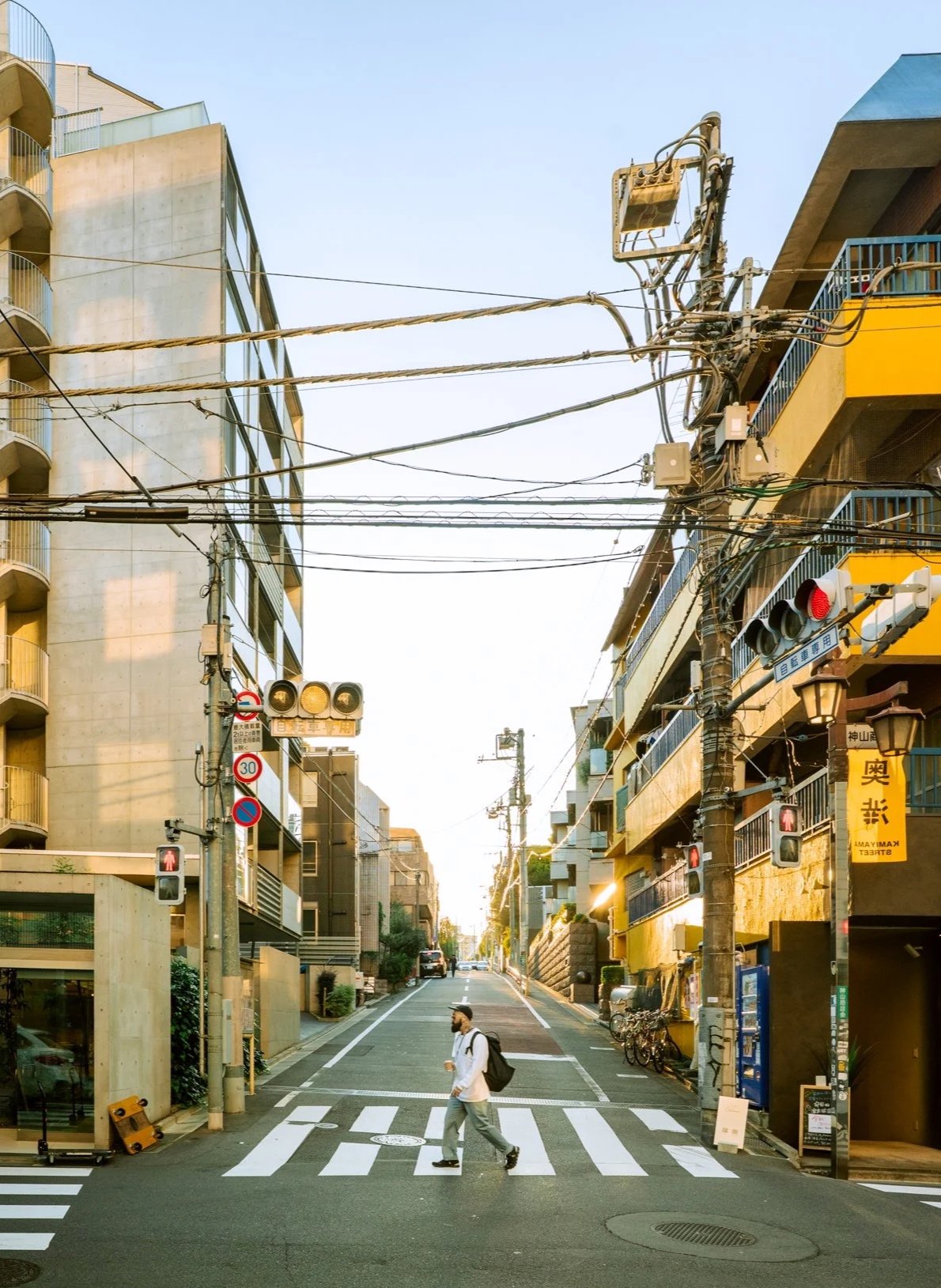
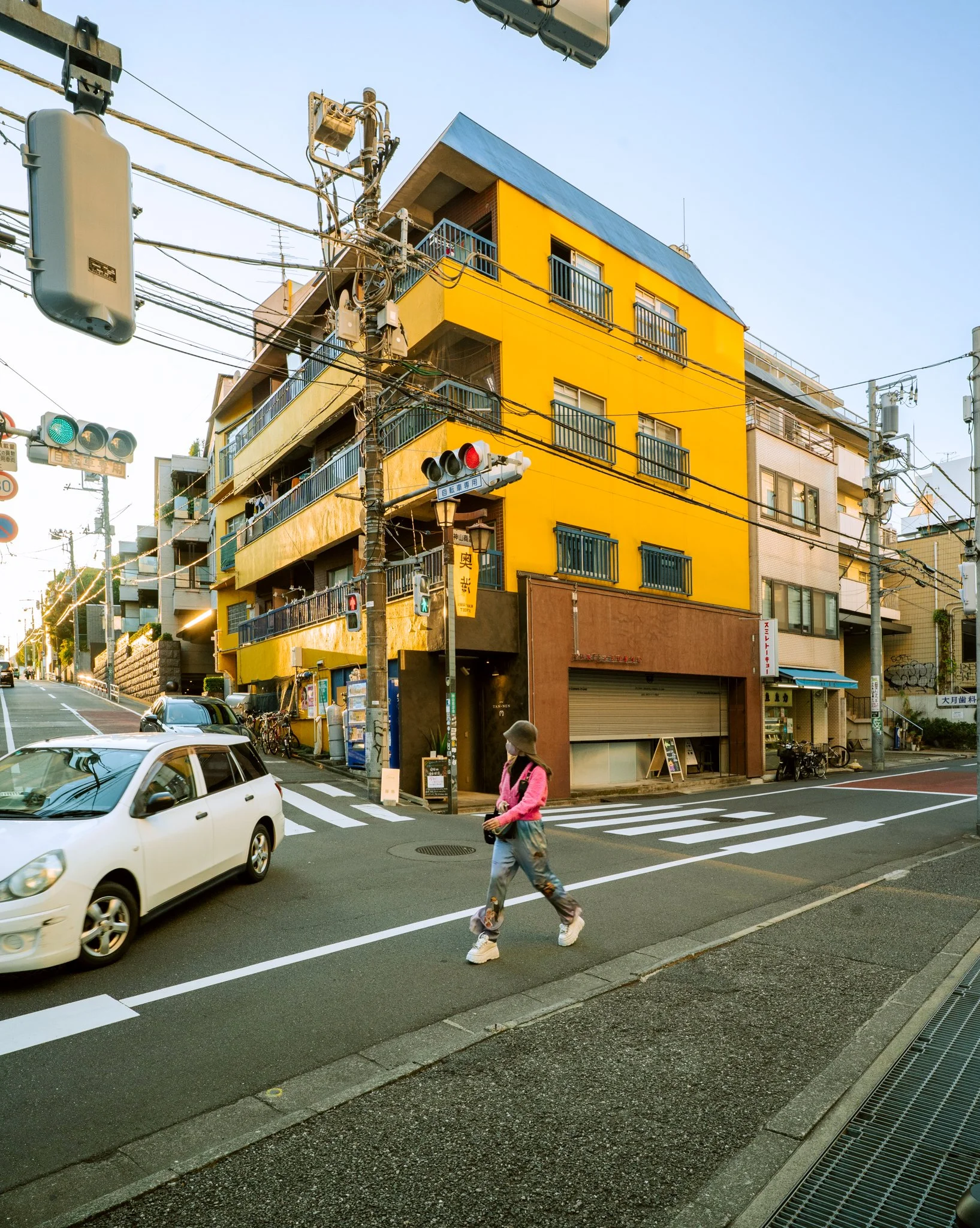
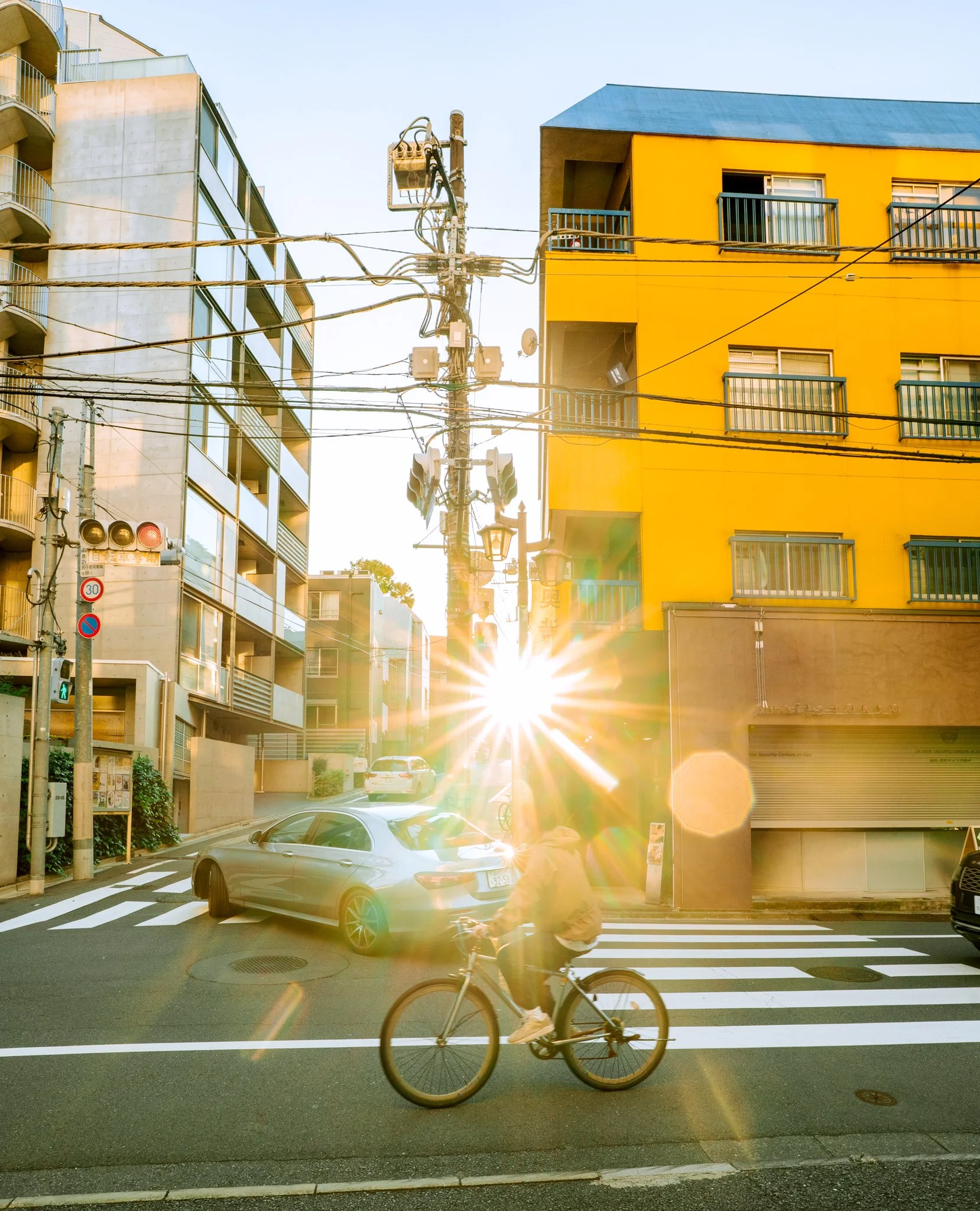
As we got closer to central Shibuya, we saw the Mario go-karts - that mosquito-buzzing, touristy thorn in Tokyo’s side. I guess it’s fun and all, but somehow I feel that this particular activity furthers the “Japan is one big amusement park” narrative. And that it encourages tourists to abuse the place. But hey, it’s not the tourists who put the activity there in the first place.
Sahit wanted to pop into a store and my feet were having none of it. I found myself a nice place to sit while I waited and did one of my favourite things. People watch. Tokyo locals are some of the best and most imaginatively put together humans on the planet. The style that is so innate is just incredible. On model-like bodies. It was a visual treat of unrealistic body standards. There is thin and then there is Tokyo thin. At 55 kgs, I was virtually fat in comparison.
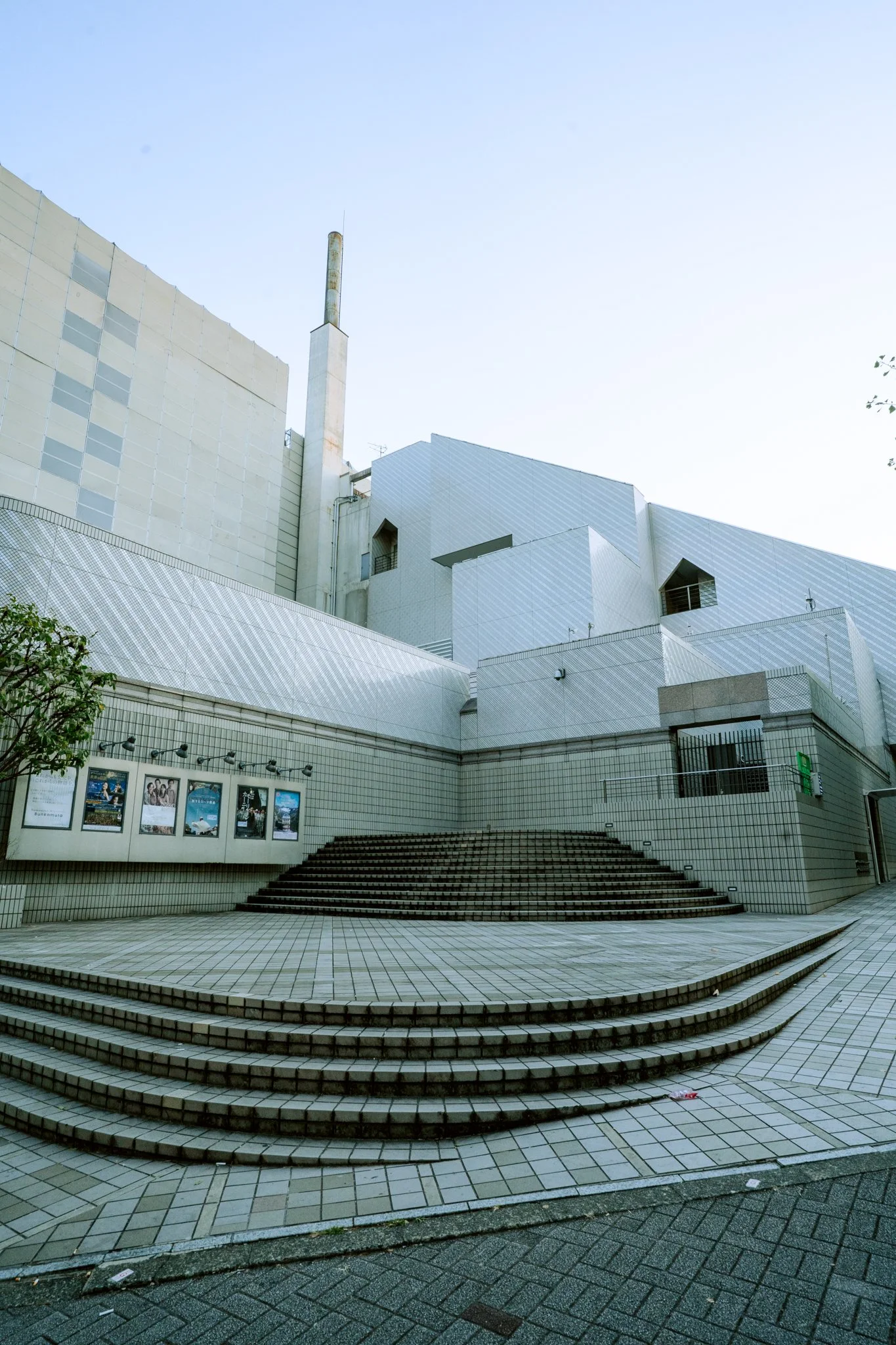
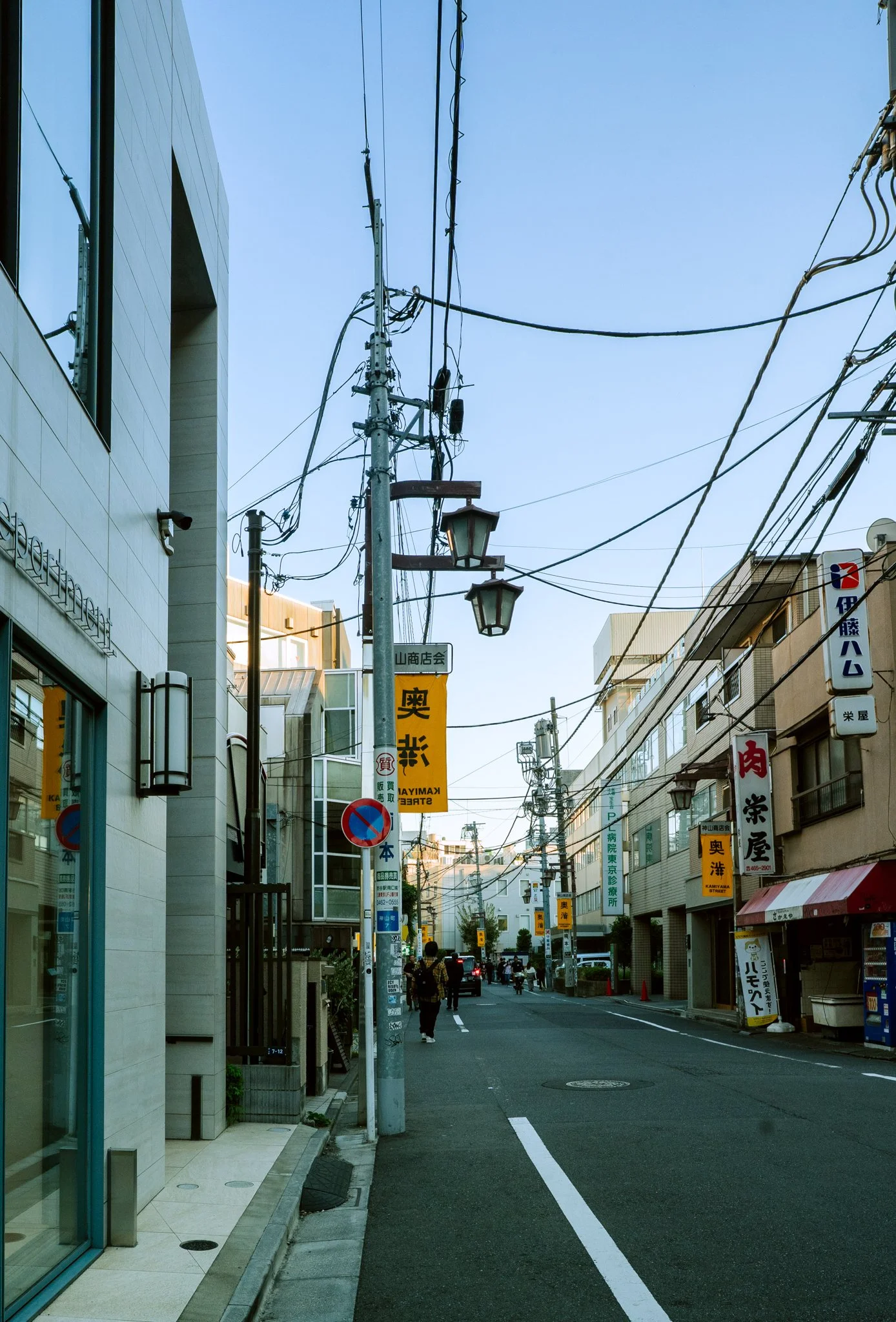
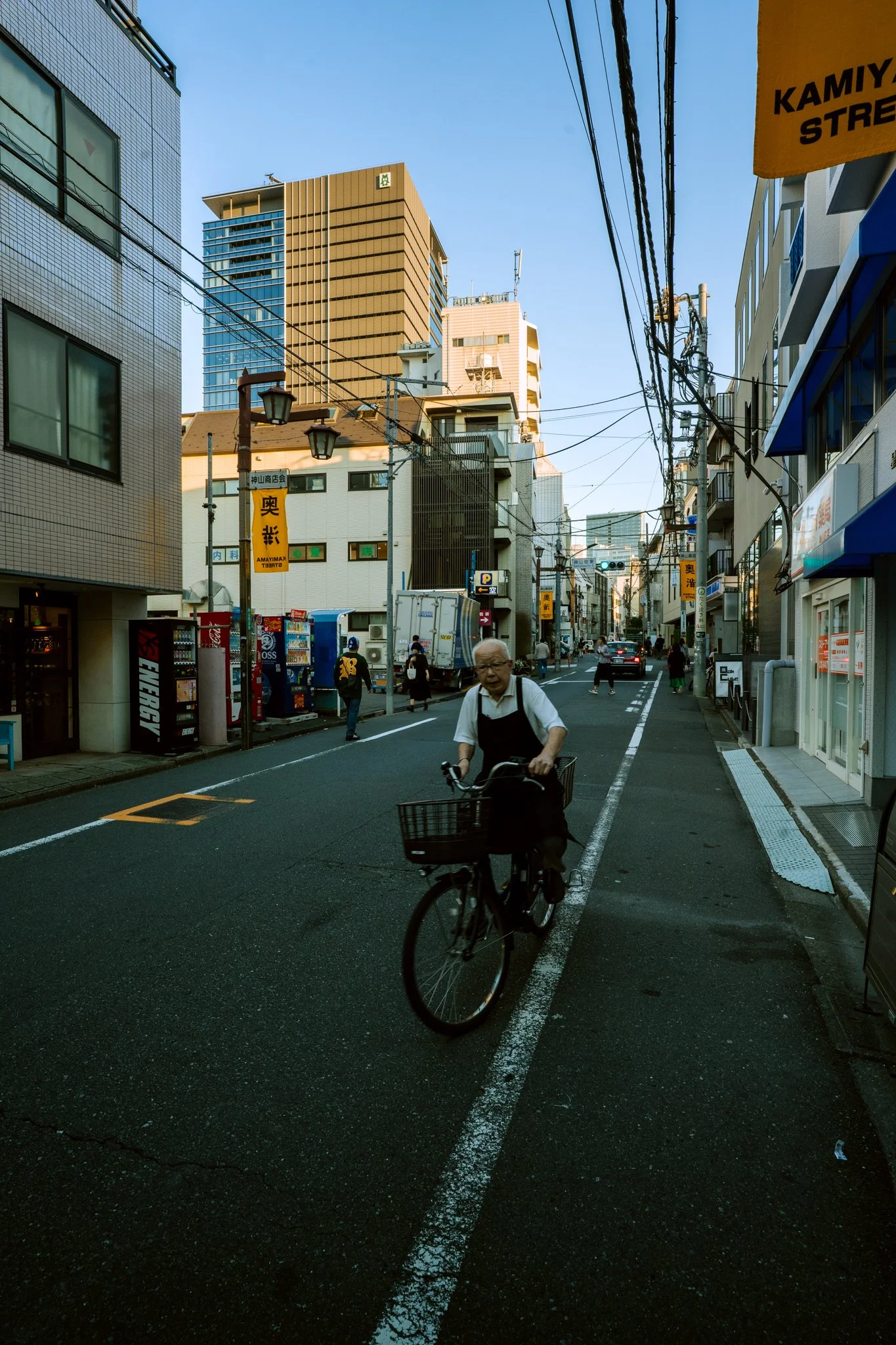
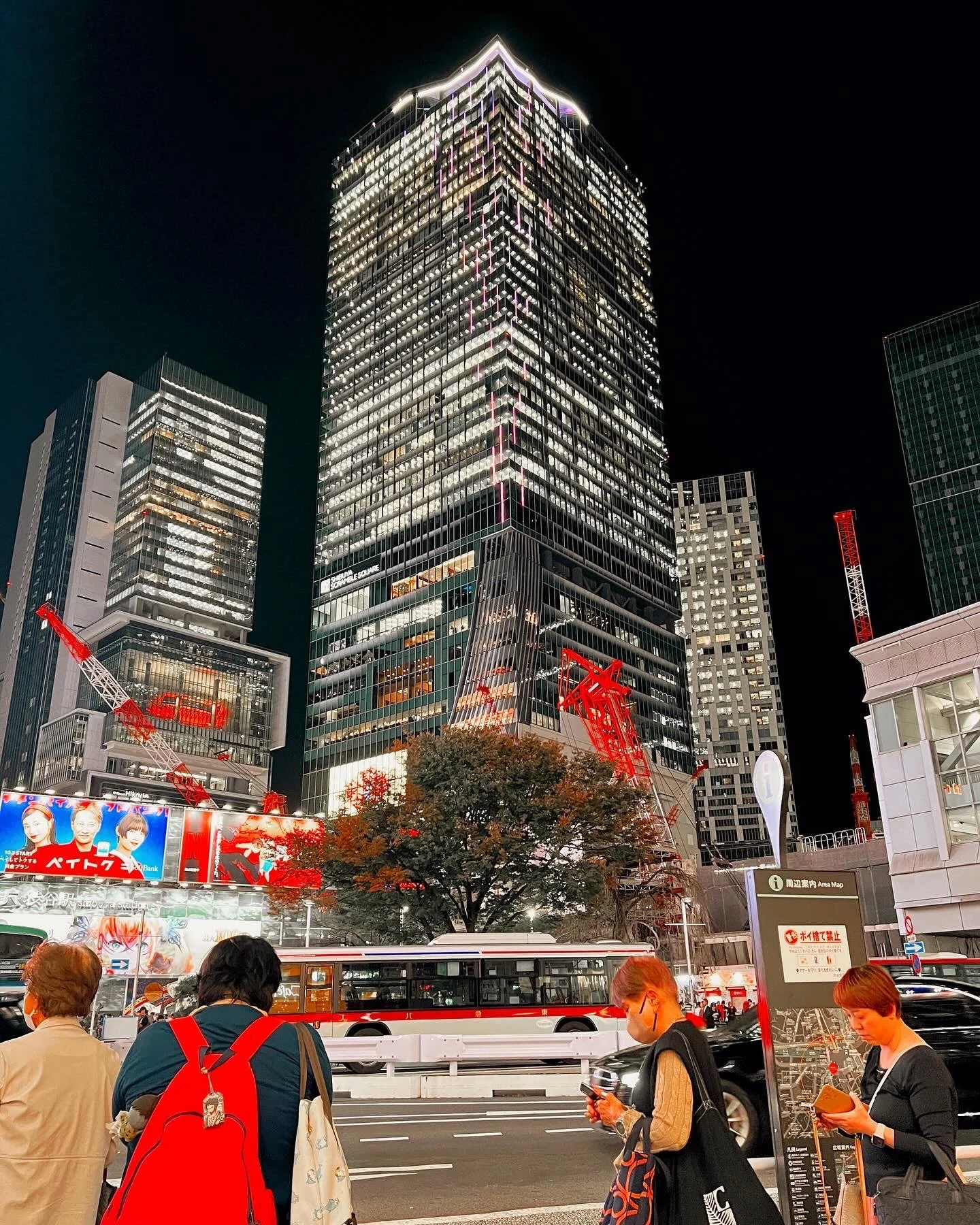
Shibuya central is a vibe by night. It glitters in neat neon. It’s grunge with a fancy college degree. The angst of the “human condition” is very much present, but it’s still quite “ambient” if you know what I mean. Exhausted people returning home after a working day - but still being a functional and beautiful part of a scenery. At 7:00 PM, it is yet to sink into that depraved version of the human condition, that Instagram reels and documentary photographs warn about - the one where salarymen get drunk, miss the last train home and end up sleeping on the pavement after other unsavoury exertions - what the Japanese lovingly refer to as Busshu suru. Trust the Japanese to create mainstream slang based on your most embarrassing accidents. I wonder how George HW Bush feels about his unfortunate throwing up on the then Japanese Prime Minister has been immortalised and admitted into the annals of daily life parlance.
At 7:00 PM, the famous salarymen and not as famous, but no less existent, salarywomen get into the izakaya part of the day. Lights lit up the skyline. The streets were psychedelic. The spectrum of moral acceptability widens in the after hours. A Godzilla head rode by, on the back of a pick-up truck (what, even?). This place is wild. Shibuya Scramble is still alive with its traffic of dawdling (with aching feet) tourists and brisk-walking locals heading home or to a stopover. Japan walks fast. I love it. We’re not exactly slow walkers, but we’ve had seventy year old grannies huff politely in frustration, for slowly them down. Just as we realise we’re in their way, we hurriedly move aside. And they scurry ahead of us in top-speed, tiny but swift, Shinkansen steps. It’s criminal our unwalkable streets are costing us our health in so many ways. I’m aware that I might be unwittingly romanticising loneliness or the economic compulsions that keep seniors in the work force - but to see so many seniors out and about, doing their shopping, walking, meeting friends, hanging out at their favourite joint was refreshing. And made me so jealous. It’s something as basic as walking that I enjoy the most when I’m abroad.
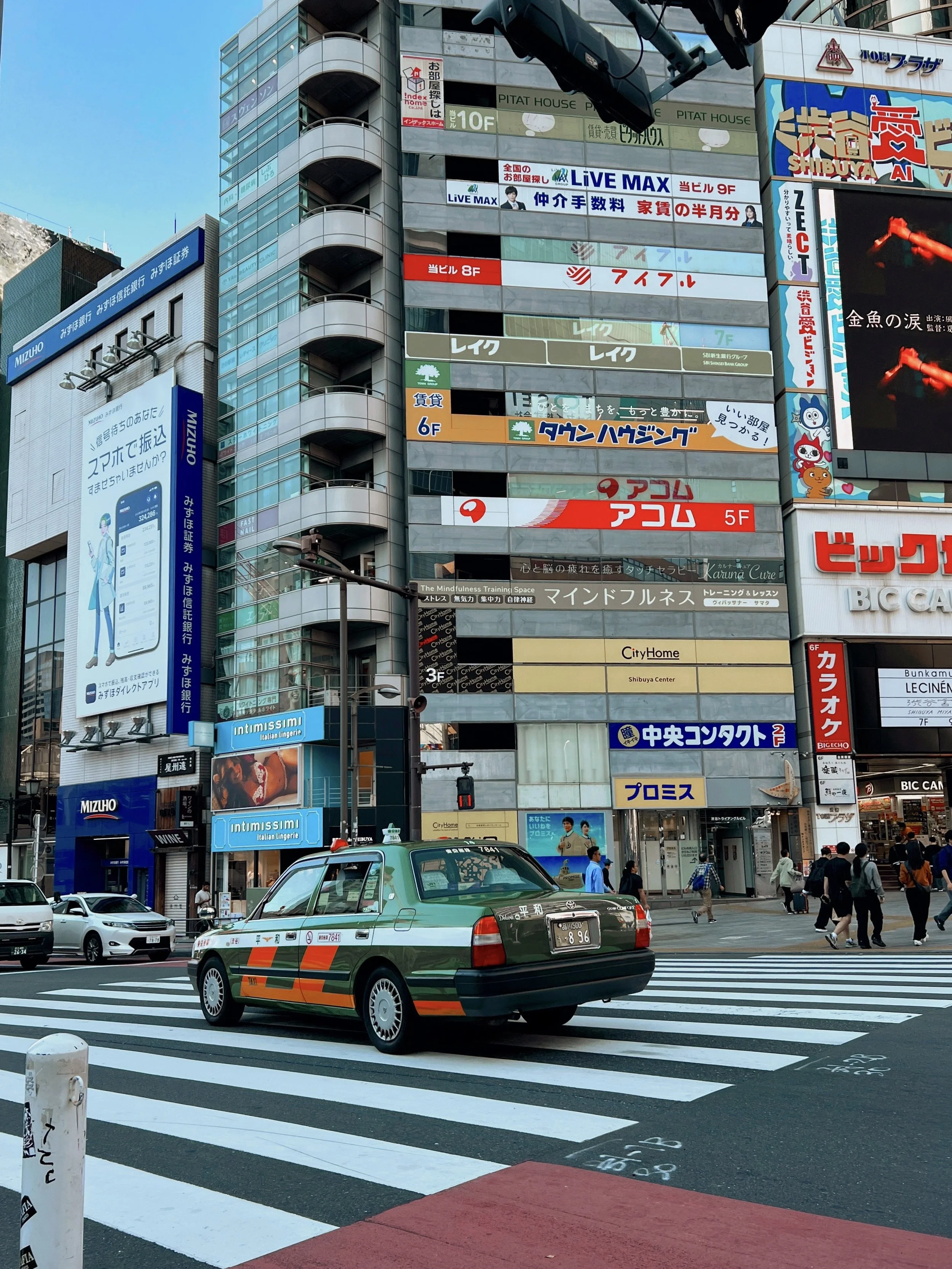
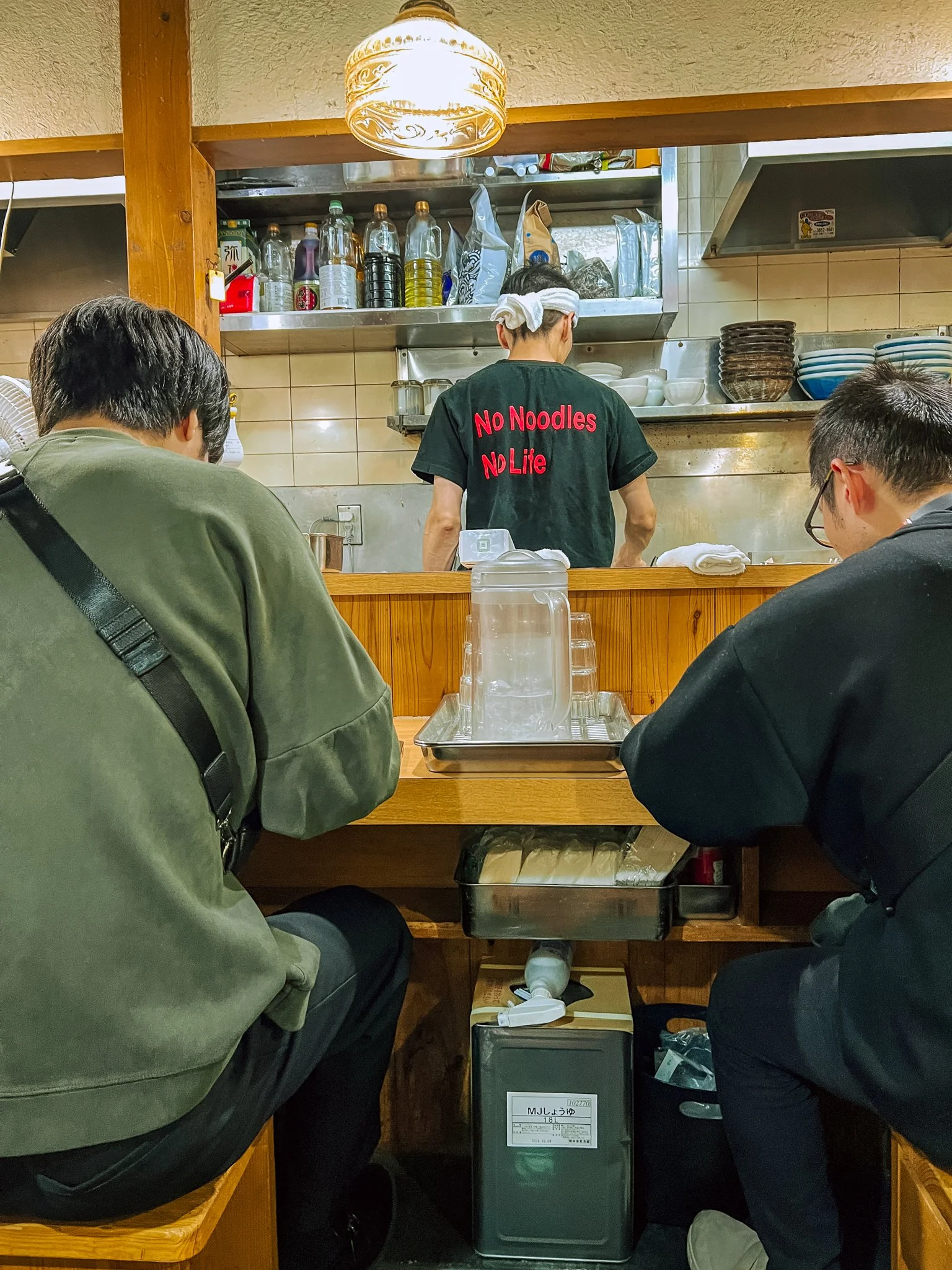
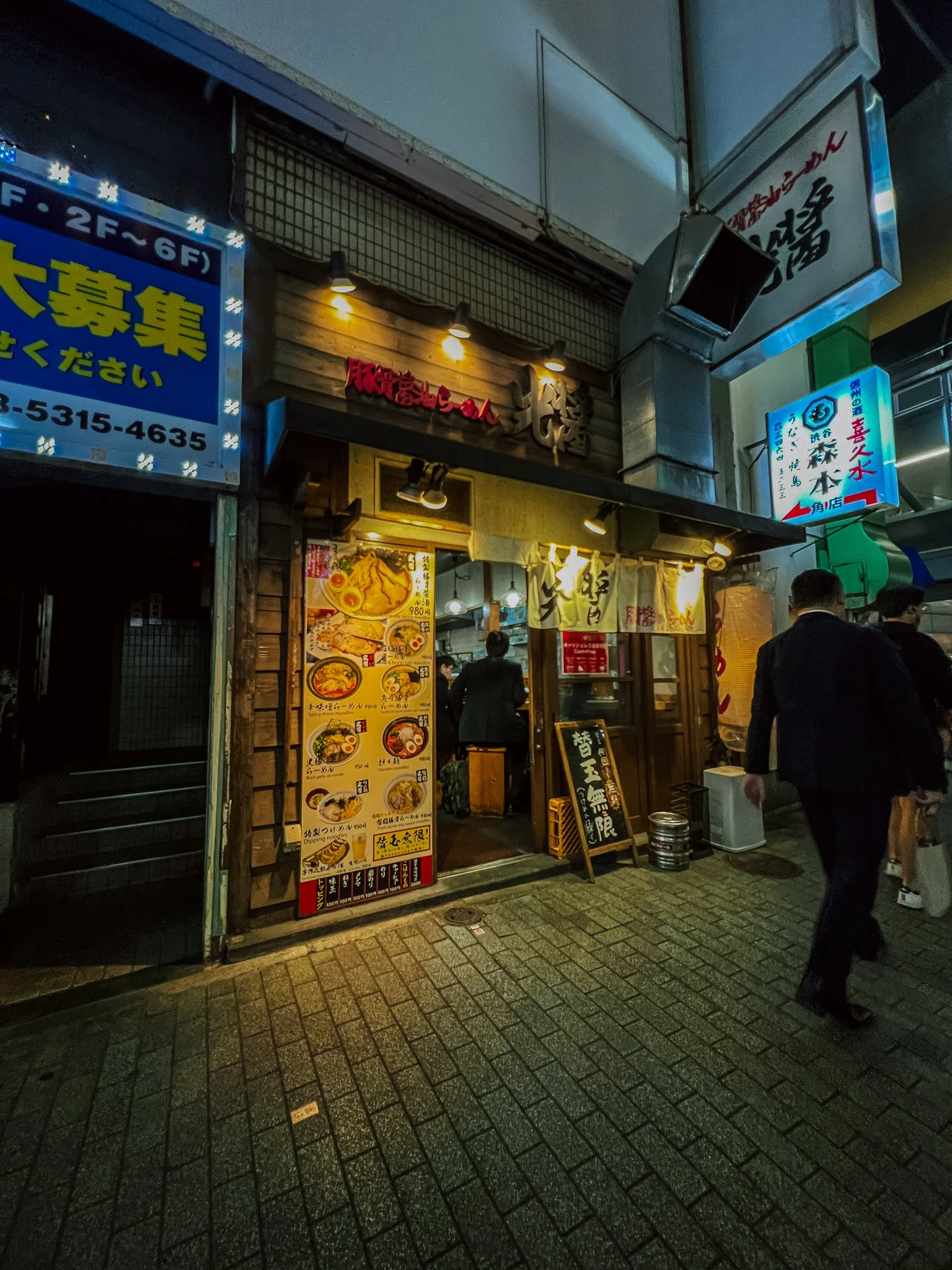
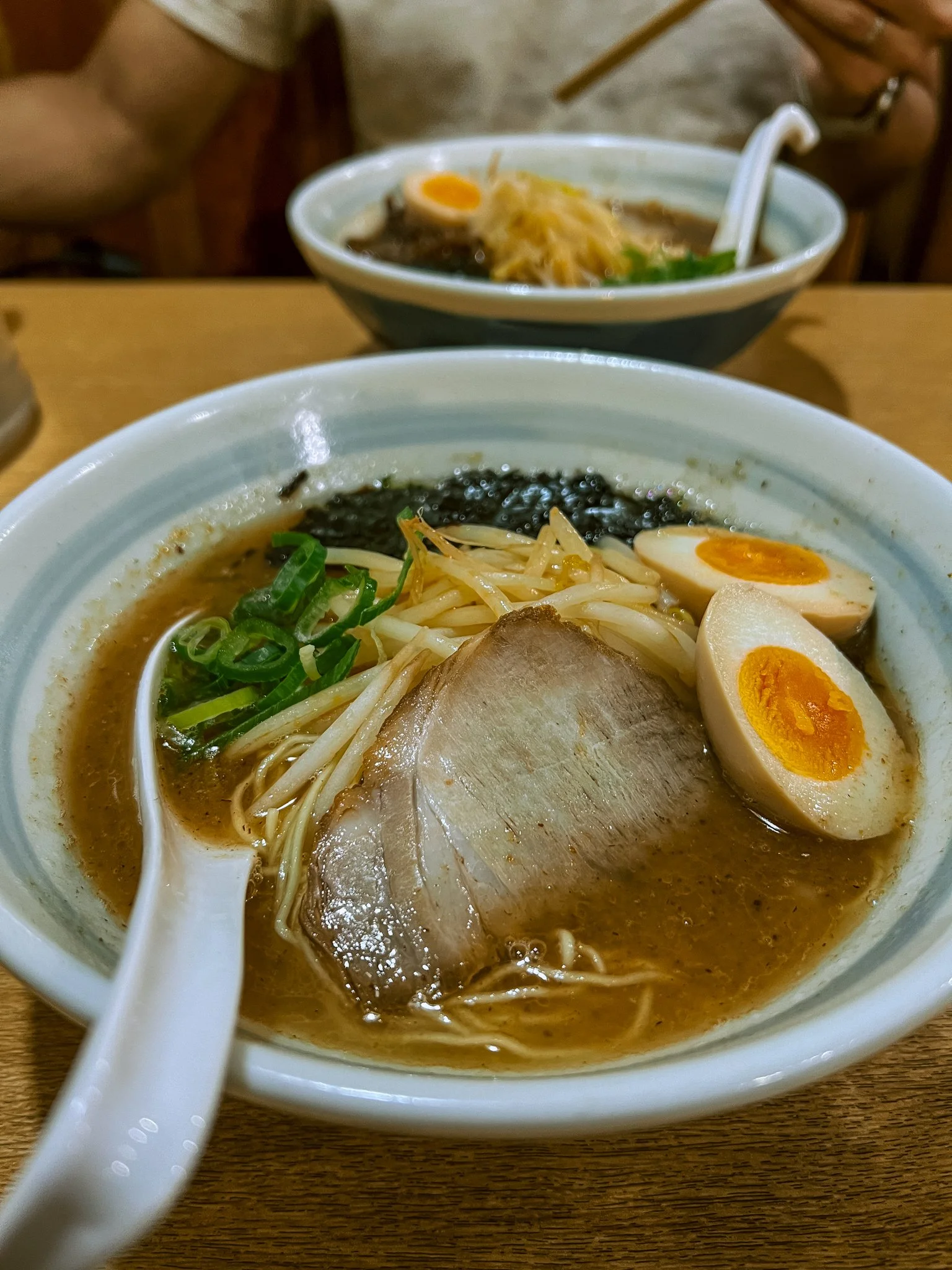
We wandered around the station area and then stumbled into a lively, not particularly touristy, maze of side streets called Dogenzaka. We were really hungry by now and got into some random ramen-ya - ya is a suffix that indicates shop. It was one of those places that seats 10 people at the most. A busy chef, too busy to even throw us a half hearted “Irasshaimase”. Which was okay with us, because we were still getting used to the enthusiastic way shop keepers welcomed us to their store. The chef probably took one look at us and groaned inside about the communication struggle that was ahead. The exhaustion of having to communicate with tourists with “No Japanese” must be exhausting when one is “No Igirisu” (English). He nodded towards the machine at the entry. Since we were the first ones, he must have dialled up his social skills to effusive. Later customers got a grunt for a greeting.
Back to the machine. We were loving these. From vending machines with everything from hot coffee to electrolytes that were everywhere, to these cool machines that took your order, with instructions on how to pay - machines were so cool. Again, since we were the first ones there, it allowed us the luxury of figuring it out - it took us a little getting used to. We beeped-booped our order, got a little token and handed it to the chef. And we were seated, feeling resolutely tomin* . Tokyo residents are called tomin or Tokyo-mon (OMG, more malayalam sounding stuff) .
No sooner we took our luxurious seating, which had the square footage of our ottoman at home, people started filling in. Salarymen and career girls. Soon the entire place was filled with the slurps of souls being warmed and resuscitated by warm broth and ramen. I feel my insides turn golden every time I have good ramen. I can almost picture it, like those diagrammatic representations in medicine ads - showing the medicine taking effect. For someone who seemed to be “no igirisu” our chef wore a very statement making “No Noodles, No Life” tee shirt. Very igirisu, me thinks.
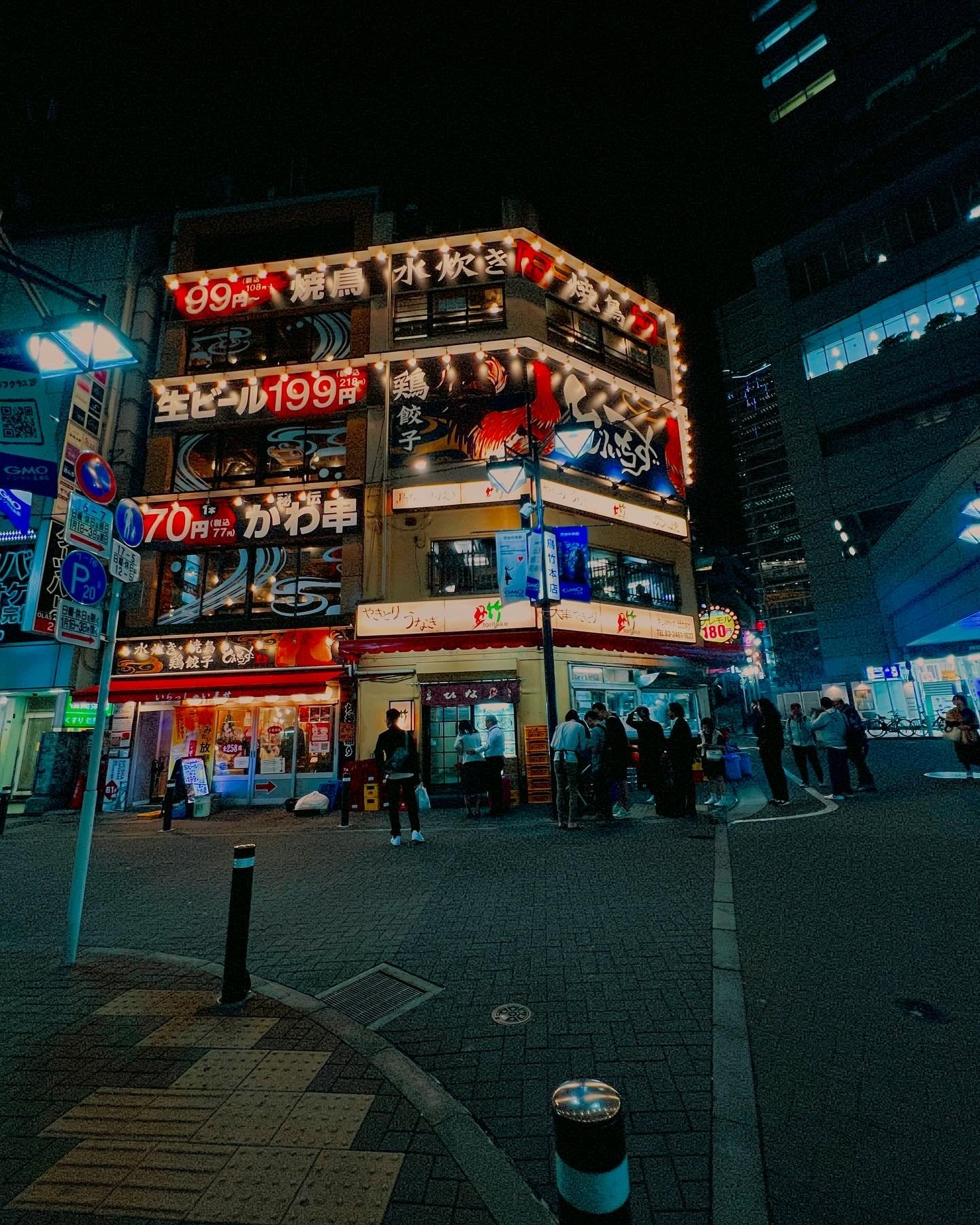
We were really trying to kill time to avoid the neck of “rush hour”. As though the forces that be heard that, Google Maps decided to take us on a detour. We went walking through some very interesting but very confusing drinking district. Interesting because it was very cool - lanterns, a bit worse for wear, a lot of people in interesting clothes. Confusing because we were still in close proximity to the station and the Scramble and everything so far was glitzy and well-put-together - but this was more grunge. Very other side of the tracks, quite literally, because this particular route straddled the rail tracks on one side. And it wasn’t supposed to take us this long to get to the main station. I think it was the Nonbei Yokocho - a 70 year yokocho (alleyway) that’s been around since the Showa period. Apparently this is the place for some authentic Tokyo food.
Google Maps took us to an entry that made Daigon Alley or Platform 9 and three-quarters look a lot more real. It looked shady. it looked like a blip in the universe that opens every twenty-years and leads to some place in the past or several galaxies away. Shibuya is a massive station, and any entrance that didn’t look massive, promised labyrinthine confusion at a subterranean level. Nope, didn’t feel like a mole, did not want to want to scurry around underground, especially because by now my feet were operating on fumes. It was quite a walk back to the main entrance. Exhausted legs or no, hey, this is all part of the experience. Getting lost, having these stories to tell, to relive - these experiences are just as priceless as the mainstream ones that are often sung about in the “Must-do” and “ultimate guides”. Just how much this would hold true, I would find out the following day.
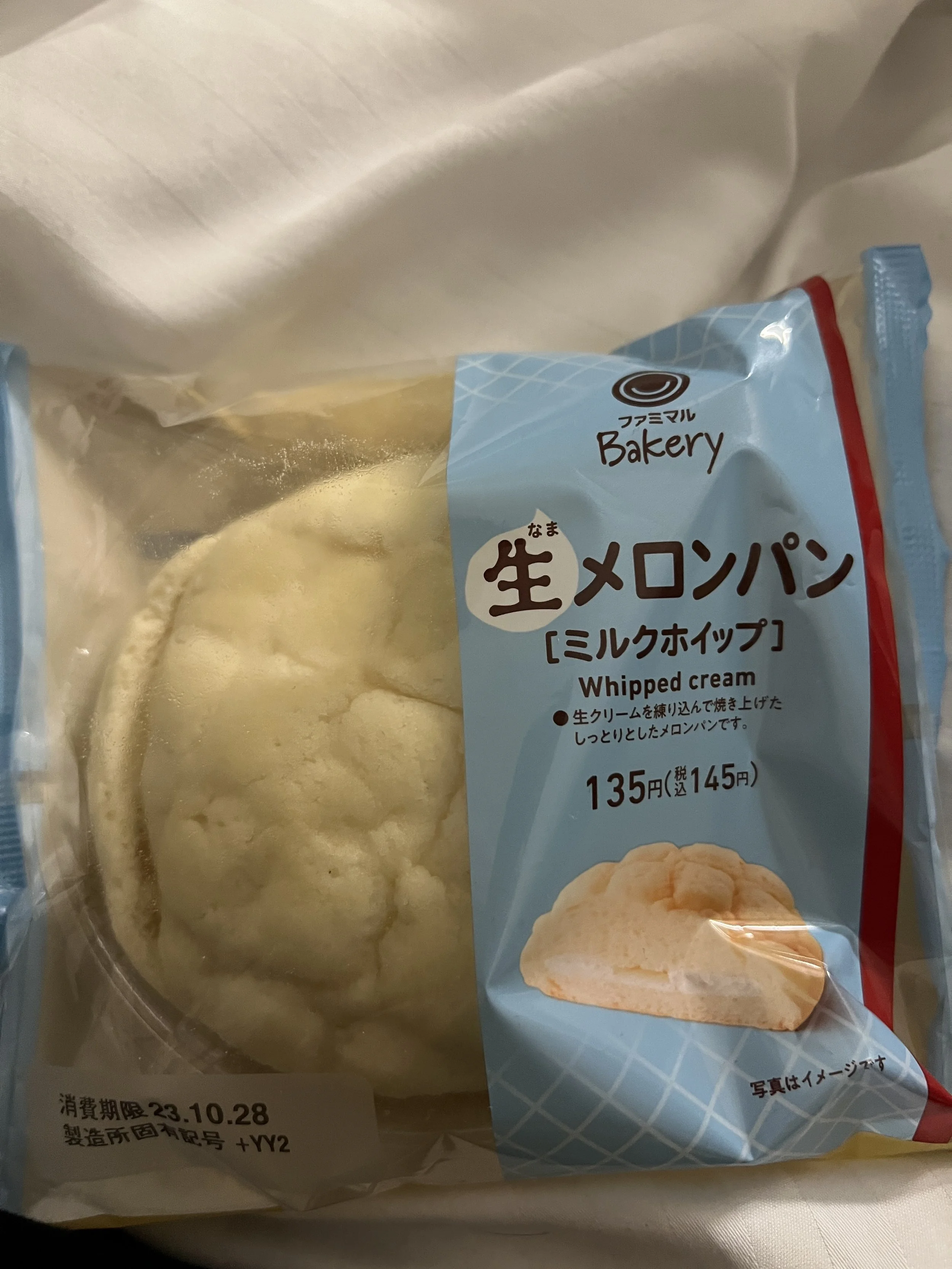
We retraced our way back, one step after excruciating step. And this time we found the proper entrance, replete with snazzy stores inside and droves of gorgeously dressed people. “Like KR Market, but with really well-dressed people” - that’s Shibuya Station for you. Though I have to say, our strategic waiting paid off. Even if the trains were crowded, we did get to sit. We returned to quiet Asakusa, walking down with just our shadows for company. A welcome break from crowds to end the day. But first, a leisurely browse at our friendly, neighbourhood Seven Eleven for our nightly “digestion challenge”. Yes, this was becoming a habit as it did with most tourists in Japan. There’s a reason why things become a cliche. Why go against the grain, when the grain is part of delicious Konbini sushi?